
Review · JAPAN BUS TOURS
Hiroshima and Miyajima 1 Day Bus Tour
Hiroshima gives you two very different experiences in one day: a quiet confrontation with the atomic bombing, followed by the sea views and Shinto beauty of Miyajima. This tour handles both by bus, with lunch and the ferry ticket included, so you spend less time sorting out transport and more time at the sights.
I like the well-planned route and the chance to eat Hiroshima-style okonomiyaki, a local specialty layered with cabbage, noodles, egg, pork, and fish powder. I also like the guides’ personal connection to the city. Guides such as Tom, Hiro, Yuka, Kaori, and Takane have been praised for clear English, steady organization, and personal stories.
The main drawback is time. One hour at the Peace Memorial Museum can feel short, especially if you want to read every display. The day also involves long periods on your feet, and a group of up to 40 people will not feel as nimble as a private visit.
Key points to know before booking
- Two sides of Hiroshima in one day: Visit the sobering Peace Memorial sites, then shift to Miyajima’s shrine, sea views, shops, and street food.
- Okonomiyaki is included: Choose the regular version, no pork with eggs, or no pork, fish powder, or eggs.
- Ferry and museum admission are covered: You do not need to arrange the main tickets yourself.
- English-speaking guides add local context: Guides have included Hiro, Tom, Yuka, Kaori, Takane, and Toe with assistant Yuki.
- Start at 10:00 a.m. and finish back at Hiroshima Station: The tour lasts about 7 hours 40 minutes, so book a Shinkansen after 6:30 p.m.
- Expect a walking day: This is not a good fit if you have difficulty walking for long periods.
Why this Hiroshima day tour works
At $118.92 per person, this is not the cheapest way to see Hiroshima. But the price includes an English-speaking guide, air-conditioned transport, an okonomiyaki lunch, the ferry to Miyajima, and admission to the Peace Memorial Museum.
That bundle matters in Hiroshima. You are covering sights in separate parts of the area, and the ferry adds another piece to the day. If you tried to arrange the same route yourself, you would need to coordinate buses, museum entry, lunch, and the trip to Miyajima while keeping an eye on the clock.
I see the tour as a good value for a first visit, especially if your time in Hiroshima is limited. It is less appealing if you prefer to linger at one museum, wander without a schedule, or decide your lunch stop at the last minute.
The tour starts at Hiroshima Station at 10:00 a.m. and returns to the same meeting point. The vehicle is air-conditioned, luggage can be placed in the bus luggage compartment, and the group may include up to 40 people. That is a fairly large group, but it also keeps the cost below that of a private tour.
More single-day trips around Japan:
- Mt Fuji and Hakone 1-Day Bus Tour Return by Bullet Train
★ 5.0 · 26,383 reviews - 1-Day Tokyo Bus Tour
★ 5.0 · 14,250 reviews - PERFECT KYOTO 1-Day Bus Tour
★ 5.0 · 13,518 reviews
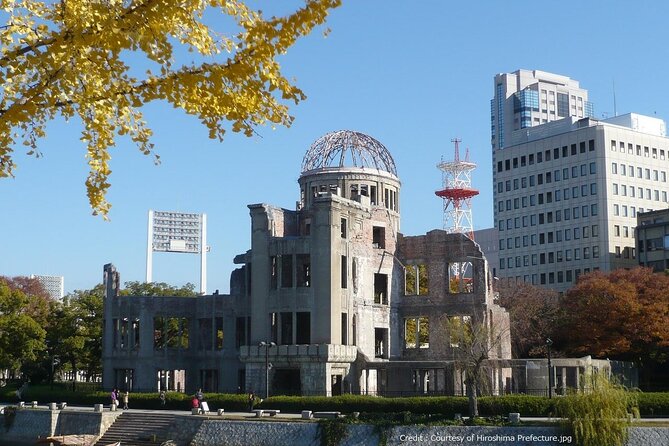
Atomic Bomb Dome: the day’s first hard look at Hiroshima
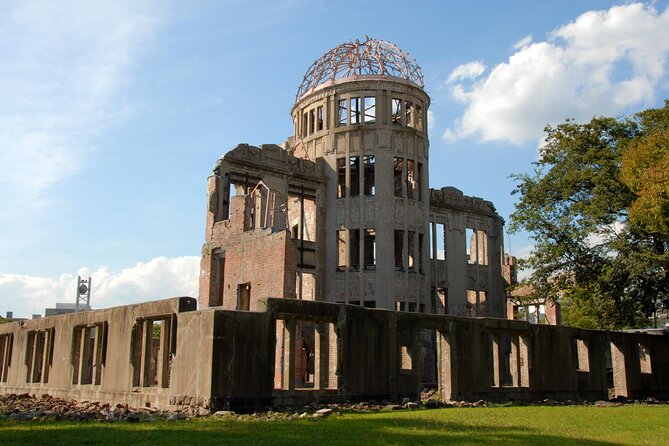
The Atomic Bomb Dome is not a grand monument. Its damaged structure is powerful precisely because it remains an ordinary building altered by an extraordinary act. The preserved remains help you picture the city before and after August 6, 1945.
You get about an hour here, with admission included at no extra cost. The guide provides the surrounding story, then you have a chance to look at the building and the nearby riverfront.
This is a useful opening stop because it gives you a physical reference point before entering the museum. You are not only reading about the bombing. You are standing beside one of the few structures left in the area near the blast center.
The site was later put forward for World Heritage status after survivors and others pushed for its preservation. That effort is part of what you are seeing: not just a damaged building, but a decision to keep a difficult piece of the city’s past visible.
Bring your attention, not just your camera. The Dome is easy to photograph, but its meaning comes from the explanation around it.
Peace Memorial Park and the meaning of Nakajima District
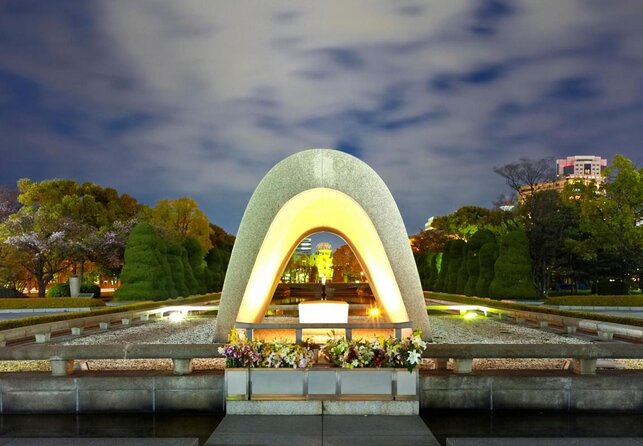
The next hour is spent in Hiroshima Peace Memorial Park, created on the former Nakajima District. The park is spacious and quiet, with memorial facilities laid out among paths and open areas.
This part of the tour gives you time to slow down. After the Atomic Bomb Dome, the park shifts the focus from one structure to the many people and communities affected by the bombing. Your guide can help connect the memorials to the larger story of Hiroshima.
I like having the park and Dome handled together. The two stops are close in meaning, but they offer different ways to understand the event. The Dome is a surviving object. The park is a place of remembrance and reflection.
The subject is painful, and the tour does not try to make it easy viewing. That is a strength, but it also means you should prepare younger children and anyone who finds wartime material difficult. The visit is educational, but it is also emotionally heavy.
Several guides have added personal context. One guide shared the experience of grandparents who survived the bombing, connecting historical facts with the long effects on families. You should not assume every departure includes the same story, but the guide’s role can give the park a human scale that signs alone cannot provide.
Peace Memorial Museum: moving, graphic, and tightly timed
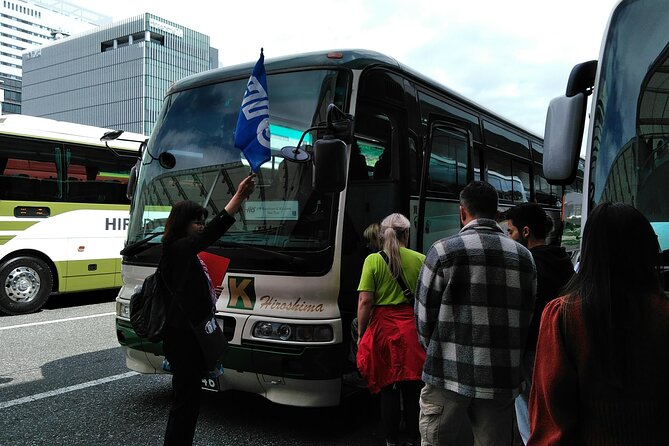
The Peace Memorial Museum occupies about one hour of the schedule. Admission is included, and the museum presents Hiroshima before the bombing, the development and use of the atomic bomb, and the events of August 6.
Expect a serious visit. Displays can be graphic and upsetting. That is not a flaw in the museum, but it is a reason to give yourself mental space before and after the stop.
The biggest planning issue is the one-hour limit. I would treat this as an introduction rather than a full museum visit. You can see the main sections and absorb the central message, but you may have to pass by detailed displays if you read everything closely.
This is where the tour’s fixed schedule helps and hurts. You are guaranteed entry and do not have to find the museum on your own, but you cannot simply stay another hour when a display catches your attention. Several people wanted more time here and would have traded some Miyajima time for it.
I recommend moving at a steady pace and choosing what matters most to you. Read the major panels, pause at the exhibits that affect you, and do not feel pressured to inspect every label. If the museum is your main reason for coming to Hiroshima, consider returning independently on another day.
The earphone guides supplied during the tour are intended to help you hear explanations in a large group. One practical weakness is that the sound quality may be uneven. Some people found the audio muffled, so stay close to the guide when possible and ask for clarification if you miss an important point.
More routes around Japan:
- Peaceful Hiroshima & Miyajima UNESCO 1 Day Bus Tour
★ 5.0 · 5,309 reviews - Kyoto: Fushimi Inari, Kinkakuji, Bamboo Grove 1 Day Bus Tour
★ 4.8 · 4,316 reviews - Tokyo: Meiji Shrine, Asakusa, Skytree Bus Tour and Cruise
★ 4.7 · 1,986 reviews - Tokyo: Kamakura & Enoshima Day Trip including Temple Tickets
★ 4.5 · 1,375 reviews
Okonomiyaki lunch: a local meal with limited choices
The included lunch is Hiroshima-style okonomiyaki. Unlike a simple pancake, this version is built in layers and includes cabbage, bean sprouts, noodles, egg, fish powder, and pork in the regular option.
It is a good fit for this tour because lunch becomes part of the city experience rather than a generic stop at a chain restaurant. The meal has also been praised as tasty and different, and the lunch setting has been described as pleasant and local.
You need to choose your menu when booking. The listed options are:
- Regular okonomiyaki
- No pork with eggs
- No pork, no fish powder, and no eggs
Tell the operator about allergies or dietary restrictions in advance. Menu changes cannot be made on the day, and you cannot bring your own food or drinks into the restaurant.
The lunch will suit most people, but it is not the place to expect a fully flexible menu. One person found the okonomiyaki had been served before taking a seat, which suggests the meal may be organized for speed rather than a made-to-order restaurant experience. That is a small tradeoff for fitting a substantial meal into a tightly timed day.
Vegetarian needs can be accommodated if arranged in advance. Do not leave this until the morning of the tour.
Miyajima and Itsukushima Shrine: a gentler second half
After the memorial sites and lunch, the tour heads for Miyajima. The ferry ticket is included, and the island portion takes about three hours.
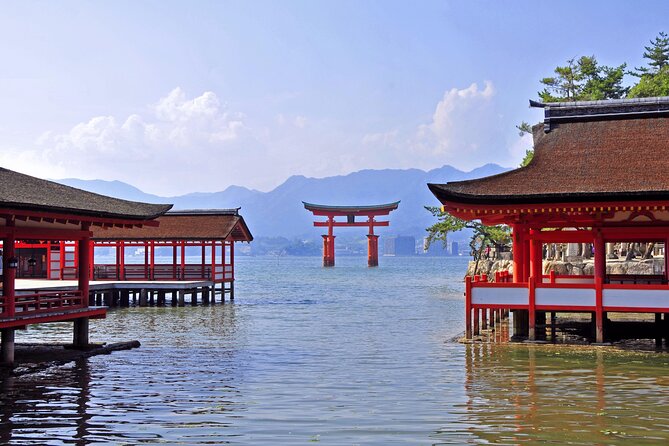
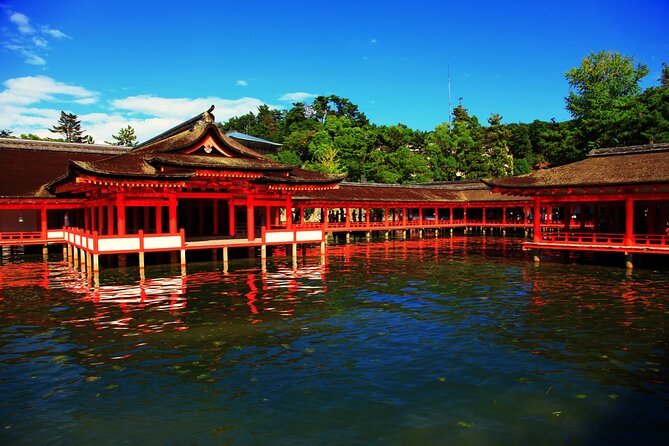
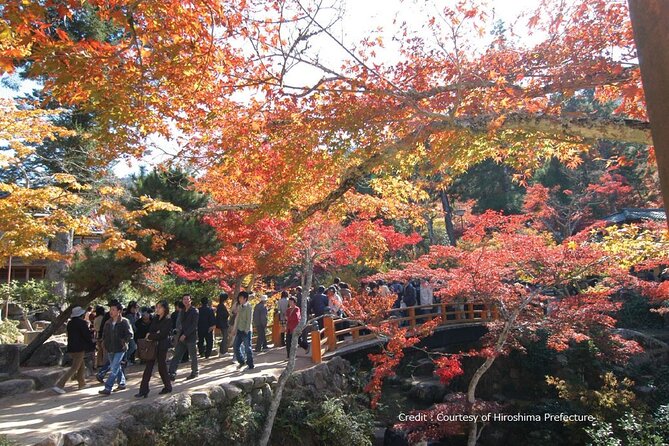
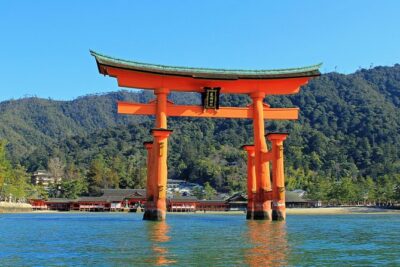
Itsukushima Shrine is built beside a small inlet, with its famous torii gate set out in the Seto Inland Sea. The gate and shrine are closely tied to the water, so your view changes with the shoreline and the conditions on the day.
This is a striking contrast with the morning. Hiroshima’s memorial sites ask you to stop and think. Miyajima gives you open water, shrine architecture, walking paths, shops, and food stalls. The contrast is one of the tour’s best features, though the transition can feel quick after the museum.
You have time to visit the shrine and explore on your own. The island is more than a single photograph. Walk around the inlet, look toward the water, and allow time for the shopping streets and local snacks if that interests you.
The three-hour block is generous by day-tour standards, though it will not cover every possible activity on Miyajima. The supplied schedule focuses on Itsukushima Shrine and the central island area. You should not book this tour expecting a long, unhurried island stay beyond that zone.
The shrine’s torii is especially appealing because its setting changes with the sea. The views can be very different depending on the tide and weather, and the tour does not promise a particular water level. Even so, the shrine remains the central reason to visit Miyajima.
Guides, earphones, and the feel of a 40-person group
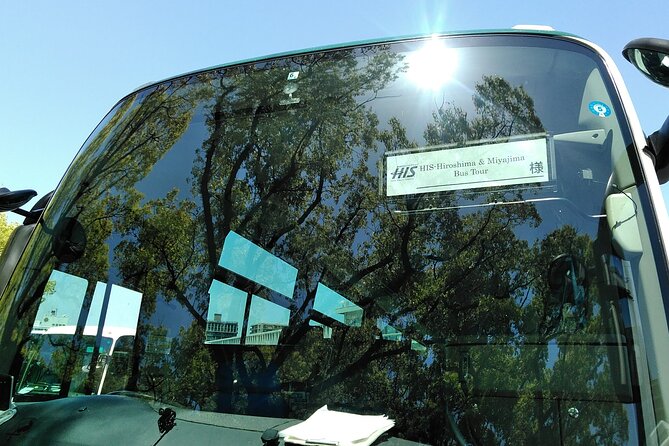
The guide is a major part of this experience. Names associated with departures include Hiro, Tom, Yuka, Kaori, Takane, and Toe, with Yuki assisting Toe on one outing. Do not book on the assumption that a particular person will lead your date, but you can expect an English-speaking guide.
The strongest guide qualities are clear explanations, good time management, and the ability to keep a large group moving. Several guides have also shared personal stories about Hiroshima, which can make the city feel less like a list of attractions and more like a place with living memory.
The bus is a practical advantage. You avoid arranging separate city transport and can rest between stops. The vehicle is air-conditioned, an important comfort during warm or wet weather.
A group of up to 40 people has limits. You may wait while everyone boards, gathers, or receives instructions. The earphone system is meant to solve the distance problem, but the sound may not always be crisp. Keep track of meeting times and stay near the group at transitions.
The organizers have been able to accommodate luggage in the bus compartment, and one departure even handled an alternative drop-off. The standard end point is Hiroshima Station, so confirm any special arrangement before you rely on it.
Timing, walking, and the best kind of visitor for this tour
The full schedule runs about 7 hours 40 minutes, beginning at 10:00 a.m. Since the tour returns to Hiroshima Station, I would book a Shinkansen departure after 6:30 p.m. That leaves useful breathing room for delays, group movement, and finding your platform.
You will walk at the Dome, through the park, inside the museum, around Miyajima, and between transport points. The tour is not recommended for anyone who has difficulty walking for long periods.
I would choose this tour if you want the main Hiroshima sights in one organized day, prefer having historical context explained in English, and like the idea of a set local lunch. It is also useful if you are staying in Hiroshima and do not want to work out the Miyajima ferry and city connections yourself.
I would choose another plan if your priority is the museum. An independent visit would give you more control over the time spent with the exhibits. The same is true if you want to photograph Miyajima slowly, explore beyond the central area, or eat wherever you please.
The tour requires good weather. If poor weather causes cancellation, you are offered another date or a full refund. You can cancel for a full refund up to 24 hours before the start time, but changes or cancellations inside that window are not accepted.
Should you book the Hiroshima and Miyajima bus tour?
Book it if you want a well-organized first look at Hiroshima with the two essential areas covered in one day. The included ferry, museum admission, lunch, air-conditioned bus, and English guide make the $118.92 price reasonable for a visitor who values simplicity.
The emotional weight of the Peace Memorial Museum is real, and one hour is not enough for a slow reading visit. But the route gives you a strong balance: the Atomic Bomb Dome, Peace Memorial Park, and museum in the first half, then okonomiyaki and Miyajima’s shrine and sea views.
For many people, that contrast is exactly what makes the day work. You leave with a clearer sense of Hiroshima’s past and a chance to see the beauty of the surrounding island, without having to arrange each piece yourself.
FAQ
Where does the Hiroshima and Miyajima tour begin?
The tour begins at Hiroshima Station, at 1-2-37 Matsubaracho, Minami Ward, Hiroshima, at 10:00 a.m.
Where does the tour end?
The activity ends back at the meeting point at Hiroshima Station.
How long does the tour last?
The tour lasts approximately 7 hours and 40 minutes.
Is lunch included?
Yes. The included meal is Hiroshima-style okonomiyaki.
What okonomiyaki choices are available?
You can choose regular okonomiyaki, no pork with eggs, or no pork, fish powder, and eggs. Dietary needs and allergies must be given in advance.
Are the museum and ferry tickets included?
Yes. Admission to the Peace Memorial Museum and the ferry ticket to Miyajima are included.
Is the tour conducted in English?
Yes. The tour is conducted by an English-speaking guide.
Can I cancel for a refund?
You can cancel at least 24 hours before the start time for a full refund. Cancellations or changes made less than 24 hours before the start time are not accepted.
Recently added around Japan
- NARUTO & BORUTO at Nijigen no Mori Park Entry& Bus Transportation★ 3.0 · 3 reviews
- From Kyoto: Nara History Guided Half Day Bus Tour with lunch★ 5.0 · 23 reviews
- Kyoto Sagano Romantic Train in Arashiyama Bus Tour★ 3.0 · 6 reviews
- Kyoto 1 Day Golden Route Bus Tour★ 5.0 · 15 reviews
- Kyoto Hop-On, Hop-Off Sightseeing Bus Tour★ 3.0 · 5 reviews
- Hiroshima, Miyajima 1 Day Bus with Indian Lunch from Osaka, Kyoto★ 5.0 · 7 reviews
- Amanohashidate & Miyama 1-Day Bus Tour: From Osaka/Kyoto w/ Lunch★ 4.5 · 18 reviews
- Full Day Hiroshima and Miyajima Bus Tour★ 5.0 · 12 reviews
Japan Bus Tours, compared.
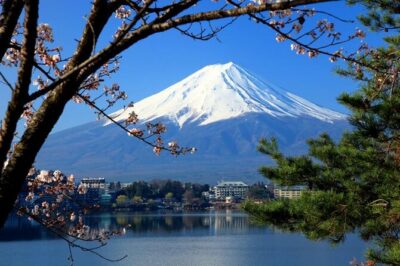
Mt Fuji and Hakone 1-Day Bus Tour Return by Bullet Train
Read our review →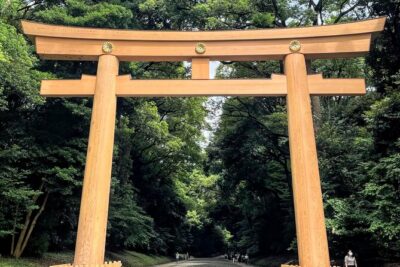
Peaceful Hiroshima & Miyajima UNESCO 1 Day Bus Tour
Read our review →
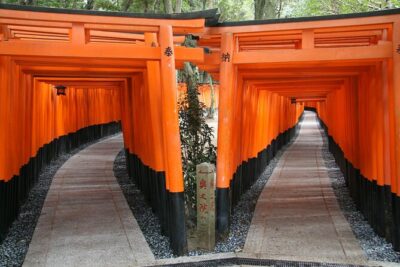
Fushimi Inari, Kinkakuji, Bamboo Grove 1 Day Bus Tour
Read our review →
Meiji Shrine, Asakusa, Skytree Bus Tour and Cruise
Read our review →
Kamakura & Enoshima Day Trip including Temple Tickets
Read our review →
Mt Fuji & Hakone Cruise, Drum Show Bus 1 Day from Tokyo
Read our review →Browse the lists this tour appears in