
Review · KYOTO BUS TOURS
Kyoto Hop-On, Hop-Off Sightseeing Bus Tour
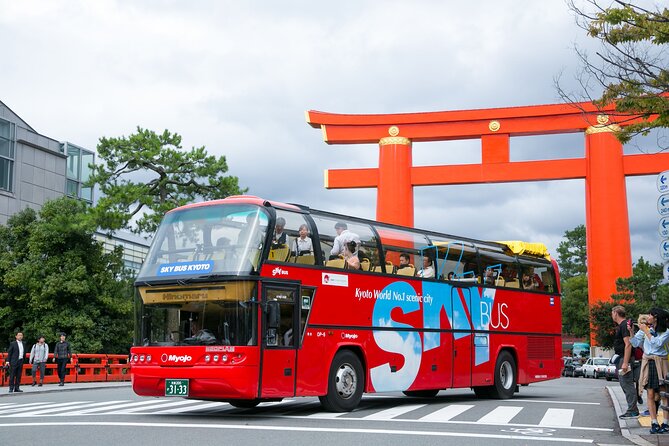
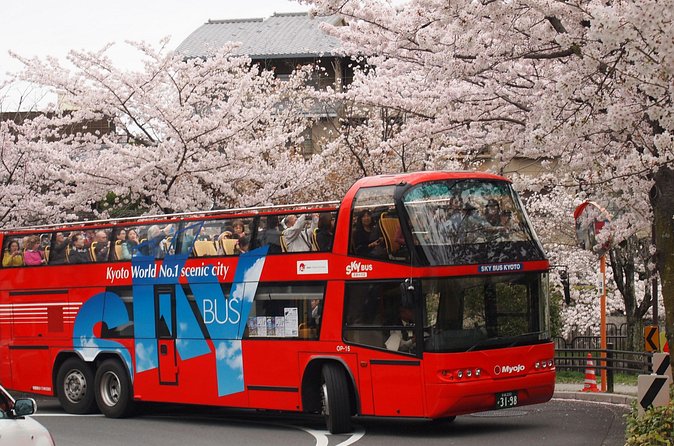
Kyoto’s SKY HOP BUS gives you a quick way to see a huge city without wrestling with several local bus routes. From the open top, you can connect Kyoto Station with temples, shrines, Gion, Nishiki Market, and the northern sights around Kinkaku-ji. The views are the main event, especially when you want a broad first look at the city.
I like the freedom to get off at Kiyomizu-dera, Ginkaku-ji, or Nijo-jo Castle and continue later. I also like the multilingual audio guide, earphones, WiFi, and rain poncho, useful touches on a sightseeing bus. The main catch is the roughly 50-minute gap between buses, and all seats are unreserved.
A current score of 3.2 from five ratings suggests a mixed experience. The strongest praise centers on courteous, helpful service and an easy way to see Kyoto. The clearest complaints concern the high price through some booking channels, the large and confusing Kyoto Station terminal, and the long wait between buses.
Key points at a glance
- Two useful sightseeing routes: One route covers Gion, Kiyomizu-dera, Ginkaku-ji, and Kyoto Station, while another reaches Nijo-jo Castle, Kinkaku-ji, Daitoku-ji, and the Imperial Palace.
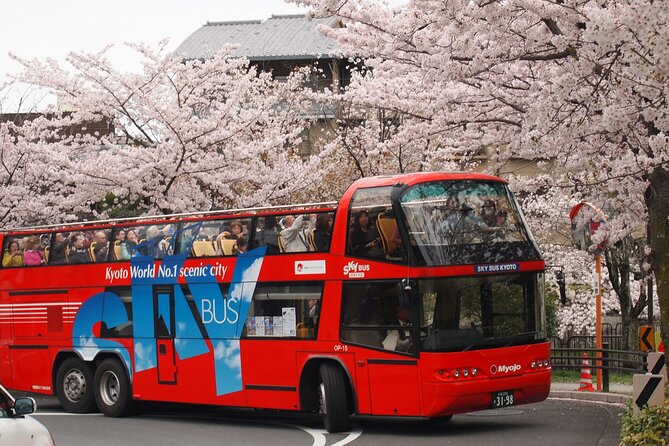
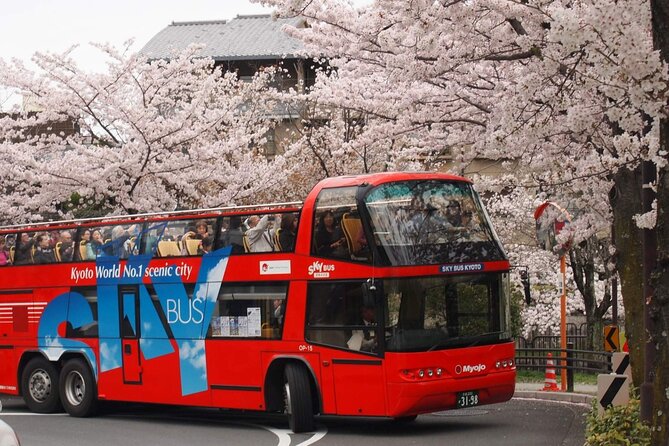
- Open-top city views: You get a better view of Kyoto’s streets and surrounding hills than from a standard enclosed bus, weather permitting.
- Buses run about every 50 minutes: This is the biggest planning issue, especially if you hop off at a busy temple.
- One-day and two-day passes: The longer pass makes more sense if you plan to visit several far-flung areas.
- Unreserved seating: Arrive early if sitting on the upper deck matters to you.
- Useful extras included: Multilingual commentary, earphones, WiFi, and a poncho in rainy weather come with the ticket.
What the Kyoto SKY HOP BUS is really good at
Kyoto looks compact on a map, but its major sights are spread across the city. Kinkaku-ji is in the northwest, Ginkaku-ji sits in the northeast, Kiyomizu-dera is southeast of the center, and Arashiyama lies well to the west. Moving between them by ordinary public transport can take time and several decisions.
The SKY HOP BUS simplifies that pattern. You board near Kyoto Station or another listed stop, listen to the audio commentary, and watch the city pass by from above. You do not need to learn every bus number before breakfast.
The advertised ride duration is about 1 hour and 8 minutes, but this is best understood as a sightseeing ride rather than a fast transfer. Since the bus stops at many locations and buses may come only every 50 minutes, a full day requires patience. I would use it as a flexible sightseeing backbone, not as a precise appointment-to-appointment transport service.
The open top is a real advantage on a clear day. You can see more of the streets, rooftops, and surrounding hills than you would from a regular city bus. On a hot day, however, the upper deck may feel exposed. Bring water, especially since one piece of feedback specifically noted very hot conditions and wished water were available onboard.
More Sightseeing Bus Tours in Japan
- Tokyo: Open Top Panoramic Sightseeing Bus with Audio Guide
★ 3.8 · 254 reviews - Departing from Takayama [Regular sightseeing bus] World Heritage Sites Shirakawago and Gokayama Ainokura
★ 4.5 · 137 reviews - Tokyo: Morning Sightseeing Bus Tour
★ 4.4 · 109 reviews
The eastern route: from Kyoto Station to Gion and Kiyomizu-dera
The first listed route begins at Kyoto Station, the city’s main transport hub. This is a sensible starting point, though the terminal is large and finding the exact bus position can take extra time. Give yourself a buffer rather than arriving just as the bus is due.
The bus then heads toward Karasuma Gojo, a central stop useful for connecting with the downtown grid. It is not one of Kyoto’s headline sights, but it can help you break up the ride or reach accommodation in the central area.
Next comes Shijo Karasuma and Nishiki Market. Nishiki is one of the most atmospheric food streets in central Kyoto, with small shops and stalls packed into a narrow shopping arcade. It is a good place to hop off for a walk and a meal, but do not treat it as a quick five-minute stop. The market area is made for slow browsing, and the next bus may not arrive for nearly an hour.
Kyoto City Hall provides another central stop near downtown streets and shopping areas. This is useful if you want to explore the city center without returning to Kyoto Station. As with Karasuma Gojo, its value is mainly as a practical access point rather than a major sightseeing stop.
The route then reaches Ginkaku-ji, the Silver Pavilion. The temple itself is known for its restrained design and carefully arranged grounds. Compared with the bright Golden Pavilion, Ginkaku-ji offers a quieter visual experience, with gardens and paths that reward a measured visit.
Allow enough time here for the temple grounds and the approach through the surrounding streets. If you get off, you should assume you may wait for the next bus rather than expecting an immediate replacement. That is the central tradeoff of this service: hopping off gives you freedom, but the schedule limits how quickly you can move on.
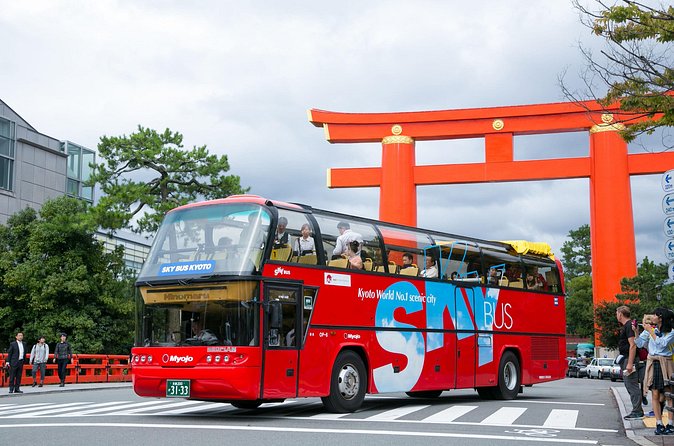
At Heian-jingu Shrine and Okazaki Park, you can explore one of Kyoto’s broadest shrine settings. The large torii and open grounds create a striking contrast with the narrow lanes found elsewhere in the city. Okazaki is also a useful stop for cultural attractions in the area.
The route continues to KOTOWA KYOTO YASAKA, near Gion. This stop places you close to the historic Gion district, where traditional wooden buildings, tea houses, and narrow lanes give Kyoto much of its old-city character. Be respectful here. Walk quietly, do not block lanes, and remember that this is a living neighborhood, not a stage set.
Gojozaka is the stop for Kiyomizu-dera. It is not right at the temple entrance, so expect an uphill walk through the approach streets. That walk is part of the experience, with shops and small businesses leading toward one of Kyoto’s best-known temple complexes.
Kiyomizu-dera is one of the strongest reasons to choose this route. The temple’s elevated setting gives you memorable views over Kyoto, and the approach combines religious sites with a busy traditional shopping district. It is also one of the busiest stops, so the 50-minute service interval matters here. If you want time at the temple, you may need to accept a long wait or use other public transport afterward.
The final eastern stop is Sanjusangendo, the Kyoto National Museum, and Hyatt Regency Kyoto. This cluster gives you several different options: a long temple hall famous for its rows of Buddhist statues, a major museum, or a convenient hotel-area stop. It is a useful choice for visitors who want culture beyond the most photographed temples.
The northern route: Kinkaku-ji, Nijo-jo, and Daitoku-ji
The second route also begins at Kyoto Station, then stops at Nishi Hongan-ji Temple. This major temple complex is close to the station and offers a calmer introduction to Kyoto’s Buddhist architecture than some of the more crowded headline sites.
The bus then reaches Nijo-jo Castle, one of the best stops for understanding Kyoto’s political past. The castle grounds and buildings offer a different experience from the city’s temples and shrines. If your schedule allows only a few stops, Nijo-jo adds variety to a day otherwise filled with religious sites.
Next is Kitano-tenmangu Shrine and Kamishichiken. Kitano-tenmangu is a major Shinto shrine, while Kamishichiken is one of Kyoto’s traditional geisha districts. Together they give you a useful mix of shrine grounds and old neighborhood atmosphere.
Kinkaku-ji, the Golden Pavilion, is the route’s major draw. The pavilion’s gold-covered exterior reflected over its pond makes it one of Kyoto’s most recognizable sights. The visit is visually rewarding but usually brief in structure: you follow a set path, see the pavilion from the permitted viewpoints, and continue through the grounds.
Do not assume that a quick photo stop means the area is easy to manage. Kinkaku-ji is far from the central station area, and the next bus may not be close behind. This is one of the places where a two-day pass can help, since you can spread the northern route across a less rushed schedule.
The bus also stops at Daitoku-ji Temple, a large temple complex with a more contemplative feel than the Golden Pavilion. Its value is in the collection of temple buildings and gardens rather than one single famous view. Check the time you have before getting off, since the listed service frequency can make an unplanned visit longer than expected.
The final northern stops include Kyoto Imperial Palace and Doshisha University, followed by Shijo Karasuma and Nishiki Market. The Imperial Palace grounds offer broad paths and formal spaces in the middle of the city. This stop pairs well with the downtown market area, though the distance between attractions means you should watch the bus timetable closely.
Arashiyama is named in the general tour description, but the detailed stop list supplied for this service does not show an Arashiyama stop. If Arashiyama is a top priority, confirm the current route before buying. Do not assume that a general mention guarantees a stop on the departure date.
The 50-minute wait changes how you should plan
The biggest practical issue is frequency. Buses are reported to arrive about every 50 minutes, so this is not a turn-up-and-go city shuttle. Miss one, and your carefully planned temple sequence may slide by nearly an hour.
I would choose two or three major stops for one day rather than trying to cover every name on the map. A sensible eastern plan could combine Ginkaku-ji, Heian-jingu, and Kiyomizu-dera. A northern plan could combine Nijo-jo, Kinkaku-ji, and Nishiki Market.
Keep the next departure in mind before leaving the bus. Since seats are unreserved, you may also need to wait for a later bus if the one arriving is full. The service is more comfortable when you treat it as a scenic route with flexible timing, not as a guaranteed seat on a fixed schedule.
One useful point from the feedback is that a late-running connection on the blue line was handled successfully with courteous help. That suggests the staff can be useful when plans go wrong, but I would not build a tight connection around that possibility.
More Hop-On Hop-Off Bus Tours in Kyoto:
- Barcelona: 24 or 48-Hour Hop-On Hop-Off Bus Tour
★ 4.4 · 20,872 reviews - Rome: City Sightseeing Hop-on Hop-off Bus with Audioguide
★ 4.0 · 16,045 reviews - Paris: Tootbus Hop-on Hop-off (Optional River Cruise)
★ 4.3 · 15,279 reviews - Paris: Big Bus Hop-On Hop-Off Tour with Optional Cruise
★ 4.4 · 13,279 reviews
Price, passes, and what you receive
At $45.56 per person, the ticket is not cheap for a sightseeing bus. The value depends on how much ordinary transport you would otherwise use and how many stops you visit.
For a single short ride, the price is hard to justify. You are paying for the open-top format, the sightseeing commentary, the ability to board and leave at listed stops, and the convenience of linking distant districts. If you use the pass for several substantial journeys in one day, the calculation improves.
A two-day pass is the better fit for a relaxed Kyoto visit. You can dedicate one day to the eastern route and another to the northern route, with less pressure from the 50-minute interval. A one-day pass suits someone who mainly wants an overview and already knows which two or three places matter most.
Prices can vary by booking channel. One important practical point is to compare the operator’s direct price with third-party offers before paying. The bus itself may be good value while a marked-up booking channel makes the total less attractive.
Included features help a little: multilingual audio commentary, earphones, onboard WiFi, and a poncho when it rains. Children under five ride free when sitting on a parent or guardian’s lap. Personal expenses are not included, so budget separately for food, temple admissions where applicable, and shopping.
Weather, seats, and comfort
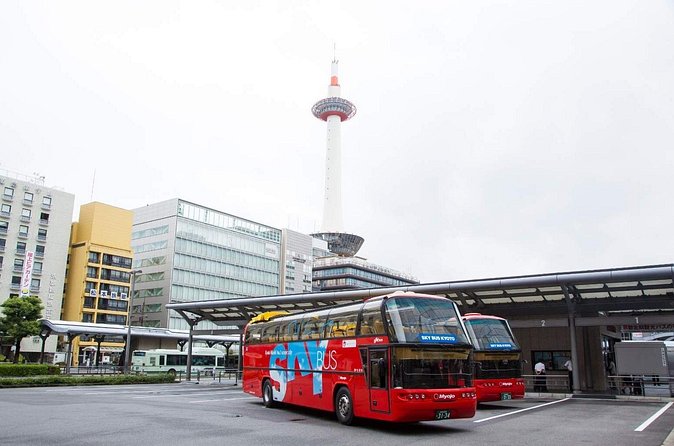
This is an open-top bus, so weather affects the experience. Rain can cancel the service, in which case you are offered another date or a full refund. A poncho is included for rain during operation, but it is still wise to check the forecast before committing your day.
The upper deck offers the best views, yet seats are unreserved. Arrive early if the open-air ride is important to you. On a hot day, carry water and consider how long you are willing to sit in direct sun.
The lower deck may be a better choice in poor weather or for anyone who prefers shade. The information provided does not promise reserved seats or onboard refreshments, so plan around those limits.
Most people can participate, and the service is near public transportation. That makes it a practical choice for a broad range of visitors, though the walks from stops to attractions, especially Gojozaka to Kiyomizu-dera, still require attention to your own comfort.
Who should book this Kyoto bus?
I would recommend the SKY HOP BUS to a first-time visitor who wants a city overview before choosing where to spend more time. It also suits anyone who likes sitting back, hearing commentary, and avoiding the mental work of planning several local bus changes.
It is useful for families and older visitors who prefer a simple route between major districts, though the unreserved seating and long gaps require patience. The free ride for children under five is a small but helpful saving for families with very young children.
I would be more cautious if you have a tight schedule, need exact arrival times, or want to visit many places in one day. Kyoto’s regular public transport may be faster for individual journeys. I would also compare prices before booking, since the $45.56 fare can feel steep if you use only a small part of the pass.
Should you book the SKY HOP BUS?
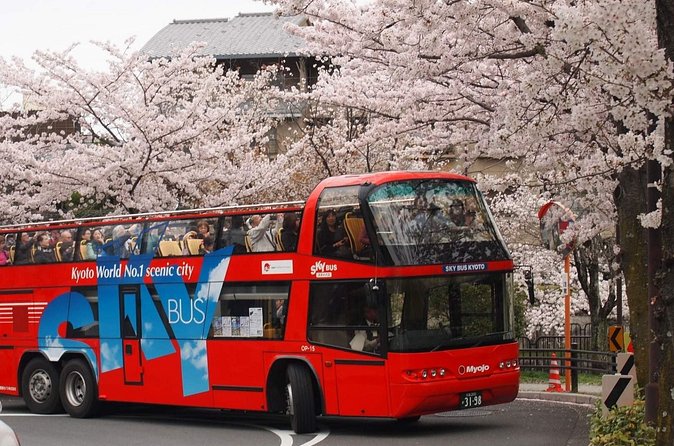
Book it if you value easy orientation, open-top views, and direct access to major sightseeing districts more than speed. Choose the two-day option if you want both routes without racing the clock.
Skip it if your Kyoto plan already has a precise timetable or if you expect frequent buses. The 50-minute interval is the deciding factor. Used patiently, this is a pleasant way to connect far-apart sights. Used as a rapid transport system, it may leave you frustrated.
FAQ
How long does the Kyoto SKY HOP BUS tour take?
The listed duration is approximately 1 hour and 8 minutes. Since the service is hop-on, hop-off, your total sightseeing time depends on how often you leave and rejoin the bus.
How often do the buses arrive?
Buses are reported to come about every 50 minutes. Plan extra time at each stop, especially if you visit a temple or market.
Can I get off and board again?
Yes. You can get on and off as many times as you like at all Sky Hop Bus stops during the validity of your ticket.
Are seats reserved?
No. All seats are unreserved, so early arrival may help if you want a particular seat or the best open-top view.
What is included with the ticket?
The ticket includes a multilingual audio guide, earphones, onboard WiFi, a poncho in case of rain, and either a one-day or two-day pass, depending on the option selected.
Can children under five ride for free?
Yes. Children under five can ride free when sitting on the lap of a parent or guardian.
More Sightseeing Bus Tours in Kyoto
- Barcelona: City Sightseeing Hop-On Hop-Off Bus Tour
★ 4.4 · 10,061 reviews - Rome: Big Bus Hop-on, Hop-off Open-Top Sightseeing Tour
★ 4.1 · 9,537 reviews - City Sightseeing London Hop-On Hop-Off Bus & Bookable Extras
★ 4.4 · 7,374 reviews - Hamburg: Line A Sightseeing Hop-On Hop-Off Bus Tour
★ 4.6 · 6,958 reviews
Recently added around Kyoto
- NARUTO & BORUTO at Nijigen no Mori Park Entry& Bus Transportation★ 3.0 · 3 reviews
- From Kyoto: Nara History Guided Half Day Bus Tour with lunch★ 5.0 · 23 reviews
- Kyoto Sagano Romantic Train in Arashiyama Bus Tour★ 3.0 · 6 reviews
- Kyoto 1 Day Golden Route Bus Tour★ 5.0 · 15 reviews
- Hiroshima, Miyajima 1 Day Bus with Indian Lunch from Osaka, Kyoto★ 5.0 · 7 reviews
- Amanohashidate & Miyama 1-Day Bus Tour: From Osaka/Kyoto w/ Lunch★ 4.5 · 18 reviews
- Full Day Hiroshima and Miyajima Bus Tour★ 5.0 · 12 reviews
- Osaka/Kyoto: Katsuoji, Kinkakuji, Arashiyama 1-Day Bus Tour★ 4.6 · 33 reviews
Hop-On Hop-Off Bus Tours, compared.

City Sightseeing Hop-on Hop-off Bus with Audioguide
Read our review →
Tootbus Hop-on Hop-off (Optional River Cruise)
Read our review →Big Bus Hop-On Hop-Off Tour with Optional Cruise
Read our review →
London Big Bus Hop-On Hop-Off Tour with Optional River Cruise
Read our review →
Big Bus Hop-on, Hop-off Open-Top Sightseeing Tour
Read our review →
Browse the lists this tour appears in