
Review · KYOTO BUS TOURS
From Kyoto: Nara History Guided Half Day Bus Tour with lunch
Nara gives you three classic Japanese sights in one morning: the immense Great Buddha at Todaiji, deer wandering through Nara Park, and the lantern-lined paths of Kasuga Taisha. I like the English-speaking guide and the neat half-day plan, especially if you have limited time in Kyoto. I also like that lunch is included, with time to browse for local souvenirs.
The trade-off is pace. You have about five and a half hours for transport, three major stops, and lunch, so the day can feel brisk. Expect walking, crowds, and possible schedule changes, especially during a festival or heavy traffic.
Key points to know before booking
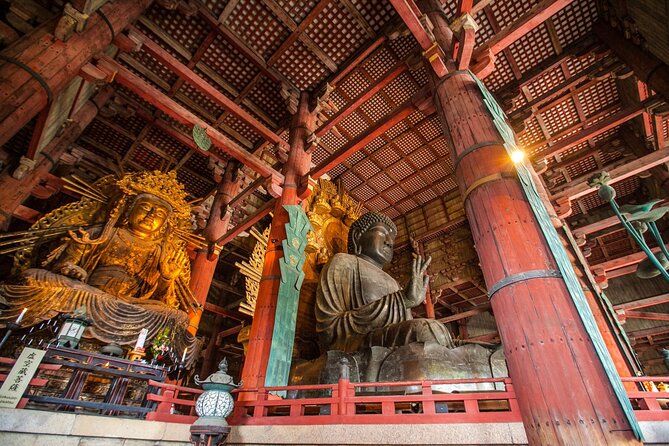
- The Great Buddha is the main event: Todaiji’s enormous bronze Buddha sits inside one of the world’s largest wooden buildings.
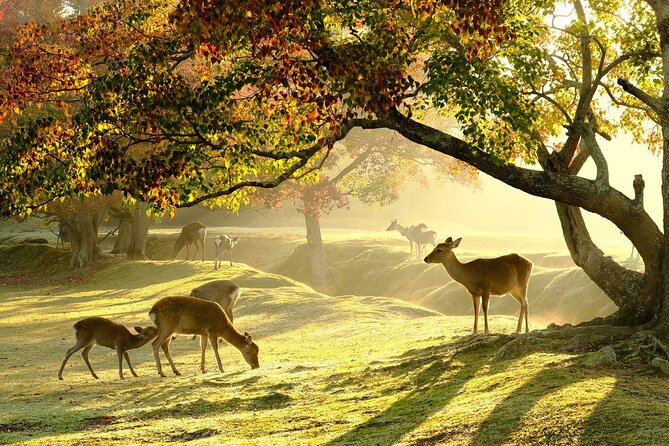
- Nara Park adds a playful break: You can see and feed the friendly deer, though the time here may feel short.
- Kasuga Taisha offers a quieter cultural stop: The tour includes general worship at the main sanctuary, not special access.
- Lunch is included: You’ll have a Japanese-style meal at a local restaurant, followed by optional souvenir shopping.
- The early start matters: Meet at Kyoto Station at 7:45 am, arriving 15 minutes early.
- It is a group tour: The maximum group size is 40, and the route cannot be changed for personal requests.
Why this Kyoto to Nara tour works well
Nara is close enough to visit from Kyoto, but it has a different feel from the city’s temple districts. You trade Kyoto’s dense streets for broad parkland, old religious sites, and deer moving freely around the paths.
This tour puts the main sights into a single morning and early afternoon. At $78.83 per person, the price includes the guided visits, admission to Todaiji, lunch, and transport arrangements. That makes it a reasonable choice if you want someone else to handle the route and explain what you are seeing.
The tour is conducted in English, and the guide’s role matters here. Guides named Tammie, Mana, and Shelley have led different departures, so your guide will depend on the date. The strongest part of the experience is the interpretation along the way, particularly when the guide helps connect the buildings, statues, and customs to the places in front of you.
I would choose this tour if you have only one open morning for Nara or if you prefer a set plan to working out trains, buses, entrance fees, and lunch yourself. I would not choose it if you want long, quiet stretches at each temple or time to explore Nara Park without watching the clock.
More routes with a meal built in around Kyoto:
- From Kyoto: Nara History Guided Half Day Bus Tour with Lunch
★ 4.8 · 114 reviews - From Auckland: Waitomo & Hobbiton Bus Tour with Lunch
★ 4.7 · 789 reviews - Honolulu: Oahu Island Full-Day Guided Tour by Bus with Lunch
★ 4.6 · 506 reviews
Meeting at Kyoto Station at 7:45 am
The meeting point is Kyoto Station’s Hachijo Entrance Square Sunken Garden, at Higashikujo Nishisannocho in Minami Ward. The departure time is 7:45 am, and you should arrive at least 15 minutes early.
This is not a place to cut things close. The bus leaves on schedule and will not wait for late arrivals. There are no refunds for missing the departure, so allow extra time to find the meeting point inside the large station complex.
Transport may involve a bus, a train, or a combination of both. The exact arrangement can change, and traffic may affect the return time. The tour finishes back at the same meeting point, which is useful if you have evening plans in Kyoto.
Large luggage is not allowed. Bring only what you need for the morning, such as water, a phone, money, and anything required for personal comfort. Keep valuables with you throughout the day.
Kasuga Taisha and its lantern-lined approach
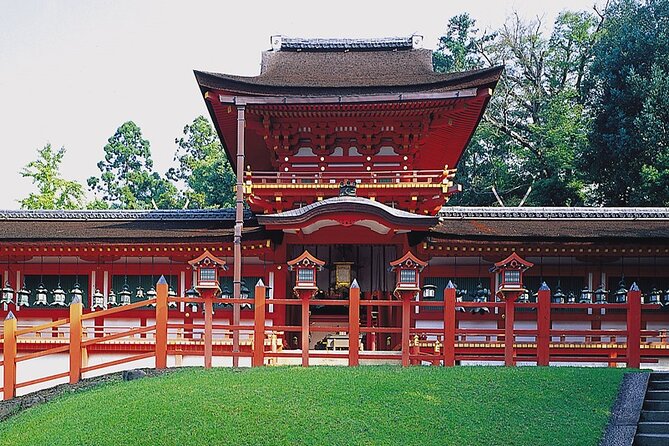
Your first listed stop is Kasuga Taisha, one of Nara’s most important Shinto sites. You have about 45 minutes here, with general worship at the main sanctuary included.
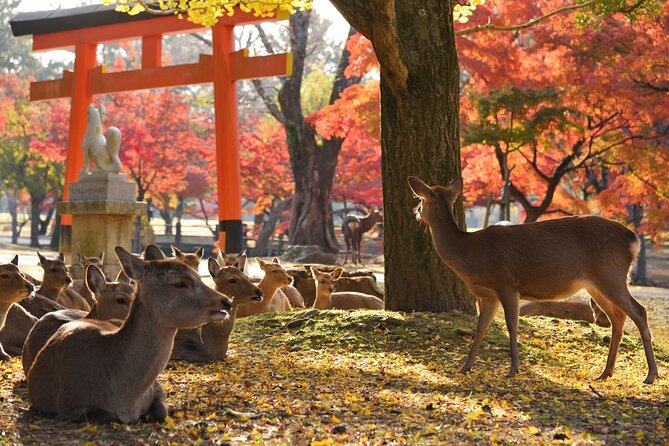
The shrine is known for its traditional setting and rows of stone and bronze lanterns. Even with limited time, the approach gives you a clear sense of how Nara’s sacred sites fit into the wooded surroundings. Your guide can help you understand the difference between the shrine’s worship customs and the Buddhist traditions you see later at Todaiji.
There are limits to what this visit includes. Special worship of the main sanctuary is not part of the tour, and admission to the Kasuga Taisha Museum and Botanical Garden is also excluded. That is not a problem for a first visit, but it matters if you hoped to spend much of the morning studying the shrine’s collections or gardens.
Forty-five minutes is enough for a focused introduction, general worship, and photographs. It is not enough for a slow exploration of every path. Stay close to the guide and keep an eye on the meeting time, since the next stop is the tour’s largest sight.
Todaiji Temple and the 15-meter Great Buddha
Todaiji receives about 1 hour and 15 minutes, including admission. This is the most substantial stop and the place most likely to stay with you after the tour.
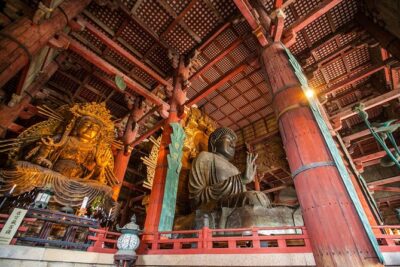
The temple’s Great Buddha is about 15 meters tall. Seeing the statue in person gives you a better sense of its scale than photographs can. The figure is housed inside the Daibutsuden, a huge wooden temple hall. Todaiji is widely described as the world’s largest wooden structure, and the building itself is as important to the visit as the Buddha inside.
The hall’s size can be hard to grasp from the entrance. Look up at the roofline and pay attention to the people near the statue, since their scale helps show how large the interior is. Your guide can add context about the temple and the role of the Great Buddha in Nara’s religious story.
This stop also comes with practical limits. Todaiji can be crowded, and construction may change the appearance of some buildings or statues. In some cases, a feature may be partly hidden or unavailable. The schedule allows a solid visit, but not an unhurried study of every corner of the temple grounds.
Wear comfortable shoes. The day includes walking between sites, time on temple and shrine grounds, and movement through busy areas. The schedule is manageable for most people, but it is not a sit-down sightseeing trip.
More stops that include lunch around Kyoto:
- Amanohashidate & Miyama 1-Day Bus Tour: From Osaka/Kyoto w/ Lunch
★ 4.5 · 18 reviews - Hiroshima, Miyajima 1 Day Bus with Indian Lunch from Osaka, Kyoto
★ 5.0 · 7 reviews - Prague: Vltava River Lunch Cruise in an Open-Top Glass Boat
★ 4.5 · 2,865 reviews - Naxos: Highlights Bus Tour with Free Time for Lunch and Swim
★ 4.8 · 1,434 reviews
Nara Park and the famous deer

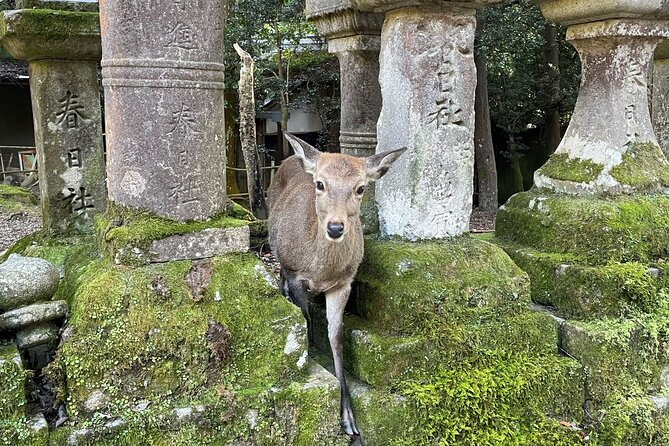
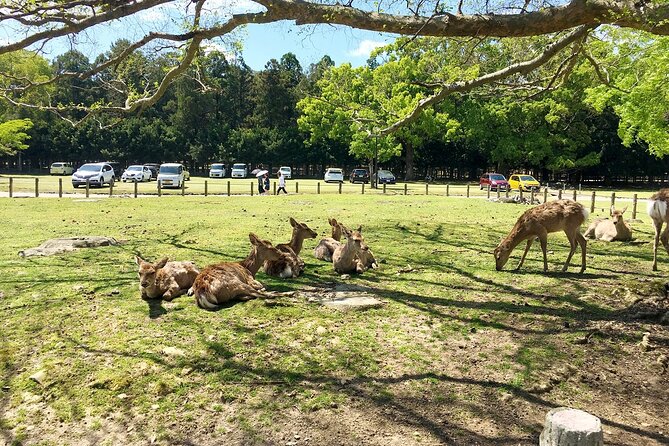
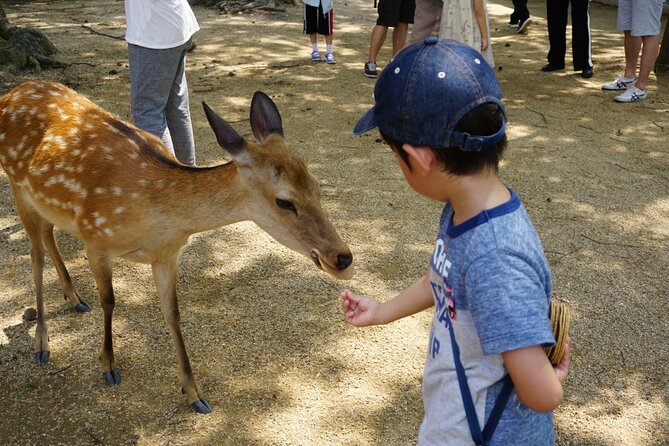
Nara Park is one of the tour’s most memorable settings because the deer are part of the everyday scene. You can see them moving around the paths near the temples and shrine, and you may have the chance to feed them.
The deer are friendly and charming, but they are still animals. Keep food and belongings under control, and follow the guide’s instructions. Feeding them can be fun, yet it can also make the stop feel busy when several deer gather at once.
The timing is the main issue. The schedule gives 45 minutes for lunch in Nara, while the overall route includes the park visit around the major cultural stops. The exact time available with the deer can vary with traffic, crowds, and the day’s schedule. If feeding the deer is your top priority, stay aware of where the group is meeting rather than wandering too far.
A festival or other busy event can make Nara feel much more crowded. One departure was described as fun but rushed because a festival brought extra crowds. That is useful to keep in mind when setting expectations. You will see the park and its deer, but this is not a full-day nature outing.
Japanese-style lunch and a short shopping stop
The tour includes a Japanese-style lunch at a local restaurant in Nara. You also have access to a shop where you can buy local souvenirs after eating.
Including lunch adds real value to a short organized tour. You do not need to spend part of the visit searching for a restaurant, comparing menus, or trying to keep a large group on schedule. It also gives the morning a natural pause after the walking and temple visits.
The meal is fixed, so tell the operator about allergies or dietary restrictions when you book. Menu changes cannot be made on the day. This is important for anyone with strict dietary needs, since you should not assume that substitutions will be available.
The shopping stop is modest, but it can be useful if you want a small reminder of Nara without planning another store visit. The focus is convenience rather than a long shopping session. If you prefer to spend every available minute with the deer or at the temple, this part may feel less important.
How the five-and-a-half-hour schedule feels
The full experience lasts about 5 hours and 30 minutes. That sounds generous at first, but transport takes up part of the day, and the route includes three major sights plus lunch.
The listed stop times give you a useful picture:
- Kasuga Taisha: about 45 minutes
- Todaiji Temple: about 1 hour and 15 minutes
- Lunch in Nara: about 45 minutes
The remaining time covers movement between Kyoto and Nara, transfers if a train is used, and walking between locations. Traffic or other delays can shorten time at a stop and push back the return to Kyoto.
I like this structure for a first visit because it keeps the day moving and covers Nara’s essential sights. The weakness is that you have little control over the pace. The tour cannot add personal requests to the route, even if the group is small. If one place captures your attention, you still need to leave with the group.
The maximum group size is 40 people. That is large enough to affect how quickly the group moves through narrow areas and crowded temple grounds. On the positive side, the guide can keep the route clear and help you reach the main sights without having to manage every detail yourself.
What the guides add to the visit
The guide is the difference between simply seeing Nara and understanding the basic meaning of what you see. You will have an English-speaking guide throughout the organized visit, with guides such as Tammie, Mana, or Shelley assigned on different departures.
Tammie has been noted for giving plenty of information during the journey and keeping the walking pace steady. Mana has also led a departure, helping make the temples, shrine, and deer part of one connected experience. Shelley is another guide name associated with the tour, though the assigned guide is not guaranteed.
The descriptions of the guides point to an important strength: the tour is not just transportation with a map. You receive explanations along the way, which can help you notice details you might otherwise pass without understanding.
Still, the quality and style of a group tour can vary by guide, traffic, and crowd levels. The itinerary is fixed, and the guide cannot turn it into a private experience. Think of the guiding as practical cultural context rather than a long specialist lecture at every stop.
Price, group size, and overall value
At $78.83 per person, the tour offers a fairly efficient package. You receive an English-speaking guide, admission to Todaiji, a Japanese-style lunch, and a planned return to Kyoto. Kasuga Taisha’s general visit is listed without an admission charge, while special areas are not included.
The value is strongest when you place a high price on convenience. You avoid planning the route, arranging the day’s transport, finding lunch, and keeping track of three major stops. You also get help making sense of Nara’s religious sites.
The value is weaker if you are comfortable using public transport and want to choose your own meal or spend several hours at one temple. Independent visitors can usually set a slower pace, while this tour trades freedom for structure.
The 4.9 rating from 23 reviews and 100 percent recommendation figure suggest strong satisfaction, but I would still read the schedule carefully. The most common praise centers on the guides, the impressive Great Buddha, and the fun of seeing the deer. The main reservations are limited time and crowds.
Who should book this Nara day trip
This tour suits you if:
- You are staying in Kyoto and want a simple introduction to Nara.
- You want an English-speaking guide to explain the main sights.
- You like having lunch and transport arranged.
- You have limited time and want to see the Great Buddha, Kasuga Taisha, and Nara Park in one outing.
- You are comfortable walking at a steady group pace.
- You want a first look at Nara rather than a detailed study of one temple.
You may want another plan if you need extensive dietary customization, carry large luggage, dislike early starts, or want a private itinerary. It is also not ideal if you need guaranteed long periods with the deer or extra time at Kasuga Taisha’s museum and botanical garden.
The experience is designed for most people who can manage ordinary sightseeing walks, but the schedule can be tiring for anyone who struggles with extended time on their feet. Since the itinerary and transport may change, leave some flexibility in your Kyoto plans after the tour.
Cancellation and weather details
You can cancel for a full refund up to 24 hours before the start time. Changes or cancellations made less than 24 hours before departure are not accepted for a refund.
The tour requires good weather and a minimum of four participants. If poor weather, such as a typhoon, causes cancellation, you will be offered another date or a full refund. If the minimum group is not reached 14 days before the scheduled date, the operator may cancel the departure and offer another date, another experience, or a refund.
Should you book this Nara tour?
Book it if you want the classic Nara highlights handled in one organized morning. The Great Buddha is powerful, Kasuga Taisha gives the day a strong cultural balance, and the deer add a lighter, more playful part to the visit. Lunch and a return to Kyoto make the plan easy to manage.
Skip it if your ideal Nara day means lingering at one shrine, making personal route changes, or spending a long time in the park. The schedule is tight, and crowds or traffic can reduce your time at each stop.
For a first visit from Kyoto, I think the tour offers good value, particularly for solo visitors, couples, and families who prefer clear guidance. Arrive early, wear comfortable shoes, mention food restrictions when booking, and keep your expectations focused on a well-run introduction rather than a slow, private exploration.
FAQ
Where does the tour start?
The tour starts at Kyoto Station’s Hachijo Entrance Square Sunken Garden, at Higashikujo Nishisannocho, Minami Ward, Kyoto.
What time should I meet the group?
The start time is 7:45 am. You should arrive at least 15 minutes before departure.
Where does the tour finish?
The activity ends back at the same meeting point in Kyoto.
How long does the tour last?
The tour lasts approximately 5 hours and 30 minutes.
Is the tour conducted in English?
Yes. The tour is conducted by an English-speaking guide.
Which places are visited?
The route includes Kasuga Taisha Shrine, Todaiji Temple, and Nara Park, along with lunch in Nara.
Is admission to Todaiji included?
Yes. Admission to Todaiji Temple is included.
Are all Kasuga Taisha areas included?
No. General worship at the main sanctuary is included, but special worship of the main sanctuary, the Kasuga Taisha Museum, and the Botanical Garden are not included.
Is lunch included?
Yes. The tour includes a Japanese-style lunch at a local restaurant. Tell the operator about allergies or dietary restrictions when booking, since menu changes cannot be made on the day.
Can I bring large luggage?
No. Large luggage is not allowed during the tour.
What happens if I arrive late?
The bus will leave according to schedule and will not wait for late arrivals. No refund is provided if you miss the meeting time.
How many people can join the tour?
The maximum group size is 40 people. The tour also requires at least four participants and may be canceled if that minimum is not reached by 14 days before the scheduled date.
More history along the route around Kyoto
- Prague: Historic City Center Bus Tour with Top Sights
★ 4.4 · 2,360 reviews - 2-Hour Gettysburg Battlefield Guided History Bus Tour with a National Park Guide
★ 4.5 · 2,201 reviews - Top Rated Brooklyn Half-Day Food, History & Culture Tour via bus
★ 5.0 · 758 reviews - Charleston: Historic City Highlights Guided Bus Tour
★ 4.6 · 719 reviews
Recently added around Kyoto
- NARUTO & BORUTO at Nijigen no Mori Park Entry& Bus Transportation★ 3.0 · 3 reviews
- Kyoto Sagano Romantic Train in Arashiyama Bus Tour★ 3.0 · 6 reviews
- Kyoto 1 Day Golden Route Bus Tour★ 5.0 · 15 reviews
- Kyoto Hop-On, Hop-Off Sightseeing Bus Tour★ 3.0 · 5 reviews
- Hiroshima, Miyajima 1 Day Bus with Indian Lunch from Osaka, Kyoto★ 5.0 · 7 reviews
- Amanohashidate & Miyama 1-Day Bus Tour: From Osaka/Kyoto w/ Lunch★ 4.5 · 18 reviews
- Full Day Hiroshima and Miyajima Bus Tour★ 5.0 · 12 reviews
- Osaka/Kyoto: Katsuoji, Kinkakuji, Arashiyama 1-Day Bus Tour★ 4.6 · 33 reviews
Bus Tours with Lunch or Dinner, compared.
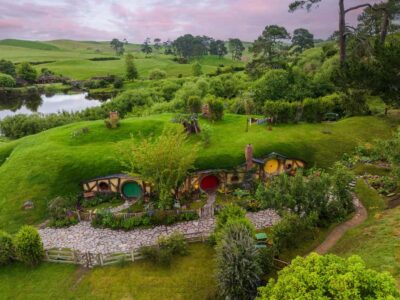
From Auckland: Waitomo & Hobbiton Bus Tour with Lunch
Read our review →
Oahu Island Full-Day Guided Tour by Bus with Lunch
Read our review →

Nara History Guided Half Day Bus Tour with Lunch
Read our review →
Rottnest Island: Grand Bus and Train Tour with Lunch
Read our review →
Play with Snow Crab Buffet Lunch and Strawberry Picking Bus Tour
Read our review →Browse the lists this tour appears in