
Review · KYOTO BUS TOURS
Kyoto: Fushimi Inari, Kinkakuji, Bamboo Grove 1 Day Bus Tour
Fushimi Inari’s endless red torii gates are the day’s signature image, but the real trick is fitting seven major Kyoto sights into one long loop without wrestling with local buses. I especially like the included temple tickets and the air-conditioned coach, which make this a practical choice when your Kyoto time is short.
I also like the human touch from guides such as Den, At-Chan, Sakura, and Tommy, who have helped solo visitors with photos, taught simple Japanese phrases, and kept families on schedule. The tradeoff is a full, fast-paced day, with stairs, hills, and limited time at each stop.
Key points at a glance
- Seven major stops in about nine hours: Kiyomizudera, Sanjusangendo, Arashiyama, the Bamboo Grove, Tenryuji, Kinkakuji, and Fushimi Inari.
- Fushimi Inari comes late: Save energy for the torii gates, where you will walk for about an hour.
- Four temple admissions are included: Kiyomizudera, Sanjusangendo, Tenryuji, and Kinkakuji.
- Lunch is optional: The Japanese buffet includes vegetarian choices, but not halal, gluten-free, lactose-free, allergy-friendly, or vegan meals.
- A real guide leads the day: English commentary comes with multilingual audio support in Spanish, French, Italian, German, Portuguese, and Ukrainian.
- The main drawback is pace: You see a great deal, but this is not the tour for slow temple visits or long photo sessions.
My overall take on this Kyoto day tour
At $122 per person, this is a sightseeing-heavy tour built for efficiency. You are paying for transport between far-flung parts of Kyoto, four admission tickets, an English-speaking guide, Wi-Fi on the coach, and the chance to cover places that would take careful planning to connect by public transport.
I see the value most clearly if you have only one day in Kyoto, are staying near Kyoto Station, or do not want to spend your morning figuring out train and bus transfers. Kiyomizudera, Arashiyama, Kinkakuji, and Fushimi Inari are spread across the city. Doing all of them independently in one day is possible, but it requires firm timing and little room for wrong turns.
The price is less compelling if you have several days in Kyoto and enjoy lingering. You will have roughly 20 to 60 minutes at most stops, so the tour gives you a strong first look rather than a slow, personal encounter with each site.
The meeting point is in front of Tully’s Coffee at Kyoto Avanti, near Kyoto Station. Check-in is at 7:50 a.m., with departure at 8:00. Be early. Latecomers and no-shows do not receive a refund or schedule change, and the bus cannot wait for one missing person.
More single-day trips around Japan:
- Mt Fuji and Hakone 1-Day Bus Tour Return by Bullet Train
★ 5.0 · 26,383 reviews - 1-Day Tokyo Bus Tour
★ 5.0 · 14,250 reviews - PERFECT KYOTO 1-Day Bus Tour
★ 5.0 · 13,518 reviews
Kiyomizudera opens the morning with a city view
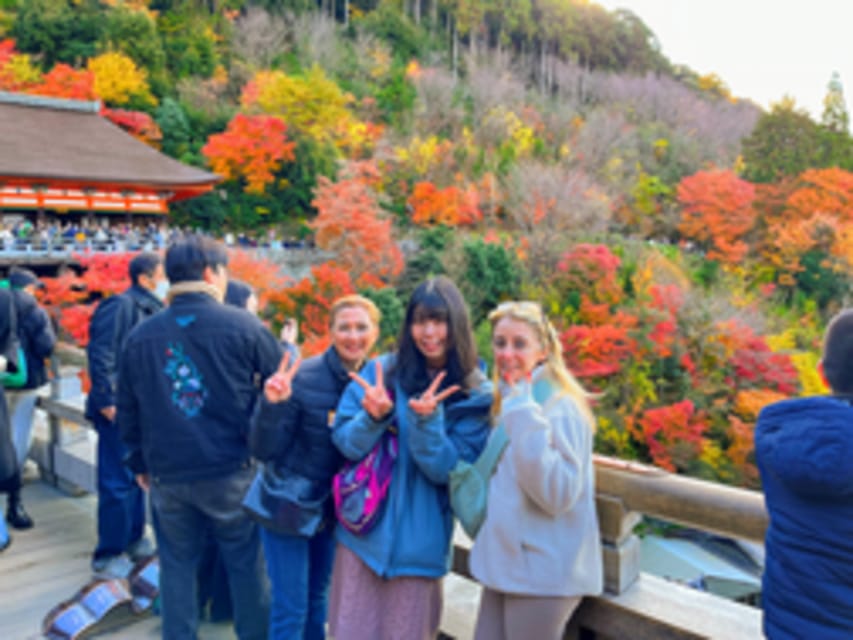
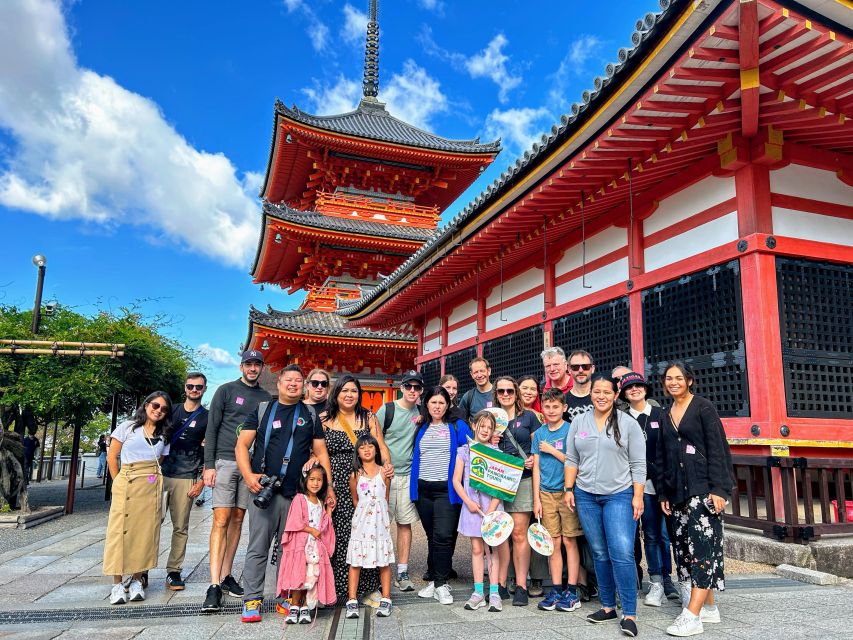
The first temple is Kiyomizudera, one of Kyoto’s essential sights and a World Heritage site. The temple is associated with the year 778, and its famous wooden terrace gives you a broad view over Kyoto and the surrounding hills.
You have about an hour here. That is enough to take in the main temple area, hear the guide’s explanation, and enjoy the view, but you will need to keep moving. The approach includes slopes and stairs, and the temple grounds are not suited to anyone who struggles with walking.
I like beginning here because the morning light can make the wooden buildings and hillside setting especially appealing. It also gives you an early sense of Kyoto’s religious character before the schedule shifts to a more focused interior visit.
Wear shoes with a good grip. Comfortable footwear is not a minor suggestion on this tour. You will use it at every stop.
Sanjusangendo offers a quieter, more focused visit
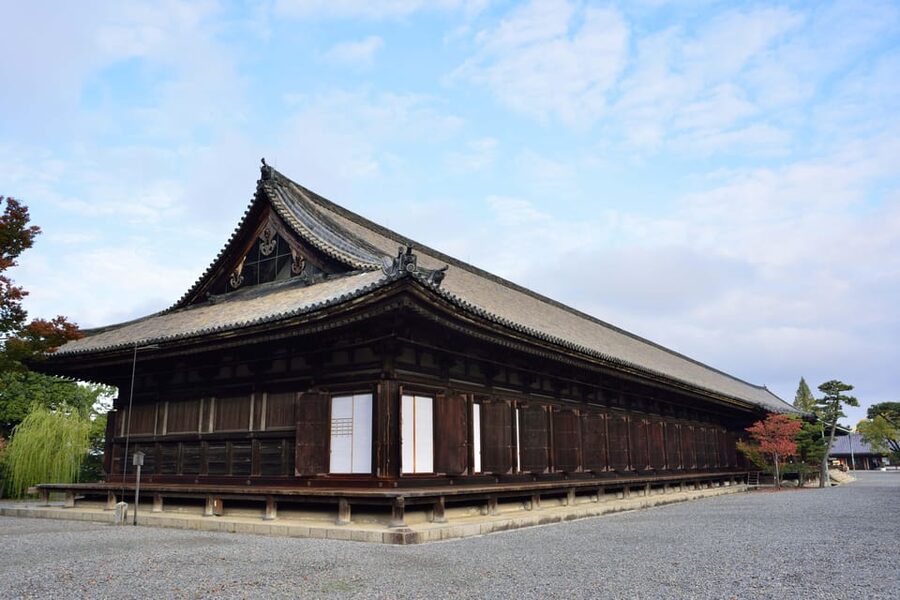
From Kiyomizudera, the coach continues to Sanjusangendo, officially known as Rengeo-in. The temple is famous for its long wooden hall, divided into 33 sections by 35 columns. Inside, the central sight is a large collection of Kannon statues.
You get around 40 minutes here. Compared with the open views at Kiyomizudera, this stop is about the structure and the atmosphere inside the hall. Photography rules can apply in temple interiors, so listen carefully to the guide and staff.
This is one of the most useful stops for a first-time visitor because the guide can explain details that are easy to miss on your own. The hall’s scale is impressive, but it is not a place to rush through while thinking only about the next photo.
The morning pairing works well: Kiyomizudera gives you a broad outdoor view, while Sanjusangendo gives you a concentrated look at Japanese Buddhist art and architecture.
Arashiyama brings lunch and a change of scenery
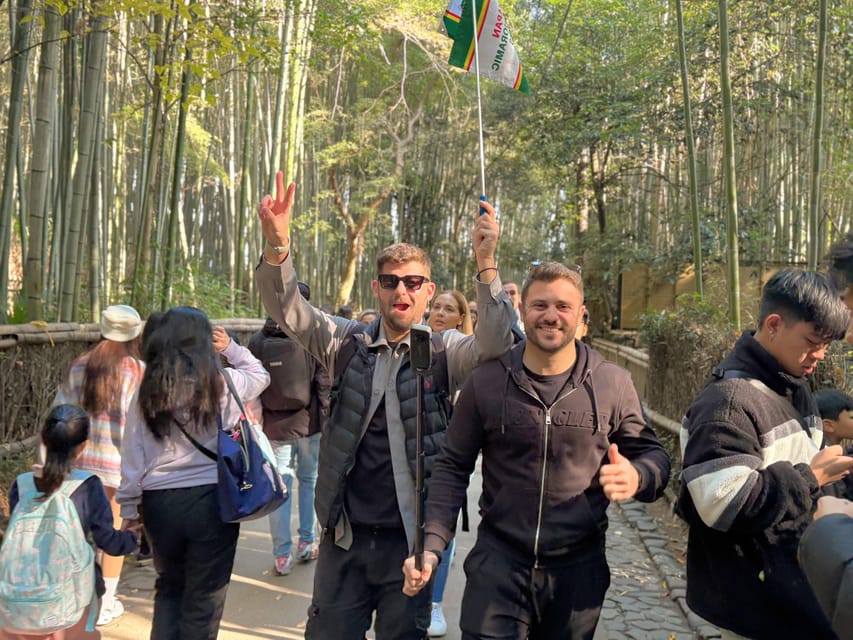
The coach then crosses Kyoto to Arashiyama, where the schedule allows about 50 minutes for lunch. The selected meal is a Japanese buffet with seasonal ingredients, and vegetarian dishes are available.
The meal can be a welcome break after the morning’s walking. Several guides, including Sakura and Tommy, received strong praise for making the day feel easy and well organized, and the lunch stop helps maintain that rhythm. At the same time, buffet quality can vary. One detailed account found some items cold, while another called the meal delicious. I would treat lunch as convenient rather than the main reason to book.
The meal is not suitable for every diet. There are no Muslim-friendly, allergy-friendly, lactose-free, gluten-free, or vegan meals listed. If you have a serious allergy, choose the option without lunch. You can bring your own food or use free time in Arashiyama to buy something else.
If you skip lunch, you gain more control over what you eat, but you also need to manage your own time. Do not wander too far from the agreed meeting point.
More routes around Japan:
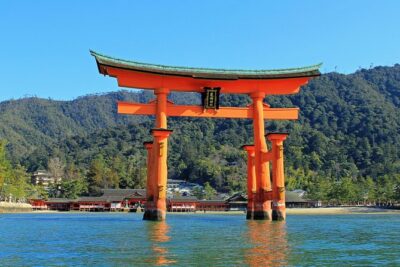
- Peaceful Hiroshima & Miyajima UNESCO 1 Day Bus Tour
★ 5.0 · 5,309 reviews - Tokyo: Meiji Shrine, Asakusa, Skytree Bus Tour and Cruise
★ 4.7 · 1,986 reviews - Tokyo: Kamakura & Enoshima Day Trip including Temple Tickets
★ 4.5 · 1,375 reviews - Mt Fuji & Hakone Cruise, Drum Show Bus 1 Day from Tokyo
★ 4.0 · 1,287 reviews
The Bamboo Grove is short but memorable
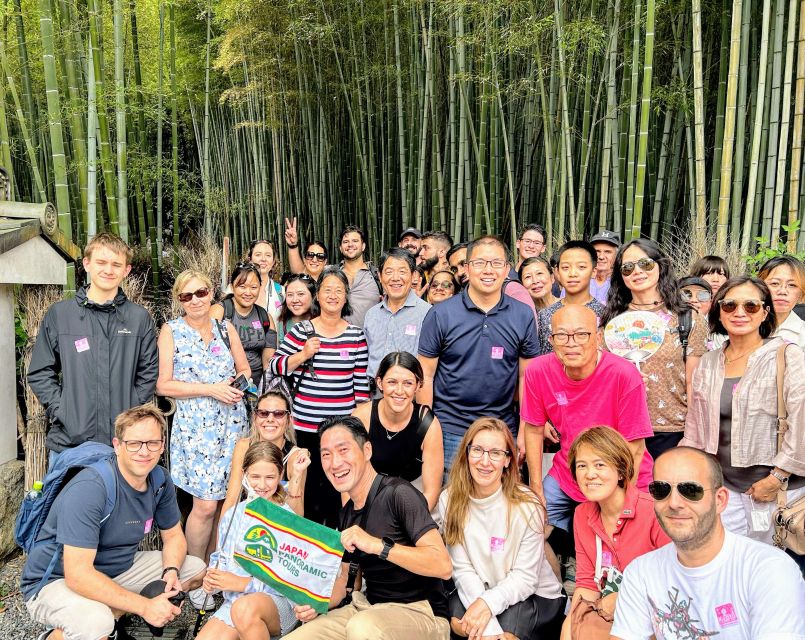
After lunch, you walk through the Sagano Bamboo Grove for about 20 minutes. Tall bamboo rises on both sides of the path, creating the green tunnel that appears in so many Kyoto photographs.
Twenty minutes is enough for a taste, not a full exploration. You can walk, take photographs, and enjoy the changing light when the wind moves through the stalks. You will not have much time to pause at every attractive angle, especially if the paths are busy.
That short visit is a fair compromise in a day that covers so much ground. The Bamboo Grove is easy to combine with Tenryuji and the Togetsukyo Bridge area, but it is also one of the places where independent visitors may prefer a slower pace.
Keep your group in sight. The grove looks simple, but a large tour group can spread out quickly, and the coach departure time matters.
Tenryuji adds gardens after the bamboo
Tenryuji sits near the Bamboo Grove and gives you about 30 minutes to explore. This World Heritage temple is known for its Japanese garden, which changes character with the seasons.
The timing is tight, but the location is convenient. You do not need another long transfer between the grove and temple, and the visit gives you a calmer setting after the photo-heavy bamboo path.
I would use this stop for the garden rather than trying to see every corner of the temple grounds. Listen to the guide before walking off, since you need to know where and when to meet the group again.
Tenryuji admission is included, as are the tickets for Kiyomizudera, Sanjusangendo, and Kinkakuji. Those included entries help the $122 price make more sense, particularly when you add the coach and guide.
Kinkakuji delivers Kyoto’s famous golden image
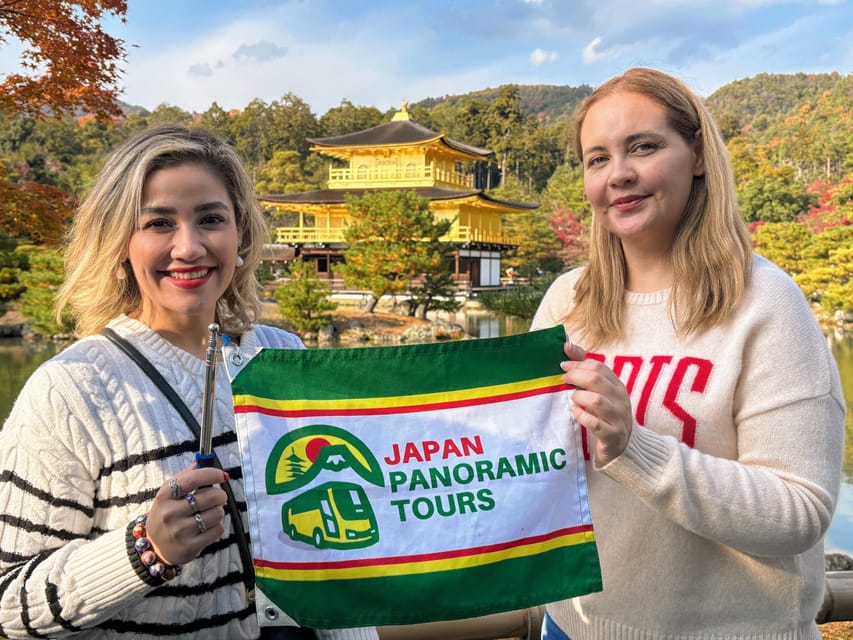
Next comes Kinkakuji, the Golden Temple, officially Rokuonji. You have about 40 minutes to admire the gold-covered pavilion beside its pond and walk through the designated viewing route.
This is one of Kyoto’s most recognizable sights, and the visit is designed around that first clear view. You will have time for photographs and a look around the grounds, but not for an extended visit to every garden path.
Kinkakuji is visually different from the morning temples. Kiyomizudera is wooden and elevated above the hillside, Sanjusangendo is long and restrained, and Kinkakuji is polished, bright, and reflected in water. That variety is one of the tour’s strengths.
The coach passes by Nijo Castle rather than stopping there. This is worth noting if Nijo Castle is a priority for you. You will see it only from the route, so do not count it as a proper visit.
Fushimi Inari saves the most famous walk for last
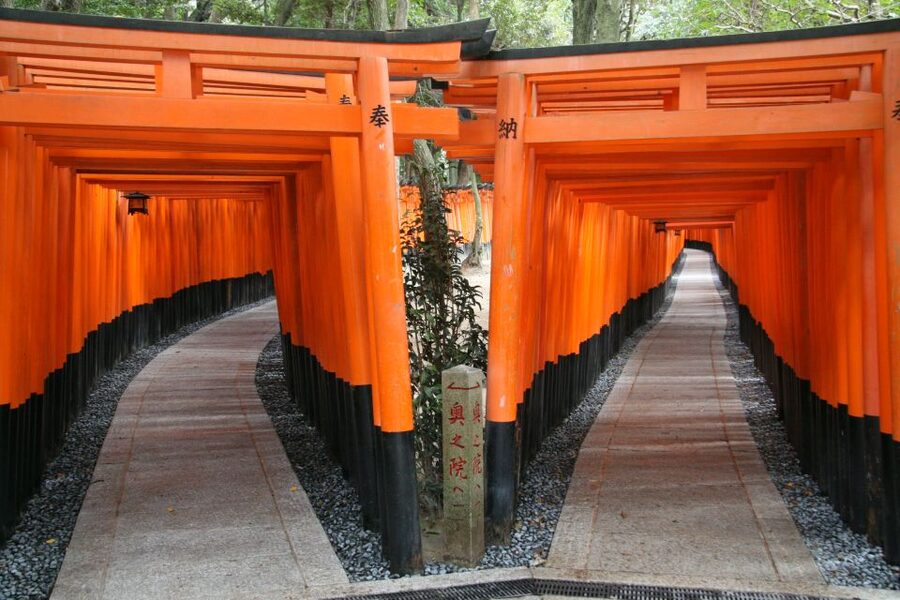
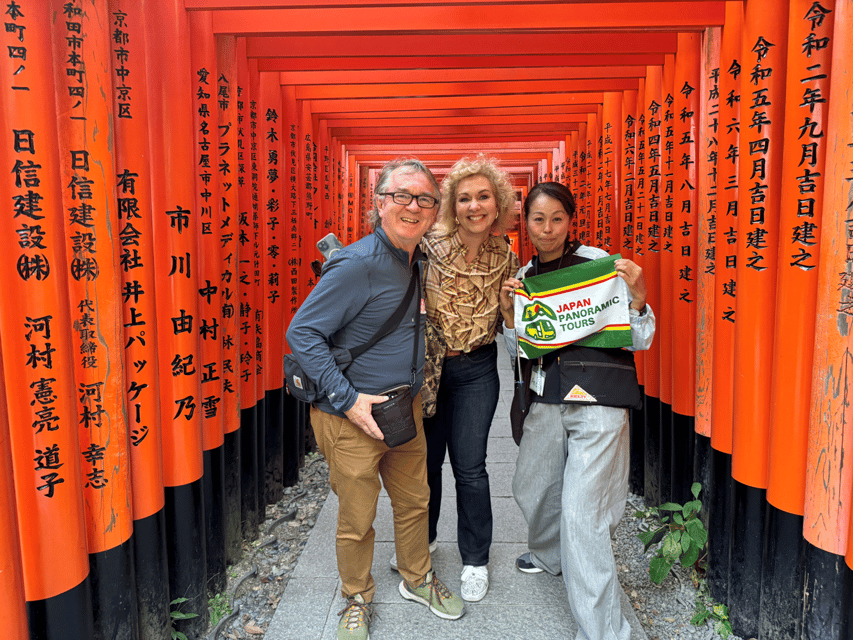
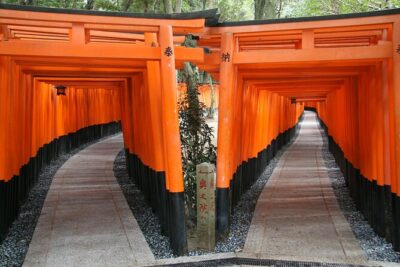
The final major stop is Fushimi Inari Taisha, where you have about an hour. This is the tour’s most iconic walk: a path lined with thousands of red torii gates climbing through the wooded shrine grounds.
The full mountain route takes much longer than an hour, so you should think of this as a focused section of the shrine rather than a complete hike. Walk at the pace your legs allow, take photographs, and turn back in time for the meeting point.
I like placing Fushimi Inari last because the scene is a powerful finish. I also understand the concern: after temples, hills, stairs, and the Bamboo Grove, your energy may be low. Save something for this stop, and bring water if you need it. Additional food and drinks are not included.
The red gates are not just decoration. They are connected with offerings to Inari, the Shinto deity associated with rice and business. Your guide can give you a short introduction, while the audio system helps visitors who prefer explanations in Spanish, French, Italian, German, Portuguese, or Ukrainian.
What the coach and guide add
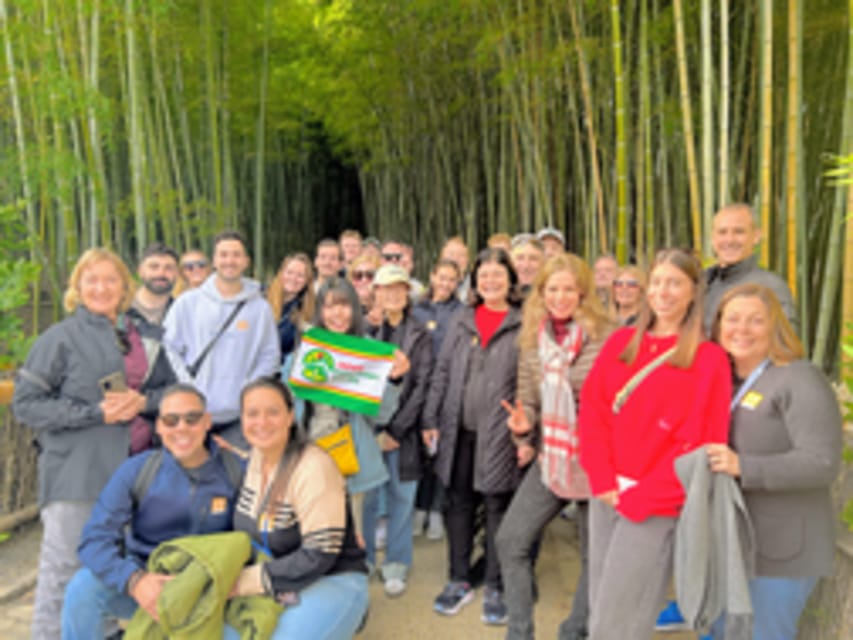
The air-conditioned coach is the practical backbone of the experience. Kyoto’s main sights are not arranged in one compact cluster, so private transport removes much of the uncertainty. The bus has free Wi-Fi, regular ventilation, and antibacterial coating, according to the supplied details.
The coach is not a private vehicle. You follow the group’s departure times, and traffic, weather, or operational needs can change the order of stops. A closed site may be replaced with another location.
The English-speaking guide adds more than directions. Den has been praised for clear explanations and a bright, encouraging manner. At-Chan is known for helping solo visitors with photographs, explaining cultural details, and teaching useful Japanese phrases. Sakura, Tommy, Ciel, Hiroko, Nagomi, Mai, and others have also led this route.
You cannot choose a particular guide in advance from the information provided. Still, the repeated pattern is clear: the guide is a major part of the experience. Expect commentary on the temples, help with timing, and reminders about meeting points.
Audio headsets are included for several languages, but live commentary is in English. That makes the tour workable for mixed-language groups, though I would still use the headset as a supplement rather than expect a fully separate tour in your preferred language.
The pace, walking, and practical limits
This is a full nine-hour day, beginning at 8:00 a.m. and returning to the Kyoto Avanti meeting point after the final transfer. You will walk at temples, along paths, through gardens, and up stairs and hills.
The schedule is described by many guests as full but manageable, including families with preteens. That does not mean easy. If you want to sit often, avoid slopes, or move slowly, this tour is a poor fit. It is not suitable for wheelchair users or people with mobility impairments.
The best preparation is simple:
- Wear comfortable walking shoes.
- Arrive at Kyoto Avanti by 7:50 a.m.
- Keep the meeting point and return time in mind at every stop.
- Decide on the lunch option before booking.
- Bring weather protection and any food you need.
- Do not depend on adding options on the day, since same-day additions cost more.
The order can change because of traffic, weather, closures, or other operating needs. That flexibility is normal for a coach tour, but it means you should not plan a separate timed activity immediately afterward.
Who should book this tour
I would choose this tour if you have one free day in Kyoto and want the major sights handled for you. It suits first-time visitors, families that value an organized day, solo visitors who appreciate help with photos, and anyone who would rather look out of a coach window than study transit maps.
It also works well as an introduction. After seeing Kiyomizudera, Arashiyama, Kinkakuji, and Fushimi Inari, you can decide which area deserves a longer return visit.
I would not choose it if your main goal is quiet temple time, a long walk through the entire Fushimi Inari route, or a food-focused day. The lunch is convenient, but dietary restrictions are a serious concern. Independent visitors may also prefer choosing their own restaurants and staying longer at fewer places.
Should you book the Kyoto bus tour?
Book it if coverage and convenience matter more than lingering. For $122, you get a strong one-day overview of Kyoto, four included temple admissions, coach transport, an English guide, and multilingual audio support. The route includes the city’s best-known sights and removes much of the planning burden.
Skip it if you have several days, dislike fixed schedules, or need strict control over food. The day is busy, the stops are short, and the walking adds up.
For the right person, this is a smart first pass through Kyoto. Choose the no-lunch option for serious dietary needs, arrive early at Kyoto Station, wear reliable shoes, and save your best energy for the red torii gates at Fushimi Inari.
FAQ
Where does the tour begin and end?
The tour begins and ends in front of Tully’s Coffee at Kyoto Avanti, 31 Higashikujo Nishisannocho, Minami Ward, Kyoto. Check-in is at 7:50 a.m., and departure is at 8:00 a.m.
Which places are included?
The tour visits Kiyomizudera, Sanjusangendo, Arashiyama, the Sagano Bamboo Grove, Tenryuji Temple, Kinkakuji, and Fushimi Inari Taisha. The coach passes by Nijo Castle without stopping.
Is lunch included?
Lunch is included only if you select the lunch option. It is a Japanese buffet with vegetarian dishes. Muslim-friendly, allergy-friendly, lactose-free, gluten-free, and vegan meals are not available.
Which languages are offered?
The live guide speaks English. Audio guidance is available in Spanish, French, Italian, German, Portuguese, and Ukrainian.
Is the tour suitable for people with limited mobility?
No. The tour includes stairs and hills and is not suitable for wheelchair users or people with mobility impairments.
What happens if a site closes or traffic changes the schedule?
The order of visits may change because of traffic, weather, or operational reasons. If a listed place is closed, an alternative location will be visited.
Recently added around Japan
- Departing from Takayama [Regular sightseeing bus] World Heritage Sites Shirakawago and Gokayama Ainokura★ 4.5 · 137 reviews
- Play with Snow Crab Buffet Lunch and Strawberry Picking Bus Tour★ 5.0 · 88 reviews
- Hiroshima & Miyajima 1 Day Bus Tour with Bullet Train Tickets★ 4.5 · 105 reviews
- From Osaka: Himeji Castle, Arima Onsen & Mt. Rokko Day Tour★ 4.6 · 339 reviews
- Tokyo: Open Top Sightseeing Bus with Audio Guide★ 4.5 · 5 reviews
- Tokyo: 60min Panoramic Open Top Bus Tour with Audio Guide★ 4.0 · 40 reviews
- Tokyo Thrilling Open Top Bus Expressway Adventure Tour★ 4.3 · 5 reviews
- Tokyo: Open Top Panoramic Sightseeing Bus with Audio Guide★ 3.8 · 254 reviews
Japan Bus Tours, compared.
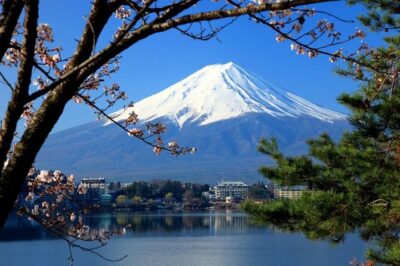
Mt Fuji and Hakone 1-Day Bus Tour Return by Bullet Train
Read our review →
Peaceful Hiroshima & Miyajima UNESCO 1 Day Bus Tour
Read our review →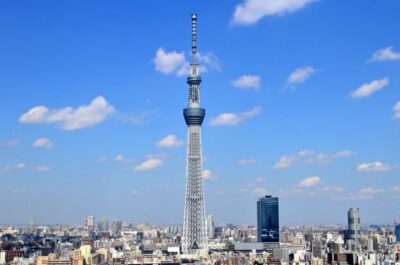
Meiji Shrine, Asakusa, Skytree Bus Tour and Cruise
Read our review →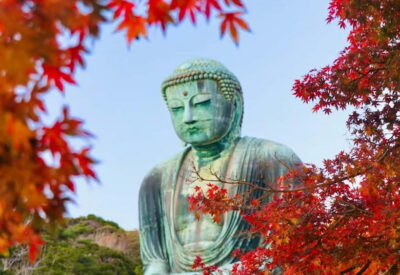
Kamakura & Enoshima Day Trip including Temple Tickets
Read our review →
Mt Fuji & Hakone Cruise, Drum Show Bus 1 Day from Tokyo
Read our review →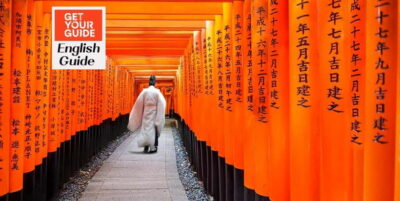
Kyoto/Osaka: Nara, Fushimi Inari Taisha, Arashiyama Bus Tour
Read our review →Browse the lists this tour appears in