
Review · JAPAN BUS TOURS
Full Day Hiroshima and Miyajima Bus Tour from Hiroshima
Miyajima’s red torii gate rising from the sea and Hiroshima’s Atomic Bomb Dome make a powerful one-day pairing. One place is beautiful and quietly sacred; the other asks you to face one of the darkest events of the 20th century. This tour connects both by air-conditioned bus and ferry, without making you sort out the transport yourself.
I like the clear two-part plan and the fact that admission fees, the ferry, the Miyajima visitor tax, and an English-speaking guide are included. I also like the human touch some guides bring. Masako has helped visitors reach the right train afterward, while guides such as Hikari, Taeko, Tomoko, and Nob have been praised for strong explanations and careful group handling.
The main consideration is the group size, which can reach 40 people. Several guides have been excellent, but a few have spoken too softly or started explaining before everyone had gathered. Bring patience, comfortable shoes, water, and a willingness to explore some parts independently.
Key points to know before booking
- Two major sights in one day: Visit Itsukushima Shrine and Hiroshima Peace Memorial Park without arranging separate transport.
- Miyajima includes free time: You can buy oysters, okonomiyaki, conger eel rice, or other food, but lunch is not included.
- The Peace Memorial Museum is included: You get admission, but much of the museum visit is self-guided.
- The day starts at 10:10 a.m.: Meet in the Hotel Granvia Hiroshima lobby and finish around 6:00 to 6:30 p.m. at Hiroshima Station.
- Group size matters: The bus may carry up to 40 people, and hearing the guide outdoors can be difficult at times.
- The tour suits first-time visitors: It gives you the major Hiroshima sights efficiently, but independent visitors may spend less and control the pace better.
Miyajima first, with Itsukushima Shrine at the center
The tour begins at Hotel Granvia Hiroshima at 10:10 a.m. You board an air-conditioned vehicle and travel toward Miyajima, whose name means shrine island. The ferry crossing adds a pleasant change of pace and gives you a sense of arriving somewhere apart from the mainland.
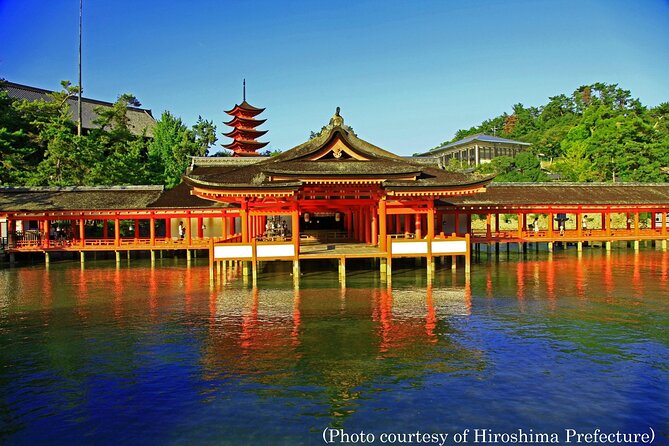
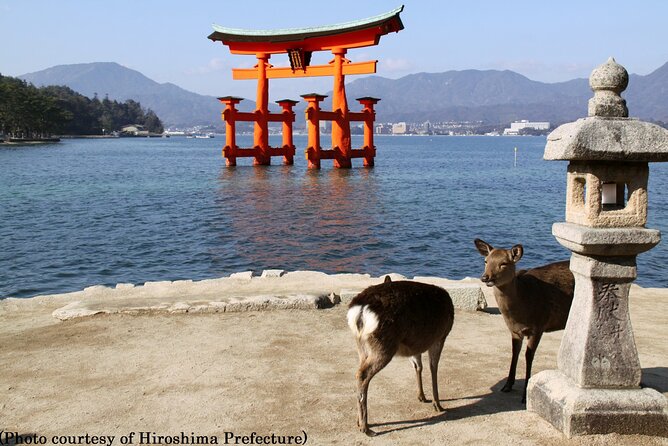
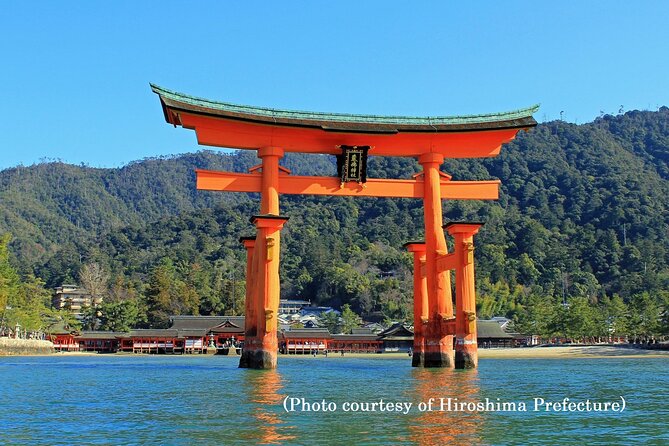
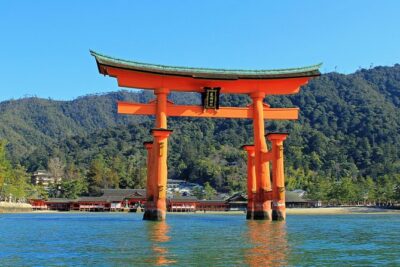
The main stop is Itsukushima Shrine, a World Heritage site founded in the sixth century. Its architecture was designed to appear connected to the sea, and the famous red torii gate is most striking around high tide, when it appears to float offshore. Tide conditions and crowds affect exactly what you see, so do not expect the same view in every photograph.
The shrine visit is scheduled for about an hour, with admission included. That is enough to see the principal buildings and hear the guide explain the site’s religious and architectural importance. It is not enough for a leisurely study of every corner, especially if the paths are crowded.
Miyajima is also known for deer that wander around the island. The tour description refers to monkeys as well, though animal sightings are never something you should count on. Treat the wildlife as part of the setting, not as a guaranteed attraction.
Some guides add useful cultural detail here. Akko Watanabe, for example, has been praised for explaining Japanese customs and everyday manners, while other guides have helped with photographs and pointed out good places to eat. That personal guidance can make the shrine feel less like a quick photo stop.
More full-day routes around Japan:
- Kyoto: Full-Day Guided Bus Tour to Top Highlights & Tickets
★ 4.6 · 533 reviews - Okinawa: Full-Day Bus Tour to Yanbaru National Park
★ 4.3 · 44 reviews - Full Day Hiroshima and Miyajima Bus Tour
★ 5.0 · 12 reviews
Free time for Miyajima food and shops
After the shrine, you get time to eat lunch and explore. The food bill is yours, so plan for it when comparing the $152.54 price with the cost of visiting independently.
Miyajima is associated with oysters, Hiroshima-style okonomiyaki, and conger eel rice bowls. You can also browse the island’s food stalls and shops. The schedule gives you a chance to choose what appeals to you rather than being tied to a fixed group meal.
The amount of free time can feel generous or frustrating, depending on your interests. Some groups have had roughly two and a half hours to wander before meeting for the ferry. That works well if you want lunch, small shops, photographs, and a slower look at the shrine area.
It is less satisfying if you hoped to ride the ropeway or make a longer mountain excursion. The available time may not allow that while staying with the group. If your main goal is Mount Misen or a longer walk, an independent Miyajima day would give you more control.
This is also the point when the tour can feel less guided. You are free to choose your meal and route, which is convenient, but you should not expect a continuous guided walk through every part of the island.
Returning to Hiroshima and facing the Atomic Bomb Dome
The ferry and bus take you back toward Hiroshima for the afternoon’s more serious section. The Atomic Bomb Dome is usually given about 40 minutes, and there is no separate admission charge.
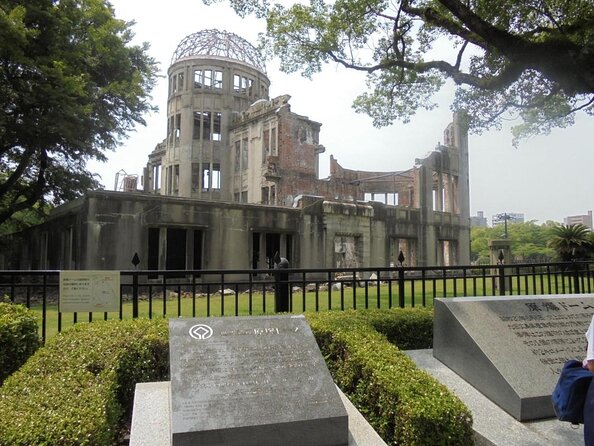
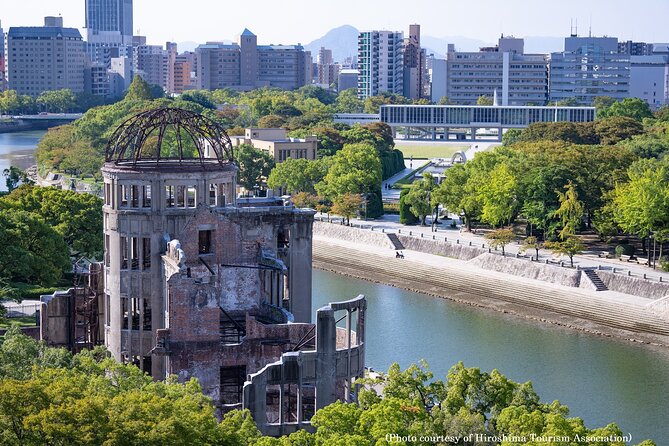
The building was once the Hiroshima Prefectural Industrial Promotion Hall. Its partial survival after the 1945 atomic bombing left a skeletal shell near the river. It is preserved as a warning about nuclear war and as a symbol of the city’s call for peace.
You will view the Dome from outside. The structure is not a place for a casual photo alone, and the guide’s explanation helps place it in the wider story of the bombing. At the same time, this is a public outdoor area, so a large group can make it hard to hear every word.
Several people have found that the guide’s personal connection to Hiroshima adds weight here. A guide from the city may share family experiences or local memories, though the exact guide varies. Names such as Nikki, Kyoko, Takeshi, Hikari, and Taeko have been associated with especially clear and thoughtful explanations on different departures.
The strongest practical tip is simple: stay close when the guide gathers the group, and ask questions if you miss a point. A full bus group can spread out quickly around the Dome.
Hiroshima Peace Memorial Park and Museum
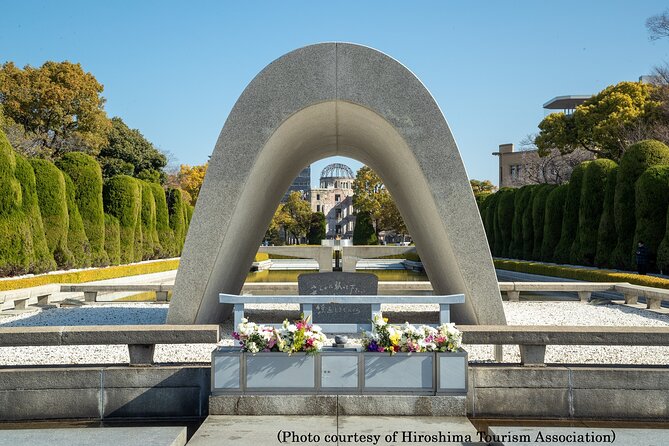
The Peace Memorial Park is the emotional heart of the day. It includes monuments to those killed in the bombing, the Memorial Cenotaph for Atomic Bomb Victims, the Cenotaph for Korean Victims, and other memorials connected to the city’s call for peace.
The guide usually explains the main monuments before you enter the museum. Take your time at the cenotaph, where the list of victims continues to grow as names are confirmed. This is a place for quiet attention rather than rushing from one sight to the next.
Admission to the Hiroshima Peace Memorial Museum is included, and you have about an hour there. The exhibits are direct and often painful. They cover the bombing, the human cost, the physical effects, and the lives of people who were in the city.
The museum visit is largely self-guided. That is useful if you prefer to read at your own pace, but it also means the guide may not accompany you through every exhibit. One hour gives you an introduction, not a complete study. If this subject is a major reason for your visit, you may want to return independently for longer.
The order of Miyajima and Hiroshima can change with traffic and local conditions. The park is often the final major stop, and the tour ends at Hiroshima Station between about 6:00 and 6:30 p.m. You then continue to your next destination on your own.
More routes around Japan:
- Mt Fuji and Hakone 1-Day Bus Tour Return by Bullet Train
★ 5.0 · 26,383 reviews - 1-Day Tokyo Bus Tour
★ 5.0 · 14,250 reviews - PERFECT KYOTO 1-Day Bus Tour
★ 5.0 · 13,518 reviews - Peaceful Hiroshima & Miyajima UNESCO 1 Day Bus Tour
★ 5.0 · 5,309 reviews
How good is the guiding?
The guide can make or break this experience. At its best, the tour has an English-speaking national government licensed guide who explains shrine customs, local food, Hiroshima’s wartime history, and the memorial sites in a clear, respectful way.
Masako has been especially appreciated for patience and kindness, including helping a visitor find the correct train after the tour. Azusa has been praised for managing photographs and sharing historical detail. Minnie, Mitsui, Hikari, Taeko, and Nob have also received strong approval for warmth, organization, and subject knowledge.
That said, the service is not perfectly consistent. A few departures have had guides with very quiet voices, limited group engagement, or explanations that were difficult to hear from the back of the group. At the Peace Park, a guide may begin speaking before everyone has arrived, so staying near the front is wise.
Some departures use a radio system, but one experience involved equipment that was hard to hear. Large groups also create ordinary problems: people stop for photos, cross busy areas, or get separated from the speaker.
I would choose a place near the guide when possible. If you have hearing difficulties, this is worth considering before booking. The tour can still work well, but it is not the same as a small private walk where every explanation is easy to catch.
What the $152.54 price really covers
The price is high compared with arranging Miyajima and the Peace Park yourself. Hiroshima has good public transport, and independent visitors can reach both sites with less expense. You also have more freedom to choose your ferry, meal, museum timing, and time on Mount Misen.
The tour earns part of its price through convenience. You get the bus, ferry, entrance fees, Miyajima visitor tax, and a licensed English guide in one package. You also avoid having to work out the day’s connections while keeping track of a tight schedule.
For someone staying in Hiroshima only briefly, that convenience can be worthwhile. The tour fits two major sights into about eight hours and returns you to Hiroshima Station, a useful end point for an evening train or hotel transfer.
For an independent visitor with plenty of time, the value is less convincing. The long free period on Miyajima and the self-guided museum visit mean you are paying mainly for transport, structure, and interpretation rather than constant guiding.
The tour has been recommended by about 90 percent of customers and carries a 4.5 rating from 371 reviews, which points to a generally strong experience but not a flawless one. The biggest variable is the individual guide and the size of the departure.
Timing, meeting point, and practical planning
You meet at the Hotel Granvia Hiroshima lobby, at 1-5 Matsubaracho, at 10:10 a.m. This is beside JR Hiroshima Station, but you should arrive early enough to find the exact lobby meeting area without a last-minute dash.
If you are coming from Kyoto or Shin-Osaka with a Japan Rail Pass, take an early enough Shinkansen to reach the meeting point on time. Missing the meeting time can mean missing the tour.
The tour ends at Hiroshima Station around 6:00 to 6:30 p.m. It does not take you onward to your next destination. If you are returning to Kyoto, one departure reached Kyoto around 9:00 p.m., but allow room for variation because traffic and crowd levels can change the schedule.
Wear shoes suitable for walking and bring water. Hiroshima summers can be muggy, and a small fan or umbrella may help. Lunch is not provided, so budget for food and keep a snack handy if you tend to eat early.
Children age five and under may join free without a bus seat. If you need a seat, book the child rate. Anyone under 18 needs written parental permission, and those under 15 or not yet in middle school must travel with a parent or guardian.
Most people can take part, and the maximum group size is 40. Seats may not be assigned.
Who should book this Hiroshima day tour?
I would recommend it to a first-time visitor who wants the two essential Hiroshima-area sights in one organized day. It is particularly useful if you have only one full day, prefer an English explanation, or do not want to arrange the ferry and local transport yourself.
It also suits visitors who want a respectful introduction to Hiroshima’s wartime history without planning every detail. The guide can add context at the Dome and memorials, while the free time on Miyajima lets you choose your own lunch and browsing.
I would hesitate if you want a small group, a slow museum visit, a long hike, or a full day of continuous guiding. Independent visitors can spend less and tailor the day more closely to their interests.
Should you book it?
Book this tour if efficiency matters most. You will see Itsukushima Shrine, enjoy time on Miyajima, visit the Atomic Bomb Dome, and enter the Peace Memorial Museum in one carefully arranged day.
Skip it in favor of independent sightseeing if you want Mount Misen, a longer museum visit, or complete control over your schedule. At $152.54, the tour is paying for convenience and a guide, not simply admission tickets.
My practical call is this: for a first Hiroshima visit with limited time, it is a sensible choice. Go in expecting a large group, stay close enough to hear the guide, and treat the museum as an introduction rather than your final word on Hiroshima.
FAQ
Where does the Hiroshima and Miyajima tour start?
It starts at the Hotel Granvia Hiroshima lobby, at 1-5 Matsubaracho in Hiroshima’s Minami Ward. The meeting time is 10:10 a.m.
Where does the tour end?
The tour ends at Hiroshima Station around 6:00 to 6:30 p.m. You make your own arrangements for the next destination.
Is lunch included?
No. Lunch is not included, and you have free time on Miyajima to choose and pay for your own meal.
Are admission fees included?
Yes. The tour includes Itsukushima Shrine admission, Hiroshima Peace Memorial Museum admission, the Miyajima visitor tax, ferry transportation, and other listed transportation costs.
How large is the tour group?
The tour can have a maximum of 40 participants. Seats on the bus may not be assigned.
Can children join the tour?
Children up to five years old may join free of charge but will not receive a bus seat. If a child needs a seat, book under the child rate. Written parental permission is required for participants under 18.
What is the cancellation policy?
You can cancel up to 24 hours before the experience start time for a full refund. Cancellations or changes made less than 24 hours before the start time are not accepted for a refund.
Recently added around Japan
- NARUTO & BORUTO at Nijigen no Mori Park Entry& Bus Transportation★ 3.0 · 3 reviews
- From Kyoto: Nara History Guided Half Day Bus Tour with lunch★ 5.0 · 23 reviews
- Kyoto Sagano Romantic Train in Arashiyama Bus Tour★ 3.0 · 6 reviews
- Kyoto 1 Day Golden Route Bus Tour★ 5.0 · 15 reviews
- Kyoto Hop-On, Hop-Off Sightseeing Bus Tour★ 3.0 · 5 reviews
- Hiroshima, Miyajima 1 Day Bus with Indian Lunch from Osaka, Kyoto★ 5.0 · 7 reviews
- Amanohashidate & Miyama 1-Day Bus Tour: From Osaka/Kyoto w/ Lunch★ 4.5 · 18 reviews
- Full Day Hiroshima and Miyajima Bus Tour★ 5.0 · 12 reviews
Japan Bus Tours, compared.
Mt Fuji and Hakone 1-Day Bus Tour Return by Bullet Train
Read our review →
Peaceful Hiroshima & Miyajima UNESCO 1 Day Bus Tour
Read our review →
Fushimi Inari, Kinkakuji, Bamboo Grove 1 Day Bus Tour
Read our review →
Meiji Shrine, Asakusa, Skytree Bus Tour and Cruise
Read our review →
Kamakura & Enoshima Day Trip including Temple Tickets
Read our review →
Mt Fuji & Hakone Cruise, Drum Show Bus 1 Day from Tokyo
Read our review →Browse the lists this tour appears in