
Review · JAPAN BUS TOURS
From Tokyo: Kamakura & Enoshima 1-Day Bus Tour
Kamakura gives you a welcome change from Tokyo’s towers and train stations: grand shrines, temple gardens, the bronze Great Buddha, and an island with sea views. This full-day bus trip links the area’s main sights without making you piece together several local trains and buses.
I like the mix of guided history and free time, and I like that temple admission at Kōtoku-in and Hase-dera is included. Guides such as Omar, Yuki, Mitsuko, and Chen have been praised for clear explanations and warm help. The main drawback is the long day and traffic, especially on the return to Tokyo, plus stairs and rushed moments if you try to see every corner of Enoshima.
Key points to know before booking
- Four strong stops in one day: Visit Tsurugaoka Hachimangu, Kōtoku-in, Hase-dera, and Enoshima.
- A practical escape from Tokyo: Air-conditioned bus transport handles the route and returns you to the Shinjuku area.
- Two different kinds of free time: Shop and eat around Komachi Street, then explore Enoshima’s shrines, lanes, and sea views.
- Good guide potential: Omar, Yuki, Mitsuko, Chen, Yuki, and Koji have each received praise, but your assigned guide is not guaranteed.
- Come ready to walk: Enoshima includes hills, steps, and optional routes that can become tiring in rain or heat.
- Price favors convenience: At $66.05, transport, two temple admissions, and a full day of sightseeing make this a useful value for first-time visitors.
Why this day trip works for a first visit
Kamakura was the seat of Japan’s samurai government for much of the medieval period. You do not need to be a history specialist to appreciate the setting. The town brings together religious sites, old shopping lanes, coastal air, and a slower rhythm than central Tokyo.
This tour gives you a broad first look rather than a slow study of one neighborhood. That tradeoff matters. You will see the major icons, hear background from a guide, and still get time to wander alone. If you want a detailed temple-by-temple visit, a private guide or independent day may suit you better.
The bus is the tour’s main practical advantage. Kamakura’s sights are spread out, and Enoshima lies farther west. A roundtrip vehicle saves you from working out local connections and keeps the day organized. It also means you are tied to the group schedule, so do not expect to linger whenever a temple catches your eye.
The standard day lasts about nine to ten hours. Traffic can stretch the return, and one afternoon itinerary reportedly had to be reversed after a road accident. That kind of change is possible here. The operator says the bus runs in poor weather and traffic unless you are told otherwise, so keep your evening plans flexible.
More Bus Day Trips in Japan
- Mt Fuji and Hakone 1-Day Bus Tour Return by Bullet Train
★ 5.0 · 26,383 reviews - 1-Day Tokyo Bus Tour
★ 5.0 · 14,250 reviews - PERFECT KYOTO 1-Day Bus Tour
★ 5.0 · 13,518 reviews
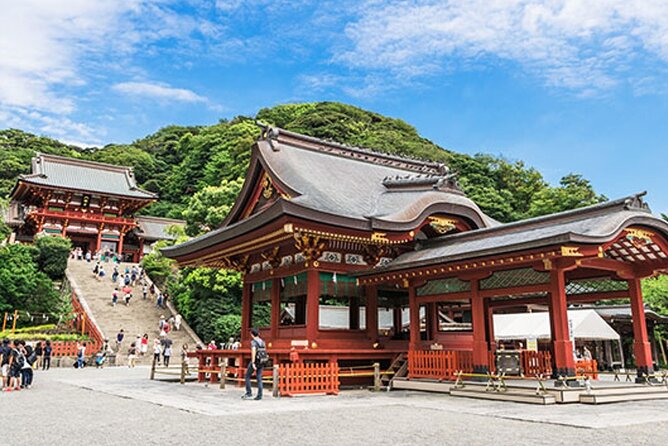
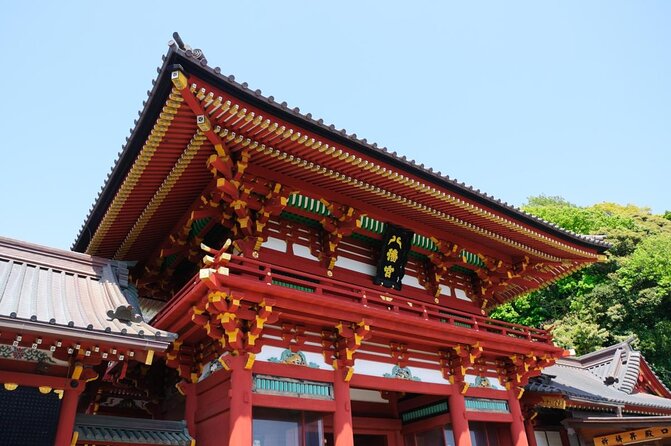
Tsurugaoka Hachimangu, Kamakura’s spiritual center
The day begins at Tsurugaoka Hachimangu, Kamakura’s best-known shrine and a fitting introduction to the town. You approach through a large torii gate, then follow the broad grounds toward shrine buildings, ponds, koi, and open ceremonial spaces.
Allow yourself time to notice how the site is arranged. It is not simply a single hall in a small compound. The approach, water, gates, stairs, and shrine buildings create a formal route that links Kamakura’s religious life with its samurai past.
The scheduled visit lasts about two hours, making this the longest stop in Kamakura. That gives you room to follow the guide, take photographs, and explore nearby areas without immediately feeling rushed. It can also feel generous if you are eager to reach the Great Buddha.
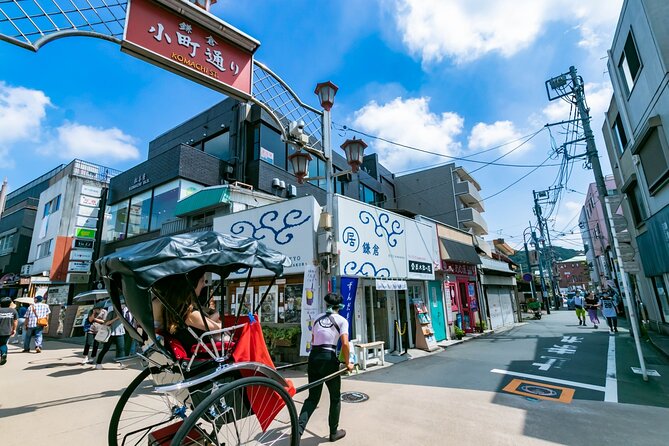
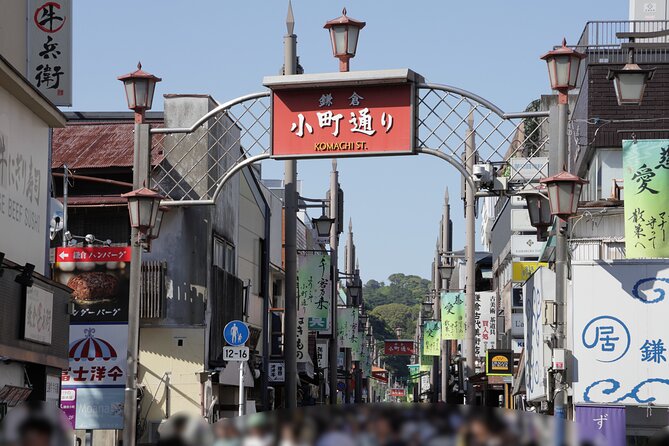
Komachi Street runs toward the shrine and is one of the day’s useful food and shopping areas. You will find snacks, local souvenirs, handmade items, and restaurants along the narrow commercial route. Depending on the day’s timing, this may be your best chance to buy small gifts or grab something quick.
Lunch is not included, so plan to pay separately. The schedule can make lunch awkward. If the route is reversed, you may reach Enoshima around 11 a.m., before many places are fully open. Ask your guide about the day’s timing before choosing where to eat.
Kōtoku-in and the Great Buddha
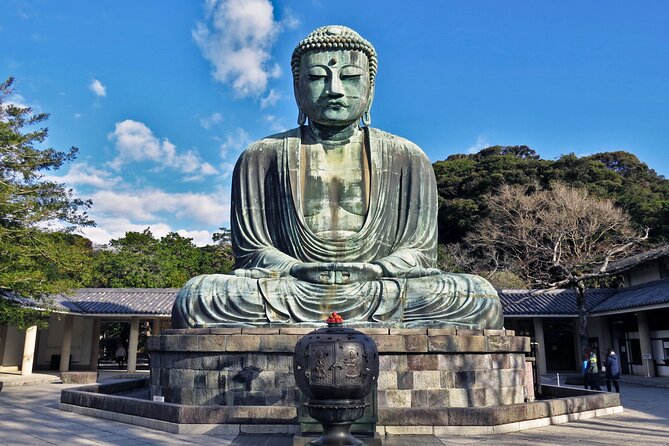
The 30-minute stop at Kōtoku-in centers on Kamakura’s most famous image, the Great Buddha. This large bronze Amida Buddha has sat outdoors for centuries and is one of Japan’s best-known religious sights.
Entry is included, which keeps the visit simple. Thirty minutes is enough to see the statue, take photographs, and look around the grounds. It is not enough for a lingering temple visit, especially when the site is crowded.
There is also an option to enter the inside of the Buddha for a small fee, noted as 50 yen in one account. Bring coins if that interests you. Crowds can make the entrance slow, so you may need to choose between waiting and using your limited time around the main statue.
This is one place where the bus schedule has a clear benefit and a clear cost. You reach a major sight without arranging transport, but you must leave when the group leaves. If the Buddha is your main reason for visiting Kamakura, an independent visit would give you more freedom.
Hase-dera, gardens, and Kannon
Hase-dera receives about 50 minutes. The temple is known for its eleven-headed statue of Kannon, the Goddess of Mercy, and for its carefully arranged grounds.
The temple offers more than a single hall. You may see gardens, religious buildings, and elevated areas with views across the town. The site also involves steps, so wear shoes that are comfortable for walking and take care on wet days.
The time here is enough for a focused visit, but not for a slow examination of every feature. Some people find this stop more striking than the first shrine and wish they had longer for lunch and the temple grounds. Keep your watch in view and listen closely to the meeting instructions.
Hase-dera is a good example of the tour’s basic rhythm: the guide gives context, then you explore at your own pace. Some guides, including Yuki and Mitsuko, have been praised for mixing useful explanations with room to wander. The quality of commentary can vary by guide and by the language arrangement on your bus.
Same city, a different seat on a different deck:
- Peaceful Hiroshima & Miyajima UNESCO 1 Day Bus Tour
★ 5.0 · 5,309 reviews - Kyoto: Fushimi Inari, Kinkakuji, Bamboo Grove 1 Day Bus Tour
★ 4.8 · 4,316 reviews - Tokyo: Meiji Shrine, Asakusa, Skytree Bus Tour and Cruise
★ 4.7 · 1,986 reviews - Tokyo: Kamakura & Enoshima Day Trip including Temple Tickets
★ 4.5 · 1,375 reviews
Enoshima Island, the day’s scenic finish
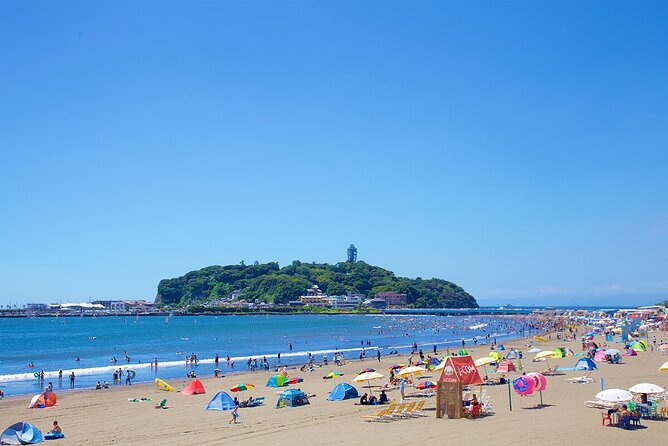
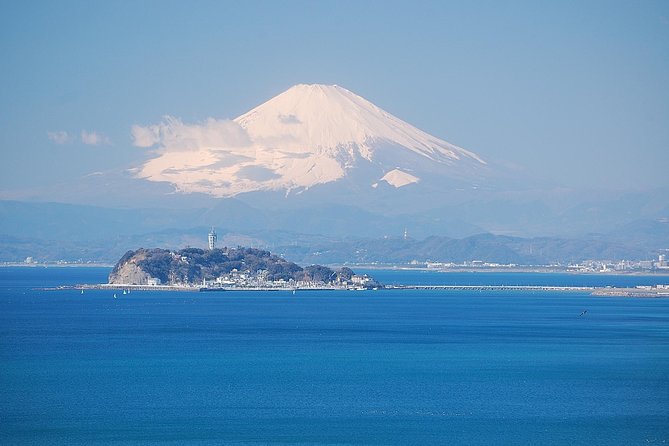
Enoshima is scheduled for about two hours and is often the most memorable part of the day. The island combines a narrow shopping street, shrine buildings, hill walks, gardens, and views over the water. On a clear day, you might see Mount Fuji in the distance.
The approach to the island leads through souvenir shops and places to eat. Seafood is a common focus, and you will have a chance to choose your own lunch rather than follow a fixed restaurant plan. That freedom is useful, but two hours is not a lot once you add food, shrine visits, photographs, and the return walk to the bus.
Enoshima’s shrine complex is dedicated to Benzaiten, associated with music, wealth, and wisdom. It includes three shrines: Hetsu-no-miya, Nakatsu-no-miya, and an upper shrine area. The route climbs, and you should expect stairs.
You can also pay to use escalators on parts of the island. They save effort, but they do not remove every stair or every uphill section. If you choose the escalator route, ask the guide how much walking remains before buying a ticket. The island includes optional attractions such as the Samuel Cocking Garden and its observatory lighthouse, which rises 59.8 meters, or 119.6 meters above sea level.
The island can become confusing near the end of the visit. Give yourself extra time to return through the lanes and locate the bus. In rain or darkness, the walk back can feel longer, and a poorly timed visit to the caves or upper areas may turn the final hour into a race.
What the guides add to the day
This is sold as a guided tour, not just a transfer service. The best version of the day comes when the guide explains why the shrines matter, points out details along the route, and gives clear instructions about meeting times.
Omar has been praised for humor, professionalism, and strong historical explanations. Yuki has received particular credit for clear English, practical help, and careful attention to the group. Mitsuko has been described as warm and helpful, with good suggestions for food and exploration. Chen and Koji have also been praised for friendly, clear guidance.
Those names give you a sense of the possible experience, not a promise of who will lead your bus. The guide may speak English, Chinese, or both, depending on the group. Commentary in two languages can make the ride less detailed in each language, and one account described a guide whose English was difficult to follow.
I would treat the guide as an important bonus rather than the only reason to book. You will still see worthwhile places if the commentary is brief, but you should not assume a private-guide level of explanation.
Bus comfort, group size, and the price
The listed price is $66.05 per person. For that amount, you receive air-conditioned transport, taxes and fees, admission to Kōtoku-in and Hase-dera, and a full day covering two destinations. That is a fair price if you value convenience and want the main sights handled in one booking.
The vehicle quality may vary. Several people describe clean or modern buses, including USB charging ports, while one group found its bus old and uncomfortable, with poor seats over a wheel. Seating may also be less pleasant at the back. If comfort matters greatly, ask the operator about current vehicle arrangements before booking.
The tour can hold up to 90 people, though some departures may feel much smaller. One account described a comfortable group size, with enough room for people to follow the guide or split off during free time. A large maximum does mean the experience can change from one departure to another.
One piece of luggage per person is allowed, provided it fits the vehicle. Stored luggage is not accessible between stops, and the total outside dimensions must not exceed 155 centimeters combined. Keep valuables and anything needed during the day with you.
Meeting point and timing advice
The stated meeting point is Shinjuku Post Office at 1-8-8 Nishishinjuku. The final drop-off is near Shinjuku Station’s West Exit, and there is no return to Ikebukuro. Some booking information refers to two central Tokyo pickup locations, so check your confirmation carefully and go to the exact point assigned to you.
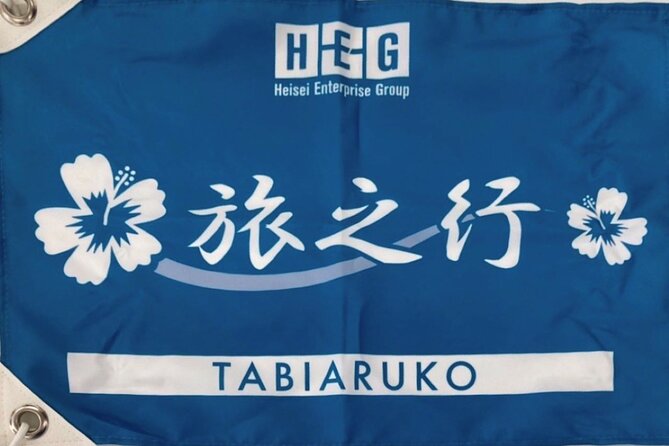
Arrive at least ten minutes early. Look for the guide holding a pale blue flag, and do not rely on the bus waiting if you are late. The operator is strict about departure times, and missing the bus because of a wrong location or late arrival may mean no refund.
The tour requires at least ten people to run. If that minimum is not met, you should be offered another date or a full refund. Normal cancellation is free up to 24 hours before the start time, but changes or cancellations inside that window are not refunded.
Who will get the most from this tour
I would choose this trip if you have limited time in Tokyo and want a broad introduction to Kamakura and Enoshima without managing several transport connections. It also suits families and first-time visitors who appreciate clear meeting times, a bus, and a guide who can handle the day’s structure.
It is a good fit if you like a balance of instruction and independence. You can walk with the guide, then break away for snacks, photographs, shops, or a quieter look at the grounds.
I would hesitate if you dislike fixed schedules, crowded attractions, stairs, or long bus rides. You should also think twice if your main goal is a slow lunch or an extended visit inside one temple. The itinerary covers a lot, and that means every stop has a limit.
Bring water, coins, comfortable shoes, and a small umbrella or rain layer. Hot weather can make the island hills tiring, while rain can make the steps and the search for the bus more stressful. Keep your return evening open because Tokyo-area traffic can add a long stretch of sitting.
Should you book it?
Book this tour if you want efficient sightseeing from Tokyo and accept a busy day with fixed departure times. The included transport and two temple admissions make $66.05 reasonable, while the combination of Kamakura’s major religious sites and Enoshima’s coastal views gives you a satisfying first look at the area.
Skip it in favor of an independent day if you want to set your own pace, spend hours at the Great Buddha, or explore Enoshima’s caves and upper paths without watching the clock. For most first-time visitors, though, this is a useful way to get beyond Tokyo for a day, provided you arrive early, plan for stairs, and keep your expectations focused on coverage rather than depth.
FAQ
How long does the Kamakura and Enoshima tour last?
The experience lasts approximately nine to ten hours, including transportation from Tokyo, time at the sights, and the return trip.
Where does the tour start and finish?
The stated meeting point is Shinjuku Post Office at 1-8-8 Nishishinjuku, Shinjuku City. The tour ends near Shinjuku Station’s West Exit, and the bus does not return to Ikebukuro.
What is included in the price?
The price includes an air-conditioned vehicle, all listed fees and taxes, entrance to Hase-dera and Kōtoku-in, and an English or Chinese-speaking guide. Lunch is not included.
Which sights are visited?
The route includes Tsurugaoka Hachimangu Shrine, Komachi Street, Kōtoku-in and the Great Buddha, Hase-dera, and Enoshima Island with its shrine complex and shopping lanes.
Is lunch included?
No. You pay for lunch separately. You can choose from food options around Komachi Street or Enoshima, depending on the schedule and route order.
Does the tour run in bad weather?
The tour is scheduled to depart in most weather and traffic conditions unless the local operator tells you otherwise. The route or timing may change because of weather, traffic, or other unexpected events.
Can I cancel for a refund?
You can cancel at least 24 hours before the start time for a full refund. Cancellations or changes made less than 24 hours before departure are not refunded or accepted.
More single-day trips around Japan
- Mt Fuji & Hakone Cruise, Drum Show Bus 1 Day from Tokyo
★ 4.0 · 1,287 reviews - Mt Fuji and Hakone 1-Day Bus Tour Return by Bus
★ 4.5 · 929 reviews - Tokyo: Mt.Fuji & Lake Kawaguchiko 1-Day Bus Tour w/Optional Lunch
★ 4.5 · 839 reviews - From Hiroshima: Hiroshima & Miyajima 1 Day Tour with Lunch
★ 4.7 · 395 reviews
Recently added around Japan
- NARUTO & BORUTO at Nijigen no Mori Park Entry& Bus Transportation★ 3.0 · 3 reviews
- From Kyoto: Nara History Guided Half Day Bus Tour with lunch★ 5.0 · 23 reviews
- Kyoto Sagano Romantic Train in Arashiyama Bus Tour★ 3.0 · 6 reviews
- Kyoto 1 Day Golden Route Bus Tour★ 5.0 · 15 reviews
- Kyoto Hop-On, Hop-Off Sightseeing Bus Tour★ 3.0 · 5 reviews
- Hiroshima, Miyajima 1 Day Bus with Indian Lunch from Osaka, Kyoto★ 5.0 · 7 reviews
- Amanohashidate & Miyama 1-Day Bus Tour: From Osaka/Kyoto w/ Lunch★ 4.5 · 18 reviews
- Full Day Hiroshima and Miyajima Bus Tour★ 5.0 · 12 reviews
Bus Day Trips, compared.
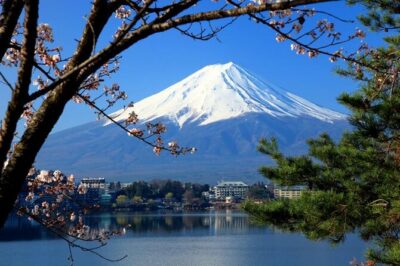
Mt Fuji and Hakone 1-Day Bus Tour Return by Bullet Train
Read our review →
Day Trip to Grindelwald, Interlaken & Lauterbrunnen
Read our review →
Munich Hop-On Hop-Off Tour: 1-Day or 2-Day Ticket
Read our review →
From NYC: Guided Day Trip to Washington DC by Van or Bus
Read our review →Browse the lists this tour appears in