
Review · OSAKA BUS TOURS
7 Day Bus Pass: Tokyo, Kanazawa, Takayama, Kyoto and More
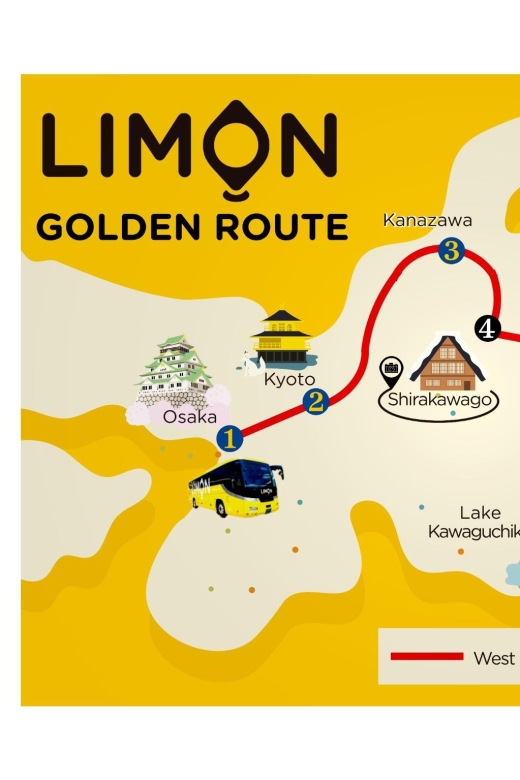
Japan’s famous Golden Route is easy by train in some places, but not all. This seven-day LIMON Pass links Tokyo with mountain towns, Kanazawa, Kyoto, and Osaka, giving you a practical way to reach Takayama and Shirakawago without building every connection yourself. I like the daily departures and the chance to shape your own route. I also like that select departures include Mt. Fuji 5th Station and Shirakawago.
The main catch is that this is not a hop-on, hop-off pass. You must reserve a seat for every leg after buying, and everyone on one booking must travel together. At $242 per person, it makes the most sense if you use several long-distance routes, not just one or two.
Key points at a glance
- Seven days across central Japan: Build a route between Tokyo or Osaka/Kyoto and several major stops.
- Useful mountain connections: Reach Takayama, Hirayu Onsen, Kawaguchiko, and Kanazawa by bus.
- Select sightseeing departures: Some routes include Mt. Fuji 5th Station and Shirakawago.
- Daily departures: Guaranteed daily service gives your itinerary a firm backbone.
- Seat reservations are required: Book each stop after purchase using your GetYourGuide booking reference.
- Baggage rules matter: You may bring up to three pieces, with size limits for large and small suitcases.
Why this pass works for Japan’s awkward middle
The LIMON Pass is built for the part of Japan where rail travel becomes less direct. Tokyo, Kyoto, and Osaka are easy to connect by train, but Takayama, Shirakawago, Kawaguchiko, and Hirayu Onsen can require extra planning. A bus pass gives you one system for these links.
You choose a direction, starting from Tokyo or from Osaka/Kyoto, then reserve seats for the stops you want. The listed route includes Tokyo, Lake Kawaguchiko, Hirayu Onsen, Takayama, Kanazawa, Kyoto, and Osaka. That is a useful spread: big-city Japan at both ends, with mountain scenery and smaller cultural centers between them.
I especially like the freedom to skip places you do not need. You are not locked into a guided group itinerary or a fixed sightseeing package. You can spend more time in Takayama, add Kanazawa, or use the pass mainly for the difficult overland sections.
Still, plan carefully. The pass is flexible only after you have done the reservation work. You cannot simply show up and expect to take the next bus. You also need to make sure your route fits within the seven-day validity period.
Other routes people ride around Japan:
- Mt Fuji and Hakone 1-Day Bus Tour Return by Bullet Train
★ 5.0 · 26,383 reviews - 1-Day Tokyo Bus Tour
★ 5.0 · 14,250 reviews - PERFECT KYOTO 1-Day Bus Tour
★ 5.0 · 13,518 reviews
Tokyo to Kawaguchiko, with Fuji views on the side
Kawaguchiko is the practical gateway for Mt. Fuji visits, and it is one of the most useful additions to a Tokyo itinerary. The route offers travel between Tokyo and Lake Kawaguchiko, with taxi arrangements available for customers using the Tokyo to Kawaguchiko connection.
The taxi detail needs careful reading. The arrangement involves a taxi from Highland Resort Hotel and Spa to Kawaguchiko Station. This is not a promise of private door-to-door transport from your Tokyo hotel. Check the exact departure option and meeting point before you travel.
Select departures include sightseeing at Mt. Fuji 5th Station. That can be a valuable bonus because it turns a transfer into part of the day’s experience. The 5th Station is a famous access point on Mt. Fuji, but the pass does not mean every departure includes this stop. Confirm the option you book.
Kawaguchiko also requires some flexibility. Weather can affect what you see of Mt. Fuji, and the provided information does not guarantee clear views. I would treat the mountain stop as a welcome chance, not the sole reason to buy the pass.
Hirayu Onsen and Takayama: the mountain route

The connection through Hirayu Onsen and Takayama is where this pass earns its keep. These places are not the simplest additions to a standard Tokyo, Kyoto, and Osaka trip, especially if you want to avoid piecing together local services.
Hirayu Onsen is one of the listed stops, linking the bus route with Japan’s mountain hot-spring country. The information does not specify how long the bus pauses there or whether bathing time is included, so check your individual schedule before planning an onsen visit.
Takayama gives you a very different pace from the big cities. It is a strong choice for anyone who wants a smaller stop between urban centers. The bus pass also offers a taxi arrangement for customers traveling between Tokyo and Takayama, with the taxi operating from Highland Resort Hotel and Spa to Kawaguchiko Station. That wording suggests you need to pay close attention to the exact connection and transfer instructions.
The bus option may save you from making several separate bookings. It also keeps your route on one booking platform. The tradeoff is less control than driving yourself, plus the need to follow the assigned departure times.
Shirakawago is a highlight, but only on selected departures
Shirakawago is one of the most appealing parts of this route. Its traditional farmhouses and mountain setting make it a natural stop between Takayama and Kanazawa. The pass includes sightseeing at Shirakawago on select departures.
That qualification is important. You should not assume every bus includes a sightseeing stop, or that a standard transfer automatically gives you time to explore. Check the route option before booking and confirm whether Shirakawago is a scheduled sightseeing stop or part of a particular departure pattern.
For the right itinerary, this is a smart use of the pass. You can connect several difficult-to-reach places without arranging separate transport for each one. For a rushed seven-day trip, though, the combination of Takayama, Shirakawago, Kanazawa, Kyoto, and Osaka can become a lot of moving around. I would choose fewer stops and enjoy them properly rather than treat the pass as a challenge to collect every destination.
More routes around Japan:
- Peaceful Hiroshima & Miyajima UNESCO 1 Day Bus Tour
★ 5.0 · 5,309 reviews - Kyoto: Fushimi Inari, Kinkakuji, Bamboo Grove 1 Day Bus Tour
★ 4.8 · 4,316 reviews - Tokyo: Meiji Shrine, Asakusa, Skytree Bus Tour and Cruise
★ 4.7 · 1,986 reviews - Tokyo: Kamakura & Enoshima Day Trip including Temple Tickets
★ 4.5 · 1,375 reviews
Kanazawa gives the route a worthwhile city stop
Kanazawa sits between the mountain area and the Kansai cities, making it a natural link in this bus network. It gives your journey a city stop that feels different from Tokyo, Kyoto, and Osaka.
The pass includes direct bus travel to Kanazawa, which is useful if your main goal is to connect the mountain towns with Kyoto or Osaka. You avoid returning to a major rail hub simply to change direction.
The information does not provide a detailed sightseeing program in Kanazawa, and meals and accommodation are not included. You will need to arrange your own time there, along with your hotel and meals. That independence is a plus if you already know what you want to see, but it means this product is transport rather than a guided tour.
I would use Kanazawa as a planned overnight stop rather than an accidental pause between buses. The pass helps you get there, but your experience in the city depends on how much time you give it.
Kyoto and Osaka form the easy end of the route
The route continues to Kyoto and Osaka, letting you finish in either of Japan’s major Kansai bases. The option you choose may begin or end at Osaka/Kyoto, so check the exact departure city when reserving.
Kyoto makes sense for temples, traditional neighborhoods, and a slower cultural finish. Osaka is useful for food, shopping, and onward travel. The pass does not include guided activities in either city, so you are free to arrange your own days.
This is also where the value calculation becomes more personal. If you only need Tokyo to Kyoto, a regular train or a separate bus ticket may be simpler. The LIMON Pass becomes more attractive when you use its less obvious links, such as Takayama to Kanazawa or the mountain connections around Kawaguchiko and Hirayu Onsen.
What the $242 price really buys you
At $242 per person, the pass is not a cheap sightseeing ticket. It is a transport planning tool. The value depends on how many included routes you use during the seven-day period.
I would consider it good value if you want several of these:
- Tokyo to or from the mountain region
- Kawaguchiko
- Takayama
- Hirayu Onsen
- Shirakawago on an eligible departure
- Kanazawa
- Kyoto or Osaka
If you use only one long transfer, the price is harder to justify. You are paying for access to a network and the convenience of arranging several legs under one pass, not for unlimited transport across all of Japan.
Meals and accommodation are not included. You also need to handle your own baggage and make your own city plans. The pass can simplify the road between destinations, but it will not replace a full itinerary.
A recent verified booking rated the service five out of five and specifically praised the drivers, clean buses, and comfortable ride. That is the most useful practical feedback here. Clean, comfortable vehicles and professional driving matter on long Japanese road journeys, though the available feedback is limited to two ratings.
Seat reservations are the part you must not skip
After purchase, log in using your GetYourGuide booking reference ID and reserve a seat for each stop on your trip. Your itinerary will be sent to the lead traveler’s email address.
This process is central to using the pass. Buying the pass does not finish the planning. You need to reserve each bus in advance, and all people under one booking must travel together.
You can modify your reservation or departure point until 12 PM on the day before departure. That gives you some room to adjust, but it is not a same-day free-for-all. I would save every confirmation on your phone and keep the lead traveler’s email easy to access.
Meeting points vary by the option booked. The listed coordinates point to the Osaka area, but do not assume every departure uses that location. Read the departure instructions for your specific route.
The vehicle may vary depending on passenger numbers. That means you should expect the service format to remain consistent while the exact bus type may change.
Baggage limits are strict enough to plan around
You can bring up to three pieces of baggage per person:
- One large suitcase with maximum overall dimensions of 208 centimeters
- One small suitcase with maximum overall dimensions of 126 centimeters
- One small carry-on bag at your seat
These are total size limits, not simply weight guidance. Measure unusual luggage before you go. A large suitcase, a second smaller case, and a small carry-on may fit the stated allowance, but extra bags could cause problems.
Baggage storage is available, but you are still responsible for managing your belongings. The operator does not accept responsibility for lost, damaged, or left-behind items when negligence is not recognized. Keep passports, medication, electronics, and travel documents with you.
Cash and comfortable clothing are listed as items to bring. Smoking and pets are not allowed. Those are simple rules, but they matter on a long-distance bus with shared space.
Who should book the LIMON Pass?
I would recommend this pass to you if you are planning a multi-city Honshu trip and want to include places that are less convenient by train. It suits independent visitors who enjoy making their own schedule but do not want to arrange every bus and taxi separately.
It is also a good match if you want daily departures and a route that can include both Mt. Fuji and Shirakawago on selected options. The clean and comfortable buses, along with the praised drivers, add confidence for longer rides.
I would be more cautious if your trip is short, your route is only Tokyo to Kyoto, or you dislike fixed departure times. The pass requires advance reservations, shared travel under one booking, and close attention to the baggage rules.
The activity page shows a duration of one day, while the product itself is a seven-day bus pass. Treat the seven-day pass period as the important planning figure, but check the availability calendar and selected option before paying. Starting times and meeting points vary.
Should you book it?
Book the LIMON Pass if you want to connect Tokyo, Kawaguchiko, Takayama, Shirakawago, Kanazawa, Kyoto, and Osaka in one carefully planned journey. Its best value comes from using several of the mountain and regional links that are less simple to arrange by train.
Skip it if you need only one transfer or want complete last-minute freedom. For $242, you should use enough of the network to justify the cost, reserve every leg early, and pack within the stated three-piece limit. Plan it as a transport backbone, not as a guided tour, and it can make a complicated Japan route much easier to manage.
FAQ
How long is the LIMON Pass valid?
The pass allows travel along the route for seven days. The activity information also displays a one-day duration, so check the exact option and availability calendar when booking.
Which cities and stops are included?
The listed stops are Tokyo, Lake Kawaguchiko, Hirayu Onsen, Takayama, Kanazawa, Kyoto, and Osaka.
Are Mt. Fuji and Shirakawago included on every departure?
No. Sightseeing at Mt. Fuji 5th Station and Shirakawago is available on select departures only.
Do I need to reserve seats after buying the pass?
Yes. After purchase, use your GetYourGuide booking reference ID to reserve a seat for each stop on your trip.
Can people on one booking travel separately?
No. All members under a single booking must travel together.
How much baggage can I bring?
You may bring up to three pieces per person: one large suitcase with maximum overall dimensions of 208 centimeters, one small suitcase with maximum overall dimensions of 126 centimeters, and one small carry-on bag for your seat.
Are meals and accommodation included?
No. You must arrange and pay for your own meals and accommodation.
Recently added around Japan
- NARUTO & BORUTO at Nijigen no Mori Park Entry& Bus Transportation★ 3.0 · 3 reviews
- From Kyoto: Nara History Guided Half Day Bus Tour with lunch★ 5.0 · 23 reviews
- Kyoto Sagano Romantic Train in Arashiyama Bus Tour★ 3.0 · 6 reviews
- Kyoto 1 Day Golden Route Bus Tour★ 5.0 · 15 reviews
- Kyoto Hop-On, Hop-Off Sightseeing Bus Tour★ 3.0 · 5 reviews
- Hiroshima, Miyajima 1 Day Bus with Indian Lunch from Osaka, Kyoto★ 5.0 · 7 reviews
- Amanohashidate & Miyama 1-Day Bus Tour: From Osaka/Kyoto w/ Lunch★ 4.5 · 18 reviews
- Full Day Hiroshima and Miyajima Bus Tour★ 5.0 · 12 reviews
Osaka Bus Tours, compared.
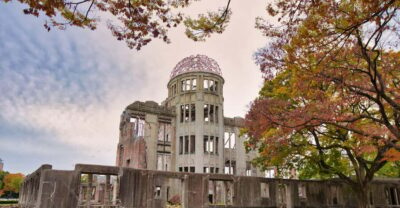
Osaka/Kyoto: Hiroshima Miyajima Bus Tour & Shinkansen Ticket
Read our review →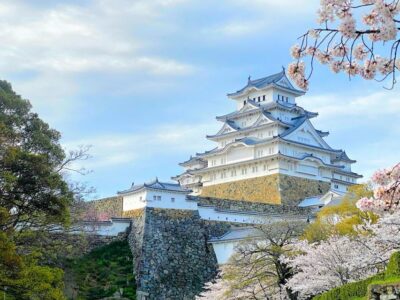
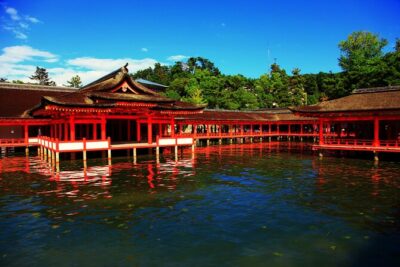
Hiroshima & Miyajima 1 Day Bus Tour with Bullet Train Tickets
Read our review →
Play with Snow Crab Buffet Lunch and Strawberry Picking Bus Tour
Read our review →Browse the lists this tour appears in