
Review · JAPAN BUS TOURS
Departing from Takayama [Regular sightseeing bus] World Heritage Sites Shirakawago and Gokayama Ainokura
The best part of this day trip is the pairing of quiet Ainokura with larger, busier Shirakawago. You see two versions of Japan’s famous steep-roofed farmhouses, rather than spending the whole day in one crowded village. I like the comfortable direct bus ride from Takayama, and I like having a guide explain what to look for before you step off the bus. The main drawback is time: Shirakawago offers plenty to see, and lunch, the observatory, and the museums can compete for the same few hours.
I also like the tour’s practical style. The guide gives maps, route advice, food suggestions, and seasonal information, then lets you explore independently. That suits you if you want help reaching remote villages without being shepherded from one sight to the next. Just remember to exchange your voucher for tickets at the Nohi Bus station before departure, and bring money for lunch.
Key points to know before booking
![Departing from Takayama [Regular sightseeing bus] World Heritage Sites Shirakawago and Gokayama Ainokura - Key points to know before booking](https://s1.bustourer.com/wp-content/uploads/departing-from-takayama-regular-sightseeing-bus-world-heritage-sites-shirakawago-and-gokayama-ainokura-1.jpg)
- Two very different Gassho villages: Ainokura is small and quiet, while Shirakawago is larger and has more restaurants, museums, shops, and viewpoints.
- A 7-hour-20-minute day from Takayama: The bus handles the long mountain-road journey, leaving you free to watch the scenery.
- Useful guidance without constant escorting: Guides explain the route, village layout, history, food, and seasonal details on the bus, then give you free time.
- Three included attractions: The Gassho-zukuri Minkaen open-air museum and Tenshukakau Observatory are included, along with entry to the tour itself.
- Lunch is your responsibility: You have time to eat in Shirakawago, but meals are not part of the $64.80 price.
- Best for independent sightseers: This works well if you want organized transport and background information, but prefer to walk at your own pace.
Why these mountain villages are worth the long ride
![Departing from Takayama [Regular sightseeing bus] World Heritage Sites Shirakawago and Gokayama Ainokura - Why these mountain villages are worth the long ride](https://s1.bustourer.com/wp-content/uploads/departing-from-takayama-regular-sightseeing-bus-world-heritage-sites-shirakawago-and-gokayama-ainokura-2.jpg)
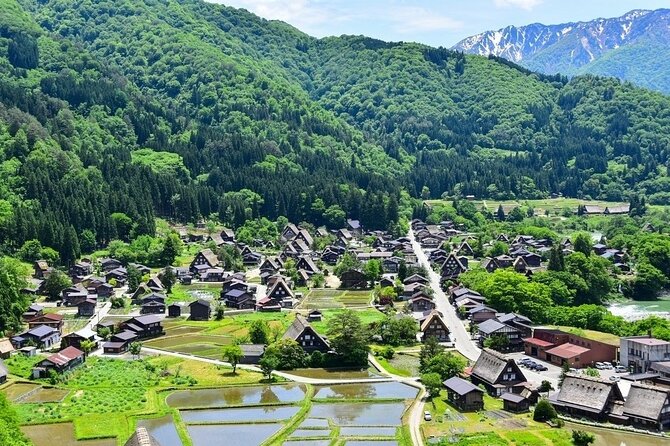
Ainokura and Shirakawago are known for Gassho-zukuri houses, the large wooden farmhouses with sharply sloping thatched roofs. The design suits a snowy region, where steep roofs help shed heavy winter snow. These are not reconstructed theme-park streets. They are living settlements, with houses, roads, gardens, small businesses, and mountain surroundings still forming the setting.
Reaching them independently from Takayama takes more planning than visiting the city’s central sights. This bus trip removes the transport puzzle and gives you a full day for the two villages. The journey is part of the experience, with views of the Hida region and Japan’s mountain country along the way.
The guide speaks during the ride, covering practical matters such as village layouts, suggested walking routes, local food, seasonal conditions, and some Hida dialect. That information matters because the villages are easier to enjoy once you know how they fit together. You can step off the bus with a plan instead of losing your first half hour looking for the right road or viewpoint.
The tour is shared with other passengers and operates by medium or large bus. The booking form allows up to four people per booking, but this is not a private vehicle experience. If you want a completely personal schedule, this is not the right format. If you want a reliable ride and some structure at a reasonable price, it makes good sense.
More Sightseeing Bus Tours in Japan
- Tokyo: Open Top Panoramic Sightseeing Bus with Audio Guide
★ 3.8 · 254 reviews - Tokyo: 60min Panoramic Open Top Bus Tour with Audio Guide
★ 4.0 · 40 reviews - Tokyo: Open Top Sightseeing Bus with Audio Guide
★ 4.5 · 5 reviews
Ainokura: a quiet first look at Gokayama
The first stop is Ainokura Gassho Community in Gokayama, in Toyama Prefecture. Around 20 Gassho-zukuri houses remain here, giving the village a smaller and more intimate feel than Shirakawago.
You have about 50 minutes. That is enough to walk through the settlement, take in the houses, and get a sense of how closely the village sits against the mountain. You will not have time to inspect every building at length, but Ainokura works well as an introduction.
I particularly like the order of the stops. You begin with the quieter village, where the traditional setting is easier to appreciate without the same volume of foot traffic found later in Shirakawago. Several people find the short walk from one side of Ainokura to the other manageable, which makes this stop a good choice if you want a clear view of the settlement without a long hike.
The 50-minute limit is also the first reminder that this tour is carefully timed. You will need to keep moving and return to the bus on schedule. Use your time for the village itself rather than trying to enter every possible building.
Snow can change the feel of Ainokura completely. Winter visits may bring white roofs, slippery paths, and a storybook setting, while autumn gives the wooden houses and surrounding hills a different color. The tour operates in changing conditions, so sensible shoes and clothing are important, though the supplied information does not promise any special equipment.
Shirakawago: the main stop with the most choices
The second stop is Shirakawago, the better-known UNESCO site. The village of Ogimachi contains 114 thatched Gassho-zukuri houses and offers far more to do than Ainokura.
You have about two hours in the historic village itself. That sounds generous at first, but it can pass quickly. You may want to walk among the houses, find lunch, visit a shop, take photographs, and reach a viewpoint. Add a museum visit and the schedule becomes tight.
The guide provides a map and suggestions before you set off. Pay attention to the route advice. Shirakawago is not difficult to walk, but a simple plan helps you avoid spending most of your free time wandering between the bus parking area and the main streets.
Lunch is not included, and this is one of the practical weak points. You have time to eat, but a popular restaurant can have a queue. One useful approach is to decide early whether lunch matters more to you than an extra sight. If you want the observatory and museum as well, a quick meal may be wiser than a long restaurant stop.
Shirakawago is also the crowded part of the day. That does not erase its appeal, but it changes the mood from Ainokura’s quiet mountain village to a more active sightseeing center. Shops and restaurants make it easier to find food and souvenirs, yet they also mean more people and more time spent waiting.
Some people find two hours enough, especially if they focus on the main streets and one viewpoint. Others want closer to three hours. The schedule is workable, but you should not expect to see every house, museum, and viewpoint at a leisurely pace.
Minkaen open-air museum: an included extra
![Departing from Takayama [Regular sightseeing bus] World Heritage Sites Shirakawago and Gokayama Ainokura - Minkaen open-air museum: an included extra](https://s1.bustourer.com/wp-content/uploads/departing-from-takayama-regular-sightseeing-bus-world-heritage-sites-shirakawago-and-gokayama-ainokura-4.jpg)
During the Shirakawago visit, the schedule includes about 30 minutes at Shirakawago Gassho-zukuri Minkaen. Admission is included.
The open-air museum gives you another way to understand the houses beyond their famous roofs. You can walk among preserved buildings and see how the architecture forms a village setting rather than a single postcard view. It is especially useful if you want more context about traditional rural buildings.
The time allocation is short, so decide how much of the museum you want before entering. Some people prefer spending this half hour in the village streets, while others find the museum more rewarding because it offers a closer look at the structures.
From December through March, the park is closed on Thursdays. If your visit falls on one of those Thursdays, the operator provides an original mascot instead of museum entry. That is a small seasonal detail, but it is worth checking when planning your day.
Same city, a different seat on a different deck:
- Mt Fuji and Hakone 1-Day Bus Tour Return by Bullet Train
★ 5.0 · 26,383 reviews - 1-Day Tokyo Bus Tour
★ 5.0 · 14,250 reviews - PERFECT KYOTO 1-Day Bus Tour
★ 5.0 · 13,518 reviews - Peaceful Hiroshima & Miyajima UNESCO 1 Day Bus Tour
★ 5.0 · 5,309 reviews
Tenshukakau Observatory: the classic Shirakawago view
The tour allows about 20 minutes at Tenshukakau Observatory. It sits on a hill northwest of Shirakawago and looks over the Gassho village.
This is the view often used in photographs and promotional images: the clustered steep roofs, the village below, and the surrounding mountains. If you have seen Shirakawago on a winter calendar, this is likely the sort of panorama you picture.
Twenty minutes is enough for the view and photographs, but not for a leisurely stop. You also need to account for the walk and return to the bus, following the guide’s timing closely.
Here is where the itinerary forces a choice. A long lunch queue can consume the time you need for the observatory. A museum visit can also mean giving up the viewpoint. Before arriving, decide which experience matters most to you. If the famous panorama is your priority, head there early. If you care more about food and village streets, accept that you may not fit everything in.
The observatory is included in the tour, so there is no extra admission charge listed for it. The real cost is your limited time.
What the guide adds, and what the guide does not do
This is a guided bus tour, not a private walking tour. The guide gives information in English and Japanese when needed, explains each stop during the drive, provides maps, and offers suggestions about routes and places to eat.
Guides named in tour feedback include Yamashia and Ikuichinami, though the person leading your departure may be different. The strongest guides on this route help you get oriented without filling every minute with commentary. That balance matters because the villages are best experienced on foot, at your own pace.
You should not expect the guide to walk beside you through every lane or explain every house in person. Once you arrive, the format is largely self-guided. One passenger described the experience as mainly transport, and that is a fair way to understand the product. You are paying for organized access, a comfortable bus, route information, and a layer of local explanation.
That can be a strength. You are free to stop for coffee, browse a shop, choose your own walking route, or eat by the river if you bring food. It can also disappoint you if you want a fully escorted cultural tour with continuous interpretation.
Is $64.80 good value from Takayama?
![Departing from Takayama [Regular sightseeing bus] World Heritage Sites Shirakawago and Gokayama Ainokura - Is $64.80 good value from Takayama?](https://s1.bustourer.com/wp-content/uploads/departing-from-takayama-regular-sightseeing-bus-world-heritage-sites-shirakawago-and-gokayama-ainokura-5.jpg)
At $64.80 per person, the price is reasonable if you value convenience. You receive air-conditioned transportation, a full-day route to two remote World Heritage villages, the guide’s information, and included entry to the Minkaen museum and observatory.
The price does not include lunch. It also does not buy you a private group, a custom schedule, or an in-depth personal guide. Your value comes from avoiding the work of arranging transport and from seeing Ainokura and Shirakawago in one day.
A direct local booking may sometimes cost less. One price comparison in the supplied information puts a Nohi Bus ticket at around 8,000 yen when bought directly, so compare the total before paying. Booking through a third-party platform may give you advance planning and a reserved date, but check the final card charge carefully and read the voucher instructions.
Give yourself extra time at the Takayama meeting point, 6-chome-125 Hanasatomachi. You may need to exchange the voucher for bus tickets at the Nohi Bus station. The tour starts at 8:30 a.m. and returns to the same meeting point after roughly 7 hours and 20 minutes.
Who should choose this day trip?
I would choose this bus tour if you are staying in Takayama and want both Gokayama and Shirakawago without arranging separate connections. It is also a good fit if you like a guide’s practical information but prefer to explore independently once you arrive.
It suits first-time visitors, photographers who want several classic views, and anyone interested in rural Japanese architecture. The air-conditioned bus is helpful because the route involves a substantial drive, and you can enjoy the mountain scenery without managing the roads yourself.
It is less suitable if you need a slow pace, want extensive time inside museums, or dislike fixed departure times. Families and older visitors can generally participate, but the schedule still requires walking through village streets and returning to the bus punctually.
Winter can be especially memorable, but weather affects the experience. The tour requires good weather and may be canceled if conditions are poor. In that case, you are offered another date or a full refund. Free cancellation is available up to 24 hours before the start time, while cancellations or changes inside that window are not refunded or accepted.
Should you book it?
Book this tour if your priority is easy access to two hard-to-reach villages and a well-organized day from Takayama. Ainokura gives you a quieter start, Shirakawago provides the bigger selection of food and sights, and the guide helps you use your limited time wisely.
Skip it if you want a private guide, a flexible schedule, or enough time to see every museum, restaurant, and viewpoint. For most independent sightseers, the balance is good: reliable transport, useful explanations, free time, and a memorable look at old rural Japan. Just plan your Shirakawago priorities before you leave the bus.
FAQ
Where does the tour depart from?
The tour departs from 6-chome-125 Hanasatomachi, Takayama, Gifu 506-0026, Japan. It also ends back at the same meeting point.
What time does the tour start?
The scheduled start time is 8:30 a.m.
How long does the experience last?
The tour lasts approximately 7 hours and 20 minutes.
Which villages does the bus visit?
The route visits Ainokura Gassho Community in Gokayama and the historic Gassho-style village of Shirakawago.
Is lunch included?
No. Lunch is not included, but you have time to eat at Shirakawago.
Is admission to the Minkaen museum included?
Yes. Admission to Shirakawago Gassho-zukuri Minkaen is included. The park is closed on Thursdays from December through March.
Is admission to the observatory included?
Yes. Entry to Tenshukakau Observatory is included.
Is this a private tour?
No. The tour is shared with other passengers and operates by medium or large bus. The maximum number on the application form is four people per booking.
Can I cancel for a refund?
You can cancel at least 24 hours before the local start time for a full refund. Cancellations and changes made less than 24 hours before the start time are not accepted or refunded. If poor weather causes the operator to cancel, you are offered another date or a full refund.
More history along the route around Japan
- Prague: Historic City Center Bus Tour with Top Sights
★ 4.4 · 2,360 reviews - 2-Hour Gettysburg Battlefield Guided History Bus Tour with a National Park Guide
★ 4.5 · 2,201 reviews - Top Rated Brooklyn Half-Day Food, History & Culture Tour via bus
★ 5.0 · 758 reviews - Charleston: Historic City Highlights Guided Bus Tour
★ 4.6 · 719 reviews
Recently added around Japan
- Play with Snow Crab Buffet Lunch and Strawberry Picking Bus Tour★ 5.0 · 88 reviews
- Hiroshima & Miyajima 1 Day Bus Tour with Bullet Train Tickets★ 4.5 · 105 reviews
- From Osaka: Himeji Castle, Arima Onsen & Mt. Rokko Day Tour★ 4.6 · 339 reviews
- Tokyo: 60min Panoramic Open Top Bus Tour with Audio Guide★ 4.0 · 40 reviews
- Tokyo Thrilling Open Top Bus Expressway Adventure Tour★ 4.3 · 5 reviews
- Tokyo: Open Top Sightseeing Bus with Audio Guide★ 4.5 · 5 reviews
- Tokyo: Open Top Panoramic Sightseeing Bus with Audio Guide★ 3.8 · 254 reviews
- From Hiroshima: Hiroshima & Miyajima 1 Day Tour with Lunch★ 4.7 · 395 reviews
Sightseeing Bus Tours, compared.

City Sightseeing Hop-on Hop-off Bus with Audioguide
Read our review →

Big Bus Hop-on, Hop-off Open-Top Sightseeing Tour
Read our review →
City Sightseeing London Hop-On Hop-Off Bus & Bookable Extras
Read our review →

City Sightseeing HOHO Bus Tour + Sunset & Night Tour
Read our review →
City Sightseeing Hop-On Hop-Off Bus with Audio Guide
Read our review →
Hop-on Hop-off Sightseeing Tour by Open-top Bus
Read our review →Browse the lists this tour appears in