
Review · TOKYO BUS TOURS
Tokyo: Open Top Panoramic Sightseeing Bus with Audio Guide
Tokyo is a huge city, and an open-top bus gives you a quick way to understand its scale. For $11, you can ride past Tokyo Tower, Ginza, and Rainbow Bridge without changing trains or working out a new station at every stop. It is a good first-day outing when you want to get your bearings fast.
I especially like the 70-minute length and the choice of two routes. The Bay Course brings sea views and Odaiba, while the City Course focuses on the Imperial Palace area, Roppongi, Tokyo Midtown, and Ginza. The main catch is the weather: the bus runs in rain or heat, and the roof may close when it rains.
Key points to know before you book
- Two routes, two different views: Pick the Bay Course for Rainbow Bridge and Odaiba, or the City Course for central Tokyo and its skyscrapers.
- GPS audio commentary: The system follows the bus and plays location-based information in seven listed languages, including English, Japanese, Chinese, French, Korean, Vietnamese, and Thai.
- A very low-cost introduction: At $11, this is one of the cheaper ways to see several major areas in one sitting.
- The open top depends on weather: Rain, strong heat, and cold can change the feel of the ride, and the roof may be closed.
- Arrive early: Check in 20 to 40 minutes before departure at the Tokyo VIP Lounge near Tokyo Station’s Yaesu North Exit.
- Bring suitable headphones: Optional headphones cost 100 yen, and the jack accepts only standard 3.5 mm mini plugs.
Why this bus works well on your first day
Tokyo can feel like several cities stitched together. The grand Imperial Palace district, neon Ginza, office towers, old temple grounds, and waterfront Odaiba all have different moods. A bus ride lets you see those changes without spending your first day learning the train network.
You do not get off at each landmark, so this is not a replacement for visiting Tokyo Tower, Zojoji Temple, or the Imperial Palace grounds. Think of it as a moving introduction. You look, listen, take notes, and later return to the places that catch your eye.
The short duration matters. Seventy minutes is long enough to cover a useful stretch of the city, but not so long that you lose half a day. If you have only a weekend in Tokyo, or you arrive tired after a long flight, this can be an easy first activity.
The price also keeps expectations clear. At $11, you are paying for a scenic overview, not a private guide, a hop-on hop-off ticket, or a stop-by-stop tour. That is a fair trade if you want orientation and views more than detailed personal commentary.
More Open-Top Bus Tours in Japan
- Tokyo: 60min Panoramic Open Top Bus Tour with Audio Guide
★ 4.0 · 40 reviews - Tokyo Thrilling Open Top Bus Expressway Adventure Tour
★ 4.3 · 5 reviews - Tokyo: Open Top Sightseeing Bus with Audio Guide
★ 4.5 · 5 reviews
Choosing between the Bay Course and City Course
The two routes leave from the same general area near Tokyo Station, but they show different sides of the capital. If your schedule allows only one, choose based on the type of Tokyo you most want to see.
The Bay Course: Rainbow Bridge, Odaiba, and Tokyo Tower
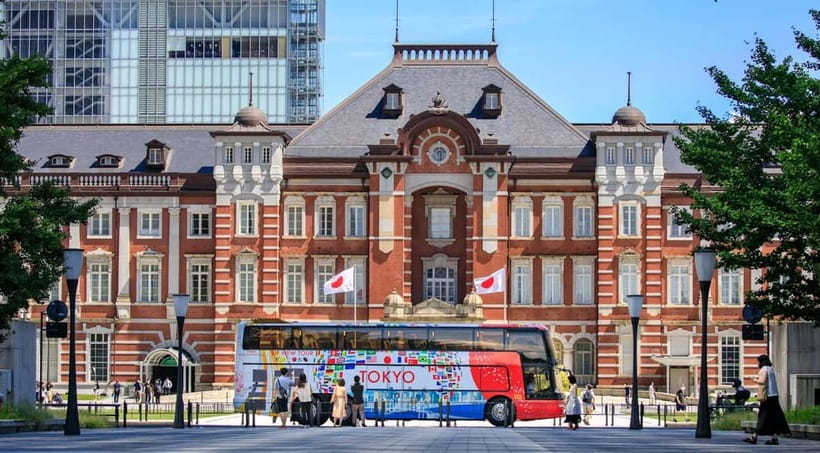
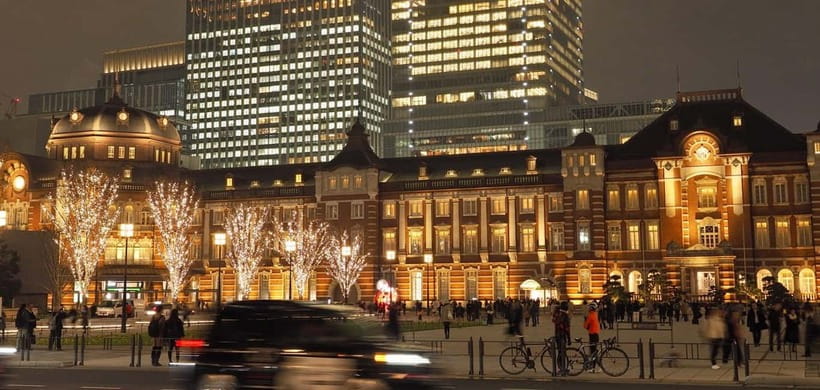
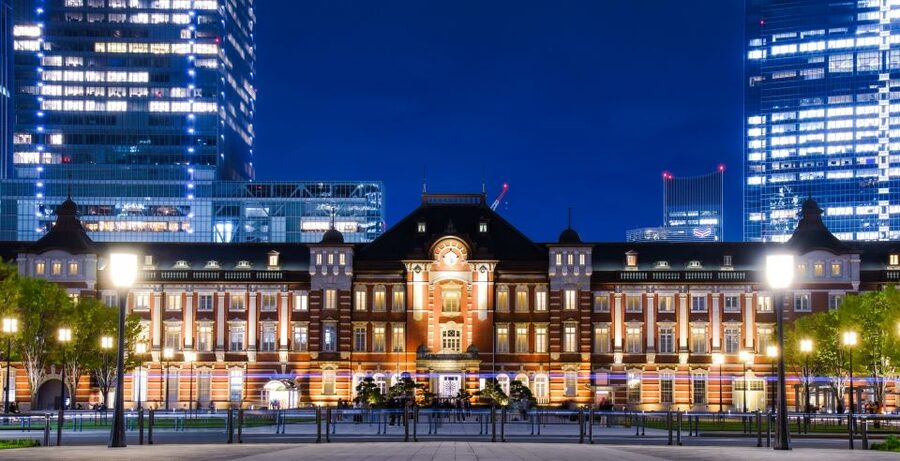
The Bay Course begins at the red-brick Tokyo Station building and moves through Marunouchi, the polished business district around the station. Tokyo Station itself is worth looking up at. Its historic red-brick exterior contrasts with the modern towers around it, and the bus gives you a quick view without asking you to cross the busy station complex.
The route then passes Zojoji Temple and Tokyo Tower. This is one of the more striking combinations in Tokyo: a traditional Buddhist temple area below a tall orange-and-white communications tower. From an ordinary street-level walk, you can study each separately. From the bus, you get the contrast in one sweep.
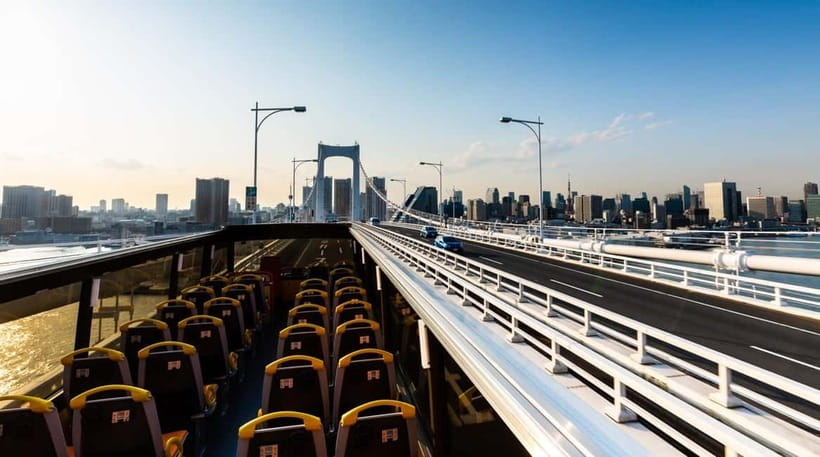
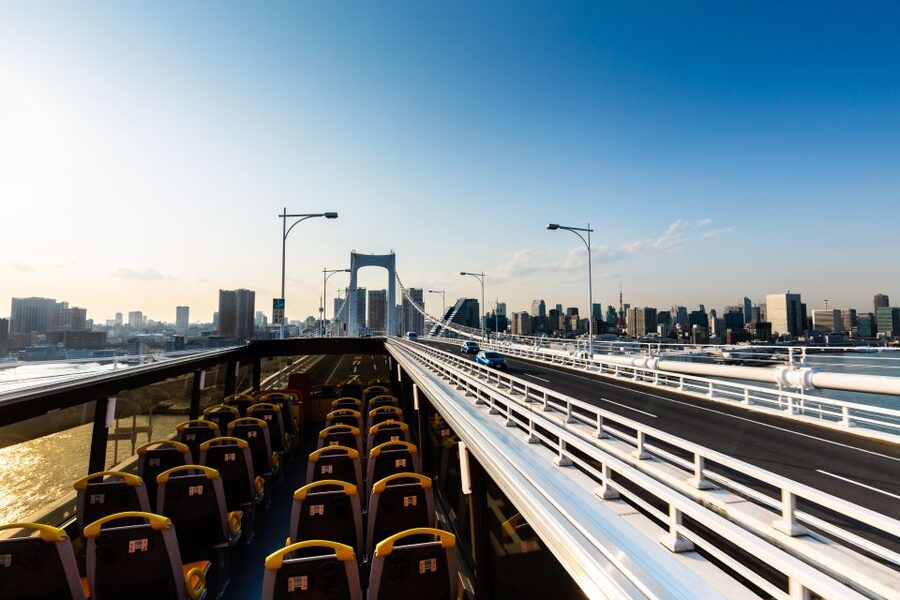
The most memorable section for many people will be the Rainbow Bridge. The bus crosses the bridge at one point on the first level and again on the second level later in the route. The elevated road gives you a broad view of Tokyo Bay and the city edges. Weather makes a real difference here. On a clear day, the open top should make the water and skyline feel much more open. In rain, the view becomes less reliable.
On the far side, you pass the Fuji TV Building, the Statue of Liberty replica, and Odaiba Seaside Park. Odaiba is a reclaimed waterfront district with wide public spaces and modern attractions. You will not have time to explore it from the bus, but the route helps you decide if it deserves a later visit.
The return section goes through Shiodome and Ginza. Shiodome is known for its tall modern buildings, while Ginza brings high-end shops and broad streets close to the heart of central Tokyo. The course ends back near the city center after giving you water, towers, temple architecture, and commercial Tokyo in one circuit.
Choose this course if Rainbow Bridge and Tokyo Bay are high on your list. It is also a good choice for anyone who likes city lights, modern architecture, and the meeting point between land and water.
The City Course: Imperial Palace views, Roppongi, and Ginza
The City Course stays closer to central Tokyo. It begins at Tokyo Station and passes through Marunouchi, where broad avenues and large office buildings frame the Imperial Palace area.
The route includes Chidorigafuchi, a moat area associated with the Imperial Palace grounds. The bus does not provide a palace visit, but this section gives you a sense of the greenery and open space that interrupts central Tokyo’s dense development.
Next comes the Akasaka State Guest House, followed by Meiji Jingu Gaien. These areas offer a different rhythm from Marunouchi and Ginza, with formal architecture, roads lined by trees, and public spaces used by people out for a walk or enjoying a weekend afternoon.
Tokyo Midtown and Roppongi shift the view back to modern towers and international business districts. Roppongi is known for its nightlife and cultural venues, while Tokyo Midtown combines offices, shops, and tall buildings. The bus gives you a quick look at this part of town without making you navigate its large underground passageways.
Tokyo Tower appears again on this route, followed by Hibiya and Ginza. Hibiya sits between the palace district and Ginza, and the final stretch brings you back into one of Tokyo’s best-known shopping and dining areas.
Choose the City Course if you want central Tokyo, high-rises, palace surroundings, Roppongi, and Ginza. I would favor it for a first overview of the city’s core. Choose the Bay Course if the bridge and waterfront matter more to you.
More Sightseeing Bus Tours in Japan
How the GPS audio guide works
The commentary system uses GPS to identify where the bus is and trigger information for the area outside your window. It is designed to adjust when traffic or road conditions change, which is useful on a city route where the bus may not reach each point at exactly the same time.
The listed audio options are Japanese, English, Chinese, French, Korean, Vietnamese, and Thai. This gives the tour broad language coverage, though the activity information also describes the system as delivering commentary in three languages based on location. I would confirm your preferred language at check-in if it matters to your booking.
You get facts about the landmarks as you pass them, rather than a live guide walking beside you. That makes the ride easy and quiet for most of the time, but it also means the experience may feel less personal than a small walking tour.
Bring your own headphones if you have them. The optional pair costs 100 yen, and the audio jack accepts only 3.5 mm mini plugs. A few practical sound issues are worth knowing: music plays between some sections, and it can feel too loud beside the spoken information. On some departures, a Japanese announcement over the bus loudspeaker has made it harder to hear the recorded guide.
The audio is most useful when you treat it as background context. Keep looking outside. Tokyo offers plenty to notice even when the commentary pauses.
The meeting point near Tokyo Station
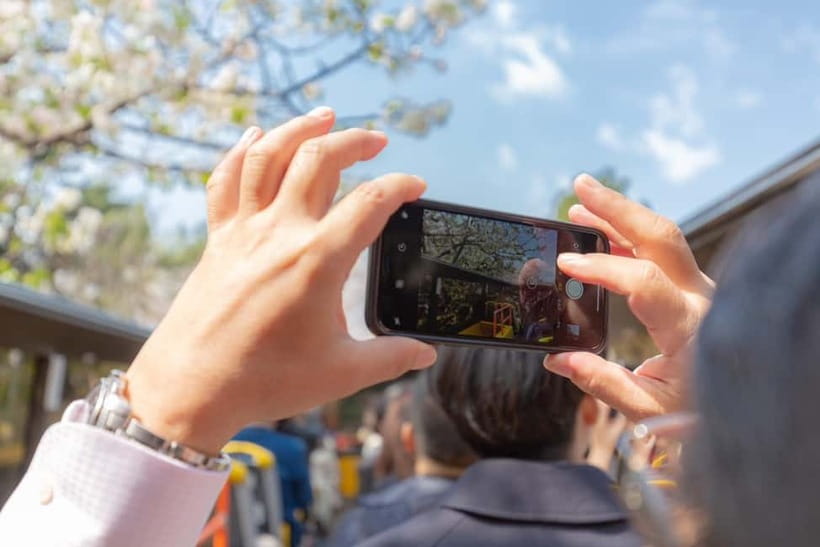
The Tokyo VIP Lounge is in a building with a Family Mart on the ground floor, about a five-minute walk from Tokyo Station’s Yaesu North Exit. The lounge uses the second and third floors.
This is not a grand airport-style lounge. It is a shared paid facility used by other customers, and the atmosphere can feel basic. The facility is free for open-top bus customers beginning 40 minutes before departure. Outside that window, you may need to pay the facility fee.
I would arrive 20 to 40 minutes early, especially if Tokyo Station is new to you. The station has several exits and a maze of underground paths. Do not rely on a last-minute dash from the platform.
At check-in, Japanese-speaking staff provide assistance. A short walk takes you from the lounge to the bus. Staff have been described as polite and helpful, but English ability may be limited. Keep your booking details and the meeting point map ready, and do not assume the lounge name will make the location obvious.
The bus leaves on schedule. It will not wait for late arrivals, even if you contact the operator before departure, and refunds are not provided for arriving at the wrong place or missing the departure. The contact number may also be unavailable outside Monday to Saturday, 9:30 AM to 6 PM Japan time.
What the open top feels like in Tokyo weather
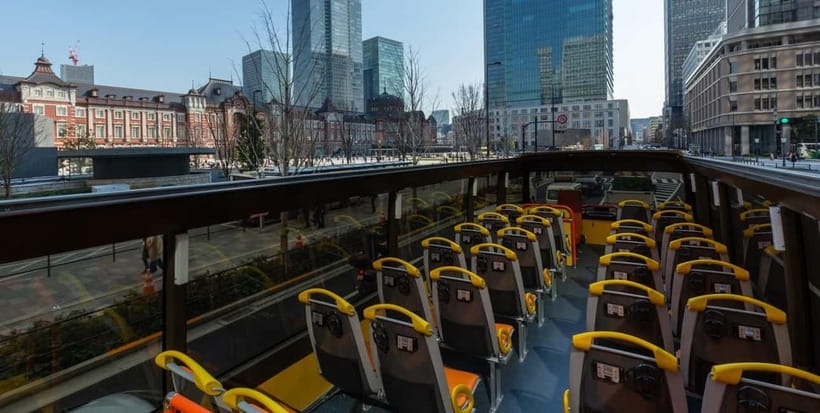
The open top is the reason to book this activity, but it is also the part least under your control. The tour operates in ordinary rain and poor weather, with cancellations reserved for extreme conditions such as typhoons. If rain comes, the roof may be closed.
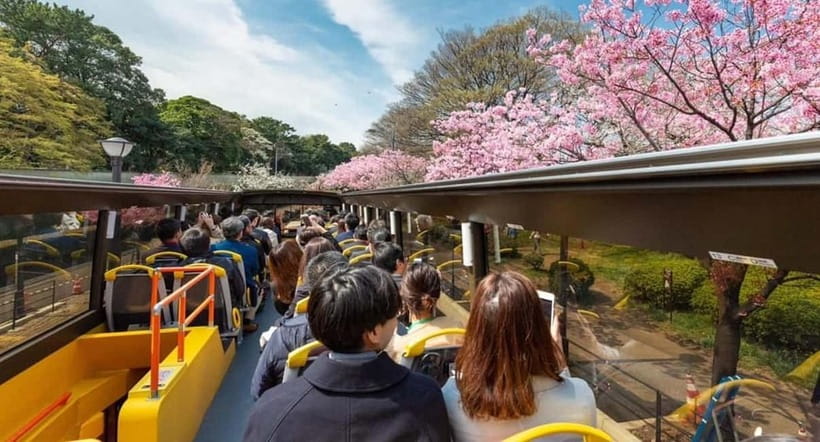
Cold air is noticeable on the upper deck, especially during the evening or on the bridge. Summer sun can be just as demanding. Bring clothing that matches the forecast, and do not assume the bus will feel like an indoor sightseeing vehicle.
You cannot use umbrellas on the vehicle. Smoking, food, and selfie sticks are also not allowed. These rules keep the ride safer and less cluttered, but they limit the usual ways you might manage rain or take photos.
The open top also affects photography. You get a higher view than from a normal car, but trees, signs, traffic lights, and other vehicles can interrupt the frame. Take your main photos when the bus is moving through open areas, such as the bridge or waterfront.
Comfort, space, and the limits of a $11 tour
The low price is the strongest argument for this experience. You can see a long stretch of Tokyo for $11, with transport, route planning, and audio information included. For a first-time visitor, that is useful value.
The tradeoff is comfort. Legroom can feel tight, and you are exposed to heat or cold on the open deck. This is a sightseeing ride, not a luxury coach. If you need lots of personal space or want a quiet, climate-controlled journey, the bus may disappoint.
There is no live guide. The instructor language is Japanese, while the GPS audio system provides the listed language choices. Staff help with boarding and basic arrangements, but you should not expect a personal explanation of every building or the chance to ask questions throughout the route.
The shared meeting room can also shape your first impression. It is functional rather than memorable, and you may need to wait according to the facility’s rules. Arriving too early can be awkward because free use begins 40 minutes before departure, not whenever you happen to reach the building.
Still, the main ride offers a lot for the cost. One departure can cover central avenues, temple grounds, tower districts, waterfront roads, and Ginza. You would spend more than $11 on separate train fares and short taxi rides while trying to recreate the same circuit.
Who should book this sightseeing ride
I would recommend it most strongly to:
- First-time visitors who want a quick sense of Tokyo’s size
- People with only one or two days in the city
- Families or couples who prefer to sit rather than make several train changes
- Visitors deciding which districts deserve a longer visit
- Anyone who likes city views, bridges, towers, and modern buildings
- People looking for a low-cost activity near Tokyo Station
I would be more cautious if you dislike exposure to weather, need generous legroom, or want detailed personal guiding. You should also think twice if you need absolute schedule certainty during heavy rain or changing road conditions, since departure times and routes can shift slightly because of traffic or weather.
The ride is especially useful on your first day. It gives you visual context before you tackle Tokyo’s enormous rail network. I would not use it as your only sightseeing activity, since you remain on the bus and do not have time to visit the places you pass.
Booking advice and cancellation details
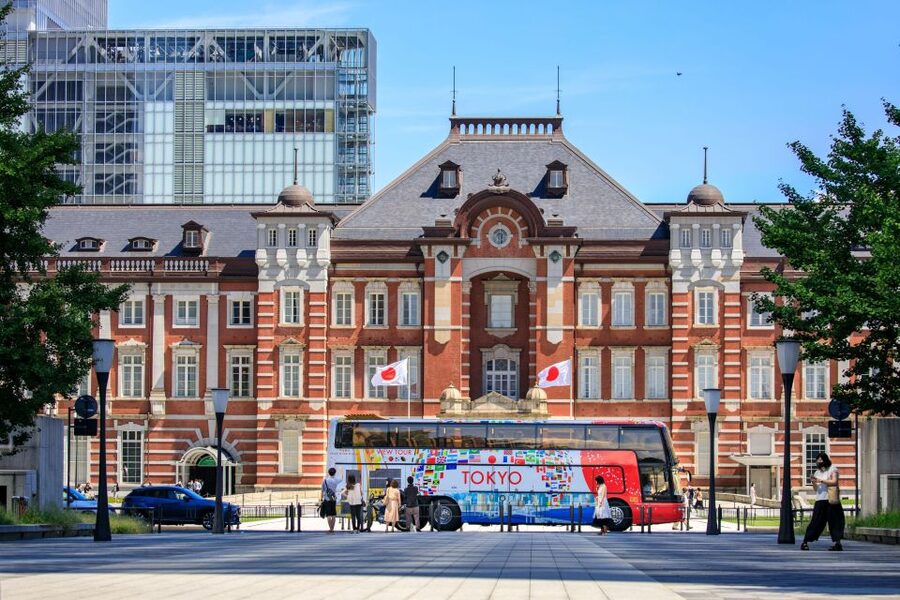
You can cancel up to 24 hours before departure for a full refund, and the reserve-now, pay-later option keeps your plans flexible. Check the available starting times when booking, since the activity runs at set departure times rather than whenever you arrive.
Keep checking the weather forecast before you go. A clear day should give you the best open-top experience, while rain may close the roof and reduce the appeal of the bridge and waterfront sections. The operator can cancel in extreme weather, such as a typhoon, but ordinary bad weather does not automatically stop the tour.
Should you book the Tokyo open-top bus?
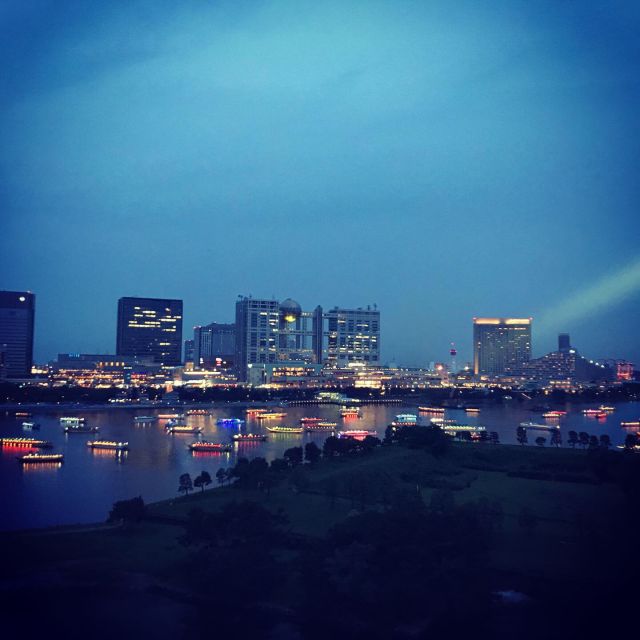
Book it if you want a cheap, easy introduction to Tokyo and can accept a basic bus, a recorded guide, and weather exposure. The Bay Course is the better pick for Rainbow Bridge, Odaiba, and Tokyo Bay. The City Course is better for the Imperial Palace area, Roppongi, Tokyo Tower, and Ginza.
Skip it if you want to step inside the landmarks, ask a guide questions, or control the pace. At $11, the value is clear, but the experience works best when you see it as a moving orientation tour. Arrive early, bring 3.5 mm headphones, dress for the forecast, and use the ride to plan what you will explore on foot afterward.
FAQ
How long is the Tokyo open-top bus tour?
The tour lasts 70 minutes.
How much does the tour cost?
The listed price is $11 per person.
Where is the meeting point?
Check in at the Tokyo VIP Lounge, located on the second and third floors of a building with a Family Mart on the ground floor. It is about a five-minute walk from Tokyo Station’s Yaesu North Exit.
How early should I arrive?
Arrive 20 to 40 minutes before your scheduled departure. The bus leaves on time and cannot wait for late arrivals.
Which routes can I choose?
You can choose the 70-minute Bay Course or the 70-minute City Course. The Bay Course includes Rainbow Bridge and Odaiba, while the City Course includes the Imperial Palace area, Tokyo Midtown, Roppongi, Tokyo Tower, Hibiya, and Ginza.
What languages are available for the audio guide?
The listed audio languages are Japanese, English, Chinese, French, Korean, Vietnamese, and Thai.
Are headphones included?
Headphones are not included. Optional headphones cost 100 yen, and the audio jack supports only 3.5 mm mini plugs.
Does the bus operate in the rain?
The tour operates rain or shine except in extreme weather, such as typhoons. If it rains, the open top may be closed.
Can I cancel for a refund?
You can cancel up to 24 hours before departure for a full refund. The reserve-now, pay-later option is also available.
More routes you ride at your own pace around Japan
- Los Angeles: Hop-On Hop-Off Bus Tour with Audio Guide
★ 3.7 · 2,030 reviews - Zurich: City Bus Tour with Audio Guide and Lake Cruise
★ 4.3 · 1,195 reviews - City Sightseeing Hop-On Hop-Off Bus Tour with Audio Guide
★ 3.0 · 1,083 reviews - Toulouse: City Sightseeing Tour by Bus with Audio Guide
★ 4.2 · 956 reviews
More routes with commentary in your ear around Japan
- Milan: City Sightseeing Hop-On Hop-Off Bus with Audio Guide
★ 4.0 · 6,256 reviews - London: Christmas Lights Bus Tour With Live Guide
★ 4.0 · 5,410 reviews - Big Bus Dublin Hop-on, Hop-off Sightseeing Tour with Live Guide
★ 4.5 · 2,387 reviews - Trieste Bus Tour with Audio Guide
★ 4.4 · 2,170 reviews
Recently added around Japan
- Departing from Takayama [Regular sightseeing bus] World Heritage Sites Shirakawago and Gokayama Ainokura★ 4.5 · 137 reviews
- Play with Snow Crab Buffet Lunch and Strawberry Picking Bus Tour★ 5.0 · 88 reviews
- Hiroshima & Miyajima 1 Day Bus Tour with Bullet Train Tickets★ 4.5 · 105 reviews
- From Osaka: Himeji Castle, Arima Onsen & Mt. Rokko Day Tour★ 4.6 · 339 reviews
- Tokyo: Open Top Sightseeing Bus with Audio Guide★ 4.5 · 5 reviews
- Tokyo: 60min Panoramic Open Top Bus Tour with Audio Guide★ 4.0 · 40 reviews
- Tokyo Thrilling Open Top Bus Expressway Adventure Tour★ 4.3 · 5 reviews
- From Hiroshima: Hiroshima & Miyajima 1 Day Tour with Lunch★ 4.7 · 395 reviews
Sightseeing Bus Tours, compared.
City Sightseeing Hop-on Hop-off Bus with Audioguide
Read our review →
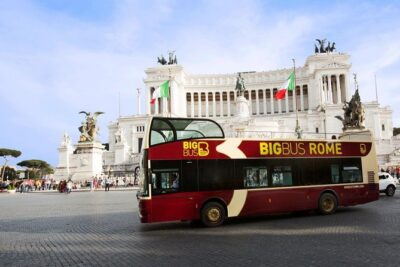
Big Bus Hop-on, Hop-off Open-Top Sightseeing Tour
Read our review →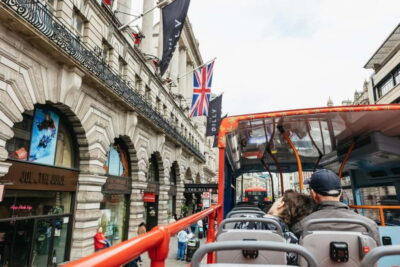
City Sightseeing London Hop-On Hop-Off Bus & Bookable Extras
Read our review →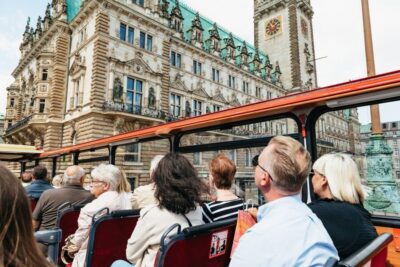
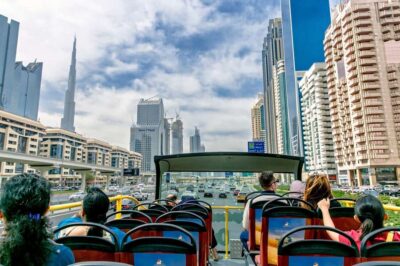
City Sightseeing HOHO Bus Tour + Sunset & Night Tour
Read our review →
City Sightseeing Hop-On Hop-Off Bus with Audio Guide
Read our review →
Hop-on Hop-off Sightseeing Tour by Open-top Bus
Read our review →Browse the lists this tour appears in