
Review · OSAKA BUS TOURS
Hiroshima & Miyajima 1 Day Bus Tour with Bullet Train Tickets
Hiroshima and Miyajima make a powerful pair: one asks you to reflect on war and peace, while the other offers sea views, shrine architecture, deer, food stalls, and a famous red torii gate. This tour links both in one long day, using the Shinkansen from Osaka, Kyoto, or Fukuoka and a private bus once you reach Hiroshima.
I like two things right away. First, the transport is mostly handled for you, including the bullet train, local bus, ferry, and admission fees. Second, the day includes Hiroshima-style okonomiyaki, so you get a proper local meal rather than another hurried station lunch.
The trade-off is time. You cover a lot in roughly 12 hours, but the Peace Memorial Museum and Miyajima each receive only about an hour of scheduled time. This is a highlights tour, not a slow visit.
Key points to know before booking
- A full Hiroshima day from Osaka: Leave around 8:18 a.m. from Shin-Osaka and return around 8:04 p.m.
- The bullet train is a major part of the value: Round-trip Shinkansen tickets are included, along with the Hiroshima bus and Miyajima ferry.
- Two very different places in one day: Visit the Atomic Bomb Dome and Peace Memorial Museum, then cross to Miyajima for Itsukushima Shrine and shopping streets.
- Lunch is more than a box meal: The included Hiroshima-style okonomiyaki comes with pork, cabbage, bean sprouts, fish powder, noodles, and eggs, with limited dietary options available.
- The ferry uses the Great Torii route: The boat is positioned to give you a close sea view of the famous shrine gate.
- Expect a brisk pace and plenty of walking: Comfortable shoes, water, and careful attention to meeting times will make a real difference.
Why this Hiroshima day trip works
The hardest part of seeing Hiroshima and Miyajima from Osaka is not deciding what to visit. It is fitting the two places together without wasting half the day changing trains, finding ferry tickets, and working out local transport.
This tour removes much of that work. You meet an assistant at the departure station, receive your Shinkansen tickets, and travel to Hiroshima. At Hiroshima Station, an English-speaking guide takes over, and the group continues by air-conditioned coach.
The arrangement is useful because Hiroshima and Miyajima are not next door to each other. The morning is spent around the Peace Memorial Park. After lunch, you travel by bus to Miyajimaguchi and cross by ferry. At the end of the afternoon, you return to Hiroshima Station for the train home.
The day is long, but the route makes sense. It moves from the serious history of Hiroshima to the calmer beauty of Miyajima, giving the experience a natural rhythm rather than cramming unrelated sights together.
The tour has a 4.7 rating from 105 reviews, with 94 percent recommending it. The strongest praise goes to the guides and the organization. Guides named Kane, Tom, Hiro, Joe, Miyuki, and Hiroguchi have been singled out for clear explanations, patience, warmth, and keeping the group moving.
More trips by rail around Japan:
- Mt Fuji and Hakone 1-Day Bus Tour Return by Bullet Train
★ 5.0 · 26,383 reviews - Granada City Train 1 or 2-Day Hop-On Hop-Off Ticket
★ 3.5 · 3,128 reviews - Swiss Travel Pass: Unlimited Travel on Train, Bus & Boat
★ 4.8 · 1,631 reviews
Starting with the Shinkansen from Osaka, Kyoto, or Fukuoka
From Osaka, you meet at Shin-Osaka Station’s Central Gate on the third floor at about 8:18 a.m. An assistant helps with the ticket handoff and boarding, but does not ride with you all the way to Hiroshima. You meet the main guide at Hiroshima Station’s Shinkansen gate on the second-floor North Exit.
From Kyoto, the meeting time is about 8:03 a.m. at the Shinkansen Central Gate on the second floor. From Fukuoka, you meet at Hakata Station’s Chikushi Gate, in front of three mailboxes, at about 8:23 a.m.
This station handoff deserves attention. Large Japanese stations can be confusing, especially when you are looking for a particular gate on an upper floor. Keep your phone charged, arrive early, and read the meeting instructions carefully. One traveler initially had trouble finding the right entrance but reached the group with help from the tour staff.
The train ride is not just a transfer. It is one of the reasons the tour can cover so much ground in a single day. The return service listed for Osaka is Nozomi 56, leaving Hiroshima at 6:43 p.m. and reaching Shin-Osaka at 8:04 p.m. The Kyoto return reaches Kyoto at about 8:19 p.m. The Fukuoka option uses Sakura 565, leaving Hiroshima at 6:52 p.m. and reaching Hakata at 7:59 p.m.
Because the train times are fixed, do not wander far from the group at Hiroshima Station. The whole day depends on catching the return train.
The Atomic Bomb Dome and Hiroshima’s difficult morning
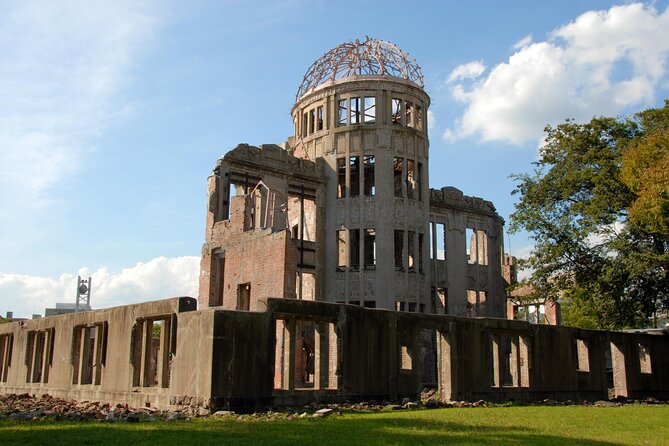
The first Hiroshima stop is the Atomic Bomb Dome, with about 30 minutes allotted. The preserved building is one of the most recognizable sights in the city, but its importance is not about appearance alone. It gives you a physical point of reference for the destruction caused by the atomic bomb and places the morning’s visit in a real setting.
Thirty minutes is enough for photographs and a short explanation, but not enough for a leisurely look at every memorial in the surrounding park. Your guide provides context while keeping the group on schedule.
The next stop is the Hiroshima Peace Memorial Museum, with admission included and about 60 minutes inside. This is the emotional center of the tour. The displays address the bombing, its victims, and the human effects that followed. You should expect the visit to feel serious and, at times, upsetting.
The museum can be crowded. With only an hour, you may need to move steadily through the exhibits rather than read every panel. Some people will find that frustrating, while others will value having a focused introduction before returning to Hiroshima independently on another trip.
The schedule also includes time around the memorial area, giving you more than a quick photograph at the Dome. The guides are expected to explain the sites with care. Kane, Tom, Hiro, and Miyuki are among the guides praised for clear historical explanations and a respectful approach.
If the Peace Memorial Museum is closed, the replacement visit is the Hiroshima National Peace Memorial Hall for the Atomic Bomb Victims. The museum is closed on December 30 and 31, and from February 16 to 21. Check the date before booking if the museum is a priority.
Hiroshima-style okonomiyaki for lunch
Lunch is included, and it is one of the more enjoyable practical touches. Hiroshima-style okonomiyaki differs from the better-known Osaka version because the ingredients are built in layers, with noodles included. The standard meal contains pork, cabbage, bean sprouts, fish powder, noodles, and eggs.
If you have never tried it, think of a savory griddled dish that combines vegetables, noodles, egg, and toppings in one filling meal. It is a useful introduction to local food, and several people found the lunch a highlight of the day.
Three meal choices are listed:
- Regular okonomiyaki
- No pork with eggs
- No pork, no fish powder, and no eggs
You must report allergies or dietary restrictions when booking. Menu changes cannot be made on the day, and you cannot bring your own food or drinks into the restaurant. Those with serious allergies should read the options carefully before paying.
Lunch also gives the day a needed pause. The morning is emotionally heavy, and the afternoon includes walking, ferry travel, and sightseeing. A substantial local meal helps you reset before Miyajima.
More single-day trips around Japan:
- 1-Day Tokyo Bus Tour
★ 5.0 · 14,250 reviews - PERFECT KYOTO 1-Day Bus Tour
★ 5.0 · 13,518 reviews - Peaceful Hiroshima & Miyajima UNESCO 1 Day Bus Tour
★ 5.0 · 5,309 reviews - Kyoto: Fushimi Inari, Kinkakuji, Bamboo Grove 1 Day Bus Tour
★ 4.8 · 4,316 reviews
Crossing to Miyajima on the Great Torii ferry route
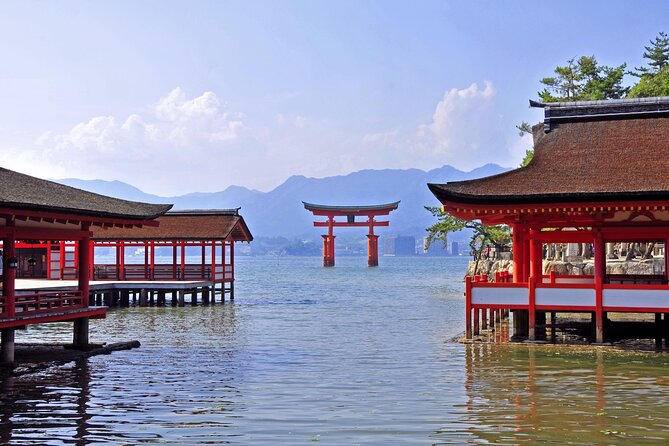
After Hiroshima, the coach takes you to Miyajimaguchi. From there, you board a ferry using the Great Torii route, designed to bring you close to the famous gate from the water.
This crossing is a highlight in its own right. The view changes as you approach the island, and the torii appears offshore in front of the shrine complex. The ferry gives you a better sense of how Miyajima is arranged than simply arriving by train and walking into town.
Weather affects this part of the day. Rain can soften the views, while hot weather makes the open-air walking more tiring. The tour requires good weather and may offer another date or a full refund if poor conditions force cancellation.
Itsukushima Shrine and the famous red torii
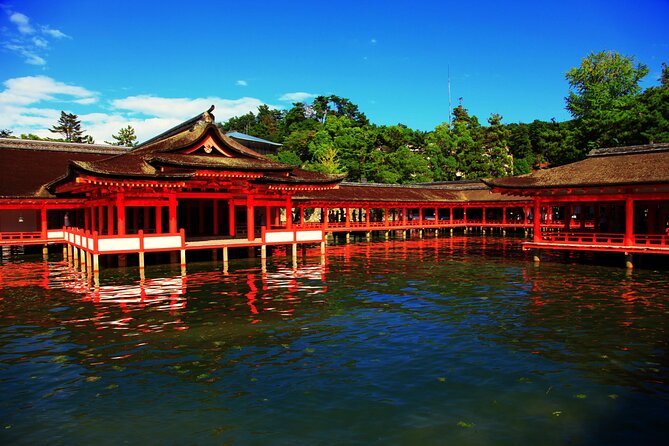
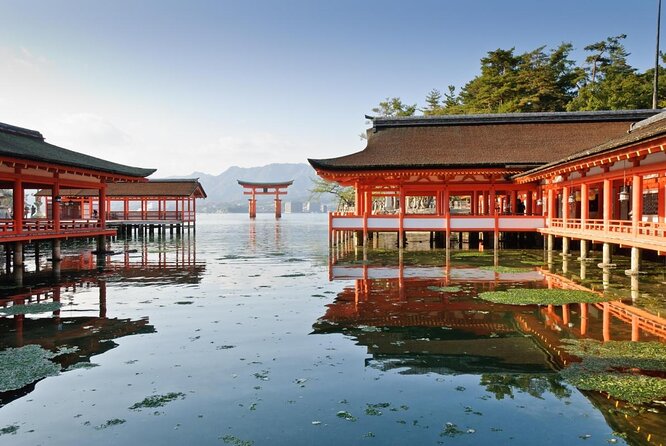
You have about 60 minutes at Itsukushima Shrine, with admission included. The shrine is known for its buildings and red torii gate set against the water. The tide affects how the scene looks, so the gate may appear surrounded by water or more accessible from the shore depending on conditions.
The shrine is photogenic, but do not treat it as only a photo stop. Its position facing the sea is central to the character of Miyajima, and the ferry approach helps you understand that design.
An hour is enough to enter the shrine, take photographs, and listen to the guide’s explanation. It is not enough to explore every corner of the island or add a ropeway ride, a long walk, or another major attraction. Those looking for a slower Miyajima visit will want to stay overnight or return independently.
The island also has deer. They are part of the Miyajima experience, but keep food and loose paper away from them. They may approach if they think you have something edible.
Omotesandō Street, snacks, and one hour of freedom
The final Miyajima stop is Omotesandō Shopping Street, with about 60 minutes of free time. This is where the tour becomes less structured. You can browse food stalls, look for souvenirs, and try local snacks.
The hour goes quickly. If you want photographs at the shrine, a snack, and shopping, decide what matters most before reaching the street. The island has more food than you can reasonably try in one visit, including seafood options and sweets, but personal food and drinks beyond lunch are not included.
This free time is also the best chance to take a break from the group. You still need to return at the agreed meeting point, so do not walk far into side streets without checking the time.
The contrast with the morning is one of the tour’s strengths. Hiroshima asks for quiet attention. Miyajima gives you sea air, traditional buildings, small shops, and a more relaxed hour to explore.
How much walking and waiting should you expect?
This is not a sit-back-and-watch-the-country tour. You walk around the Atomic Bomb Dome, memorial grounds, museum, shrine, ferry area, and shopping street. One person described the day as extensive, with a lot of walking, while another warned that toilet breaks and unstructured time are limited.
Wear shoes that are comfortable for a full day. In hot weather, carry water and use shade whenever possible. One guide, Tom, was praised for adding shade breaks and reminders to drink water during a very hot day, but you should still prepare for the conditions yourself.
The coach is air-conditioned, which matters after walking outdoors. Luggage can be stored in the bus luggage compartment during the tour. The experience is not recommended for people who have difficulty walking for long periods.
You will also need to keep track of the group. A late participant can affect everyone’s schedule, especially when a return train is reserved. Guides such as Kane and Hiro have been praised for handling delays calmly and maintaining the timetable, but the best way to help is to return promptly after each stop.
What the $270.88 price includes
At $270.88 per person, this is not a cheap day trip. The value depends on how much you would pay for the individual pieces and how much you value having someone manage the route.
Included are:
- Round-trip Shinkansen tickets from Osaka, Kyoto, or Fukuoka
- Air-conditioned bus transportation in Hiroshima
- English-speaking guide
- Hiroshima-style okonomiyaki lunch
- Itsukushima Shrine admission
- Hiroshima Peace Memorial Museum admission
- Miyajima ferry ticket
The bullet train is the largest cost built into the price. One person who initially found the tour expensive later felt the Shinkansen tickets made the price easier to understand. You also avoid buying ferry and attraction tickets separately, and you receive help at the stations.
You can probably spend less by arranging the train, local transport, ferry, meals, and admissions yourself. But independent planning takes time, and a mistake with the return train could be costly. I see this tour as a convenience purchase. It makes sense if you are based in Osaka or Kyoto, have only one day, and want the major sights without managing several connections.
It makes less sense if you prefer to linger in museums, choose your own restaurants, or spend half a day on Miyajima. The schedule is fixed, the group may be large, and the most popular sites can feel crowded.
The guides make the difference
The most consistently praised part of this experience is the human side. Joe is described as kind and helpful. Miyuki is credited with strong English and good pacing. Hiro is praised for warmth, clear explanations, and patience when people fell behind. Tom is noted for organization, historical detail, and care in hot weather. Kane is repeatedly associated with keeping the day on track while adding useful information.
That matters because this route can become confusing without a clear leader. You need someone to explain the morning’s history without reducing it to a rushed checklist, then guide you through the bus, ferry, shrine, and station connections.
The quality of spoken English can vary by guide. One person found a guide difficult to understand and felt the commentary was basic. That is a fair caution for anyone choosing the tour mainly for detailed interpretation. Still, the general picture is of guides who are attentive, organized, and respectful.
The tour supplies earphone guides for use during the day. Handle them carefully and return them afterward. Loss or damage can lead to a replacement charge of up to 18,000 yen.
Who should book this day trip?
I would recommend it most strongly to:
- First-time visitors staying in Osaka, Kyoto, or Fukuoka
- People who want Hiroshima and Miyajima in one day
- Anyone who prefers prearranged transport and admissions
- Visitors comfortable with a long day and regular walking
- People who want a guide for the Peace Memorial sites
- Families or couples who do not want to plan several rail and ferry connections
I would hesitate to recommend it to anyone who wants a quiet, flexible visit. The museum deserves more than an hour for many people, and Miyajima offers more than can fit into the afternoon schedule. A separate overnight stay would give you more time, but it would also cost more and require extra planning.
Should you book the Hiroshima and Miyajima tour?
Book it if your Japan schedule gives you one available day and Hiroshima is a priority. The tour covers the essential memorial sites, provides a meaningful introduction to Miyajima, includes a local lunch, and takes care of the costly long-distance train.
Go in with the right expectations. You will not see every corner of either destination, and you will spend much of the day watching the clock. But you will see the Atomic Bomb Dome, Peace Memorial Museum, Itsukushima Shrine, and the Great Torii from the ferry, all without having to build the route yourself.
For many people, that is a fair trade. The day is long and sometimes intense, yet the combination of solemn history, local food, sea views, and careful guidance makes this one of the more practical ways to add Hiroshima and Miyajima to an Osaka itinerary.
FAQ
How long is the Hiroshima and Miyajima tour?
The experience lasts about 12 hours. The Osaka version begins around 8:18 a.m. and returns to Shin-Osaka around 8:04 p.m. Kyoto and Fukuoka departures have slightly different meeting and return times.
Is the Shinkansen included?
Yes. The tour includes round-trip Shinkansen tickets from Osaka, Kyoto, or Fukuoka to Hiroshima.
Is lunch included?
Yes. Lunch is Hiroshima-style okonomiyaki. The listed choices are regular, no pork with eggs, or no pork, no fish powder, and no eggs. Dietary restrictions must be provided when booking, and changes cannot be made on the day.
Are the ferry and attraction fees included?
Yes. The Miyajima ferry, Itsukushima Shrine admission, and Hiroshima Peace Memorial Museum admission are included.
What happens if the Peace Memorial Museum is closed?
The tour visits the Hiroshima National Peace Memorial Hall for the Atomic Bomb Victims instead. The museum is closed December 30 and 31, and February 16 through 21.
Can I cancel for a refund?
You can cancel at least 24 hours before the experience starts for a full refund. Cancellations or changes made less than 24 hours before the start time are not accepted. If poor weather or an insufficient number of participants cancels the tour, you can choose another date or receive a full refund.
Recently added around Japan
- Departing from Takayama [Regular sightseeing bus] World Heritage Sites Shirakawago and Gokayama Ainokura★ 4.5 · 137 reviews
- From Osaka: Himeji Castle, Arima Onsen & Mt. Rokko Day Tour★ 4.6 · 339 reviews
- Play with Snow Crab Buffet Lunch and Strawberry Picking Bus Tour★ 5.0 · 88 reviews
- Tokyo: Open Top Sightseeing Bus with Audio Guide★ 4.5 · 5 reviews
- Tokyo: 60min Panoramic Open Top Bus Tour with Audio Guide★ 4.0 · 40 reviews
- Tokyo Thrilling Open Top Bus Expressway Adventure Tour★ 4.3 · 5 reviews
- Tokyo: Open Top Panoramic Sightseeing Bus with Audio Guide★ 3.8 · 254 reviews
- From Hiroshima: Hiroshima & Miyajima 1 Day Tour with Lunch★ 4.7 · 395 reviews
Train Experiences, compared.
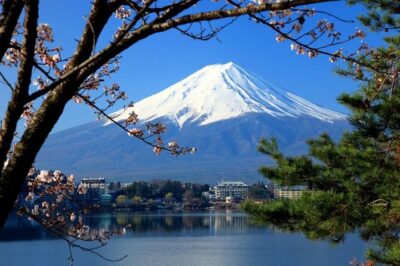
Mt Fuji and Hakone 1-Day Bus Tour Return by Bullet Train
Read our review →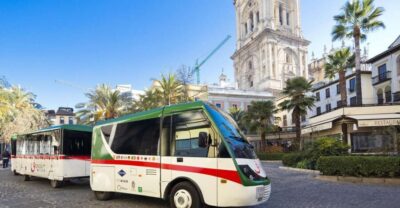
Granada City Train 1 or 2-Day Hop-On Hop-Off Ticket
Read our review →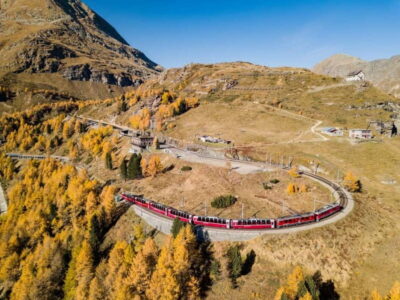
Swiss Travel Pass: Unlimited Travel on Train, Bus & Boat
Read our review →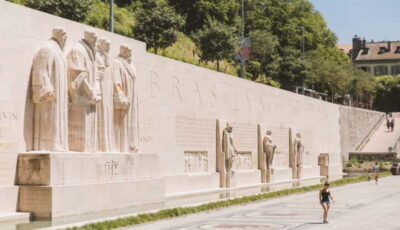

Hanoi City Tour: Bat Trang, Train Street, Lunch & Luxury Bus
Read our review →Browse the lists this tour appears in