
Review · TOKYO BUS TOURS
Tokyo: Mt.Fuji & Lake Kawaguchiko 1-Day Bus Tour w/Optional Lunch
Mt. Fuji is the star, but the best part of this day is seeing it from several different angles. You climb to Chureito Pagoda, stroll beside Lake Kawaguchiko, photograph seasonal flowers at Oishi Park, and finish in a traditional thatched-roof village beside Lake Saiko.
I like the easy bus transport from Shinjuku and the way the stops mix famous views with a quieter cultural visit. I also like the guides, who can make a long day more enjoyable. Names praised in the feedback include Mitsuko, Eric, Chen, Omar, Kogi, and Mizuki. The catch is simple: Fuji may hide behind clouds, and traffic can stretch the day.
Key points to know before you book
- Chureito Pagoda requires 398 steps, so bring shoes you can comfortably walk and climb in.
- The bus removes the hassle of piecing together trains and local connections from Tokyo.
- Lunch is optional, with several choices available when you reserve, including Japanese dishes and Kobe beef.
- You get several Fuji viewpoints, from the pagoda, lake shore, flower park, and traditional village.
- The group may be large, with up to 94 people on the tour.
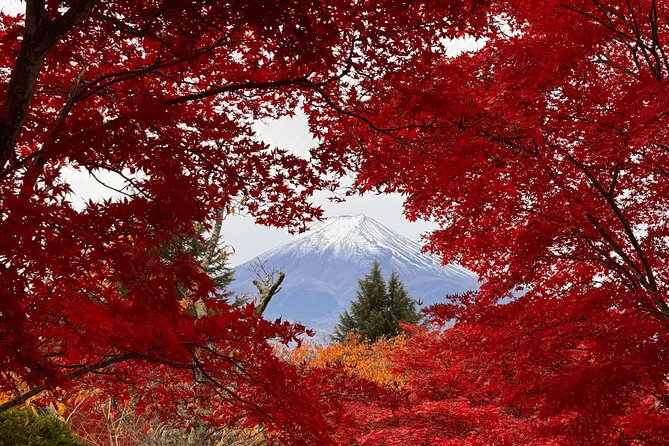
- November brings an autumn adjustment, with a stop at a maple-lined corridor near Lake Kawaguchiko.
Why this Mt. Fuji day trip works from Tokyo
At about $77.96 per person, this is a practical way to reach the Fuji area without renting a car or working out a complicated route by rail and bus. The price covers the air-conditioned vehicle, taxes, handling charges, live commentary, and admission to Saiko Iyashi no Sato Nenba. Lunch costs extra unless you select a lunch-inclusive option.
The value comes mainly from the transport and the number of places covered in one day. You can see the famous pagoda, spend time at Lake Kawaguchiko, visit Oishi Park, and walk through a recreated traditional village before returning to Shinjuku.
You should think of this as a sightseeing sampler, not a slow retreat in the Fuji foothills. The day lasts roughly 9 to 10 hours, and every stop has a departure time. You get variety, but you will not have unlimited time at any one location.
The meeting point is near the Shinjuku Station West Exit area, at Shinjuku Post Office. You need to arrive at least 10 minutes early and confirm your name with the guide or staff. The bus leaves on time, and a late arrival or wrong meeting point means missing the tour without a refund.
More Bus Day Trips in Japan
- Mt Fuji and Hakone 1-Day Bus Tour Return by Bullet Train
★ 5.0 · 26,383 reviews - 1-Day Tokyo Bus Tour
★ 5.0 · 14,250 reviews - PERFECT KYOTO 1-Day Bus Tour
★ 5.0 · 13,518 reviews
The 398 steps to Chureito Pagoda
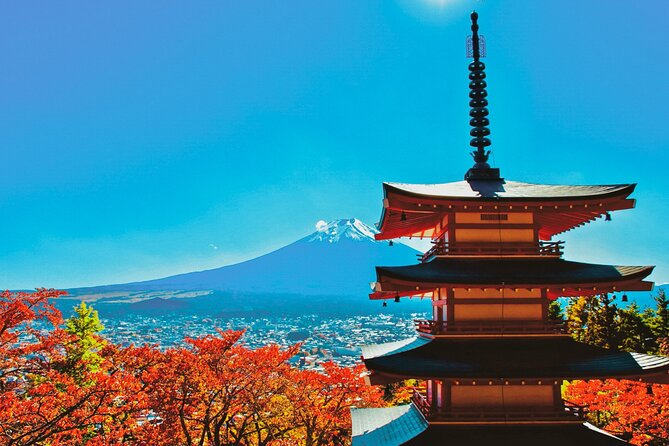
The first major stop is Arakurayama Sengen Park, home to the view that appears on countless Japan postcards: the five-story Chureito Pagoda with Mt. Fuji behind it. On a clear day, this is the visual prize of the whole outing.
Reaching the viewing platform takes effort. The observation deck sits partway up Mt. Arakura, and the route includes 398 steps. The climb is manageable for anyone with moderate fitness, but it is not a quick stroll from the bus.
Give yourself time to go steadily rather than racing upward. You will want to pause for photographs, and the stairs can feel more demanding if you are visiting in cold weather or carrying a day bag.
The view changes with the season. Spring brings the famous combination of cherry blossoms, pagoda, and Fuji. Other seasons offer a different mix of colors, and the mountain may look especially sharp against cooler air. Still, the key factor is weather, not the calendar. Fuji visibility is never guaranteed.
This stop also includes Shinkura Fuji Sengen Shrine, a historic shrine founded in 750. The pagoda and shrine give the viewpoint more meaning than a simple photo stop. You are seeing a place where religious tradition, mountain worship, and one of Japan’s best-known peaks come together.
Lake Kawaguchiko and the craft park lunch stop
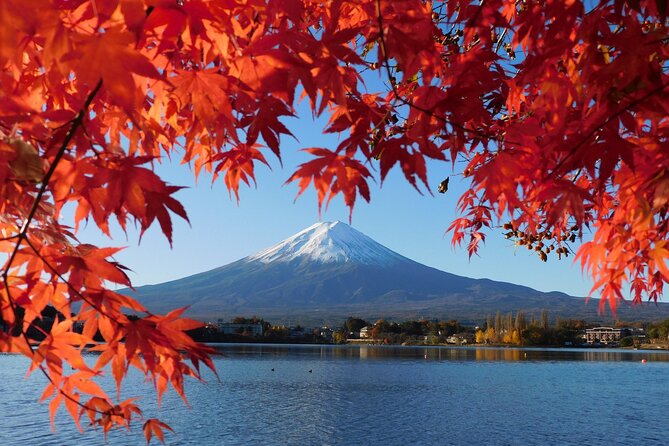
The bus then heads to the northern side of Lake Kawaguchiko and Kawaguchiko Craft Park. This is the longest part of the middle section, with about two hours assigned to the lake and craft park area.
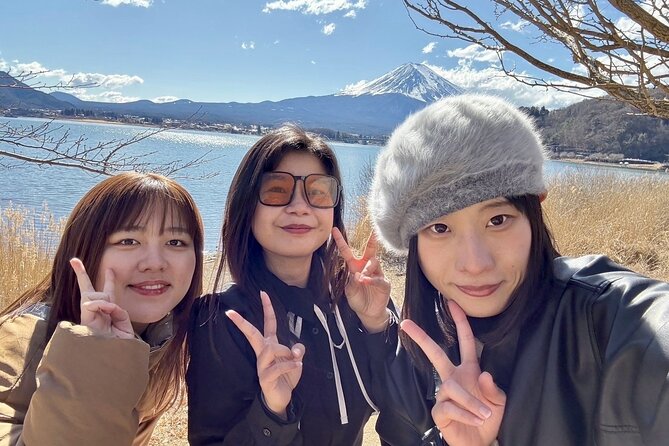
The setting is calmer than the pagoda viewpoint. You can walk beside the water, look for Fuji’s reflection, browse local crafts, and take a break from the bus. The lake is also a useful place to reset before the afternoon stops.
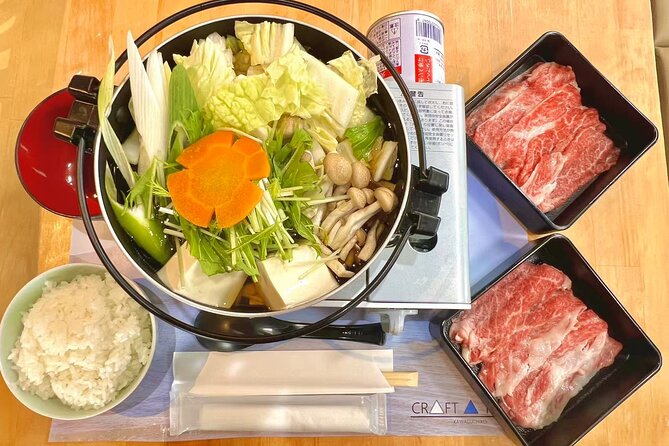
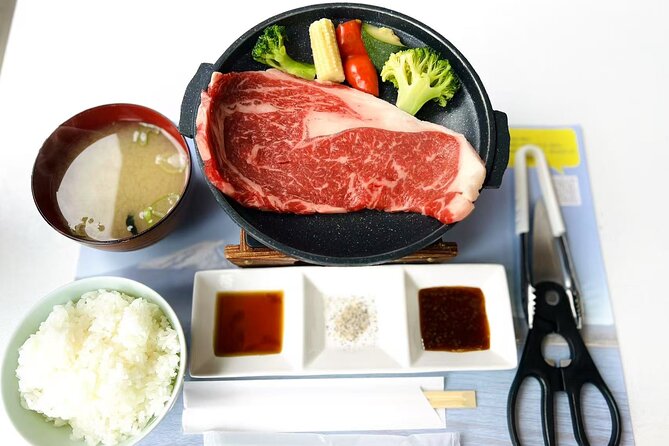
Lunch is available at your own expense, or you can book a lunch option in advance. The choices vary, and the supplied options include Japanese cuisine, noodles, steak, wine-based dishes, and Kobe beef. Several people found the meals tasty, though one useful caution is that portions may feel small if you have a large appetite.
I would decide about lunch when booking. Choosing the included meal makes the day simpler because you do not need to find a table during a fixed stop. Paying on your own gives you more freedom, but the timetable means you should not expect a long restaurant search.
Kawaguchiko Craft Park is also a place to consider the region’s handmade traditions. The wider lake area includes attractions linked to silk work, music, art, and local food. The tour does not promise entry to every nearby museum or attraction, so treat those places as background to the lake stop rather than guaranteed visits.
Oishi Park and Fuji through the flowers
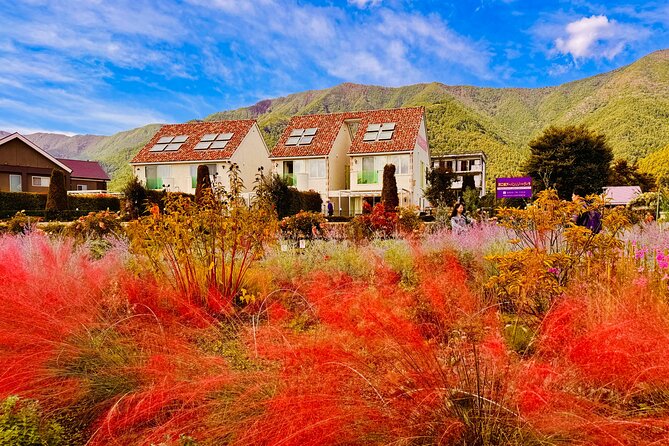
Oishi Park is a shorter stop, usually about 30 minutes, but it earns its place on the route. The park runs along Lake Kawaguchiko and is planted with flowers that change through the year.
This is a good location for photographs because the flowers add a foreground to the lake and mountain. If Fuji is visible, you can frame the peak beyond the flower beds or try for its reflection on the water.
The nearby Fuji Oishi Hana Terrace has low-rise shops designed to fit the area’s scenery. The Kawaguchiko Natural Living Center sells local items, including blueberry-related gifts and souvenirs. You may have time to browse, but the short stop means you should put photographs first if the weather is clear.
The park also gives you a different sense of Fuji. At Chureito, the mountain appears behind a pagoda from a high viewpoint. Here, it sits beyond open water and gardens. That change of setting helps justify the bus ride, especially for first-time visitors who want several classic views in one day.
Do not count on a quiet, empty park. This is one of the well-known stops around Kawaguchiko, and shops and photo areas can feel tourist-oriented. That is not a flaw if you want easy access to food, gifts, and clean viewpoints. It matters if your ideal Fuji day means remote paths and very few people.
More Bus Day Trips in Tokyo
- Mt Fuji and Hakone 1-Day Bus Tour Return by Bus
★ 4.5 · 929 reviews
Saiko Iyashi no Sato Nenba’s thatched roofs
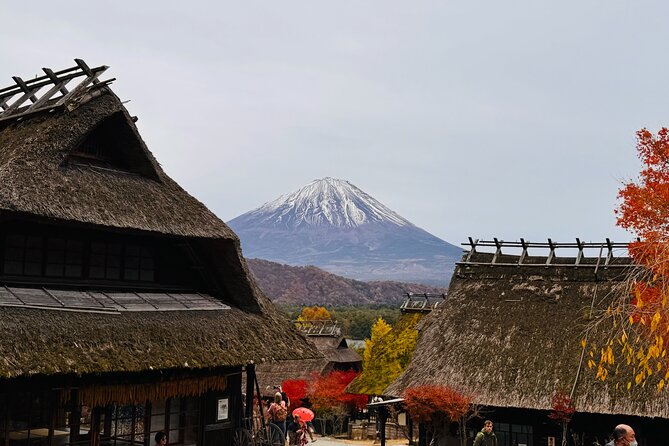
The last major stop is Saiko Iyashi no Sato Nenba, a reconstructed village beside Lake Saiko. About an hour is set aside here, and admission is included.
The village has traditional thatched-roof houses that offer a clear contrast to the modern city you left that morning. You can walk between the buildings, see local crafts and goods, and take in views toward Mt. Fuji and the lake.
This stop gives the tour its strongest cultural note. The pagoda and shrine show one side of Japan’s connection to sacred mountains. The village shows how older rural homes and crafts are presented for visitors today.
You will also find attractive gifts and snacks here. The stop works well for shopping because the setting feels more distinctive than a standard roadside store. Still, it is a recreated village, so you should not mistake it for an untouched historic settlement.
The village is especially worthwhile if clouds obscure Fuji at the earlier viewpoints. You can still enjoy the houses, roofs, local products, and lakeside setting even when the mountain disappears. That helps protect the day from becoming a single all-or-nothing mountain photograph.
What the guide and bus add to the day
The guide is an important part of this experience because you spend a large share of the day on the road. Live commentary can turn the drive between stops into useful context about Fuji, the shrines, local traditions, and the places ahead.
Guide assignments vary. Names associated with especially strong service include Mitsuko, Eric, Chen, Omar, Kogi, and Mizuki. Mitsuko is praised for warmth, energy, and helping with photographs. Chen is noted for fluent English and Chinese commentary, while Omar is described as humorous and clear. Mizuki is praised for practical photo advice and friendly help.
Depending on the number of bookings, English and Chinese commentary may be given on the same bus. That can mean a little more listening time, but it also makes the tour workable for guests using either language.
The bus is air-conditioned, clean, and modern according to the supplied feedback. The driver also receives strong praise for smooth, comfortable driving. That matters because the journey is long, and the Fuji area is far easier by organized vehicle than by trying to connect several local services in one day.
The possible downside is group size. The tour can carry as many as 94 people, so you should expect a group-tour rhythm rather than personal guiding. Guides generally help by explaining the meeting times and best photo spots, but you still need to watch the clock and return to the bus promptly.
Weather, traffic, and the Fuji gamble
Mt. Fuji is a mountain, not a scheduled performance. Clouds can cover the summit even when the lower slopes are visible, and the tour runs regardless of normal weather or traffic unless the operator contacts you with a change.
That uncertainty is the main consideration before booking. You can see the pagoda, lakes, village, and surrounding area even on a cloudy day, but the signature Fuji view may not appear.
Traffic is another variable. The drive from Tokyo can slow down, and the return time is only approximate. The tour is intended to get you back to Shinjuku in time for dinner, but you should not book a cruise, restaurant reservation, or other fixed activity immediately afterward.
December 14 can bring extra traffic connected with the Mt. Fuji Marathon. If your date falls then, allow more flexibility.
November has a small itinerary change. After Kawaguchiko Craft Park, the bus visits a maple corridor with more than 400 trees, giving the day a stronger autumn focus. Seasonal changes like this are useful, but they also mean you should read the final schedule supplied for your departure date.
Lunch, luggage, and physical effort
The tour suits people with moderate physical fitness. The main physical challenge is the climb to Chureito Pagoda, but you will also spend the day getting on and off the bus and walking around parks, the lakeshore, and the village.
Wear comfortable shoes. You do not need specialist hiking gear, but thin fashion shoes may make the pagoda stairs unpleasant.
One piece of luggage per person is allowed. Stored luggage cannot be reached between stops, and the combined height, width, and depth should not exceed 155 centimeters. Keep valuables and anything needed during the day with you.
For lunch, the included option is convenient for families and anyone who dislikes making food decisions on a tight schedule. The paid option may suit you if you prefer to choose your own meal. The food receives strong praise overall, but portions can be modest, so an extra snack is sensible.
Who should book this tour
I would recommend this outing to a first-time visitor based in Tokyo who wants to see Mt. Fuji without handling several transport connections. It also suits families, solo visitors, and anyone with only one free day.
The route works well for photographers because you get several Fuji angles and practical help from guides who know where to stand. It also suits people who want more than a mountain lookout, thanks to the shrine, craft area, flowers, and traditional village.
I would hesitate if you dislike fixed schedules, large groups, or tourist shops. You may also prefer a smaller private tour if you want long walks, quiet villages, or the freedom to wait for a brief break in the clouds.
The cancellation terms are reasonable: you can cancel at least 24 hours before the start for a full refund. Changes or cancellations inside that window are not refunded, and the experience may be changed or fully refunded if the minimum number of participants is not reached.
Should you book the Mt. Fuji and Kawaguchiko bus tour?
Book it if you want an efficient first look at the Fuji region and value transport, several viewpoints, and a guide more than a slow, independent day. The combination of Chureito Pagoda, Lake Kawaguchiko, Oishi Park, and Saiko Iyashi no Sato Nenba gives you a fuller picture than a single photo stop.
Just keep your expectations realistic. The mountain may be hidden, the bus may be delayed by traffic, and the schedule can feel brisk. Arrive early, wear good shoes, keep your afternoon free, and choose lunch in advance if convenience matters. With those points in mind, the $77.96 price is fair for a full day from Tokyo.
FAQ
Where does the tour start and finish?
The tour starts and ends at Shinjuku Post Office near the Shinjuku Station West Exit area. This is the only listed drop-off location.
How long does the tour last?
The experience lasts approximately 9 to 10 hours. Road traffic and weather can change the schedule, and the return time is not guaranteed to be exact.
Is lunch included?
Lunch is included only if you select the lunch-inclusive option when booking. Otherwise, lunch is at your own expense at the Kawaguchiko Craft Park stop.
How difficult is the climb to Chureito Pagoda?
The viewing platform requires climbing 398 steps. The tour recommends a moderate level of physical fitness.
Can I be sure I will see Mt. Fuji?
No. Visibility depends on weather conditions and cannot be guaranteed. You can still visit the pagoda, lakes, parks, and traditional village if clouds cover the mountain.
Is admission to Saiko Iyashi no Sato Nenba included?
Yes. Admission to Saiko Iyashi no Sato Nenba is included in the tour.
Can I bring luggage?
One piece of luggage per person is allowed. Luggage stored in the trunk should not exceed 155 centimeters in combined height, width, and depth, and you cannot access it between stops.
What happens if I arrive late?
The bus departs on time and cannot wait. Arriving late or going to the wrong meeting point can result in missing the tour without a refund.
More single-day trips around Japan
- Peaceful Hiroshima & Miyajima UNESCO 1 Day Bus Tour
★ 5.0 · 5,309 reviews - Kyoto: Fushimi Inari, Kinkakuji, Bamboo Grove 1 Day Bus Tour
★ 4.8 · 4,316 reviews - Tokyo: Kamakura & Enoshima Day Trip including Temple Tickets
★ 4.5 · 1,375 reviews - Mt Fuji & Hakone Cruise, Drum Show Bus 1 Day from Tokyo
★ 4.0 · 1,287 reviews
More stops that include lunch around Japan
- From Hiroshima: Hiroshima & Miyajima 1 Day Tour with Lunch
★ 4.7 · 395 reviews - Play with Snow Crab Buffet Lunch and Strawberry Picking Bus Tour
★ 5.0 · 88 reviews - Prague: Vltava River Lunch Cruise in an Open-Top Glass Boat
★ 4.5 · 2,865 reviews - Naxos: Highlights Bus Tour with Free Time for Lunch and Swim
★ 4.8 · 1,434 reviews
Recently added around Japan
- Departing from Takayama [Regular sightseeing bus] World Heritage Sites Shirakawago and Gokayama Ainokura★ 4.5 · 137 reviews
- From Osaka: Himeji Castle, Arima Onsen & Mt. Rokko Day Tour★ 4.6 · 339 reviews
- Play with Snow Crab Buffet Lunch and Strawberry Picking Bus Tour★ 5.0 · 88 reviews
- Hiroshima & Miyajima 1 Day Bus Tour with Bullet Train Tickets★ 4.5 · 105 reviews
- Tokyo: 60min Panoramic Open Top Bus Tour with Audio Guide★ 4.0 · 40 reviews
- Tokyo Thrilling Open Top Bus Expressway Adventure Tour★ 4.3 · 5 reviews
- Tokyo: Open Top Sightseeing Bus with Audio Guide★ 4.5 · 5 reviews
- Tokyo: Open Top Panoramic Sightseeing Bus with Audio Guide★ 3.8 · 254 reviews
Bus Day Trips, compared.
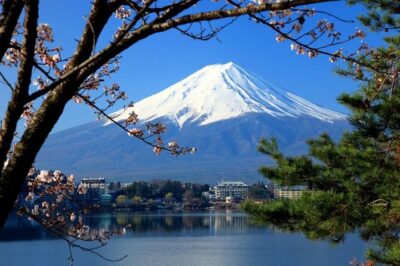
Mt Fuji and Hakone 1-Day Bus Tour Return by Bullet Train
Read our review →
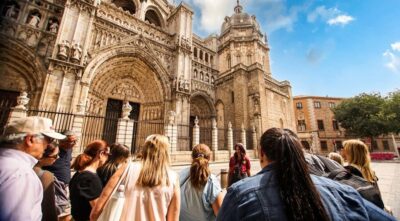
Day Trip to Grindelwald, Interlaken & Lauterbrunnen
Read our review →
Munich Hop-On Hop-Off Tour: 1-Day or 2-Day Ticket
Read our review →
From NYC: Guided Day Trip to Washington DC by Van or Bus
Read our review →Browse the lists this tour appears in