
Review · BERLIN BUS TOURS
Berlin & Sachsenhausen: 5-Hour Tour “Third Reich” by VW-Bus
The most striking part of this tour is the way it links Nazi government offices in central Berlin with Sachsenhausen, the concentration camp built close to the capital. You move from the machinery of power on Wilhelmstrasse to the prison cells, barracks, and memorial grounds outside the city.
I like the private VW bus and the chance to ask direct questions without a large group slowing things down. I also like the serious, measured approach of guide Johannes Westerkamp, who has helped families and teenagers engage with difficult material. The main drawback is simple: five hours is tight if you want a thorough visit to Sachsenhausen.
Key points to know
- Wilhelmstrasse connects the Nazi leadership to the modern city, including former offices of Goebbels and Göring.
- The private format suits families and small groups, with room for questions and quiet reflection.
- Sachsenhausen is the emotional center of the tour, but the schedule gives you only limited time there.
- The Topography of Terror adds essential context about the Gestapo, SS, and Reich Security Head Office.
- Hotel pickup is included within 10 kilometers of Brandenburg Gate, making the morning easy to organize.
- The $448 price covers up to two people, so the value improves sharply when two people share the booking.
From Wilhelmstrasse to Sachsenhausen: the tour’s central idea
This is not just a drive to a memorial outside Berlin. The tour first shows you where Nazi power worked, then takes you to one of the places where that power was enforced through imprisonment, forced labor, and murder.
That connection matters. At Sachsenhausen, it can be hard to picture the camp as part of a wider government system. In Berlin, the former ministries and administrative buildings can look ordinary, even bland. The tour helps you connect these two settings: decisions were made in government offices, then carried out in places such as Sachsenhausen.
You begin with hotel pickup in an air-conditioned VW bus. Pickup is available at hotels within 10 kilometers of the Brandenburg Gate. For a private group, this saves you from finding a meeting point and lets the guide shape the pace around your questions.
The vehicle is a practical part of the experience, not just a novelty. The drive to Oranienburg takes time, and a clean bus with space for the group makes the transfer more comfortable. One recent participant specifically noted that the VW bus was clean and spacious. If you are traveling with one other person, the private arrangement also means you are not sharing the ride with a large party.
More routes around Berlin:
- Berlin: Hop-on Hop-off Bus Tour with Live Commentary
★ 4.3 · 8,579 reviews - Berlin: Big Bus Hop-On Hop-Off Sightseeing Tour & Currywurst
★ 4.4 · 4,638 reviews - Berlin: City Sightseeing Hop-On Hop-Off Bus Tour
★ 4.1 · 4,233 reviews
Walking the old government district on Wilhelmstrasse
Wilhelmstrasse was the administrative heart of Berlin in the 1930s. Much of what you see today has changed, but the street still offers a useful setting for understanding how the Nazi state operated through offices, ministries, and official residences.
The route begins near the Brandenburg Gate and follows the path toward Platz des Volksaufstandes 1953. This is the route of the huge torchlight procession led by Hitler on January 30, 1933, when he moved toward the Reich Chancellery after becoming chancellor.
The point is not to treat the procession as a spectacle. It is to understand the public theater of power. The route helps you see how political authority was presented in the streets, not just inside government buildings.
You also hear about the building now associated with Germany’s Ministry for Consumer Protection. Konrad Adenauer had an official residence there and spent more than a month hiding from the Nazis. That detail gives the street a more complicated character. These buildings were not used by only one political faction across time. Their meanings shifted as Germany moved through dictatorship, war, division, and democracy.
The former Propaganda Ministry is another important stop. The building now houses the Federal Ministry of Labor, giving you a clear example of how a site tied to Joseph Goebbels has been put to a new civic use. You do not get a frozen museum district here. You get working government buildings, later additions, and traces that require explanation.
That is one reason a guide matters. Without context, a modern ministry may look like just another office building. With the story attached, the street becomes a lesson in how ordinary-looking places can carry difficult political memory.
Göring, the Reich Air Ministry, and the July 1953 site
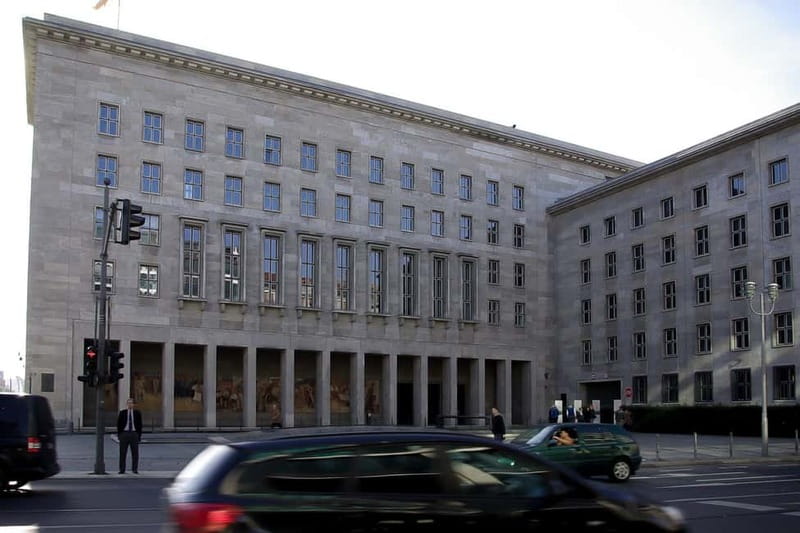
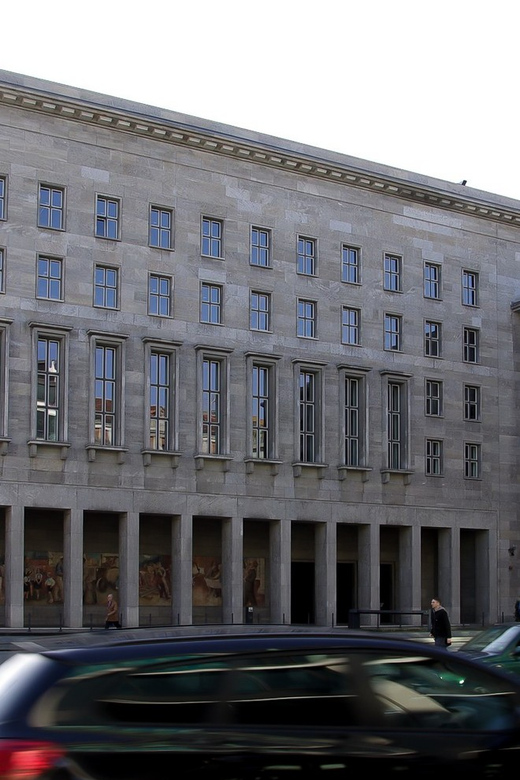
At Platz des Volksaufstandes 1953, the tour turns to the former Reich Air Ministry of Hermann Göring. The site was connected to military administration and to a pre-Wannsee meeting about the Final Solution held under Göring’s leadership.
The present-day name of the square also recalls the East German uprising of June 1953. That gives the stop more than one historical layer. You are not looking only at Nazi Berlin. You are also seeing how the same part of the city remained tied to state power and public protest after the war.
I appreciate this kind of stop because it prevents the tour from reducing Berlin’s past to a row of famous names. It places Nazi rule within the physical city and shows how the meaning of public spaces changes over time.
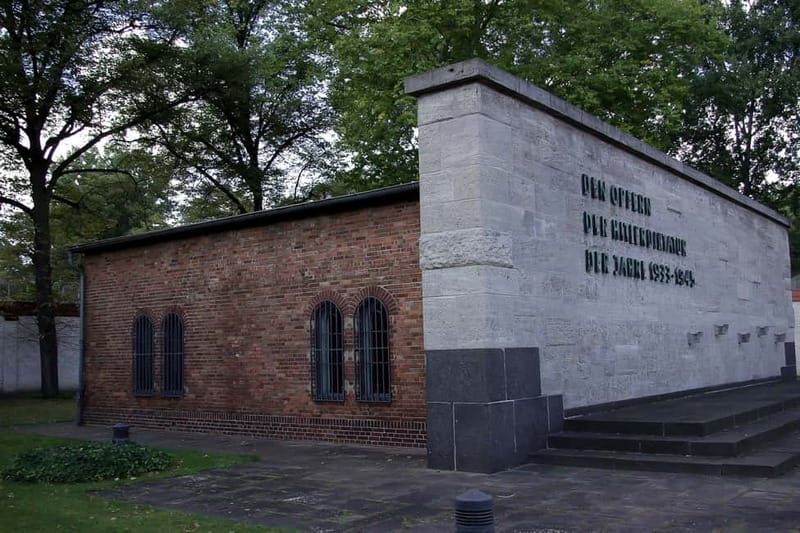
The tour also visits the monument to Georg Elser. Elser planned an assassination attempt at Munich’s Bürgerbräukeller, but the attempt failed. His story is useful because it reminds you that opposition to Hitler existed, even though it was dangerous, isolated, and often unsuccessful.
Do not expect every stop to be a large museum visit. Much of this portion is about seeing locations, hearing the history, and understanding how the sites fit together. If you prefer a tour built around long indoor exhibitions, this may feel too quick. If you want the city itself to act as the classroom, the format works well.
The Topography of Terror puts the perpetrators in view
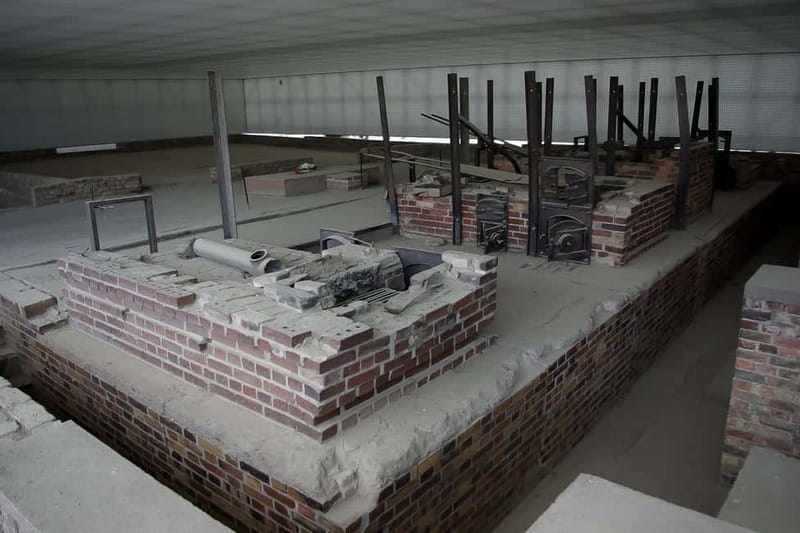
The Topography of Terror documentation center provides the most direct indoor context in central Berlin. Its permanent exhibition focuses on the institutions that organized Nazi oppression, including the Gestapo, the SS, and the Reich Security Head Office.
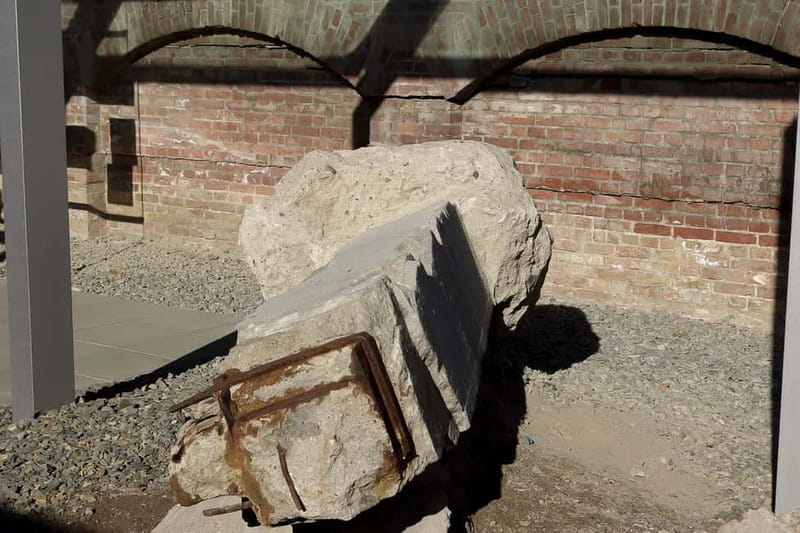
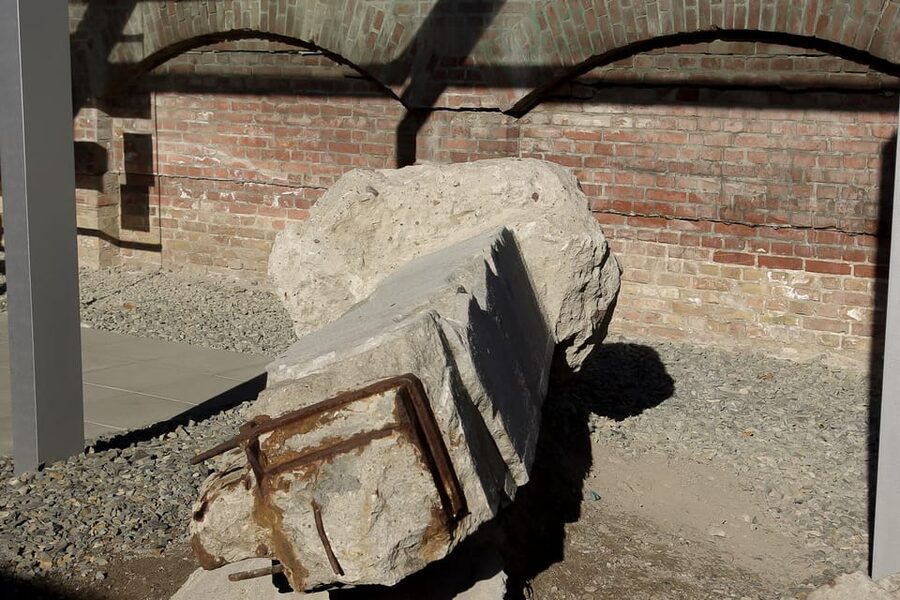
You can also see remnants of cells from the infamous prison house. These physical remains are modest, but they matter. They keep the exhibition from becoming only a display of photographs and documents. The site connects the bureaucratic language of persecution with the people who were detained and abused.
This stop is especially useful before Sachsenhausen. It gives you a framework for understanding the camp as part of a network of state agencies, rather than as an isolated place of cruelty. You hear about the offices and officials first, then see how that system affected prisoners outside Berlin.
Time is the issue. The entire experience lasts five hours, including the drive to Oranienburg, the city stops, the documentation center, and the memorial visit. Your guide will need to keep the schedule moving. If you want to study every panel in detail, you may need a separate visit to the Topography of Terror.
Still, its inclusion makes the tour stronger. It keeps the Berlin portion from being a simple drive-by of former buildings and gives you a clearer view of how repression was organized.
Same city, a different seat on a different deck:
- Berlin: East and West Hop-On Hop-Off Bus Tour
★ 4.2 · 2,195 reviews - Sachsenhausen Concentration Camp Bus Tour in English from Berlin
★ 5.0 · 1,962 reviews - Berlin: English Bus Tour to Sachsenhausen Concentration Camp
★ 4.9 · 1,380 reviews - Berlin: 1.5-Hour Comedy Bus Tour in German
★ 4.5 · 1,165 reviews
Sachsenhausen Memorial: the most serious part of the day
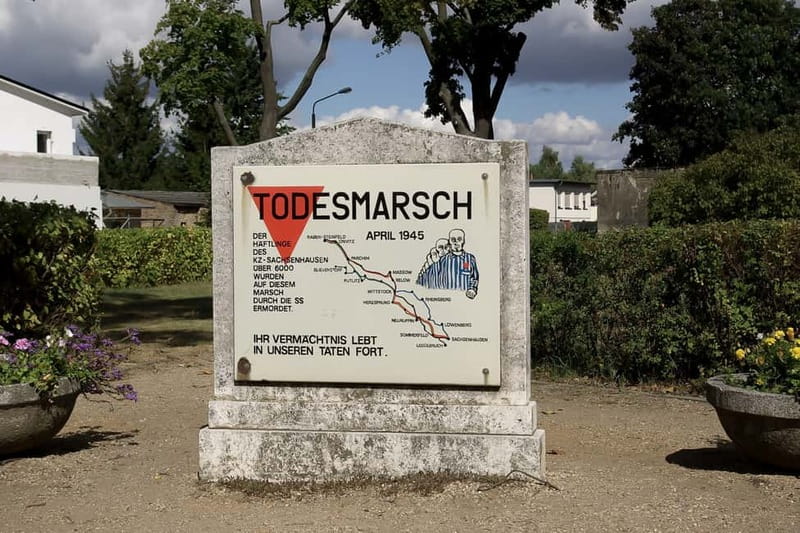
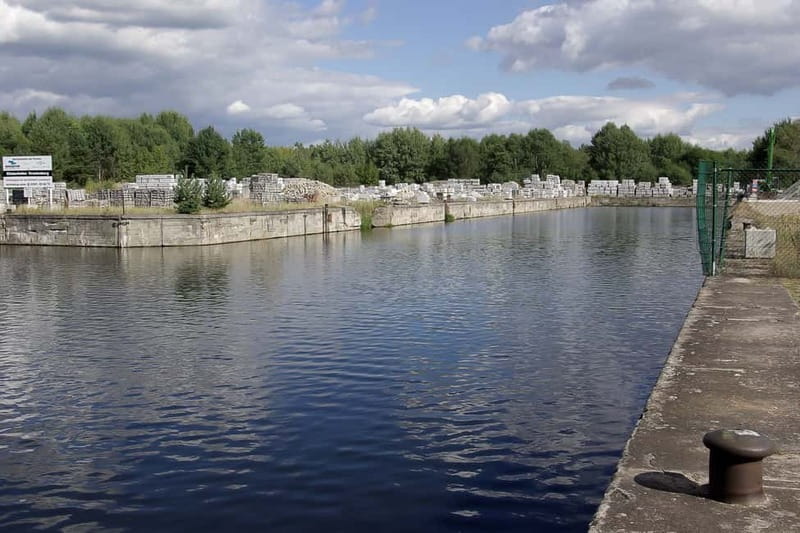
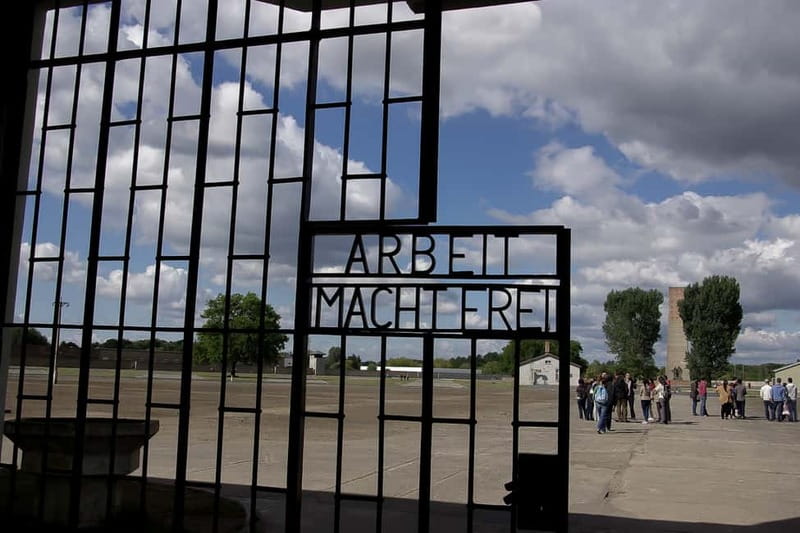
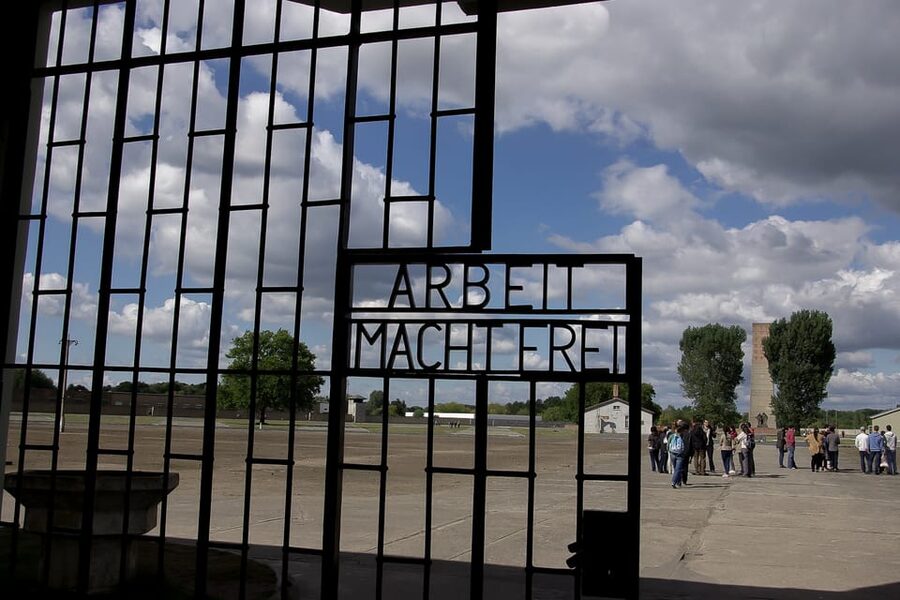
Sachsenhausen Memorial in Oranienburg is the main reason to choose this tour. The camp was close to Berlin and served as a model and training camp. It was also the official residence of the camp inspectors, which gave it a special role in the concentration camp system.
Your guide accompanies you to the memorial and explains what you are seeing. The experience is not designed as entertainment, and the best approach is to allow the place its own quiet. The open grounds, remaining structures, cells, and memorial spaces require concentration. You may find that the emotional weight arrives gradually rather than through one dramatic sight.
A private guide is helpful here. You can stop to ask questions, take a moment when needed, or let the guide know if you need a slower pace. One family found the private setting particularly useful with teenagers, since the young people could ask questions and the family had room to take in the memorial without a crowd around them.
That private space can also help with a mobility need. The tour is listed as wheelchair accessible, and one participant specifically praised Johannes for being considerate about mobility. You should still discuss your requirements when booking, since a memorial site can involve different surfaces and walking conditions.
The chief limitation is time. One family felt that five hours did not allow enough time to see as much of the camp as they wanted. That is the most important practical warning in this experience. The tour gives you a meaningful introduction to Sachsenhausen, but not an all-day examination of the site.
If Sachsenhausen is your main goal, ask before booking if a longer private option is possible. The supplied information confirms the five-hour version, but not the availability or price of an extended tour. Do not assume that every building or exhibition can be covered in this schedule.
What the private format changes
The booking covers a private group of up to two people for $448. For two people, that works out to $224 each. For one person, it is a costly half-day, but you are paying for the vehicle, pickup, guide, and private attention rather than a seat on a shared bus.
The format makes the most sense for a couple, parent and teenager, or two friends who want to discuss difficult material at their own pace. It is also useful if you have specific questions about Nazi Berlin, the resistance, or Sachsenhausen and do not want to wait for a group pause.
Johannes Westerkamp is the guide named in the available feedback. He is praised for careful explanations, punctual hotel pickup, patience with questions, and a sensitive approach to a painful subject. One assessment was more reserved, noting that the information was clear and efficient but that another guide had used more vivid storytelling.
That is a fair distinction. This tour appears strongest as a focused, factual experience. If you want a theatrical performance packed with dramatic anecdotes, it may feel restrained. If you want a guide who treats the subject seriously and gives you room to think, that restraint is a benefit.
The private setup also helps families. Teenagers can ask direct questions without feeling self-conscious, and you can pause for discussion between sites. The tour is offered in English or German, so confirm your preferred language when you check availability.
Is five hours enough for this route?
Five hours is enough to give you a clear structure:
- Pickup and travel in the VW bus
- Berlin’s Wilhelmstrasse and former Nazi government buildings
- The Georg Elser monument and former Reich Air Ministry area
- The Topography of Terror
- The drive to Oranienburg
- A guided visit to Sachsenhausen
- Return to your hotel
It is not enough for an unhurried, detailed study of every stop. The distance to Sachsenhausen makes the schedule a balancing act. Berlin’s central sites need time, but the memorial outside the city needs time too.
I would choose this tour if you have only one free morning or afternoon and want both the political center and the concentration camp in one organized outing. I would choose a longer arrangement if Sachsenhausen is the main focus, especially if you have a strong interest in the memorial’s exhibitions and grounds.
The tour’s compact structure can also help first-time visitors. Berlin has many Nazi-era sites, and it is easy to spend a morning moving between disconnected addresses. This route gives you a clear thread from government offices to the memorial.
Practical details before you book
Hotel pickup and drop-off are included for hotels within 10 kilometers of Brandenburg Gate. If your hotel lies outside that area, check the pickup arrangement before paying.
Food and drink are not included, so plan accordingly. The supplied details do not specify a meal stop, and the five-hour schedule is busy. Bring what you need for the half-day, while keeping in mind that Sachsenhausen is a memorial site where respectful behavior matters.
The tour is listed as wheelchair accessible. It also offers free cancellation up to 24 hours before the start and a reserve-now, pay-later option. Starting times depend on availability, so check the calendar before arranging other Berlin plans.
The overall rating is 5 out of 5 from 27 reviews, with repeated praise for Johannes, punctual pickup, useful explanations, and the clean VW bus. The one recurring concern you should take seriously is not poor service, but limited time at Sachsenhausen.
Should you book Berlin and Sachsenhausen by VW bus?
Book this tour if you want a private, guided introduction to Nazi Berlin and Sachsenhausen, especially if you are traveling as two people and value hotel pickup, direct questions, and a calm guide. It is a strong fit for families with older children or teenagers, couples, and visitors who prefer a small setting for serious subjects.
Think twice if you want a full-day study of Sachsenhausen or long, leisurely visits inside each documentation center. Five hours forces choices, and the camp visit may leave you wishing for more time.
For two people, the price is easier to justify because it covers a private vehicle and personal guide attention. The tour is not the cheapest way to see Sachsenhausen, but it gives you something a standard group outing cannot: a direct line from the Nazi offices of central Berlin to the memorial outside the city.
FAQ
How long is the Berlin and Sachsenhausen tour?
The tour lasts five hours, including the Berlin stops, travel to Oranienburg, and the guided visit to Sachsenhausen Memorial.
What languages are available?
The live tour guide is available in English or German.
Is the tour private?
Yes. It is a private group experience for up to two people.
What is included in the price?
The price includes travel to Oranienburg in an air-conditioned VW bus, a guide at Sachsenhausen, and hotel pickup and drop-off within 10 kilometers of Brandenburg Gate.
Is food included?
No. Food and drink are not included.
Is the tour wheelchair accessible?
The activity is listed as wheelchair accessible. One participant also described the guide as considerate of mobility needs. Contact the provider with your specific requirements before booking.
Recently added around Berlin
- Sachsenhausen Concentration Camp Bus Tour★ 4.0 · 3 reviews
- Hop-on Hop-off Berlin Tour with Audio Guide★ 3.0 · 11 reviews
- Berlin Combo: Hop-On-Hop-Off Bus and Icebar Ticket★ 3.0 · 20 reviews
- Big Bus Berlin Panoramic Night Tour by Open-Top Bus★ 3.5 · 10 reviews
- Dresden: 10-Hour-Tour from Berlin by VW-Bus★ 5.0 · 5 reviews
- Berlin: Hop-On Hop-Off City Tour by Bus and Boat★ 4.4 · 488 reviews
- Potsdam: 5-Hour-Tour “Parks & Palaces” from Berlin by VW-Bus★ 5.0 · 17 reviews
- City Sightseeing Berlin: HOHO Bus – All Lines & Icebar★ 4.3 · 6 reviews
Berlin Bus Tours, compared.
Big Bus Hop-On Hop-Off Sightseeing Tour & Currywurst
Read our review →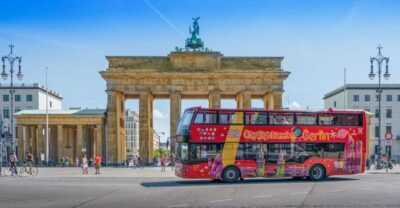
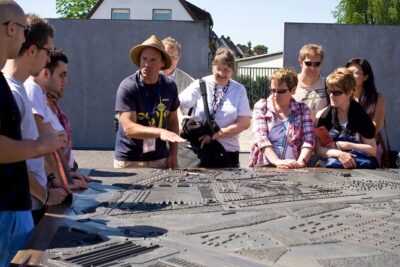
Sachsenhausen Concentration Camp Bus Tour in English from Berlin
Read our review →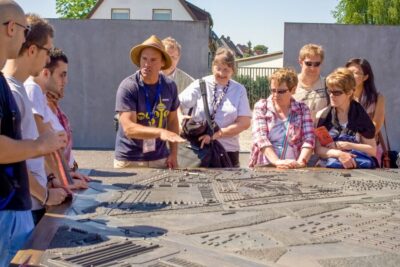
English Bus Tour to Sachsenhausen Concentration Camp
Read our review →
Sightseeing Tour in Classic Volkswagen T1 Samba Bus
Read our review →Browse the lists this tour appears in