
Review · BERLIN BUS TOURS
Berlin: English Bus Tour to Sachsenhausen Concentration Camp
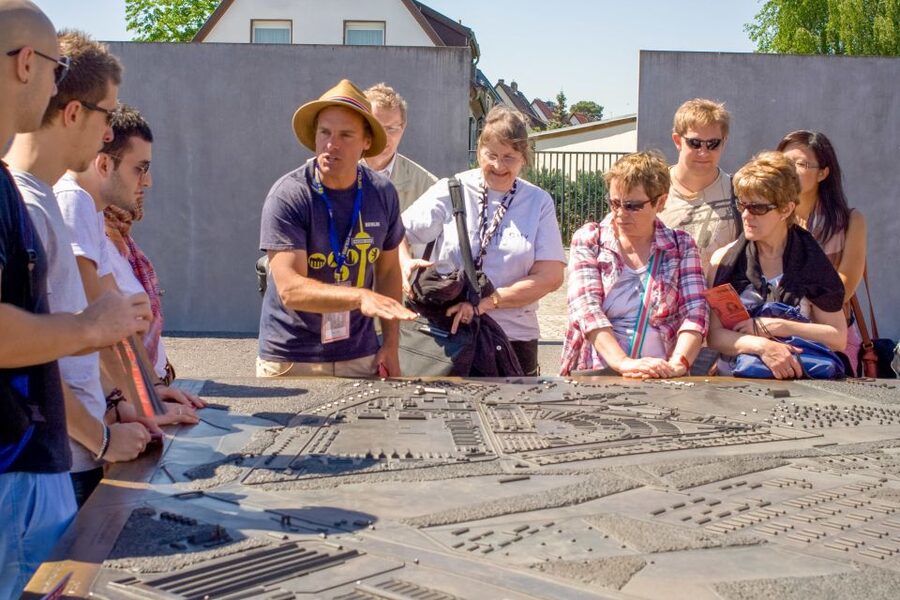
Sachsenhausen is not a quick museum visit. It is a broad, stark former concentration camp where the empty spaces, surviving barracks, and remains of the killing facilities force you to think about how a system of terror worked day after day. This English guided tour adds the historical frame that the site itself cannot always provide.
I like two things here: the comfortable coach removes the fuss of getting out to Oranienburg, and the guide begins the lesson before you arrive. Guides such as Hannah, Paul, Georgia, Klaus, and Jamie G have been singled out for clear, sensitive explanations. The main drawback is time. Two hours at the memorial gives you a strong introduction, but not enough time to read every display or visit every building at length.
Key points to know before booking
- The bus ride is part of the lesson: The roughly 50-minute journey from Berlin covers the rise of Nazism, the camp system, and the role of the surrounding area.
- You visit the essential remains: The route includes Tower A, barracks, infirmaries, isolation cells, crematoria, the gas chamber area, punishment cells, and the execution trench.
- The site is large and exposed: Expect substantial walking outdoors, with limited time for every indoor exhibit.
- Guiding is the main value: A good guide explains the camp’s machinery, the prisoners’ daily lives, and Germany’s approach to remembrance today.
- The price covers the practical details: For $55, you get return transport, a licensed guide, entry, a map, and a €3 donation to the memorial.
- Prepare for a difficult visit: Comfortable shoes, weather-ready clothing, water, and a small snack will make the four-hour outing easier.
Why Sachsenhausen needs a guided visit
Sachsenhausen was built north of Berlin in 1936 as a model concentration camp. It was planned from the start, rather than adapted from an older site, with a layout intended to give guards control over prisoners and allow the camp system to expand.
That design matters when you visit. The site is not just a collection of buildings. Its triangular arrangement, long sightlines, entrance tower, barracks, work areas, and punishment zones show how architecture supported control. Without context, you may see a wide field and a few surviving structures. With a guide, the layout begins to explain itself.
The camp also helps you understand that persecution did not happen in a faraway place cut off from ordinary life. The bus route through Oranienburg is part of the story. Your guide explains where prisoners worked and how the camp system affected the town and the people living nearby. You also consider what local residents knew about the brutal system operating close to home.
This is why the journey from Berlin is useful rather than wasted time. Guides such as Paul, Scott, Hannah, and Nikolai have used the ride to explain the political conditions that allowed Hitler’s rise, the creation of concentration and death camps, and the growth of the wider camp network. The trip works best when you listen closely on the way out, then use the return ride to think through what you have seen.
More routes around Berlin:
- Berlin: Hop-on Hop-off Bus Tour with Live Commentary
★ 4.3 · 8,579 reviews - Berlin: Big Bus Hop-On Hop-Off Sightseeing Tour & Currywurst
★ 4.4 · 4,638 reviews - Berlin: City Sightseeing Hop-On Hop-Off Bus Tour
★ 4.1 · 4,233 reviews
Meeting at Friedrichstraße and riding to Oranienburg
The meeting point is outside Friedrichstraße train station, on the square between the station and the Tränenpalast, also called the Palace of Tears. Look for a guide with a blue lanyard and yellow name tag, often holding a yellow umbrella. The address is Reichstagufer 17, 10117 Berlin.
Give yourself enough time to find the square. The station area is busy, and the nearby Palace of Tears can make the meeting point easier to recognize. There is no hotel pickup, so you need to reach Friedrichstraße on your own.
The air-conditioned coach takes about 50 minutes each way. It is a useful advantage over arranging the trip independently, especially if you do not want to combine regional trains, local transport, and a walk to the memorial. The bus also gives the guide a controlled setting for the opening history lesson.
The coach commentary has been one of the most praised parts of the outing. Guides have covered the period from the growth of Nazism to the operation of the camps, often sharing family or personal connections in a careful way. One practical warning: a microphone problem was reported on one bus, so it is worth telling the guide if you cannot hear from your seat.
Bring a bottle of water and a light snack. The schedule is compact, and you should not count on having a relaxed meal break during the visit. Wear shoes you can walk in for several hours, and dress for the weather. Sachsenhausen involves outdoor walking, and Berlin conditions can change quickly.
Seeing Oranienburg before entering the memorial
As the bus approaches Sachsenhausen, the guide explains the connection between the camp and Oranienburg. This is an important part of the visit because it places the camp within a working community rather than treating it as an isolated site.
You learn about the places where prisoners were forced to work and how the camp supported a wider system of exploitation. The point is not to turn the drive into a sightseeing tour. It is to help you understand the relationship between the camp, its labor system, and the surrounding population.
The guide’s commentary also prepares you for the scale of the memorial. Sachsenhausen is spread out, and two hours can pass quickly. If you want to study every letter, photograph, and document in detail, you will need to accept that this guided visit is an introduction rather than an exhaustive research day.
Entering through Tower A
The entrance through Tower A is one of the most powerful moments of the tour. The gate leads into a space planned to make prisoners visible and controllable from the start. The slogan above the entrance has become one of the most chilling symbols of the concentration camp system.
A guide can explain how the entrance functioned within the camp’s daily routine, rather than leaving you with only the familiar image of the gate. From here, the group moves into the former camp area, where the pattern of barracks, open ground, fences, and guard positions becomes easier to read.
The emotional effect is restrained and serious. This is not a theatrical attraction, and the best guides do not treat it like one. Hannah, for example, has been praised for giving clear explanations while allowing quiet moments to think. That balance is vital at a site where too much talking can feel as unhelpful as too little.
Same city, a different seat on a different deck:
- Berlin: East and West Hop-On Hop-Off Bus Tour
★ 4.2 · 2,195 reviews - Sachsenhausen Concentration Camp Bus Tour in English from Berlin
★ 5.0 · 1,962 reviews - Berlin: 1.5-Hour Comedy Bus Tour in German
★ 4.5 · 1,165 reviews - Berlin: Sightseeing Tour in Classic Volkswagen T1 Samba Bus
★ 4.9 · 993 reviews
Barracks, punishment, and daily control
The surviving barracks and reconstructed areas show the physical conditions prisoners faced. You learn about routines, overcrowding, work, hunger, discipline, and the constant threat of punishment. The barracks are not simply old rooms to walk through. They help you picture how the camp reduced individuals to numbers within an administrative system.
The punishment areas and isolation cells add another layer. Here, the guide explains how the camp’s violence was organized through rules, guards, surveillance, and arbitrary force. The horror lies partly in the cold efficiency of the system. It was not random violence alone. It was a structure designed to break people.
The group also visits infirmary barracks, where medical experimentation took place during the war. These areas require particular care and attention. Your guide provides context without turning suffering into spectacle, and you have time to absorb the information before moving on.
Because the memorial is large, you will not have unlimited time inside each building. One visitor wanted longer to read the letters and displays, a fair criticism if you are drawn to primary documents. If that is your priority, plan to return independently on another day or choose a longer visit if available. This four-hour tour favors a clear overview and guided explanation.
Crematoria, gas chamber area, and the execution trench
The remains connected with mass murder are among the hardest parts of the visit. You see the crematoria area, the gas chamber site, and the execution trench. These are not presented as dramatic attractions. They are quiet, physical reminders of how prisoners were killed and how the camp disposed of bodies.
The guide explains the function of these spaces and connects them to the wider camp system. At Sachsenhausen, around 35,000 people were murdered or died from disease and the camp’s conditions. The number is immense, but the buildings and traces of individual lives help bring the subject back to human scale.
You may find this portion especially heavy. The tour is suitable for people who want to confront difficult history, but it is not a light outing to fit between shopping and dinner. Give yourself some quiet time afterward if you can. The coach returns you to central Berlin, but the visit may stay with you for the rest of the day.
What the guide adds to the memorial
The guide is the central reason to pay for this particular format. A map and the memorial displays can take you through the site, but a skilled guide connects the pieces. You need someone to explain why the camp was designed this way, how its administration worked, what prisoners endured, and how the site fits into Nazi Germany’s larger system.
The strongest guides named in the feedback include Hannah, Paul, Georgia, Klaus, Scott, Jamie G, Nikolai, Will, Jonna, and Rebecca. Individual guides vary, but the consistent praise is for empathy, clear English, strong command of the subject, and a willingness to answer questions.
The best commentary is not just a list of dates. It explains cause and effect. You hear how political persecution developed, how camps expanded, how forced labor fitted into the system, and how Germany now teaches this history. The return ride can also address remembrance and public education, giving you a useful link between the past and Berlin today.
A small limitation is that a group tour cannot pause for every question. One visitor wanted more time for questions, while another felt two hours was enough for a first visit. I would agree with both points. The schedule works well for an overview, but readers with a strong academic interest may want a longer independent visit.
Is $55 a fair price?
At $55 per person, this is not the cheapest way to reach Sachsenhausen. The value comes from what is bundled into the price: return transport in a private air-conditioned vehicle, a driver, a licensed English guide, memorial entry, a map, and a €3 donation to the memorial.
You also avoid the uncertainty of arranging several transport connections. More important, you get nearly two hours of historical explanation on the road and at the site. A strong guide can help you notice details you might otherwise pass without understanding.
The price is easiest to justify if you have only one day available for Sachsenhausen, want a structured introduction, or would rather not manage transport yourself. If you already know the history well, prefer to read every display at your own pace, and are comfortable planning the journey, independent travel may give you more time inside the exhibitions.
Group size is not specified, so do not book expecting a private tour. The comfortable coach and organized schedule make the outing easy, but the pace is set by the group.
Who should book this Sachsenhausen tour?
I would recommend it to first-time visitors to Sachsenhausen, history-minded adults, families with older teenagers, and anyone who wants the site explained in English from beginning to end. It is also a practical choice for people staying in central Berlin who want to avoid transport changes.
The tour suits you if you value context, clear explanations, and a guide who can help you process an emotionally difficult subject. It is less suitable if you have limited mobility, use a wheelchair, or dislike walking outdoors. The tour is not wheelchair accessible and is not recommended for people with walking impairments.
You may bring a camera, but use good judgment. This is a memorial site, not a normal tourist attraction. Keep your behavior quiet and respectful, and follow the guide’s direction around sensitive areas.
Cancellation is free up to 24 hours before departure, and you can reserve now and pay later. Those policies are useful if your Berlin plans are still shifting, but the main booking decision should be about the pace and subject matter.
Should you book it?
Book this tour if you want an efficient, serious introduction to Sachsenhausen and prefer expert guidance over a self-planned visit. The strongest reasons are the comfortable direct coach, the historical briefing on the road, and the careful way guides such as Hannah, Georgia, Paul, and Klaus handle a painful subject.
Skip it, or choose a longer independent visit, if reading every exhibit is your main goal. Two hours at the memorial is enough to see the major areas, but not enough to study everything in detail.
For most first visits from Berlin, $55 is a reasonable price for the transport and guidance. Just arrive prepared for a demanding day, wear good shoes, bring water, and leave room afterward for reflection.
FAQ
Where does the Sachsenhausen tour meet?
Meet outside Friedrichstraße train station, on the square between the station and the Tränenpalast, or Palace of Tears. The address is Reichstagufer 17, 10117 Berlin. Look for a guide wearing a blue lanyard and yellow name tag, usually with yellow umbrellas.
How long does the tour last?
The full experience lasts four hours. The coach journey takes about 50 minutes each way, and the guided visit at Sachsenhausen lasts about two hours.
What is included in the $55 price?
The price includes a professional licensed English-speaking guide, a driver, private air-conditioned vehicle transport, entry to the Sachsenhausen Memorial, a map of the former camp, and a €3 donation per person to the memorial.
Is hotel pickup included?
No. You need to make your own way to the Friedrichstraße meeting point, and hotel pickup and drop-off are not included.
Is the tour suitable for wheelchair users?
No. The tour is not wheelchair accessible and is not recommended for people with limited mobility or walking impairments.
What should I bring?
Bring comfortable walking shoes, weather-appropriate clothing, water, and a light snack. You may also bring a camera. Alcohol and drugs are not allowed.
Recently added around Berlin
- Berlin: Sachsenhausen Concentration Camp and Potsdam day tour★ 4.5 · 318 reviews
- Berlin: Bus Tour by Night with Live Commentary★ 4.2 · 687 reviews
- Berlin: Live-Guided Evening Sightseeing Tour by Open-top Bus★ 4.1 · 783 reviews
- Berlin: Hop-On-Hop-Off Bus with Boat Cruise Option★ 3.8 · 818 reviews
- Big Bus Berlin Hop-On Hop-Off Sightseeing Tour & Currywurst★ 4.0 · 856 reviews
- City Sightseeing Berlin Hop-On Hop-Off Bus Tour★ 3.0 · 981 reviews
- Berlin: Sightseeing Tour in Classic Volkswagen T1 Samba Bus★ 4.9 · 993 reviews
- Berlin: 1.5-Hour Comedy Bus Tour in German★ 4.5 · 1,165 reviews
Berlin Bus Tours, compared.
Big Bus Hop-On Hop-Off Sightseeing Tour & Currywurst
Read our review →
Sachsenhausen Concentration Camp Bus Tour in English from Berlin
Read our review →
Sightseeing Tour in Classic Volkswagen T1 Samba Bus
Read our review →
Browse the lists this tour appears in