
Review · BOLIVIA BUS TOURS
La Paz: 5-Day Uyuni Salt Flats by Bus
The best part of this five-day journey is that Uyuni’s famous white salt pan is only the beginning. You also reach flamingo-filled lagoons, fumaroles, hot springs, volcanoes, giant cacti, and a green lagoon beneath Licancabur Volcano. The trip moves by night bus from La Paz and four-wheel-drive vehicle after Uyuni, so you see far more than you could on a quick day trip.
I like the smooth transport plan and the amount of ground covered. The reclining buses include bathrooms, and pickup is arranged at both ends. I also like the human side of the trip: guides such as Johnny, Ronaldo, Adalid, and Dolphin have been praised for calm driving, good photography, practical help, and care for the group.
The tradeoff is comfort. The final two nights are basic, with cold rooms, limited electricity, and occasional extra charges for showers or other small needs. This is a strong choice for scenery and value, but not for anyone who needs hotel-style comfort at 4,000 to 5,000 meters.
Key points to know before booking
- The salt flats are only one part of the trip: Incahuasi Island, red and green lagoons, geysers, hot springs, and volcanoes fill out the route.
- Two overnight bus rides save daytime hours: You travel from La Paz to Uyuni and back in reclining seats with onboard bathrooms.
- Expect high-altitude conditions: The route reaches about 5,000 meters, with cold, dry air and long stretches over rough roads.
- The scenery is paired with wildlife: Flamingos, Andean geese, seagulls, llamas, and highland plants appear along the lagoon route.
- Food is a real convenience: Breakfast, lunch, dinner, snacks, and bottled water are provided according to the schedule.
- Bring cash for extras: The entrance fees total BOB 200 per person, and private rooms cost US$35 per person per night.
Why this five-day route covers far more than Uyuni
At $486 per person, this is not the cheapest way to see the salt flats, but it packs in transport, meals, lodging, a bilingual guide, and a three-day four-wheel-drive circuit. I see the value in it if you want the full southern Bolivia route without arranging buses, hotels, drivers, and meals yourself.
The trip is also practical for a La Paz visit. You do not lose two full daytime blocks to long road travel because the La Paz to Uyuni and Uyuni to La Paz legs run overnight. The cost includes hotel pickup, bus tickets, both night rides, two nights of shared accommodation, food, snacks, and water.
The price does not include the BOB 200 entrance fees. You also pay extra for a private room, at US$35 per person per night, and there is no single-room option. Carry enough Bolivianos for these charges, hot springs, and small purchases. One of the most useful practical lessons from this trip is simple: do not expect every service in the high desert to be included.
The stated group limit is 10 people, which is small enough for a guide to keep an eye on everyone and help with photos. One account recorded a group of 12, so group size may not always match the advertised limit. If a small vehicle or quieter ride matters greatly to you, confirm the departure details before paying.
More five-day trips around the world:
- 5-Day Pass: Hop-On Hop-Off, Lost World Aquarium, Dubai Frame
★ 4.4 · 838 reviews
Day 1: Leaving La Paz on a reclining night bus
The experience begins with pickup at your La Paz hotel. A driver takes you to the bus station, where you board the overnight service to Uyuni.
The buses have reclining seats and bathrooms. That matters on a nine-hour ride through the night. You should still dress warmly and keep your passport, water, medications, and valuables with you rather than placing everything in the luggage hold.
This is a long first evening, but the overnight schedule is sensible. You sleep while covering the distance, then begin the sightseeing portion after breakfast in Uyuni. The ride is not the same as a private transfer, but the reclining seats make it more manageable.
Day 2: Train Cemetery, salt workers, and Incahuasi Island

After about nine hours on the bus, you are taken to an office for breakfast. Some departures also use a hotel where you can rest or shower before the four-wheel-drive portion begins. This pause is more important than it sounds. You have spent the night sitting on a bus, and a meal, wash, and short break help you start the day properly.
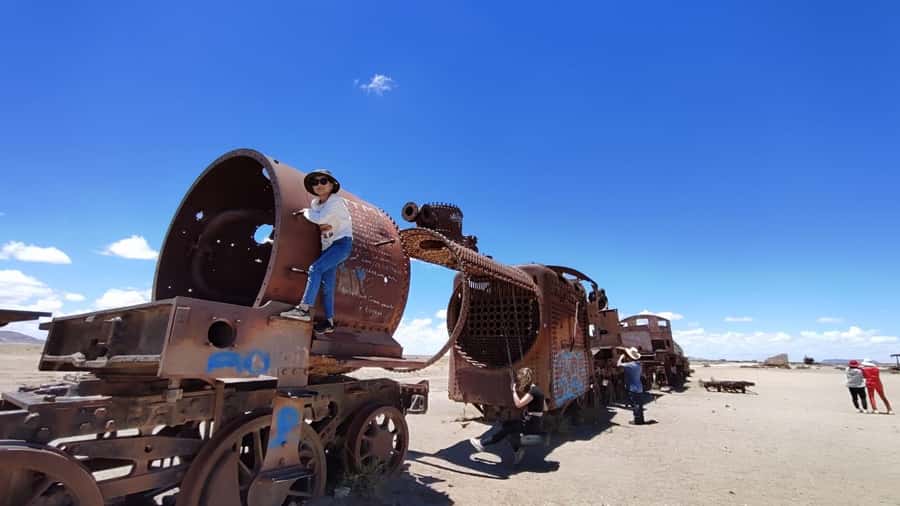
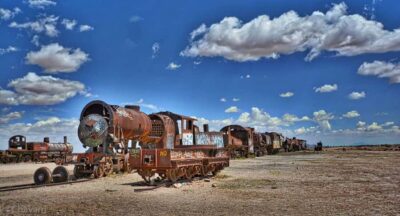
The first stop is the Train Cemetery outside Uyuni. Rusting locomotives sit in the open air, their metal frames worn down by sun, wind, and time. It is a quick, photogenic stop, but it also gives you a sense of the abandoned industrial side of this remote region.
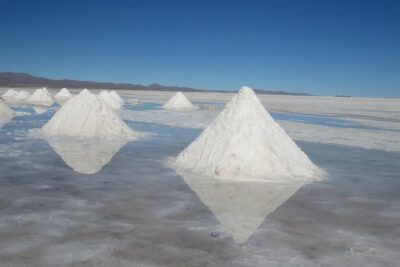
At Colchani, you see salt being processed by hand. The work is modest and practical, with salt gathered and shaped into mounds rather than treated as a polished tourist display. This is one of the better stops for seeing how people use the salt pan as a working place.
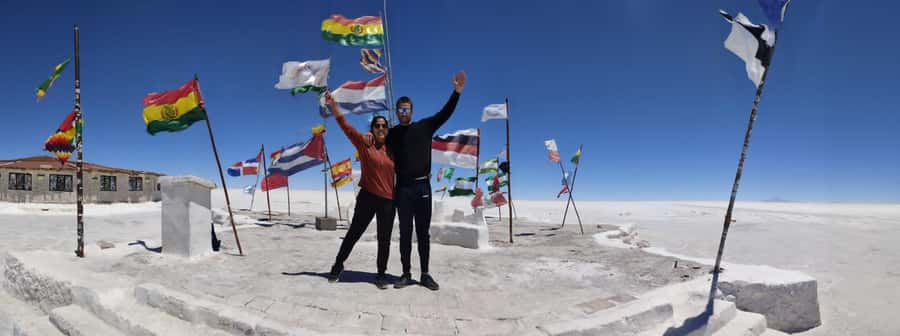
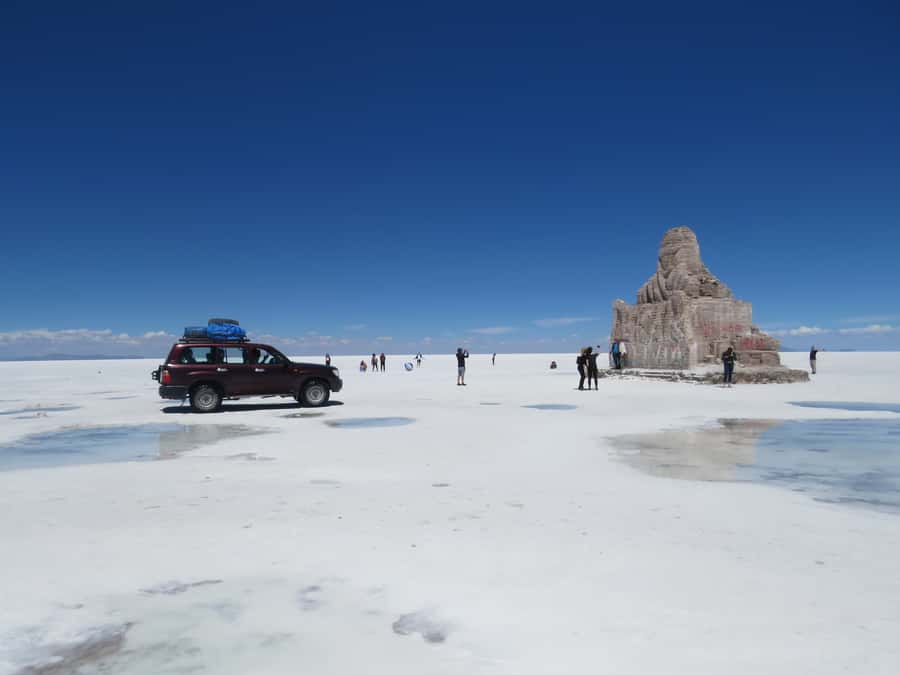
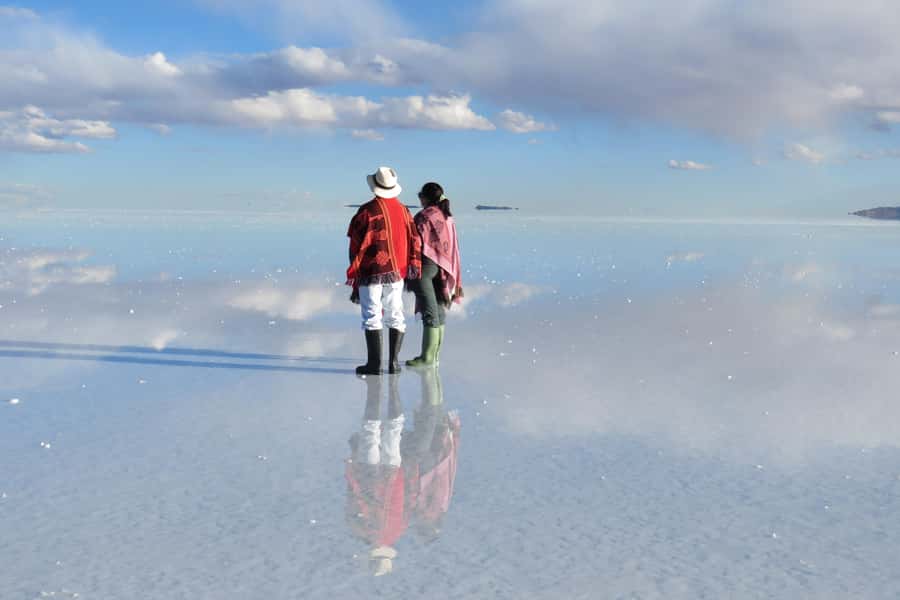
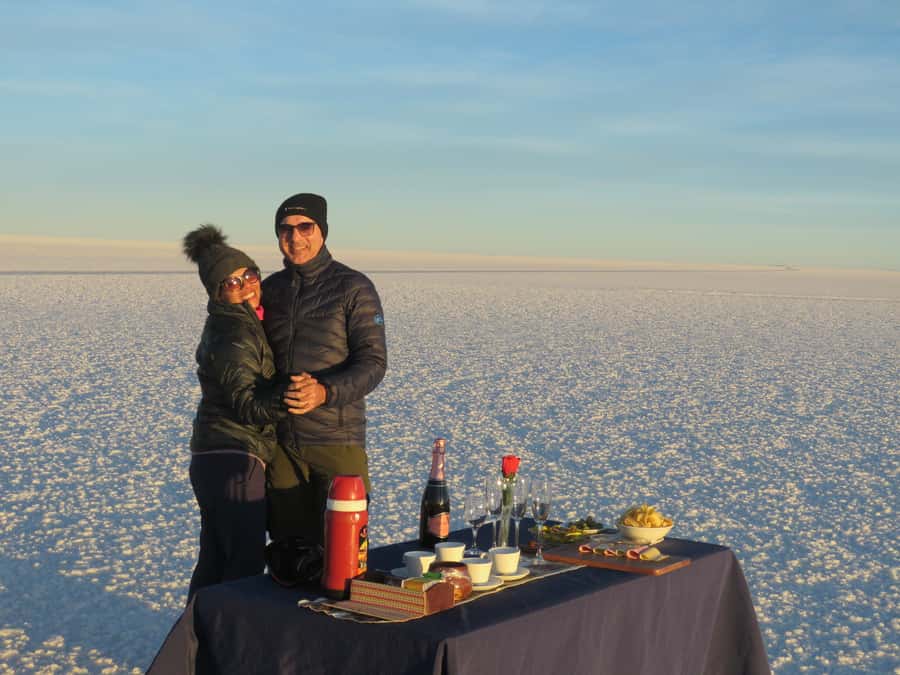
Then the road reaches Salar de Uyuni itself. On a dry day, the white surface seems to run without end. The guide and photographer help with perspective pictures, using the flat ground to create playful images. Bring extra batteries and plenty of storage because you will want to take more pictures than expected.
The route continues past salt mounds to Incahuasi Island, a volcanic-rock formation rising from the salt pan. Giant cacti cover the island, making a sharp contrast with the flat white surface around it. You may pay a separate entrance fee here as part of the BOB 200 total entrance cost.
After the salt pan, the vehicle crosses toward San Juan. This is a long driving day, and the four-wheel-drive vehicle is not a luxury touring car. The roads are rough, the back seats can feel cramped, and there is no air conditioning. If you are tall, ask where you will sit before setting out, since the last row has limited legroom.
San Juan provides the first shared-room night. Dinner is included, and the accommodation is basic but intended to keep you warm with blankets. Conditions vary, so pack thermal layers rather than trusting the room to be heated.
Day 3: Five lagoons, flamingos, and a cold night near Laguna Colorada
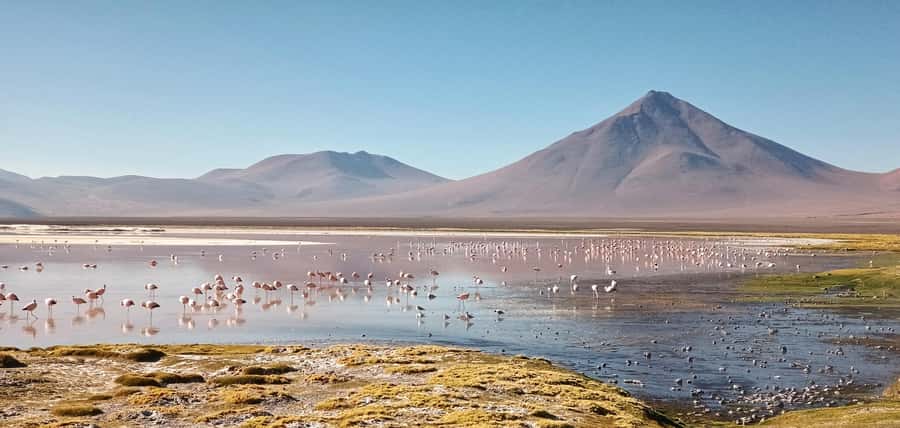
After breakfast, the route turns southwest toward the highland lagoons. Cañapa, Stink, Chiarkota, Honda, and Ramadita each have a different setting and color, though the appeal is not only visual.
Flamingos feed in the shallow water, while Andean geese and seagulls appear around the edges. Snowy volcanoes form the backdrop. The birds are a good reason to bring binoculars if you have room, but even without them you can see large groups against the pale water and open desert.
This section explains why the longer circuit is worth considering. A short Uyuni visit gives you the salt pan, but the lagoon route adds wildlife, volcanic scenery, and changing colors. The views also change with weather and light, so the same stop can feel different from one hour to the next.
The roads between the lagoons are rough and the driving takes much of the day. You spend hours in the vehicle, often on tracks with little shelter. This is where a calm driver matters. Dolphin has been praised for smooth driving over difficult roads, while Adalid has been singled out for staying attentive and making sure people were doing well.
Laguna Colorada is the main destination at the end of the day. The red tones come from minerals and tiny organisms in the water, though the color can look stronger or softer depending on light and conditions. The surrounding high desert is stark, open, and very quiet.
The overnight accommodation near Laguna Colorada is the toughest part of the trip for many people. You may receive plenty of blankets, but rooms can be cold, electricity may run for only a few hours, and hot water may not be available. Reports also describe shared bathrooms without reliable soap, toilet paper, or towels, and some services may cost extra.
Pack a headlamp or small flashlight, a power bank, toilet paper, and a towel. Keep your phone and camera batteries warm inside your clothing at night. You should not book this trip expecting a comfortable lodge. Think of this night as functional shelter in an extremely remote place.
After dinner, look up. The high, dry air and low light pollution make the stars and Milky Way unusually clear when the sky is open. This can be one of the most memorable moments of the trip, but it also means stepping outside in very low temperatures. Wear every warm layer you brought.
More routes around the world:
- Mt Fuji and Hakone 1-Day Bus Tour Return by Bullet Train
★ 5.0 · 26,383 reviews - Barcelona: 24 or 48-Hour Hop-On Hop-Off Bus Tour
★ 4.4 · 20,872 reviews - London: Warner Bros. Studio Harry Potter Tour & Branded Bus
★ 4.7 · 19,194 reviews - Rome: City Sightseeing Hop-on Hop-off Bus with Audioguide
★ 4.0 · 16,045 reviews
Day 4: Geysers, hot springs, and the green lagoon
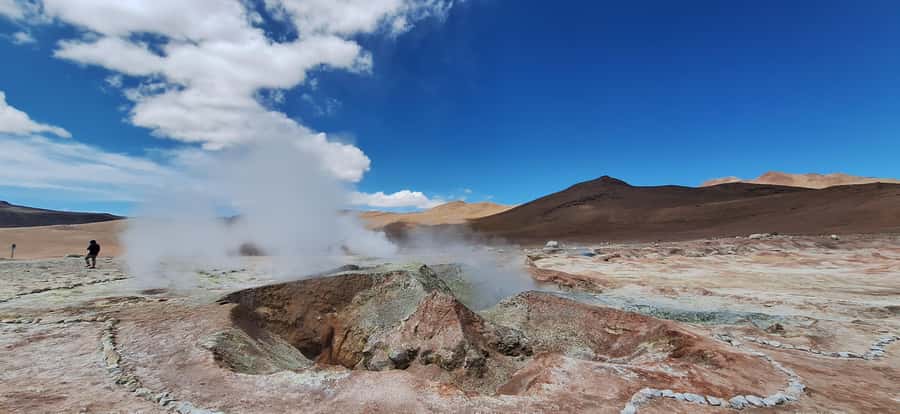
The fourth day begins early, often before sunrise, with the drive to the geysers known as Morning Sun. You arrive as the first light reaches the area. Fumaroles rise from the ground, and small signs of volcanic activity make the region feel active and unsettled.
The air is thin at this point, and the route reaches roughly 5,000 meters above sea level. Move slowly, drink water, and do not treat the early stop as a sprint for photos. Altitude affects people differently, and the combination of height, cold, and little sleep can be demanding.
You return toward Laguna Colorada before continuing to the Stone Tree, a naturally sculpted rock formation in the desert. The stop is short, but the shape is striking against the open terrain.
At Polques, you can take a hot-spring bath. This is one of the trip’s best comfort breaks after a cold night and a morning at high altitude. Bring a swimsuit and a small bag for wet clothing, though the provided information only specifically requires comfortable clothing and shoes.
The route then crosses the Dalí Desert, named for its surreal rock forms, before reaching Laguna Verde at the foot of Licancabur Volcano. The green water and volcano create one of the strongest views of the circuit. Depending on conditions, the color may not look equally bright at every moment, but the setting remains impressive.
The return to Uyuni takes several hours. You pass highland plants and animals before reaching town at about 5 p.m. This is not a relaxed final afternoon. You have a short break, then board the night bus to La Paz.
A useful part of the arrangement is the chance to rest and shower in Uyuni before the return bus. Several departures use Hotel Atipax for breakfast, a shower, and a short rest. That stop can make a big difference after two nights in basic rooms, though one report noted that a return delay of about three hours can happen. Keep your La Paz plans flexible the next morning.
Day 5: Returning to La Paz before breakfast
The bus is expected to reach La Paz around 6 a.m. A driver then meets you and takes you back to your hotel.
This timing works well if you need to continue your trip, but you may feel tired after two night buses and three days of long drives. Do not schedule an important flight immediately afterward unless you have a generous buffer. The return road can run late, and you will benefit from a few hours of rest.
Guides, drivers, and the value of good organization
The strongest human part of this experience is the staff. Johnny has been praised for being calm, funny, prepared, and confident. Ronaldo has been described as warm, friendly, and good at keeping the group together. Adalid has been noted for professional guidance throughout the three-day circuit, and Dolphin for smooth driving on difficult roads.
The guide may also handle photography. That is useful on the salt flats, where perspective shots work best when someone else helps position people and objects. It is worth asking the guide for a few photos early in the day, then saving time for your own pictures at the later stops.
The schedule is tightly organized. Pickup in La Paz, transfer to the bus, breakfast in Uyuni, the vehicle circuit, the return to the hotel, and the final bus are all linked together. You do not have much freedom to linger at one lagoon or change the route, but that structure is what makes the five-day plan possible.
What to pack for cold, high-altitude conditions
Comfortable shoes and clothing are only the starting point. You should bring:
- Gloves, hat, sunglasses, sunscreen, and warm layers
- A swimsuit for the Polques hot springs
- Extra camera batteries and generous storage
- Passport and enough Bolivianos for entrance fees and extras
- Headlamp or flashlight, power bank, toilet paper, and a small towel
- Water-resistant bag for electronics and wet clothing
The sun can be strong even when the air feels cold. Wear sunscreen and sunglasses on the salt pan, where glare can be intense. Keep a warm layer close during every stop, especially around Laguna Colorada and the geysers.
This experience is not suitable for pregnant women. It is also a poor fit if you need dependable electricity, regular hot showers, private bathrooms, or smooth roads every day. The trip is wheelchair accessible according to the activity information, but the remote roads and basic overnight conditions make it sensible to confirm your specific needs before booking.
Should you book this Uyuni trip from La Paz?
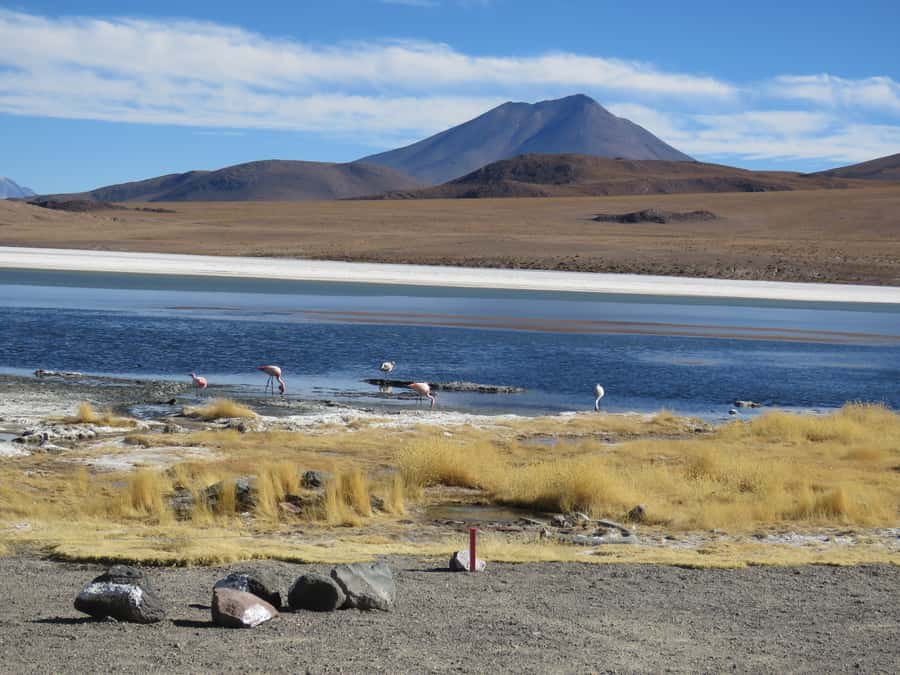
I would choose this tour if you want the broadest Uyuni experience in a short window and can accept basic conditions. The salt flats are memorable, but the flamingo lagoons, volcanoes, geysers, hot springs, and Laguna Verde are the real reason to choose the five-day route instead of a quick visit.
At $486, the package offers solid value for someone who wants transport, meals, guides, lodging, and a full circuit handled in one booking. Bring extra cash, warm gear, patience for rough roads, and realistic expectations about the accommodation.
Choose it for scenery, wildlife, night skies, and efficient planning. Skip it if your priority is comfort. For the right kind of visitor, this is a demanding but rewarding way to see Bolivia’s high desert in one continuous journey.
FAQ
How long does the tour last?
The experience lasts five days. You leave La Paz on the first day, arrive back in La Paz at about 6 a.m. on the fifth day, and spend three days touring Uyuni and the surrounding highland region.
Are bus tickets from La Paz to Uyuni included?
Yes. The price includes bus tickets for both the La Paz to Uyuni and Uyuni to La Paz journeys, along with two overnight bus trips.
What type of accommodation is provided?
Two nights of shared-room accommodation are included. Private rooms cost US$35 per person per night, and single rooms are not available.
Are entrance fees included?
No. Entrance fees cost BOB 200 per person and are paid separately. Souvenirs, travel insurance, and private-room upgrades are also excluded.
What languages does the guide speak?
The tour provides a live bilingual guide in English and Spanish.
What should I bring?
Bring your passport, comfortable shoes, comfortable clothing, gloves, a hat, sunscreen, sunglasses, warm clothing, extra camera batteries, and enough storage for photographs.
Recently added around the world
- Vine Hopper: Hop-On Hop-Off Wine Tour – Northern Route★ 4.5 · 62 reviews
- Vine Hopper: Hop-On Hop-Off Wine Tour – Southern Route★ 4.5 · 64 reviews
- Xi’an 1-Day Coach Tour of Terracotta Army★ 4.5 · 47 reviews
- Xi’an: Terracotta Army Mini-Bus Tour with Options★ 5.0 · 240 reviews
- Adelaide Hills & Hahndorf Hop-On Hop-Off Wine Tour★ 5.0 · 136 reviews
- Barossa Valley Hop-On Hop-Off Wine Tour★ 5.0 · 418 reviews
- McLaren Vale North Hop-On Hop-Off Wine Tour★ 5.0 · 251 reviews
- Stellenbosch Wine Tractor hop-on-hop off wine tasting tour★ 5.0 · 72 reviews
Bolivia Bus Tours, compared.
From La Paz: Uyuni Salt Flat Tour & Overnight Roundtrip Bus
Read our review →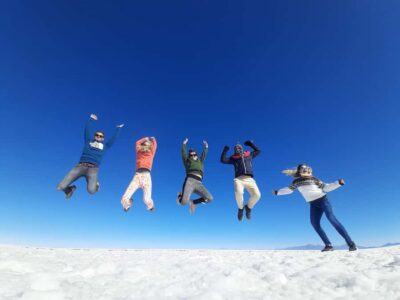

Visit to Uyuni Salt Flats from La Paz Bolivia by Bus
Read our review →Browse the lists this tour appears in