
Review · BOLIVIA BUS TOURS
La Paz: Uyuni Salt Flats & Isla Incahuasi 5-Day Bus Tour
The white expanse of the Uyuni Salt Flats is the star here, but the real payoff is the three-day route around it. You move from salt miners and rusting locomotives to giant cacti, pink flamingos, geysers, hot springs, and the stark deserts of southern Bolivia.
I like two things right away: the comfortable overnight Todo Turismo bus saves you a separate hotel night and includes dinner, breakfast, a blanket, heating, and a toilet; and the small group, limited to 11 people, keeps the 4WD outing more personal. The tradeoff is clear: this is a packed trip with shared six-bed rooms, basic toilets, rough roads, and very early starts.
Key points to know before booking
- The salt flats are only the beginning: The route also reaches Isla Incahuasi, Chiguana Desert, three lagoons, Eduardo Avaroa National Reserve, Sol de Mañana geyser, and Licancabur volcano.
- Overnight buses make the schedule work: You leave La Paz at 9:00 p.m. and return from Uyuni at 9:00 p.m. on the final night.
- Isla Incahuasi adds a worthwhile hike: Giant cacti and petrified coral formations rise from the salt plain.
- Expect simple accommodation: Both nights use shared six-bed rooms with shared toilets and no Wi-Fi.
- Several entrance fees are extra: Budget for Isla Incahuasi, Eduardo Avaroa, Galaxy Caves, hot springs, roadside toilets, drinks, and optional gear.
- This suits hardy sightseers: The trip is not suitable for pregnant women or people with back or heart problems.
Why this five-day route works
At $499 per person, this trip bundles a lot into one booking: round-trip bus transport from La Paz, a three-day 4WD excursion, an English-speaking guide, two nights of accommodation, and most meals. You are not paying only for a quick visit to the salt flats. You are paying for access to a remote circuit that would be awkward to arrange piecemeal.
The value is strongest if you want to start and finish in La Paz. The overnight bus removes the need to arrange a separate domestic transfer or hotel in Uyuni. You also avoid finding your own 4WD, driver, rooms, meals, and return transport.
Still, the price is not the complete cost. Required or expected extra fees include 30 Bs for Isla Incahuasi, 150 Bs for Eduardo Avaroa National Reserve, 15 Bs for Galaxy Caves, and 6 Bs for the hot springs. Toilets along the route cost 30 Bs, while drinks and personal expenses are extra. A sleeping bag costs 50 BOB, and rain boots cost 20 BOB if you choose to rent them.
I would bring cash in Bolivianos for these costs. The stated personal-expense allowance of 150 Bs is optional, but it gives you a sensible idea of how much spending money to carry beyond the tour price.
More five-day trips around the world:
- 5-Day Pass: Hop-On Hop-Off, Lost World Aquarium, Dubai Frame
★ 4.4 · 838 reviews - La Paz: 5-Day Uyuni Salt Flats by Bus
★ 4.3 · 153 reviews
La Paz to Uyuni on the Todo Turismo bus

Your evening begins at the Todo Turismo office on Avenida Uruguay number 102, in the Paula Building, office 6, across from the bus station. Check-in is at 8:30 p.m., with departure at 9:00 p.m. Arrive on time, since this is a fixed group transfer rather than a flexible bus connection.
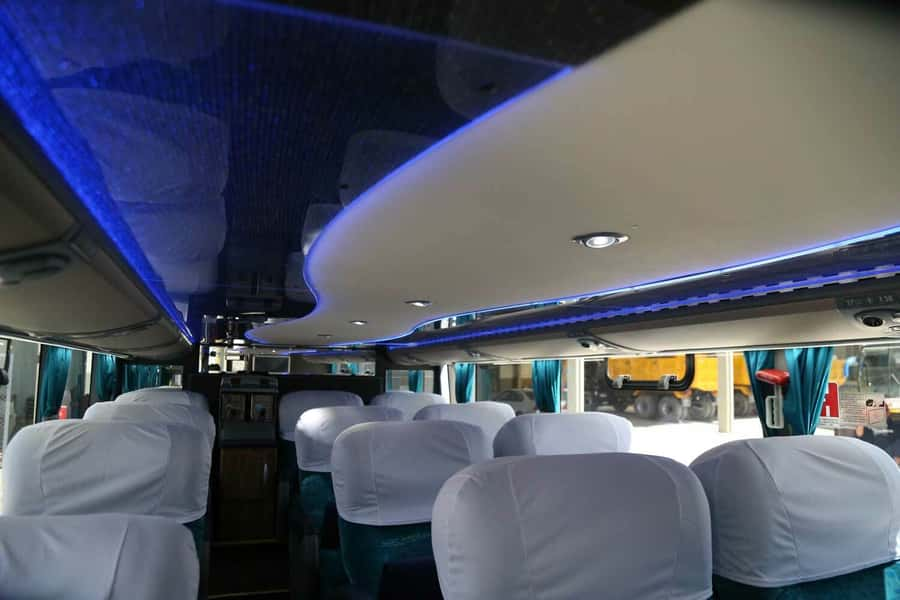
The bus includes dinner, breakfast, bottled water, a hot drink, heating, a polar blanket, Wi-Fi, a toilet, and a first-aid kit. The seats are adjustable, which matters on an overnight ride. One particularly positive account described the bus as comfortable enough for sleeping, a useful detail when you are about to spend several nights in simple accommodation.
You arrive in Uyuni at about 7:30 a.m. On arrival, you go to the local office one block from the bus station. You then have time to buy snacks and water before the 10:30 a.m. 4WD departure.
That short break is important. The next three days are remote, and the included meals do not cover every snack or drink you may want. Pack food that travels well, refill your water supply, and keep your warm clothing easy to reach.
Day one: rusting trains and the first salt
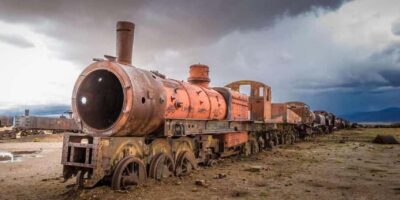
The first stop is Uyuni’s Train Graveyard, just outside the city. Old locomotives sit in the open air, their metal frames marked by rust and weather. It is a quick, unusual introduction to the region, and the machinery gives you a sense of Uyuni’s past as a transport and mining center.
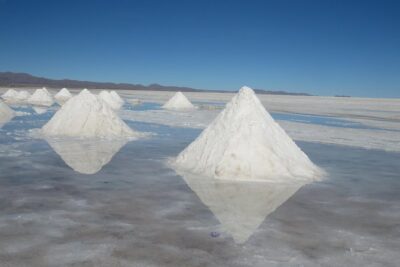
From there, you visit Colchani, a small settlement beside the salt flats. Salt-miner workshops sell handicrafts made from salt, along with textile work made from llama and alpaca wool. This is a practical place to buy a small souvenir, though you should compare prices and remember that the route has only limited shopping.
Then the white begins. The Uyuni Salt Flats are among the most memorable sights in Bolivia because the ground seems to run without end. You visit salt-water eyes, a salt hotel now used as a museum, the world-flags area, and a Dakar racing monument.
The salt hotel and Dakar monument are easy stops, while the salt-water eyes show that this apparently dry surface has water below it. The flags area offers a simple personal touch: you may bring your own flag and place it there for free.
Lunch is served near Isla Incahuasi, also called Fish Island. The island is covered with giant cacti and rock formations made from petrified coral. You can hike toward the top for views across the salt plain, but the altitude, sun, wind, and dry air make this more tiring than the short distance suggests.
The island entrance fee is not included. Keep your ticket money handy, and carry sunscreen, sunglasses, and water. The white surface reflects strong light from below, so sunglasses are not just a photo accessory.
Making the famous salt-flat photos
After lunch, the guide helps your group create perspective photos on the salt. This is where a spoon can look huge, a person can appear tiny, and a group can play with forced proportions.
The quality of these photos depends on cooperation. With a group of up to 11, you have enough people to make creative scenes but may need to take turns. Bring a few simple ideas rather than relying on the guide to stage every shot.
The salt flats are visually spare, so ordinary objects work well. A bottle, hat, shoe, or snack can become part of the picture. The setting also rewards patience. Small changes in distance and camera angle make a big difference.
This part is playful, but it should not overshadow the place itself. I would set aside time to simply look across the flat surface, especially when the group pauses between photos.
More routes around the world:
- Mt Fuji and Hakone 1-Day Bus Tour Return by Bullet Train
★ 5.0 · 26,383 reviews - Barcelona: 24 or 48-Hour Hop-On Hop-Off Bus Tour
★ 4.4 · 20,872 reviews - London: Warner Bros. Studio Harry Potter Tour & Branded Bus
★ 4.7 · 19,194 reviews - Rome: City Sightseeing Hop-on Hop-off Bus with Audioguide
★ 4.0 · 16,045 reviews
Day two: caves, desert, lagoons, and flamingos
The second full day begins around 7:00 a.m. with breakfast and a long sequence of stops. Galaxy Caves comes first among the listed sights. Its entrance fee is extra, and you should keep some cash available rather than assume all roadside stops are covered.
The route continues through Chiguana Desert to the Ollagüe lookout. You also pass the rocky road called El Pasito Tuntun. This is a day for watching the view change through the vehicle window, since much of the experience comes from the distance between stops.
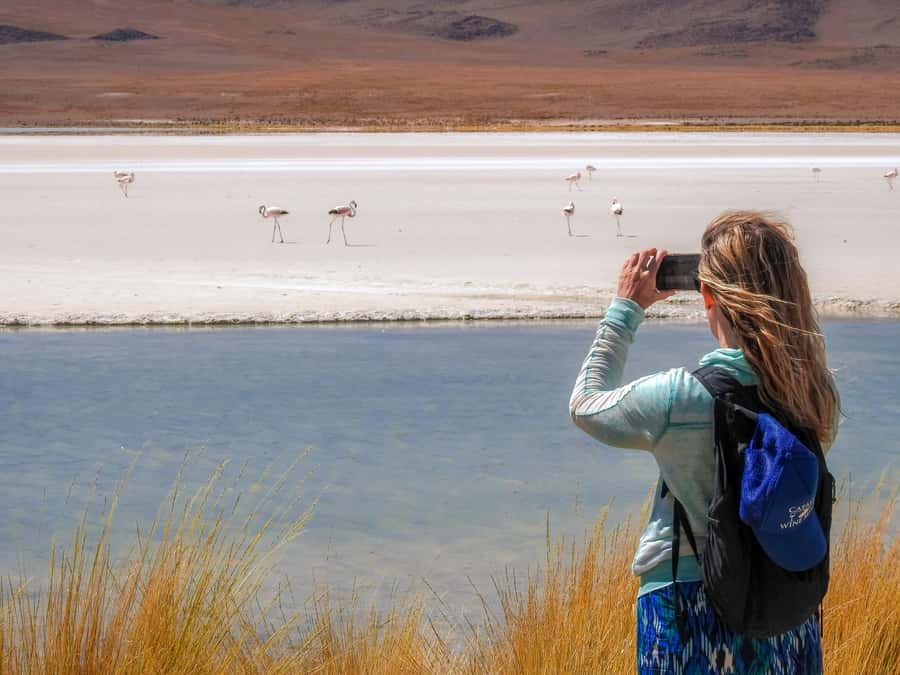
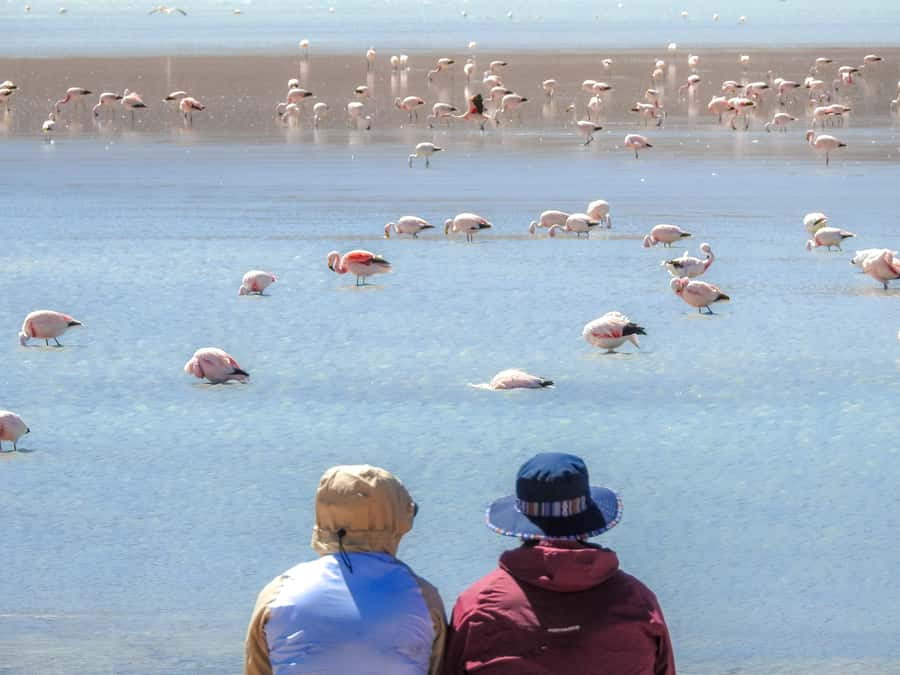
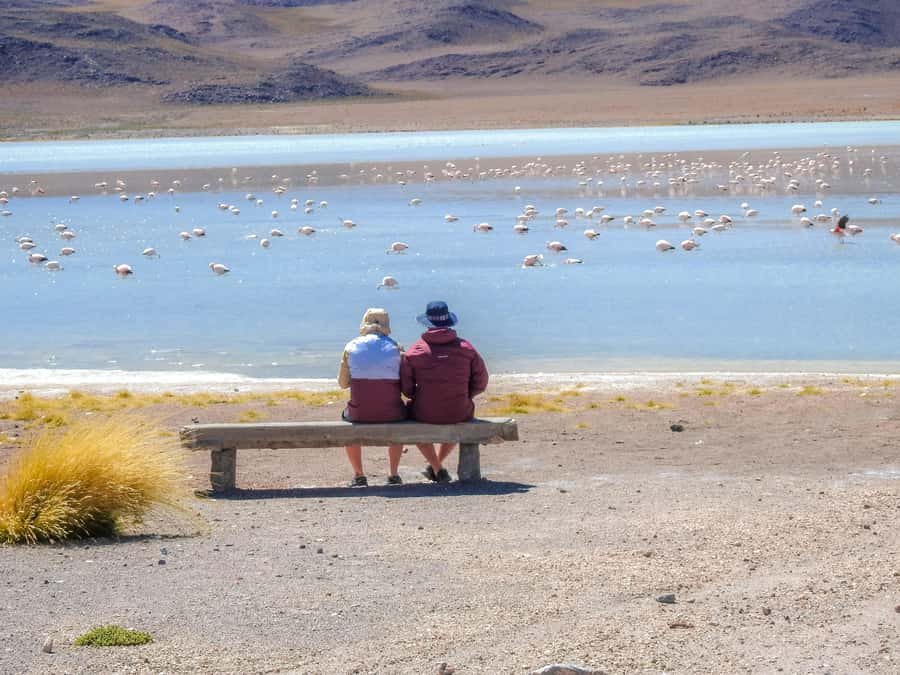
The famous lagoons are Cañapa, Hedionda, and Chiarcota. Flamingos gather in these high-altitude waters, giving the day a welcome burst of color against the pale water, mineral ground, and dry surrounding country.
You should not expect a wildlife park or guaranteed close approach. The flamingos are in their natural habitat, so keep a respectful distance and use a zoom lens if you have one. The value is in seeing them where they feed and move freely, not in getting a perfect close-up.
By the end of the day, you enter Eduardo Avaroa National Reserve and continue toward the Desert of Siloli. The reserve fee is 150 Bs and is not included. This is one of the larger extra costs, so include it when comparing this tour with cheaper-looking options.
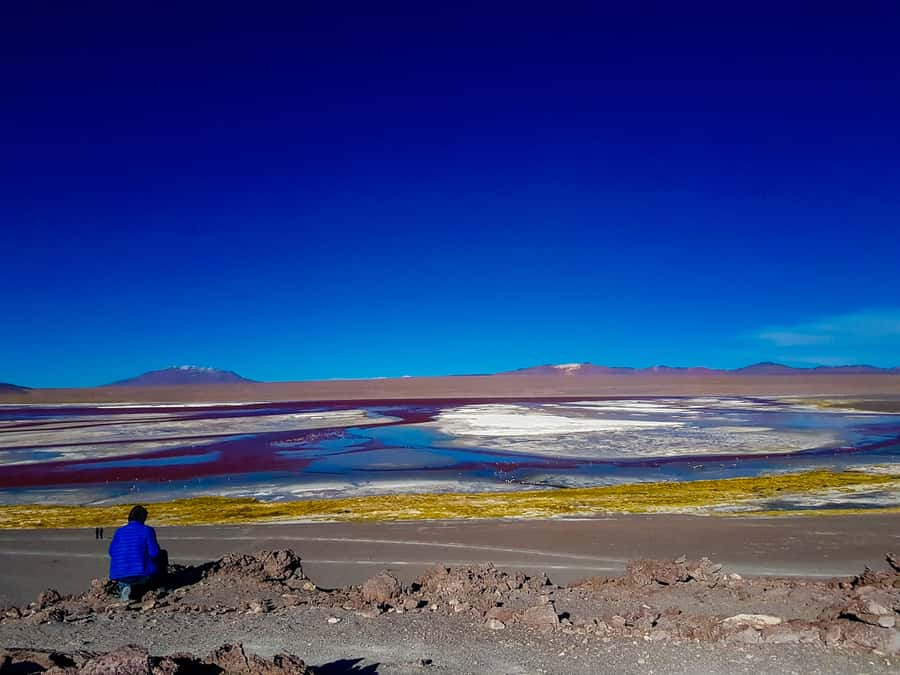
The Rock Tree is a famous natural formation shaped by wind and erosion. Next comes the immense Red Lagoon, another place to see pink flamingos. The color of the water can vary with conditions, but the contrast between red mineral tones, pale ground, and birds is the reason this stop earns its place on the route.
You spend the night at a basic hostel in Huayllajara. The room is shared with your 4WD group and holds six people. Toilets are shared, and there is no Wi-Fi. I would treat this as a functional overnight stop, not a hotel stay. Bring a warm layer for the evening, keep your sleeping bag option in mind, and organize your belongings before bedtime.
Day three: geysers, hot springs, and volcano views
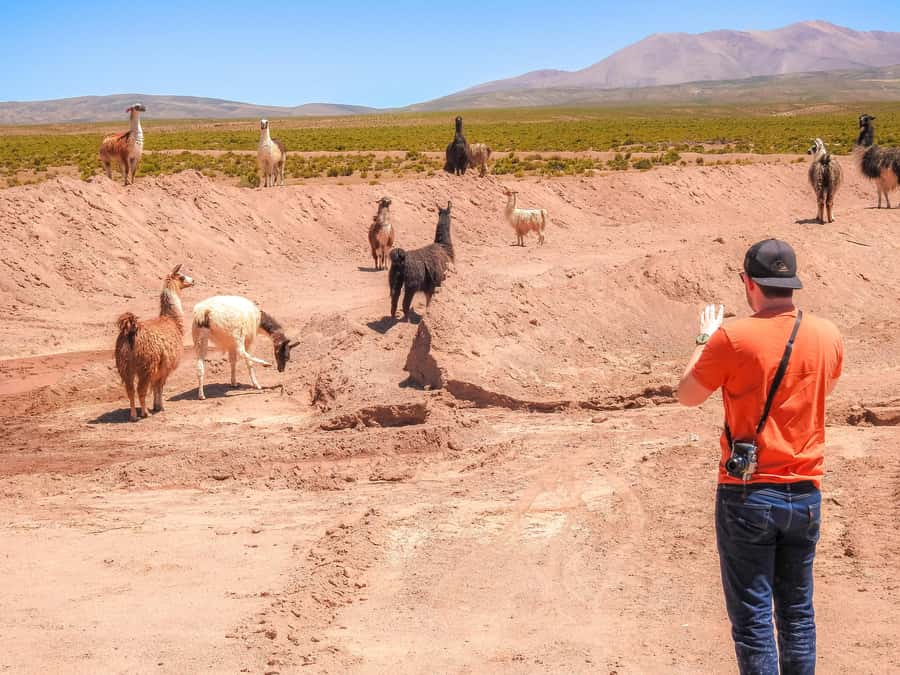
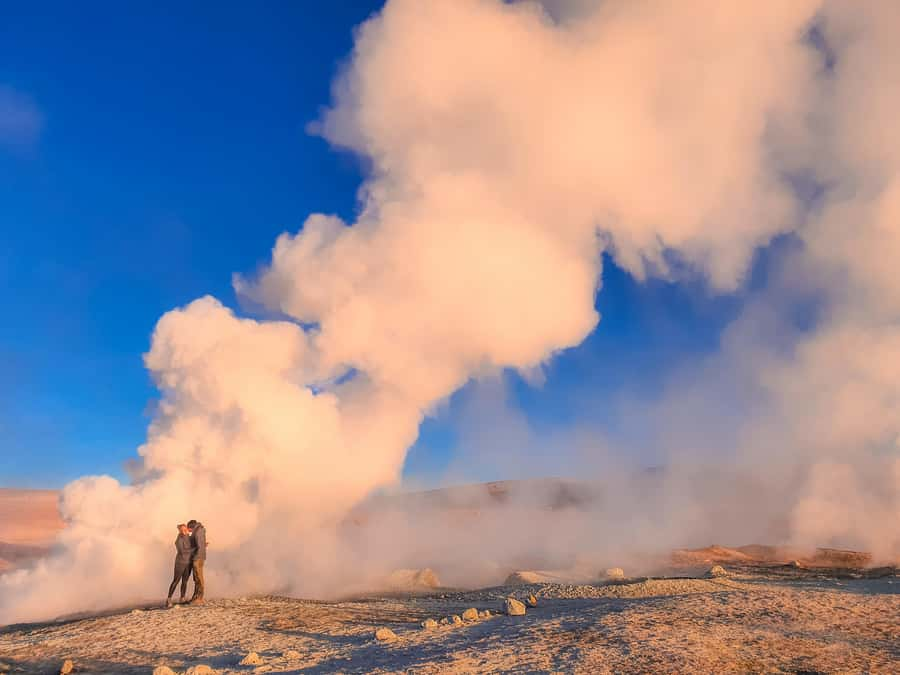
The next morning starts very early, around 5:00 a.m. That painful alarm has a purpose: Sol de Mañana geyser is best reached at the start of the day, when the cold air makes the steam and geothermal activity especially striking.
The route then reaches natural hot springs, where you can bathe in a pool at about 35 degrees Celsius. Bring swimwear and a towel. This is one of the few moments when you can warm up properly after the cold desert morning, so keep these items accessible rather than buried under luggage.
The entrance fee is 6 Bs. It is small compared with the reserve charge, but the tour has enough add-ons that small amounts can accumulate.
Next are the Dali Desert, Green Lagoon, and White Lagoon at the foot of Licancabur volcano. The Dali Desert name reflects the strange, sculptural rock forms and open desert setting. Green Lagoon and White Lagoon offer different colors and textures, with Licancabur providing a dramatic volcanic backdrop.
You then begin the long return toward Uyuni. Lunch is a picnic along the road, and the route passes Rock Valley, the settlement of Alota, and San Cristobal Village. San Cristobal is notable for its baroque church and colonial paintings, giving the final day more cultural content after so much open country.
The return is not a quick transfer. You are likely to spend many hours in the 4WD, with stops breaking up the drive. That is part of the bargain for seeing this remote circuit. If you need frequent comfort breaks or find long rough-road journeys difficult, this is the part to think about carefully.
Food, rooms, and the small-group setup
The package includes two breakfasts, three lunches, and two dinners during the 4WD tour. The bus adds two breakfasts and two dinners. Meals are therefore covered for the main schedule, but drinks, extra snacks, and roadside purchases are not.
The accommodation is shared six-bed lodging on both nights. The first night is at Atulcha Salt Hostel, with shared toilets and no Wi-Fi. The second is at the Huayllajara hostel, with the same basic arrangement.
This setup works best if you pack light and keep a small day bag. Put warm clothes, water, sunscreen, toiletries, swimwear, and your towel where you can reach them without unpacking everything in the vehicle.
The small group limit of 11 is a real practical benefit. You spend less time coordinating a large crowd, and the guide can help with photo setups and questions. One very positive account praised the guide’s explanations at stops and during the drive, along with a lively sense of humor. That matters on long road days.
At the same time, guide quality can affect the experience greatly. The tour promises an English-speaking guide, with English and Spanish available, but no guide name is provided in the details. I would confirm the language arrangement before departure if clear English explanations are important to you.
What to pack for the salt flats and reserve
The supplied packing advice is sensible. Take your passport or identity card, warm clothing, sunglasses, swimwear, a towel, sunscreen, water, and a long-sleeved shirt.
I would add a few practical habits:
- Keep cash in Bolivianos for entrance fees and toilets.
- Carry a small bag for daily essentials.
- Use layers instead of one heavy item, since temperatures shift between sunny salt flats, cold mornings, and hot springs.
- Bring shoes suitable for dusty roads and uneven ground.
- Keep your phone or camera protected from dust and strong sun.
- Consider the optional sleeping bag if you are sensitive to cold.
- Ask about rain boots if conditions make wet salt or water crossings likely.
The tour is not suitable for pregnant women or people with back or heart problems. That warning makes sense given the early starts, high-altitude route, rough roads, and repeated time in a 4WD.
Who should book this route
I would recommend it to you if you have limited time, want to see more than the salt flats, and prefer a package that handles transport, meals, a guide, and lodging. It is also a good fit if you want to begin and end in La Paz without arranging a separate return journey.
The route suits people who enjoy strong scenery more than comfort. You will see salt, desert, volcanic forms, lagoons, flamingos, geysers, and hot springs, but you will also sit for long stretches in a vehicle and share basic rooms.
I would hesitate if you need private accommodation, reliable Wi-Fi, flexible meal times, or a gentle schedule. I would also compare the final cost carefully if you are trying to travel on a strict budget, since the reserve fee and other entrance charges come separately.
The cancellation policy is forgiving: you can cancel up to 24 hours in advance for a full refund, and you can reserve now and pay later. The operator also asks for your WhatsApp number and email, so provide contact details you check regularly.
Should you book the $499 tour?
Book it if the overnight bus, small group, English-speaking guide, and complete three-day circuit solve your main planning problems. The strongest parts are the efficient La Paz connection, the huge range of sights, the adjustable bus seats, and the chance to see flamingos and geysers instead of stopping at the salt flats alone.
Skip it if shared six-bed rooms and long, rough drives sound miserable. This is an ambitious trip, not a soft adventure. For the right person, the $499 price gives you a practical way to reach one of Bolivia’s most unusual regions, provided you add the entrance fees, carry warm clothes and cash, and arrive ready for early mornings.
FAQ
Where does the tour begin in La Paz?
Meet at the Todo Turismo office at Avenida Uruguay number 102, Paula Building, floor 1, office 6, across from the bus station. Check-in is at 8:30 p.m., and the bus leaves at 9:00 p.m.
What is included on the overnight bus?
The round-trip Todo Turismo bus includes Wi-Fi, a toilet, heating, a polar blanket, dinner, breakfast, bottled water, a hot drink, and a first-aid kit.
How many nights are spent in accommodation?
The 4WD portion includes two nights. The first is at Atulcha Salt Hostel, and the second is at Huayllajara Hostel. Both use shared six-bed rooms, shared toilets, and have no Wi-Fi.
Are the park and attraction entrance fees included?
No. You pay separately for Isla Incahuasi, Eduardo Avaroa National Reserve, Galaxy Caves, and the hot springs. Toilets along the route, drinks, and personal expenses are also extra.
Is an English-speaking guide included?
Yes. The tour includes an English-speaking guide and lists English and Spanish as available languages.
What should I bring?
Bring your passport or identity card, warm clothing, sunglasses, swimwear, a towel, sunscreen, water, and a long-sleeved shirt. You may also choose to rent a sleeping bag or rain boots for an additional fee.
Recently added around the world
- TopView® 48 Hr Hop on Hop off Bus Tour with River Cruise & Walks★ 3.5 · 83 reviews
- TopView® 24 Hr Hop on Hop off Bus Tour with River Cruise & Walks★ 3.0 · 87 reviews
- City Sightseeing Llandudno Hop-On Hop-Off Bus Tour★ 4.0 · 109 reviews
- Two Treasures Day Trip by Bus: Florence & Pisa★ 5.0 · 25 reviews
- Special Summer Cruise Bus Tour of Lofoten★ 4.5 · 83 reviews
- City Sightseeing Livorno Hop-On Hop-Off Bus Tour★ 3.0 · 33 reviews
- The Liverpool Pass®: All top attractions inc. Hop-On Hop-Off Bus Tour | 2-Days★ 4.5 · 11 reviews
- The Liverpool Pass®: All top attractions inc. Hop-On Hop-Off Bus Tour | 1-Day★ 3.0 · 8 reviews
Bolivia Bus Tours, compared.
From La Paz: Uyuni Salt Flat Tour & Overnight Roundtrip Bus
Read our review →

Visit to Uyuni Salt Flats from La Paz Bolivia by Bus
Read our review →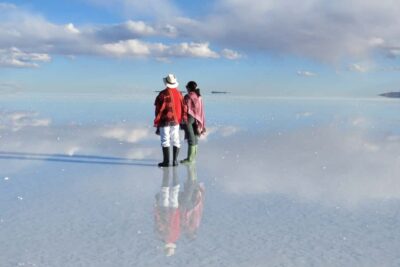
From La Paz: Uyuni Salt Flats Excursion + Round Trip Bus
Read our review →
Titicaca Lake: Highlights Tour from La Paz by Bus
Read our review →Browse the lists this tour appears in