Review · PERU BUS TOURS
Turist Bus Colca Canyon (Chivay) To Puno
The best part of this Chivay to Puno transfer is that you do not spend six hours simply watching the Andes pass by. The route pauses at Abra Patapampa, Patahuasi, and Lagunillas, with a stop near Tocrapampa for llamas, alpacas, and possibly wild vicuñas.
I like the four sightseeing stops and the bilingual guide who helps explain what you are seeing. I also like the practical setup: air conditioning or heating, charging points, reading lights, and a toilet on board. The main drawback is that the trip can run longer than planned, and one passenger reported that snacks, bottled water, and Wi-Fi were not provided as expected.
Key points at a glance
- Abra Patapampa: Stop at the Mirador de los Andes for views of several volcanoes, the Chila range, and the source area of the Amazon River.
- Tocrapampa wildlife stop: Look for llamas and alpacas grazing naturally, with a chance of seeing vicuñas.
- Patahuasi refreshments: Buy hot herbal drinks, use the facilities, and browse local crafts in the Aguada Blanca area.
- Lagunillas photography: Small mountain lakes reflect the sky, and Andean flamingos may appear depending on the season.
- Afternoon timing: Meet in Chivay between 12:30 and 1:10 pm, leave around 1:15 pm, and reach Puno around 7:00 to 7:30 pm.
- Comfort with a caveat: The bus has Wi-Fi, charging points, and a toilet listed among its features, but it is wise to carry your own water and snacks.
Why this is more than a basic Chivay to Puno bus
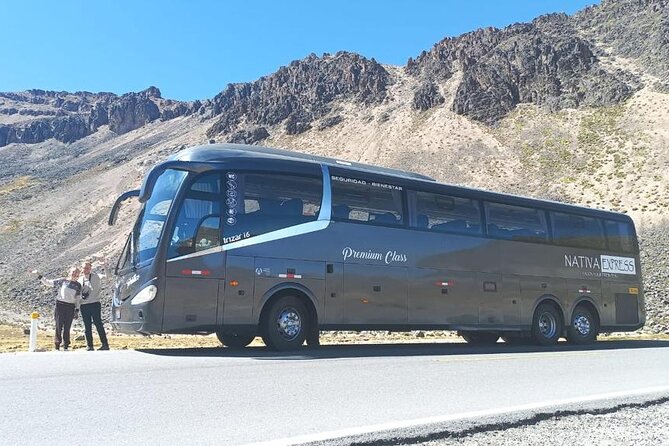
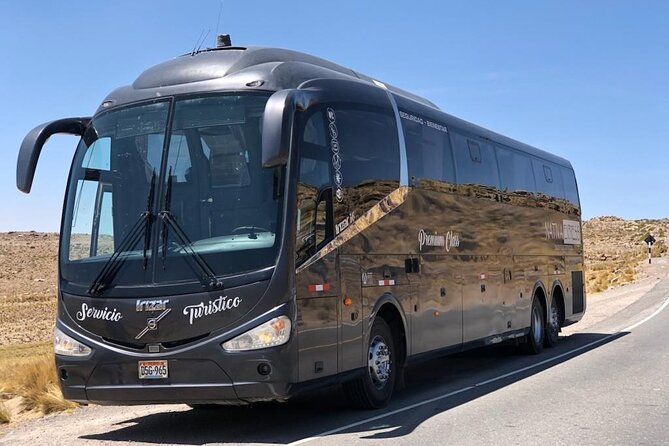
Many people need to get from Chivay to Puno after visiting Colca Canyon. A plain bus would do the job, but this service turns the ride into a half-day sightseeing trip through the high Andes.
That distinction matters. The route crosses open country where volcanoes, grazing camelids, high mountain lakes, and wide skies become the main attractions. You are still spending much of the afternoon on a bus, but the stops break up the ride and give you a better sense of the region than a direct transfer would.
The journey lasts about 6 hours 30 minutes, though road construction can stretch it to roughly 7.5 hours. I would not schedule a tight evening connection in Puno. The expected arrival window is 7:00 to 7:30 pm, and delays are possible.
The group can reach up to 40 people. That makes this a shared coach trip, not a private excursion. You gain a lower price and a guide who speaks Spanish and English, but you should expect a fixed schedule and short stops.
At $41.03 per person, the value is strongest if you need transportation anyway. You are paying for the ride, guide service, four scenic pauses, and onboard facilities. If you only want the cheapest point-to-point bus, a sightseeing transfer may cost more than necessary. If you want to make the route part of your Peru experience, the price is reasonable.
More routes around the world:
- Mt Fuji and Hakone 1-Day Bus Tour Return by Bullet Train
★ 5.0 · 26,383 reviews - Barcelona: 24 or 48-Hour Hop-On Hop-Off Bus Tour
★ 4.4 · 20,872 reviews - London: Warner Bros. Studio Harry Potter Tour & Branded Bus
★ 4.7 · 19,194 reviews
Meeting in Chivay and setting out at 1:15 pm
The meeting point is the operator’s office beside the church on Chivay’s main plaza. You are expected there between 12:30 and 1:10 pm, with departure planned for about 1:15 pm.
That meeting arrangement is easy to identify, but do not arrive at the last second. The time window gives the operator a chance to organize boarding and passengers. Since the activity begins in the center of Chivay, you can reach it using nearby public transportation.
The afternoon departure works well for people finishing a morning in Chivay. It also means the first hours of the ride take place in daylight, which is important because the views are a major part of the experience.
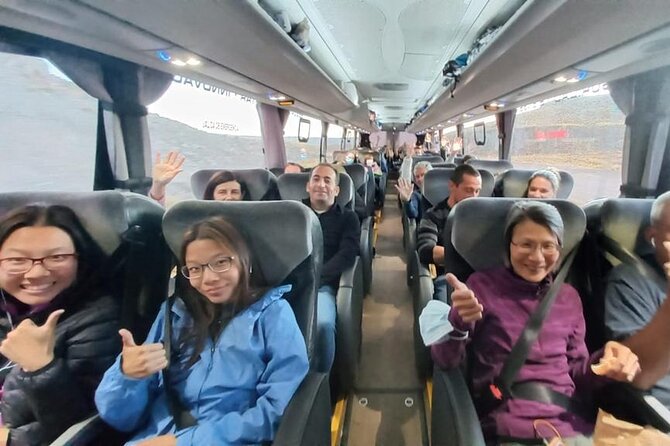
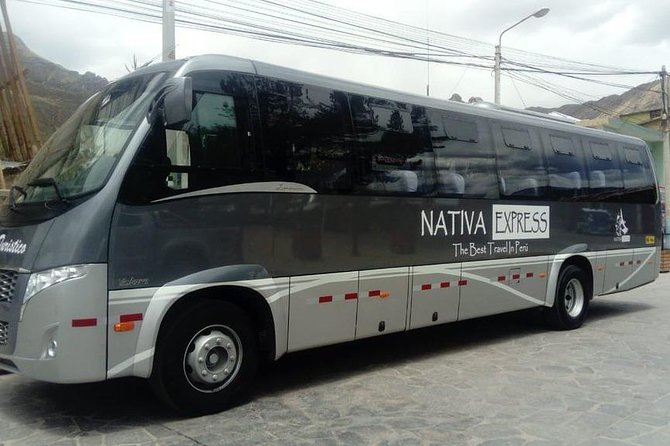
The bus is described as air-conditioned, with heating or cooling as needed. You also have an individual reading light, charging points for phones, tablets, and laptops, and an onboard chemical toilet depending on the vehicle assigned that day.
Wi-Fi is included in the service details, but I would treat it as a convenience rather than a work plan. One passenger specifically found that Wi-Fi, bottled water, and snacks were not offered. Bring your own water, snacks, and offline entertainment so a missing connection does not spoil the ride.
Abra Patapampa and the Mirador de los Andes
The first main sightseeing stop is Abra Patapampa, known as the Mirador de los Andes. The stop lasts about eight minutes and has no admission charge.
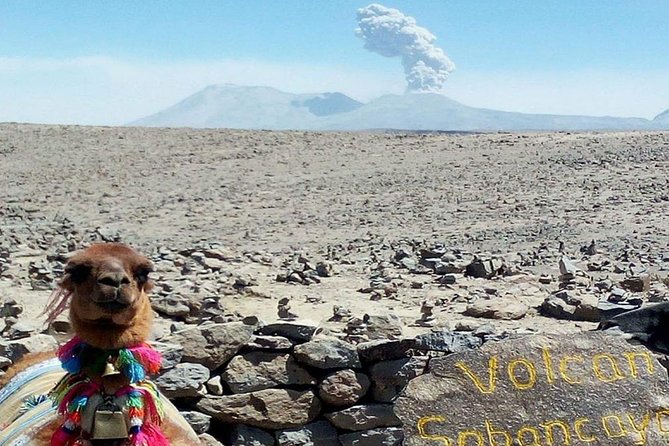
This is a quick photo stop, not a long walk or a full visit. The view reaches toward volcanoes including Ampato, Sabancaya, Hualca Hualca, and Mismi, along with the Chila mountain range.
Mismi is especially interesting because it is identified here as the source area of the Amazon River. You will not be taking a long hike to a river source, but the reference adds meaning to what might otherwise look like a distant mountain ridge.
You may also see apachetas, small piles or towers of stones traditionally left by people as offerings during journeys. They add a human detail to this high route. The stop is short, so keep your camera ready and listen for the guide’s explanation before wandering away from the bus.
High viewpoints can feel exposed and cold, even during a sunny afternoon. A jacket is sensible. Since the stop is only eight minutes, use the time for photographs and a quick look rather than expecting a relaxed walk.
Tocrapampa and the high-country camelids
The route also pauses at Tocrapampa for a technical stop and wildlife viewing. The focus here is on South American camelids grazing in their natural setting.
Llamas and alpacas are the most likely animals to see. With luck, you may spot vicuñas, prized for their exceptionally fine and expensive fiber in the textile industry.
This is a useful distinction. Llamas and alpacas are familiar working and domesticated animals, while vicuñas are wild and much harder to see at close range. The open setting gives you a better chance to see them behaving naturally rather than posing in a market or near a souvenir stall.
No exact duration is given for this stop, so follow the guide’s instructions closely. Do not assume you have time for a long walk. The purpose is a short break and a chance to scan the surrounding country.
You may also see guanacos or foxes at a distance along this stretch, though those sightings are not guaranteed. Bring binoculars if you have them, but do not expect a wildlife tour with long viewing sessions. This is a pleasant bonus during a transport day.
Same city, a different seat on a different deck:
- Rome: City Sightseeing Hop-on Hop-off Bus with Audioguide
★ 4.0 · 16,045 reviews - Paris: Tootbus Hop-on Hop-off (Optional River Cruise)
★ 4.3 · 15,279 reviews - Amsterdam: Zaanse Schans, Edam, Volendam & Marken Bus Tour
★ 4.6 · 15,034 reviews - 1-Day Tokyo Bus Tour
★ 5.0 · 14,250 reviews
Patahuasi in the Aguada Blanca reserve
Patahuasi, also called Pampa Cañahuas, is the more useful stop for a break. It lies in the National Reserve of Aguada Blanca, behind Chachani Volcano, and lasts about 15 minutes.
Here you may see more vicuñas, llamas, and alpacas. Foxes and guanacos are possible at a distance. The setting gives you a stronger sense of the high Andean environment, where animals graze across open ground beneath huge volcanic peaks.
Patahuasi also offers practical comforts. You can use the restrooms, buy handicrafts and souvenirs, and try hot drinks made with local herbs such as chachacoma and muña.
A warm herbal drink can be welcome after sitting in an air-conditioned bus. It also gives you a small taste of local ingredients without turning the stop into a formal meal. The 15-minute limit is short, so choose your priorities. If you need the restroom, do that first. Then buy a drink or browse if time allows.
The stop is not a full market visit, and you should not expect a large meal. Carry a snack for the bus, especially if your evening meal in Puno will be late. The service information says snacks and water are provided, but one passenger reported receiving neither, so personal supplies are the safer choice.
Lagunillas and the best photo stop
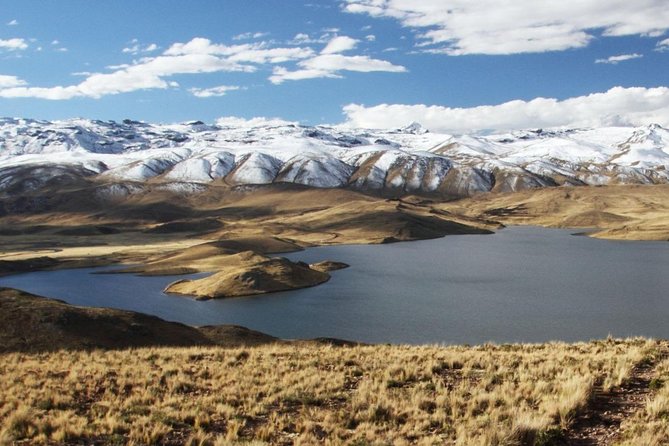
Lagunillas is another 15-minute stop and may be the most photogenic part of the route. Small lakes reflect the sky like mirrors, creating broad views that change with the light and weather.
Andean flamingos and other birds may be present depending on the season. Their presence is not guaranteed, but the lakes are worth seeing even without wildlife. The open water and surrounding mountains make this a natural pause after the bus ride.
This is a place where you will want your phone or camera ready. The stop is short, and there may be several good angles from the viewing area. Stay aware of the departure time. Missing the bus would turn a pleasant photo stop into a serious problem.
The exact bird season is not specified, so do not book the ride solely to see flamingos. Think of them as a bonus. The reliable attraction is the view across the small lakes and the chance to photograph a less familiar side of southern Peru.
The bus ride itself: useful comfort, modest expectations
A 6.5-hour coach ride can feel long, especially after several days of sightseeing. The air conditioning or heating, reading light, charging points, and onboard toilet make the trip easier than a basic public bus.
Wi-Fi would be useful for checking messages or handling light online tasks. Still, connection quality can vary, and the reported absence of Wi-Fi on one trip means you should not depend on it. Download maps, entertainment, or work files before departure.
The onboard toilet is listed as available according to the type of vehicle. It is a practical backup, not a reason to skip the Patahuasi restroom stop. Use the facilities there if you can.
The service includes a professional bilingual guide, which is one of its strongest features. The guide can connect the scenery to volcanoes, wildlife, local plants, and traditional apachetas. The guide’s help may also extend beyond sightseeing. Assistance with onward arrangements and accommodation questions has been especially useful on this route.
The coach holds up to 40 people, so the atmosphere will depend on the group. You will not get the flexibility of a private car, but the shared format keeps the cost down and provides a clear schedule.
Arrival in Puno and possible hotel drop-off
The bus should reach Puno around 7:00 to 7:30 pm. If your hotel is in Puno’s historic center, the service may be able to take you directly to your accommodation.
That final detail can save time and effort after a long day. It is not described as a universal drop-off for every address, so confirm that your hotel qualifies. If your accommodation is outside the historic center, plan for a separate transfer.
The arrival time is late enough that dinner plans should remain flexible. Construction or road delays can add an hour or more. I would avoid booking a fixed evening activity or a tight onward connection.
One advantage of arriving by a sightseeing bus is that the ride has already included several breaks. You are not simply reaching Puno exhausted after an uninterrupted transfer. Still, it is a long afternoon, and anyone prone to motion sickness or fatigue should prepare accordingly.
Who will get the most value from this trip
I would choose this service if you are already planning to travel from Chivay to Puno and want the route to include scenery and short explanations. It suits people who prefer a guided transfer over arranging separate transport and roadside stops.
It is also a good fit for visitors who want to see volcanoes, camelids, and high-altitude lakes without committing to a full extra excursion. The stops are brief and easy to fit into a travel plan.
Families and older passengers may appreciate the toilet, controlled schedule, and possible hotel drop-off in central Puno. Most people can participate, and the activity is near public transportation at the starting point.
I would think twice if you need reliable Wi-Fi for work, dislike group schedules, or have an evening reservation in Puno that cannot move. The bus is comfortable by transfer standards, but it is still a shared coach journey with possible delays.
The cancellation terms are forgiving if your plans change: cancel at least 24 hours before the start for a full refund. Changes made inside that window are not accepted, and poor weather may lead to a new date or full refund.
Should you book the Chivay to Puno sightseeing transfer?
Book it if you want a practical transfer with real sightseeing value. The four stops make the $41.03 fare easier to justify, and the bilingual guide, onboard facilities, and possible central hotel drop-off add useful convenience.
Pack water, snacks, a jacket, and anything you need offline. Treat Wi-Fi and included refreshments as helpful extras rather than guarantees, based on the service experience reported on one trip.
If you can accept a possible 7.5-hour journey and a group of up to 40 people, this is a sensible way to connect Colca Canyon and Puno without wasting the day on a plain bus ride. If your priority is speed or total flexibility, choose a direct private transfer instead.
FAQ
Where does the Chivay to Puno trip begin?
It begins at the Nativa Express office beside the church on the main plaza in Chivay.
What time should I arrive in Chivay?
You should arrive between 12:30 and 1:10 pm. Departure is planned for about 1:15 pm.
How long does the journey take?
The expected duration is about 6 hours 30 minutes. Road construction can make the trip take about 7.5 hours.
What time does the bus reach Puno?
Arrival is expected around 7:00 to 7:30 pm.
How many sightseeing stops are included?
Four stops are included: Abra Patapampa, Tocrapampa, Patahuasi, and Lagunillas.
Is a guide included?
Yes. A professional bilingual guide speaking Spanish and English accompanies the trip.
Does the bus have a toilet and Wi-Fi?
The service includes free Wi-Fi and a chemical toilet according to the type of vehicle. It also lists air conditioning or heating, reading lights, and charging points.
Can the bus take me to my hotel in Puno?
If your hotel is in Puno’s historic center, the service may be able to take you directly there. Other locations may require separate transport.
Recently added around the world
- Vine Hopper: Hop-On Hop-Off Wine Tour – Northern Route★ 4.5 · 62 reviews
- Vine Hopper: Hop-On Hop-Off Wine Tour – Southern Route★ 4.5 · 64 reviews
- Xi’an 1-Day Coach Tour of Terracotta Army★ 4.5 · 47 reviews
- Xi’an: Terracotta Army Mini-Bus Tour with Options★ 5.0 · 240 reviews
- From Stellenbosch: Hop-On Hop-Off Wine Tour Southern Route★ 4.7 · 105 reviews
- Malta: Vintage Bus Ride through the Three Cities★ 4.1 · 112 reviews
- Adelaide Hills & Hahndorf Hop-On Hop-Off Wine Tour★ 5.0 · 136 reviews
- Barossa Valley Hop-On Hop-Off Wine Tour★ 5.0 · 418 reviews
Bus Tours, compared.

Mt Fuji and Hakone 1-Day Bus Tour Return by Bullet Train
Read our review →

Warner Bros. Studio Harry Potter Tour & Branded Bus
Read our review →
City Sightseeing Hop-on Hop-off Bus with Audioguide
Read our review →
Tootbus Hop-on Hop-off (Optional River Cruise)
Read our review →
Zaanse Schans, Edam, Volendam & Marken Bus Tour
Read our review →