

Review · HANOI BUS TOURS
Sapa Trekking 3 Days 2 Nights by Bus – Homestay & Hotel
Sapa’s best moments come on foot, when the road gives way to rice terraces, village paths, waterfalls, and homes belonging to Hmong and Giay families. This three-day trip gives you that experience without making you arrange buses, village guides, hotels, meals, and local transfers separately. The rice terraces around Y Linh Ho and Lao Chai are the main event.
I like the mix of a private hotel room in Sapa and a shared family homestay in Ta Van. I also like the practical return bus from Hanoi, since the long journey is handled for you. The main caution is organization: communication between the hotel and tour company may be uneven, and the schedule can change with weather.
Key points at a glance
- Cat Cat on the first afternoon: Walk about 3 kilometers from Sapa to a Hmong village, hydropower station, and waterfall.
- Y Linh Ho and Lao Chai on day two: See old rice terraces and stop for lunch in a Hmong village.
- Ta Van homestay: Share dinner and cooking time with a local Giay family.
- Giang Ta Chai on day three: Trek through bamboo forest to a silk waterfall before returning to Sapa by vehicle.
- Bus convenience: Pickup in Hanoi Old Quarter, return transportation, water, tissues, and a tour leader on the bus are included.
- Moderate effort: The walks last several hours each day, so good shoes and a fair level of fitness matter.
Why this three-day Sapa plan works
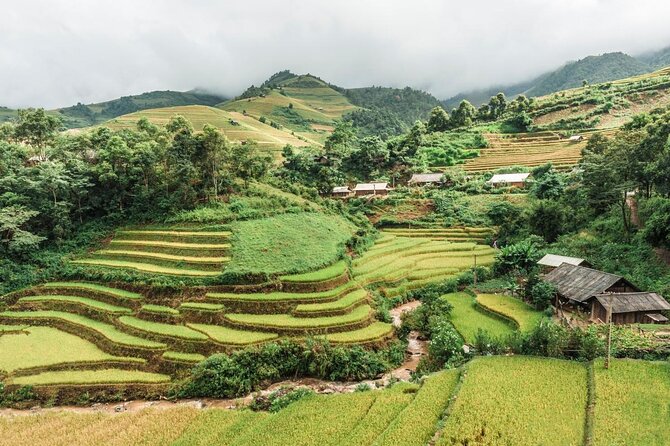
For $165 per person, this is a practical package for anyone starting and ending in Hanoi. You get return bus transport, a hotel night, a homestay night, two breakfasts, three lunches, two dinners, local guiding, and admission fees where required. Booking each piece separately could take more time and may not save much once transport and meals are added.
The trade-off is control. You are following a fixed schedule, sharing accommodation at the homestay, and traveling by bus rather than choosing a train or private car. If you want a private trek with a flexible pace, this is not the right format. If you want to see Sapa without sorting out every transfer, it makes good sense.
The group limit is 15 people. That is large enough to make the trip social but small enough for the guide to keep the walking group together. The experience is aimed at people who can walk for several hours over uneven village paths. It is not recommended for children under nine or for people with disabilities, and a moderate fitness level is required.
More walks and climbs around Hanoi:
- 2-Day Trekking Adventure of Sapa from Hanoi with Night Bus
★ 5.0 · 134 reviews - Sapa Trekking Tour 2 Days 1 Night By Bus
★ 5.0 · 86 reviews - From Hanoi: 2-Day Sapa-Fansipan Peak & Trek & Ha Giang Bus
★ 4.8 · 52 reviews
The bus from Hanoi to Sapa
Pickup takes place from hotels in Hanoi’s Old Quarter or from the stated meeting point at Vietnam Open Tour, 9 Ngo Hang Huong in Hang Ma. The bus leaves between 6:30 and 7:00 in the morning, so you need to be ready early.
The route follows the highway toward Lao Cai. There is a comfort break around 9:30, followed by another stop in Lao Cai at about 11:00. Arrival in Sapa is planned for around 1:00 in the afternoon, though road conditions can affect the timing.
The bus includes two bottles of water and tissues per person for the round trip. An English-speaking tour leader accompanies the bus journey, while a local guide handles the walking days in Sapa. This division is useful because the road transfer and village walks require different kinds of help.
One timing detail deserves attention. The schedule gives both an arrival around 1:00 and a pickup from the bus office at 12:30. Treat the afternoon as approximate rather than minute-perfect. Your operator should collect you from the Sapa bus office and take you to the local office before lunch and hotel check-in.
Cat Cat and Shin Chai on the first afternoon
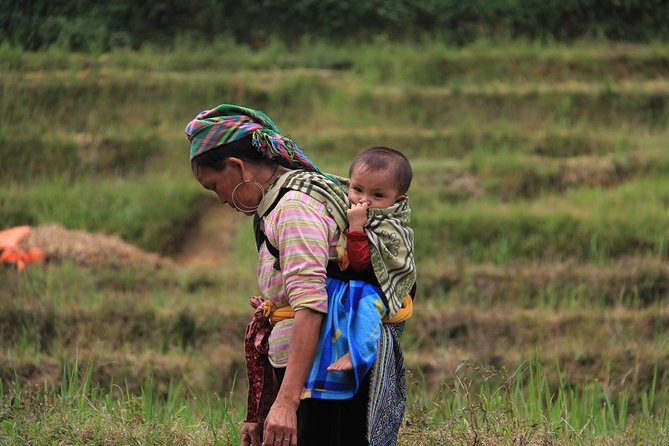
After lunch and settling into your Sapa hotel, the first walk begins at about 2:30. You walk roughly 3 kilometers downhill toward Cat Cat and Shin Chai, areas associated with the Hmong community and early French-era resort activity.
Cat Cat is a popular introduction to the region. You can see the hydropower station and the village waterfall, while the local guide explains aspects of Hmong life and culture. The path gives you an early look at the steep terrain around Sapa, though the route is not simply a flat village stroll.
The first afternoon lasts about four hours. That makes it a useful warm-up for the longer days ahead, but the downhill walking can still be tiring, especially after the morning bus ride. Wear shoes with a firm sole and bring water, even though water is provided on the bus.
Because Cat Cat is a well-known stop, it may feel more visited than the smaller villages later in the trip. Its value is convenience: you can reach it from Sapa on foot and see a waterfall, village setting, and local culture without committing to a full day in the hills.
You return to the hotel after the walk. Accommodation in Sapa is a private room with double, twin, or triple sharing, depending on the booking. One of the strongest parts of the hotel stay can be the mountain view from the room, but room type and exact view are not guaranteed in the information provided.
Y Linh Ho and Lao Chai on day two
Day two starts with breakfast and checkout before 8:30 in the morning. The route leads down toward Y Linh Ho, a village inhabited by Hmong people. This is the day when the rice terraces receive the most attention.
The terraces around Y Linh Ho are described as roughly 100 years old. Their stepped shape follows the mountain contours, creating broad views and plenty of photo opportunities. The walk also gives you a better sense of how villages and farming fit together in steep northern Vietnam.
From Y Linh Ho, you continue to Lao Chai, a Hmong village where you stop for lunch for about an hour. Lunch is included, along with the other meals listed for the trip, but drinks are not. Carry Vietnamese dong for extra water, coffee, soft drinks, or small purchases.
The full walking program lasts about seven hours. That does not mean seven hours of constant hard climbing, but you should expect a long day on uneven paths. Mud, drizzle, or slippery sections are possible because the schedule may change with weather and Sapa can be foggy or wet in December, January, February, and March.
This is also the day when the difference between sightseeing and trekking becomes clear. You are not only stopping at viewpoints by road. You are walking between villages and through the agricultural area, which takes more effort but gives the day a stronger sense of place.
More three-day trips around Hanoi:
- Sapa 3-day Discovery Package Tour By Bus with 1 Night Homestay 1 Night Hotel
★ 3.5 · 3 reviews - Sapa 3 Days Trekking Tour By Bus from Hanoi (2 Nights in Hotel)
★ 3.0 · 2 reviews - Ha Giang Loop Adventure: 3D2N Full Packages – VIP Bus Hanoi
★ 5.0 · 2 reviews - Double Decker Hop-On Hop-Off City Sightseeing Philadelphia (1, 2, or 3-Day)
★ 4.0 · 562 reviews
Dinner and a night in Ta Van
After Lao Chai, the walk continues to Ta Van, a village associated with Hmong and Giay communities. A local Giay family welcomes you for the night, and you take part in cooking and dinner with the family.
The homestay is shared accommodation. That means you should not expect the privacy of the Sapa hotel, and the arrangement may suit some people better than others. Its value is the chance to spend an evening in a family home rather than returning to town after the day’s walk.
Meals are included according to the plan, with two dinners across the trip. Beverages are not included, so budget for drinks separately. The information does not specify sleeping arrangements or bathroom details, so ask the provider if those points matter to you.
Ta Van is well placed for the next morning’s walk. You finish day two already among the village paths and rice terraces rather than spending time traveling back to Sapa. For me, that overnight stay is one of the strongest reasons to choose this trip over a basic day excursion.
Bamboo forest and Giang Ta Chai on day three
The third morning begins with breakfast at the homestay. The setting is part of the appeal: you may wake to roosters or pigs, have pancakes with hot tea or coffee, and look across the rice terraces before leaving.
The route passes through a bamboo forest and continues toward a silk waterfall at Giang Ta Chai. After several hours of walking, you stop for a picnic lunch with scenic views. The combination of forest, waterfall, terraces, and village paths gives day three a different feel from the more open terrace views around Y Linh Ho and Lao Chai.
After lunch, you walk back to the main road and take a car or minivan to Sapa. You are expected back around 2:00 in the afternoon. The return vehicle is important because it prevents the final hours from becoming an unnecessarily long walk after two demanding trekking days.
Back at the hotel, you can shower before leaving Sapa. The shuttle to the bus office is scheduled for 3:00, and the staff prepare sandwiches for the journey to Hanoi. That shower and takeaway food are small details, but they make the return leg much easier after walking since morning.
Accommodation, meals, and what $165 covers
The accommodation setup is clear enough for most bookings:
- One night in a Sapa hotel, with a private double, twin, or triple-sharing room
- One night in a shared homestay with a Giay family
- Two breakfasts
- Three lunches
- Two dinners
- A sandwich for the return bus journey
The $165 price also includes the Hanoi to Sapa and Sapa to Hanoi bus, hotel pickup and drop-off within Hanoi Old Quarter, local transfers mentioned in the schedule, a bus tour leader, a Sapa guide, and admission fees. That is a fair amount of transport and support for three days.
Do not read the price as an all-inclusive deal. Drinks, early hotel check-in, late checkout, and anything not clearly listed cost extra. Bring cash in Vietnamese dong because the local banking system may not always work properly in Sapa. US dollars, euros, and Australian dollars are also accepted there, but dong is the most useful currency for small expenses.
One account of the trip describes the three-star hotel as a major positive, especially because of the mountain view. That is worth keeping in mind, but hotel quality and room views can vary. Another experience points to poor communication when the hotel and tour company did not seem to have the same information about the booked program. Confirm your pickup time, room arrangement, guide meeting point, and day-two departure before leaving Hanoi.
How hard is the trekking?
The tour calls for moderate physical fitness, and that is the right way to think about it. Day one is about four hours, while days two and three are listed at about seven hours each. The routes pass through hills, terraces, forest, villages, and paths that may be wet.
You do not need to be an expert hiker, but you should be comfortable walking for several hours and handling uneven ground. Trekking shoes are essential, particularly in wet months. Sunglasses, sunscreen, and insect repellent are also advised.
Sapa weather can change quickly. Warm clothes, a scarf, and a hat or cap are useful, especially from September through March. Cold conditions are common from September to March, and fog or drizzle can affect December through March. The route can change because of weather, so keep some flexibility in your expectations.
Pack light. You need practical walking clothes, a warm layer, rain protection if you have it, personal medicine, and enough cash. Chemist shops exist in Sapa, but carrying medication you may need is safer than relying on finding a specific item locally.
Who will enjoy this Sapa trip?
This works best for an active visitor who has limited time in northern Vietnam and wants transport and accommodation arranged in one package. It suits first-time hikers because a local guide leads the village walks, and it removes the worry of getting lost on remote paths.
It also suits people who want both comfort and contact with local life. The Sapa hotel gives you a private room after the first walking day, while the Ta Van homestay adds shared meals and a family setting.
I would be more cautious about booking it for a young child, anyone with limited mobility, or someone who dislikes long walks. It may also disappoint you if you expect a polished, tightly managed tour with perfect communication at every handoff. The language and scheduling gap between the Hanoi bus operation, Sapa office, and hotel is the main practical risk.
Free cancellation is available if you cancel at least 24 hours before the local start time. Changes or cancellations made within 24 hours are not accepted for a refund. Confirmation is normally issued at booking, though bookings made within three days of departure may take up to 48 hours and depend on availability.
Should you book this Sapa trekking tour?
Book it if you want the main Sapa sights on foot, a real homestay night, included meals, and a return bus from Hanoi for a reasonable $165. The rice terraces, Giang Ta Chai walk, and dinner with a Giay family give it more character than a simple town-and-viewpoint visit.
Go in with realistic expectations. This is moderate trekking, not a gentle sightseeing trip, and the homestay is shared. Confirm the practical details before departure, pack for cold and wet weather, and allow for changes in the schedule. For an active first visit to Sapa, the balance of price, scenery, village contact, and transport makes this a solid choice, with organization being the point to watch.
FAQ
How long is the Sapa tour?
The experience lasts about three days and two nights, with one night in a Sapa hotel and one night in a shared homestay.
Where does the tour start in Hanoi?
Pickup is offered from hotels in Hanoi Old Quarter or from the meeting point at Vietnam Open Tour, 9 Ngo Hang Huong, Hang Ma, Hoan Kiem, Hanoi.
Is transportation from Hanoi to Sapa included?
Yes. Modern bus transportation from Hanoi to Sapa and back to Hanoi is included, along with pickup and drop-off in Hanoi Old Quarter.
How large is the group?
The tour has a maximum of 15 people.
What accommodation is included?
You receive a private hotel room in Sapa, with double, twin, or triple sharing, plus one night in shared homestay accommodation with a local family.
What meals are included?
The package includes two breakfasts, three lunches, and two dinners. Drinks are not included.
Is the trekking difficult?
The tour requires a moderate fitness level. The first walk lasts about four hours, and the walks on days two and three last about seven hours each.
What should I bring?
Bring warm clothing, a scarf, hat or cap, trekking shoes, sunglasses, sunscreen, insect repellent, personal medicine, and cash in Vietnamese dong. Sapa weather can be cold, foggy, or wet.
Can I cancel for a full refund?
Yes, if you cancel at least 24 hours before the experience start time. Cancellations or changes made less than 24 hours in advance are not refunded.
Recently added around Hanoi
- 2-Day Trekking in Sa Pa from Ha Noi by sleeping bus★ 5.0 · 4 reviews
- Vietnam Day Trips All-Inclusive, Bus, Guide, Meals & Activities★ 4.5 · 8 reviews
- Sleeping bus Ninh Binh to Hue★ 4.0 · 5 reviews
- From Hanoi: 2D1N Ha Long Bay Deluxe Cruise with Bus Limousine★ 5.0 · 185 reviews
- Sapa trekking 2days by bus from Hanoi ( over night in homestay)★ 5.0 · 21 reviews
- Sapa Trekking Tour 2 Days 1 Night By Bus★ 5.0 · 86 reviews
- Sapa 2D1N Trekking to Giang Ta Chai Village from Hanoi by Bus★ 3.5 · 4 reviews
- Sapa 2D1N All Included (Bus & Homestay)★ 4.5 · 8 reviews
3-Day Experiences, compared.

Double Decker Hop-On Hop-Off City Sightseeing Philadelphia (1, 2, or 3-Day)
Read our review →
Banff Lake Louise Excursion – 3-Day Calgary To Vancouver Bus Tour
Read our review →
Sapa 3-day Discovery Package Tour By Bus with 1 Night Homestay 1 Night Hotel
Read our review →
Ha Giang Loop Adventure: 3D2N Full Packages – VIP Bus Hanoi
Read our review →
Sapa 3 Days Trekking Tour By Bus from Hanoi (2 Nights in Hotel)
Read our review →Browse the lists this tour appears in