
Review · LISBON BUS TOURS
Lisbon: Hop-On Hop-Off Bus Tour
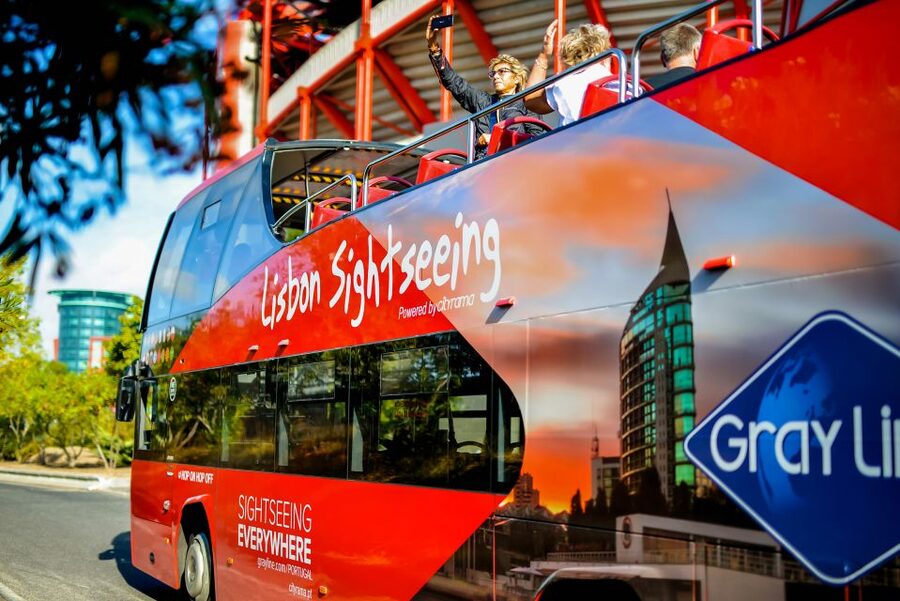
Lisbon’s hop-on hop-off bus is most useful as a city orientation tool. It links far-flung sights that are awkward to combine on foot, from Jerónimos Monastery and Belém Tower to Parque das Nações, Alfama, Cascais, and the beaches beyond town. You can ride the full circuit first, then hop off where the city grabs your attention.
I like the freedom to set your own pace and the useful spread of routes. The audio guide comes in 16 languages, buses have Wi-Fi, and the ticket can last one, two, or three days. The main catch is time: a 24-hour ticket may not give you enough daylight to cover every route, especially Cascais, which is effectively a day trip. The commentary is recorded, not a live guiding service, and the Castle Line uses single-decker buses.
Key points to know before booking

- Five routes cover very different Lisbons: Historic Belém, Alfama and the castle district, modern Parque das Nações, residential uptown areas, and the coast toward Cascais.
- A 72-hour ticket gives the best breathing room: You can ride one route for orientation, then use the next two days for stops and museums.
- Belém is the strongest sightseeing circuit: Jerónimos Monastery, Belém Tower, the waterfront, and Portugal’s maritime story are all concentrated here.
- Cascais needs a full time block: It offers beaches, Estoril, and coastal scenery, but it is not a quick extra stop on a central Lisbon itinerary.
- Commentary is recorded: You receive an audio guide in 16 languages, but you should not expect a live guide explaining the city.
- Attraction discounts add some value: The ticket can reduce costs at selected museums, monuments, restaurants, and shops, though entrance fees are not included.
Why this bus works well in a hilly city
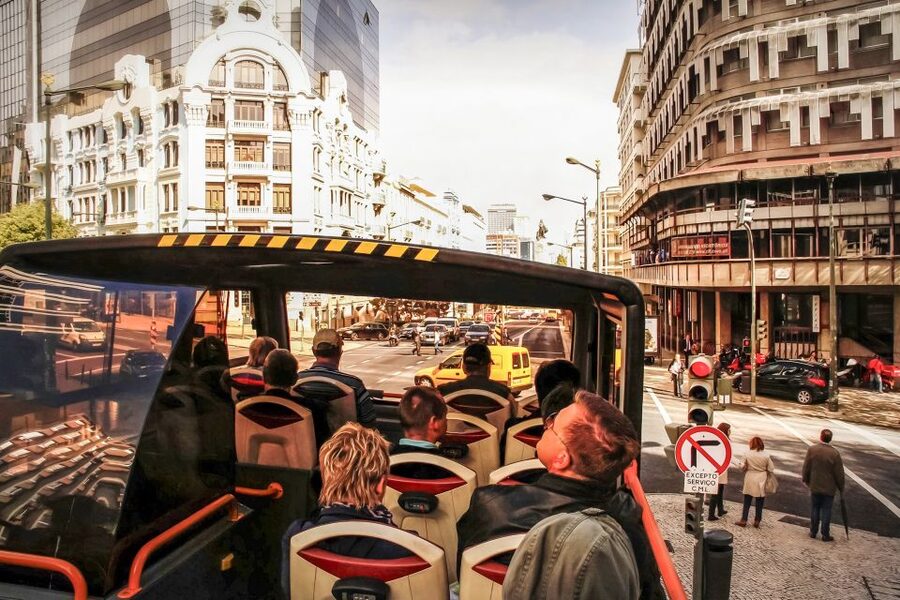
Lisbon is beautiful, but it can be hard on your legs. Streets climb sharply, tram routes can be crowded, and the most interesting districts are spread along the river, across the hills, and out toward the coast. This bus lets you see the city’s shape without spending the whole day climbing from one viewpoint to the next.
Start at the bus terminal at Marquês de Pombal, where you redeem your voucher. From there, I would first ride without getting off. Use the audio guide to mark the places you want to revisit, and watch how Lisbon changes from the broad avenues around the park to older neighborhoods, riverfront districts, and modern commercial zones.
The bus is best for connecting major areas, not for replacing every local ride. You still need to walk from stops to monuments, museums, shopping centers, and waterfront promenades. Bring comfortable shoes, a sun hat, and a camera. Umbrellas are not allowed.
More Hop-On Hop-Off Bus Tours in Portugal
- Lisbon: 1-or 2-Day Hop-On Hop-Off Bus Tour
★ 4.1 · 4,774 reviews - Porto: City Sightseeing Hop-On Hop-Off Bus Tour
★ 4.0 · 2,588 reviews - Lisbon: 72/96-Hour Hop-On Hop-Off Bus, Tram & Boat Ticket
★ 4.4 · 2,170 reviews
The Belém Line reaches Lisbon’s grandest monuments
The Belém Line, also called the Portuguese Discoveries Line, is the route I would put first on your list. It takes you west along the river to the part of Lisbon most closely tied to Portugal’s seafaring age.
The headline stop is Jerónimos Monastery, one of the city’s most impressive buildings. Its detailed stonework and large cloisters reward a slow visit, so allow time beyond the bus ride itself. Entrance is not included, and the line can only take you to the monument. You will need to decide if you want to spend part of your day inside.
Nearby Belém Tower is another major stop. The tower sits by the river and is one of Lisbon’s best-known sights. It is more compact than the monastery, so it can fit into a shorter stop, though the surrounding waterfront also invites a walk.
This route works well because several major sights sit in the same general district. You can get off, walk between nearby attractions, and board again instead of crossing the city each time. The route also gives you a sense of Lisbon’s relationship with the river, which is easy to miss if you spend all your time in the central hills.
The tradeoff is timing. If you enter both major monuments, stop for food, and walk along the water, you can use most of a day here. Do not treat Belém as a quick photo stop unless you have a very short schedule.
The Castle Line takes you into old Lisbon

The Castle Line focuses on Lisbon’s traditional quarters, including the areas associated with Alfama and the castle. This is the route for low houses, narrow streets, viewpoints, and the city’s old musical tradition of Fado.
Alfama is one of the places where riding and walking work best together. Use the bus to reach the general area, then get off and explore on foot. The streets are irregular, and the character comes from small details rather than one single monument: tiled facades, steep lanes, lookout points, and quiet corners between the main sights.
The route also gives you access to Lisbon’s traditional neighborhoods without forcing you to make the full climb from the lower city. That matters on a hot day, or if hills and uneven streets are a concern.
This is the one line that operates only with single-decker buses. You may not get the same open upper-deck view found on other buses, so consider it mainly as practical transport into the old quarters rather than a perfect sightseeing loop.
The recorded commentary can help you understand what you are seeing, but it will not answer questions or adjust the route for your interests. If you want local advice about Fado, restaurants, or the best viewpoint, ask at your hotel or tourist information office rather than expecting the bus recording to do that work.
The Orient Line shows Lisbon after the 1998 World Fair
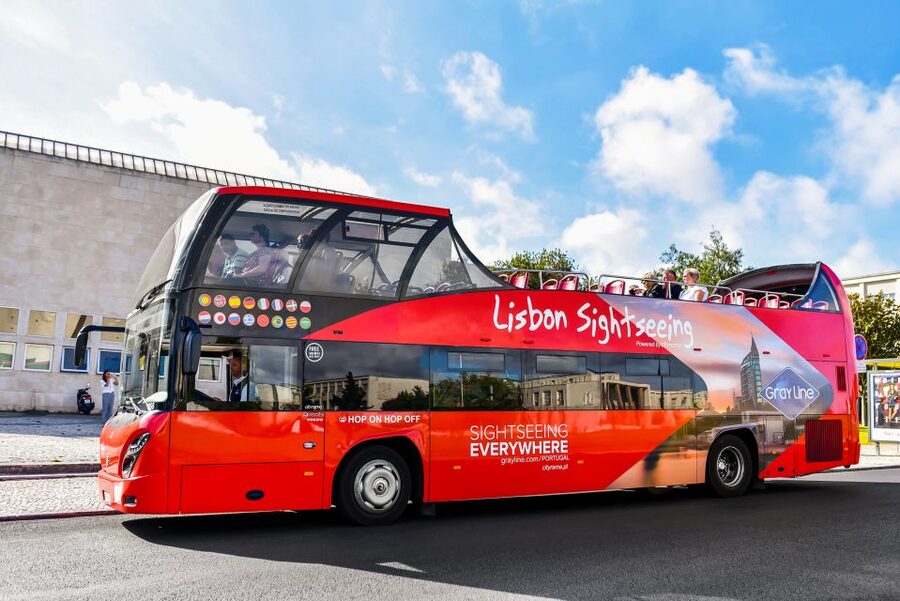
The Orient Line takes you east to Parque das Nações, Lisbon’s modern riverfront district. This area grew around the 1998 World Fair and feels very different from Belém or Alfama.
The Lisbon Oceanarium is the main draw for many families, though admission is separate. The Vasco da Gama Shopping Centre gives you an easy place to browse shops or take a break, and the wider district includes museums, cafes, restaurants, art, fashion, and viewpoints.
This line is a good reminder that Lisbon is not only old stone streets and tiled churches. Parque das Nações offers broad public spaces and modern architecture, with plenty of room to walk beside the river. It also gives families a change of pace after a morning in crowded historic districts.
I would combine the Orient Line with a half-day plan rather than trying to squeeze it between several central stops. The ride connects well with the city’s wider route network, but you need time to enjoy the oceanarium, shopping center, or waterfront instead of simply checking the district off a list.
More Hop-On Hop-Off Bus Tours in the world:
- Barcelona: 24 or 48-Hour Hop-On Hop-Off Bus Tour
★ 4.4 · 20,872 reviews - Rome: City Sightseeing Hop-on Hop-off Bus with Audioguide
★ 4.0 · 16,045 reviews - Paris: Tootbus Hop-on Hop-off (Optional River Cruise)
★ 4.3 · 15,279 reviews - Paris: Big Bus Hop-On Hop-Off Tour with Optional Cruise
★ 4.4 · 13,279 reviews
The Cascais Line is really a coastal excursion

The Cascais Line reaches the Costa do Sol, with stops connected to Cascais, Estoril, and sandy beaches. This is the route to choose when you want sea air, open views, and a break from Lisbon’s dense streets.
Cascais gives you a chance to walk around a historic coastal town and spend time near the water. Estoril adds another seaside stop, while the beaches make this route attractive if you want to relax or play sports rather than visit another museum.
The important practical point is that Cascais is not a small detour. It takes time to reach, and you need time at the destination. A 24-hour ticket is unlikely to let you enjoy the central Lisbon routes and this coastal line properly. If Cascais is one of your main goals, choose 48 or 72 hours, or treat the coast as the focus of a separate day.
This route also depends more heavily on the operating schedule. Check the current departure times before planning a tight connection. The operator can change or cancel services when conditions beyond its control make a route impractical, so leave some flexibility in your day.
The Uptown Line adds shopping and family stops
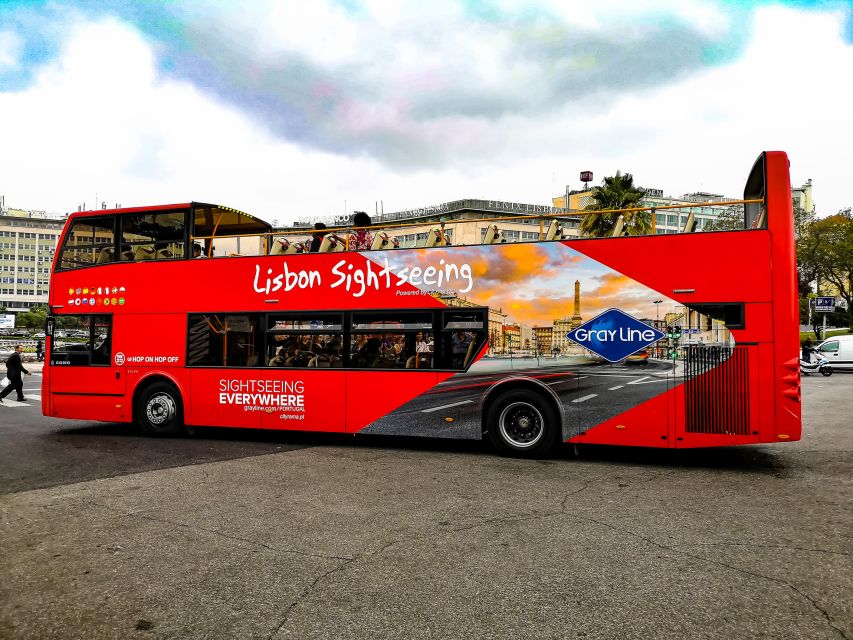
The Uptown Line, also known as the Purple Line, shows the city’s modern and residential side. It passes through business, shopping, university, and residential districts, giving you a useful contrast with Belém and Alfama.
This route is especially practical for families and shoppers. Stops include Colombo and Lisbon Zoo, although the zoo ticket is included only with the Epic pack. The zoo admission remains valid for an entire month, while the hop-on hop-off ticket itself lasts 72 hours on that package.
Colombo is useful if you need a large shopping center, a meal, or a break from sightseeing. The route can also help you see parts of Lisbon that do not appear on a classic old-town itinerary.
For a first visit, I would not put Uptown ahead of Belém or Alfama unless shopping, the zoo, or modern Lisbon is a priority. It works best as a second-day option, especially with a 48-hour or 72-hour ticket.
Recorded commentary, Wi-Fi, and the limits of the guide

The audio guide is available in Basque, Catalan, Chinese, Dutch, English, French, German, Greek, Italian, Japanese, Portuguese, Russian, and Spanish. That makes the tour easy to use for a mixed-language group, and you can listen at your own pace.
You should know what kind of experience this is. The driver speaks English, but the sightseeing information comes through a recording rather than a live guide. One report described the audio repeating on the green route, so bring patience if the commentary loops or does not match every moment perfectly.
That is not a serious problem if you use the bus mainly for transport and broad context. It matters more if you want a personal explanation of Lisbon’s buildings, local customs, or current life. I would use the recording for orientation, then explore the old quarters, museums, and monuments at your own speed.
Onboard Wi-Fi is a helpful extra. You can check opening times, review the route map, or find a nearby cafe while moving between districts. The free digital walking tour adds another self-guided option and is available in five languages.
How to choose between one, two, and three days

The $33 starting price can be good value, but only if you use the network. If you buy a 24-hour ticket and take one short ride, regular public transport may be cheaper. The bus earns its keep when you use it to connect several distant areas and take advantage of the discounts.
A one-day ticket suits you if you want a broad overview and have a clear priority, such as Belém. It is less suitable if you hope to cover all five routes. Service hours can limit the plan, and routes may run from roughly midmorning until late afternoon or early evening. You will not have unlimited time after each stop.
A 48-hour ticket gives you a better balance. You can use the first day for Belém and the central historic areas, then choose Parque das Nações, Uptown, or the coast on the second day.
The 72-hour ticket is the easiest choice for a full Lisbon plan. It lets you spread out the routes, revisit a favorite district, and avoid turning every stop into a race for the next bus. A recent three-day plan worked well because the rider could use the maps and schedules to decide where to get off without rushing.
The available ticket packs also matter. Some packages include the night tour, though that service is temporarily unavailable. The Epic pack includes the zoo ticket, and the zoo admission has a longer validity period than the bus pass. Compare the inclusions before paying for a higher package.
Discounts can improve the overall value

Your ticket provides discounts at selected attractions, museums, restaurants, and shops. Examples include the Calouste Gulbenkian Museum and CAM, the Navy Museum, the Royal Treasure Museum, Quake Lisbon Earthquake Museum, the Vasco da Gama Aquarium, El Corte Inglés, and Hard Rock Cafe.
These discounts do not replace admission fees. You still pay to enter monuments and museums, so check the reduction before assuming an attraction is included. The value depends on your plans: a museum-heavy visit can benefit more than a day spent mostly walking through Alfama.
I like this setup because it gives you choices. You can use the bus as transport, then decide which paid sights deserve your money. Just keep the ticket available when you visit a participating place, since you need to present it to receive the discount.
Who will get the most from this tour
I would recommend this experience to first-time visitors who want a fast sense of Lisbon’s layout. It is also useful for families, people who prefer not to manage several local transport changes, and anyone who wants a simple way to reach Belém, Parque das Nações, or Cascais.
It suits you if you like making your own plan. You can get off for a museum, stroll along a promenade, shop, eat, and catch a later bus. Several riders praised the clean buses, city views, convenient departure times, and the freedom to cover the green, blue, and red routes without rushing.
It is less suitable if you want a live historian, a small walking group, or guaranteed door-to-door timing. It is also not suitable for people with mobility impairments, according to the activity information. Lisbon’s hills, uneven streets, and the need to walk between bus stops and sights can make the day demanding.
Named staff praised in the supplied feedback include Catarina and Valeria, but the standard format remains a bus ride with recorded commentary, not a tour led by either person. Do not book it expecting a personal guide to accompany you all day.
Small details that make the day easier
Redeem your voucher at the terminal at Marquês de Pombal, then look at the route map before boarding. Decide which districts are must-sees and which are optional. That simple step prevents you from spending the whole day riding and missing the places you came to visit.
Start early when possible. A one-day pass has less room than it first appears, especially if you want to enter Jerónimos Monastery or another paid sight. For Cascais, reserve a generous block of time and check the schedule before leaving Lisbon.
Carry water, sun protection, and comfortable shoes. The upper deck can offer fine views, but sunlight and wind can be strong. The Castle Line uses single-decker buses, so expect a different ride there.
The service does not operate on December 25 or January 1. Cancellation is free up to 24 hours before the activity, and the reserve-now, pay-later option can help if your plans are still moving.
Should you book Lisbon’s hop-on hop-off bus?
Book it if you want a flexible overview of Lisbon and plan to use at least two routes. The strongest case is a 48-hour or 72-hour pass that combines Belém with Alfama, Parque das Nações, Uptown, or Cascais. At $33, the bus can be a fair deal when it replaces several separate rides and you use the attraction discounts.
Choose a one-day ticket only when you have a firm target and modest expectations. Do not buy the widest route package for 24 hours if you hope to cover every line. For a relaxed visit, the 72-hour option is the better fit, especially if Cascais or the zoo is part of your plan.
Skip it if you want a live guide or prefer to explore every district on foot and by regular public transport. For most first visits, though, this is a practical way to get your bearings, reach far-apart sights, and save your legs for the streets that deserve a closer look.
FAQ
Where do I redeem my voucher?
You redeem the voucher at the bus terminal at Marquês de Pombal in Lisbon.
How long is the ticket valid?
You can choose a 24-hour, 48-hour, or 72-hour bus ticket, depending on the option you book.
How many routes are available?
The service includes five named routes: Belém, Orient, Castle, Cascais, and Uptown. Route access can depend on the ticket package you choose.
Is the commentary available in English?
Yes. The driver speaks English, and the recorded audio guide is available in English and 15 other languages.
Is the guide live?
No. The sightseeing commentary is recorded. The activity includes an English-speaking driver, but not a live guide accompanying you throughout the route.
Are monument entrance fees included?
No. Entrance to monuments is not included. The ticket may provide discounts at selected attractions, museums, restaurants, and shops.
Is Wi-Fi available on the buses?
Yes. Wi-Fi is included onboard the buses.
Is the night tour available?
The night tour is temporarily unavailable. When offered, it is available only with the Classic, Explorer, Expert, and Epic packs.
Is the zoo ticket included?
The zoo ticket is included only with the Epic pack. With that package, the zoo ticket remains valid for an entire month, while the hop-on hop-off ticket is valid for 72 hours.
Recently added around the world
- Vine Hopper: Hop-On Hop-Off Wine Tour – Northern Route★ 4.5 · 62 reviews
- Vine Hopper: Hop-On Hop-Off Wine Tour – Southern Route★ 4.5 · 64 reviews
- Xi’an 1-Day Coach Tour of Terracotta Army★ 4.5 · 47 reviews
- Xi’an: Terracotta Army Mini-Bus Tour with Options★ 5.0 · 240 reviews
- Warsaw City Sightseeing in a Retro Bus★ 5.0 · 196 reviews
- Valletta: Sunday Vintage Bus to Marsaxlokk★ 4.1 · 117 reviews
- From Stellenbosch: Hop-On Hop-Off Wine Tour Southern Route★ 4.7 · 105 reviews
- Malta: Vintage Bus Ride through the Three Cities★ 4.1 · 112 reviews
Hop-On Hop-Off Bus Tours, compared.


City Sightseeing Hop-on Hop-off Bus with Audioguide
Read our review →
Tootbus Hop-on Hop-off (Optional River Cruise)
Read our review →Big Bus Hop-On Hop-Off Tour with Optional Cruise
Read our review →
London Big Bus Hop-On Hop-Off Tour with Optional River Cruise
Read our review →
Big Bus Hop-on, Hop-off Open-Top Sightseeing Tour
Read our review →
Browse the lists this tour appears in