Review · SOUTH KOREA BUS TOURS
Jeju: East of Jeju Island Bus Tour from Seogwipo City
Eastern Jeju packs an unusual amount into one day: a traditional village, a volcanic crater, coastal roads, haenyeo culture, and a bright strip of sand at Woljeongri. This small-group tour from Seogwipo is a practical way to see it without renting a car or relocating to Jeju City.
I like the well-judged mix of nature and local life, especially Seongeup Folk Village and the Haenyeo Museum. I also like Fabio’s personal style. He is the guide and company owner, speaks clear English, and has a knack for adding a quick roadside stop when conditions allow.
The main caution is pace. Nine and a half hours is a long day, with stairs and walking at Seongsan Ilchulbong. Manjanggul Cave is closed until March 2026 because of falling rocks, so the day may use Hamdeok Beach as the substitute.
Key points to know before booking
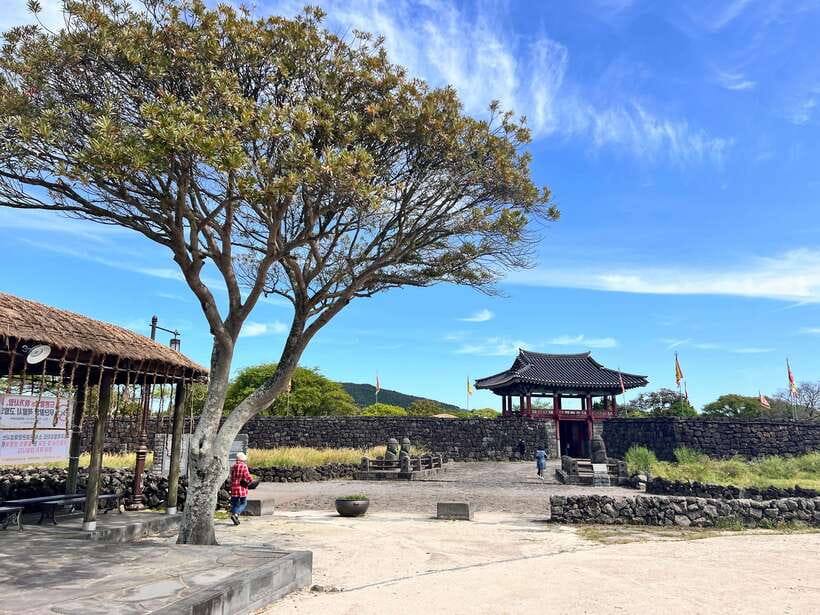
- A rare Seogwipo departure: Pickup is offered from hotels in Seogwipo Old Town when available, with Casaloma Hotel serving as the central meeting point for some locations.
- Fabio leads the day: Expect history, local customs, practical advice, and a flexible approach to timing.
- Seongsan combines views and effort: The one-hour stop includes a guided visit and a climb with stairs, so good shoes matter.
- Haenyeo culture gets real attention: The museum explains Jeju’s female sea workers, while roadside sightings may offer a glimpse of the tradition at work.
- The cave plan can change: Manjanggul Cave is temporarily closed until March 2026, and weather or site conditions can also bring a beach replacement.
- Pack for Jeju weather: Bring a wind jacket, rain protection in summer, comfortable shoes, and sun cover for bright days.
Why eastern Jeju works well as a full-day tour
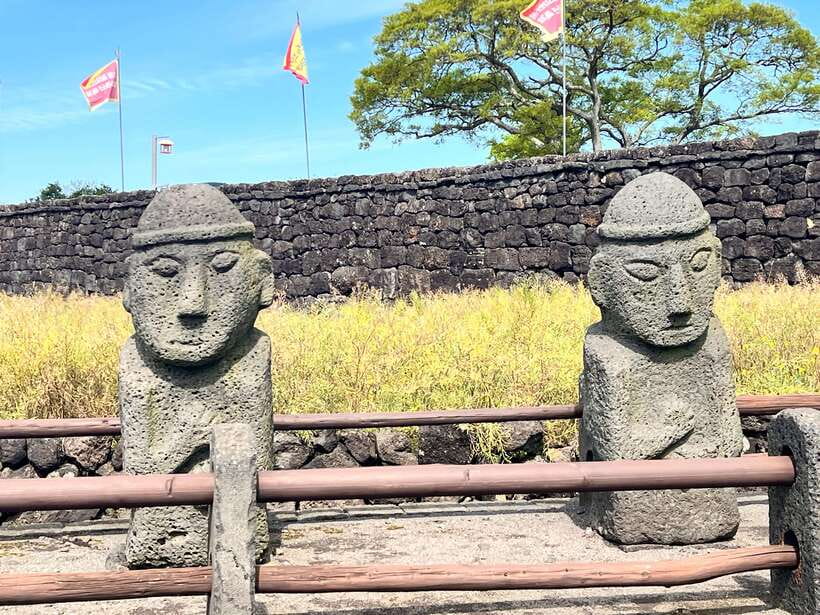
This is not a quick photo-stop circuit. The route moves across eastern Jeju for about 570 minutes, or nine and a half hours, with the guide explaining how the island’s volcanic ground, coastal villages, and older traditions fit together.
That context matters. On your own, you can photograph Seongsan Ilchulbong and walk through Seongeup, but it is harder to understand why the stone walls look different, why haenyeo culture matters, or how Jeju’s rural life changed over time.
The group is limited to 12 people, although the vehicle can vary from a family-size van to a larger bus depending on the final party. Small groups are especially useful here. Fabio can answer questions, adjust a stop within reason, and keep the day from feeling like a herd being moved between parking lots.
The transport is one of the strongest practical features. Several people specifically praised the clean, spacious van and the calm timing between stops. You will still spend time on the road, but the route uses that time well with coastal views and commentary.
More routes around the world:
- Mt Fuji and Hakone 1-Day Bus Tour Return by Bullet Train
★ 5.0 · 26,383 reviews - Barcelona: 24 or 48-Hour Hop-On Hop-Off Bus Tour
★ 4.4 · 20,872 reviews - London: Warner Bros. Studio Harry Potter Tour & Branded Bus
★ 4.7 · 19,194 reviews
Starting in Seogwipo instead of Jeju City
The tour begins in Seogwipo, generally around Seogwipo Maeil Olle Market or at Casaloma Hotel, depending on your accommodation. Free hotel pickup is available in Seogwipo Old Town when arranged, and the provider confirms availability the day before.
This is a major advantage if you are staying in southern Jeju. You do not need to cross the island before breakfast just to join a group. At the end, the tour returns to the departure hotel or Casaloma Hotel, with a stop available for people heading toward Jeju Airport or central Jeju City.
That said, do not assume every Seogwipo hotel has doorstep pickup. If your hotel is outside the old town, you may need to meet at Casaloma Hotel. Confirm the location carefully the day before.
Seongeup Folk Village and Jeju’s older rural life
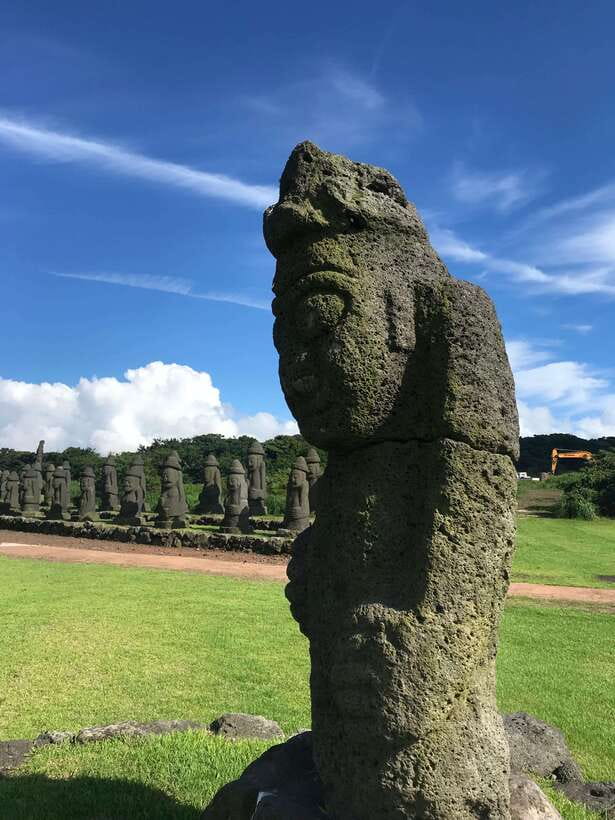
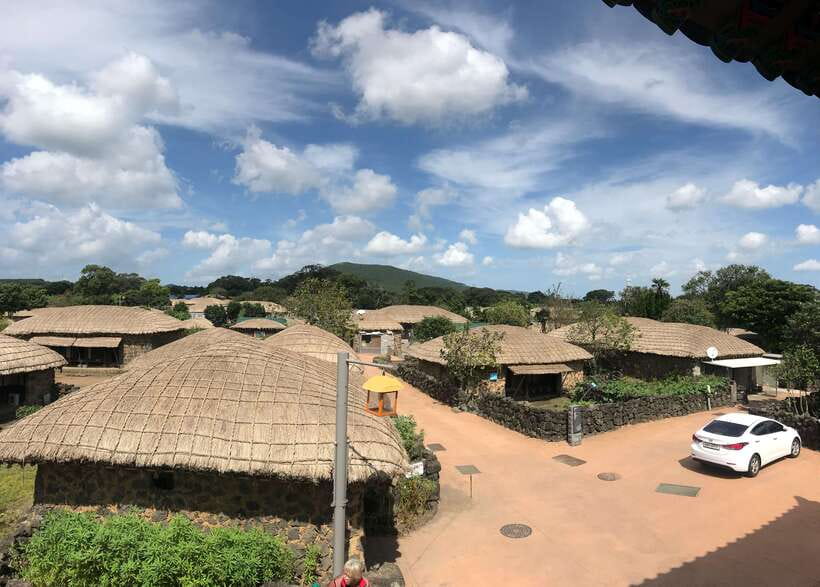
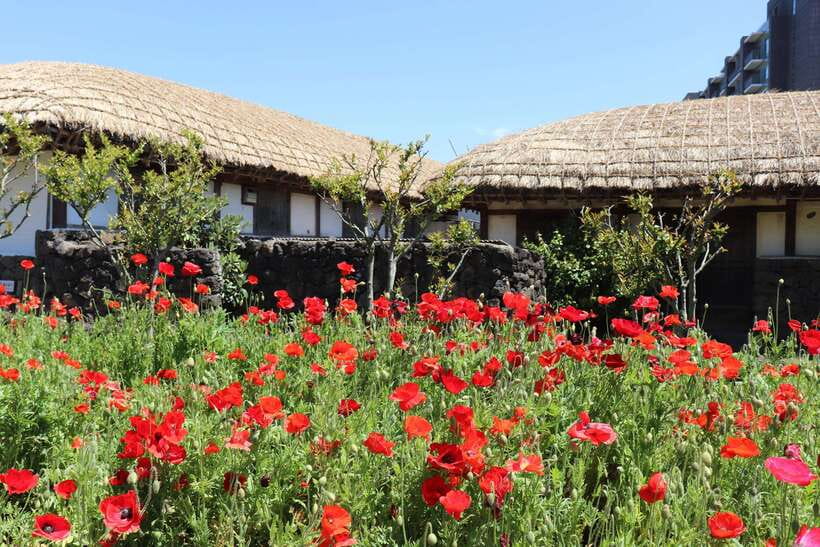
After about 50 minutes on the road, you reach Seongeup Folk Village for roughly 40 minutes of guided sightseeing. This is a strong opening stop because it introduces Jeju through lived-in village spaces rather than only scenic overlooks.
Expect traditional stone walls, older homes, and a sense of how island communities were organized. The important detail is that this is not simply a recreated theme park display. The village remains connected to local life, which gives the visit more weight than a row of decorative buildings.
Fabio’s explanations help you read what you are seeing. Jeju’s famous stonework, wind-exposed setting, and village customs make more sense when someone explains the island rather than leaving you with a few plaques.
Forty minutes is enough for an introduction, not a long independent wander. If you like to linger over architecture or take many photographs, you may wish for more time. The tradeoff is that the tour has several major stops still ahead.
Gwangchigi Beach and the approach to Sunrise Peak
The route then follows the coast for about 30 minutes toward Seongsan Ilchulbong. Before reaching the peak, the group stops at Gwangchigi Beach for an explanation of the formation and setting of the famous volcanic cone.
This is smart planning. The view from a distance lets you understand the shape of Seongsan before you walk it. The peak is a tuff cone formed by volcanic activity, and its profile becomes far more memorable when you first see it across the shore.
The coast itself is part of the attraction. Jeju’s wind can be fierce, even on a sunny day, so keep a jacket within reach. An umbrella can help with strong sun, but it may be awkward on the exposed paths if the wind rises.
Same city, a different seat on a different deck:
- Rome: City Sightseeing Hop-on Hop-off Bus with Audioguide
★ 4.0 · 16,045 reviews - Paris: Tootbus Hop-on Hop-off (Optional River Cruise)
★ 4.3 · 15,279 reviews - Amsterdam: Zaanse Schans, Edam, Volendam & Marken Bus Tour
★ 4.6 · 15,034 reviews - 1-Day Tokyo Bus Tour
★ 5.0 · 14,250 reviews
Walking Seongsan Ilchulbong, the island’s signature cone
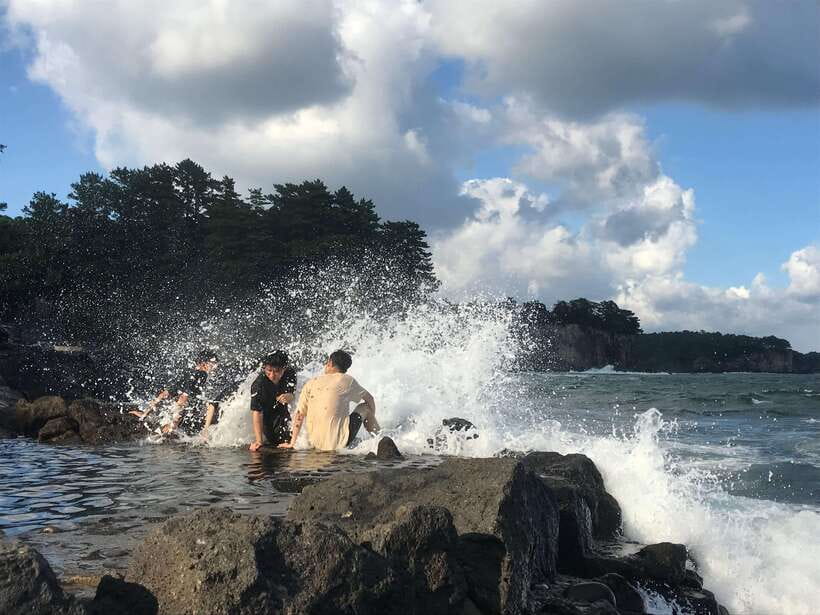
Seongsan Ilchulbong is the natural centerpiece of the day. It is a UNESCO World Natural Heritage site, and the tour allows about an hour for a guided visit and walk.
You will see the volcanic bowl at the top and the sea-shaped rock forms around the coast. The point is not only the view. Wind and waves have cut the shoreline into dramatic shapes, and the peak shows how volcanic force created one of Jeju’s most recognizable places.
Be honest about your fitness before booking. The stop involves walking and stairs, and one person described the day as requiring a lot of walking. Another noted that the guide adjusted the plan during very hot weather. Fabio can be flexible, but he cannot remove the climb itself.
The women diver performance may take place near the end of the trail. It is not guaranteed. Weather controls the schedule, and rough conditions can cancel it. If you see the performance, it adds a living connection to the haenyeo tradition. If you do not, the later museum visit still gives the subject proper attention.
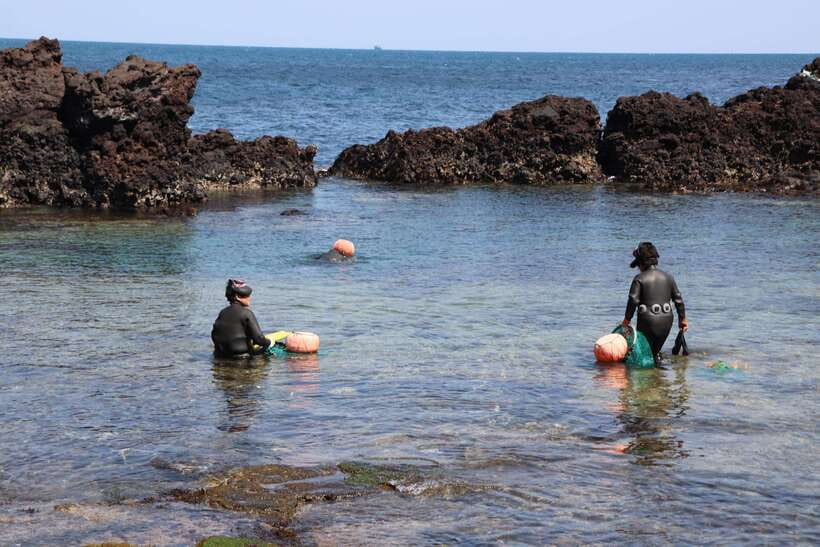
You may also spot haenyeo along the coast while driving. Fabio has been known to pull over when conditions and timing allow. These moments are not guaranteed, but they are among the best reasons to have a local guide rather than simply following a fixed map.
The Haenyeo Museum and a culture worth understanding
From Seongsan, the route continues along the Jongdal-ri coastal road before reaching the Haenyeo Museum. The museum visit lasts about 50 minutes and provides the cultural center of the tour.
Haenyeo are Jeju’s female sea workers, known for gathering seafood in coastal waters. The museum places their work within family life, island economics, and local tradition. It also helps explain why a short performance or distant sighting is only a glimpse of a much larger story.
I value this stop because the tour does not treat the women as a colorful photo opportunity. You get time to understand the work, the social role, and the risks involved. Jeju haenyeo culture is recognized as an intangible cultural heritage of humanity, and the museum gives that designation substance.
The museum is also a useful fallback when the sea is too rough for a performance. The tour’s weather planning works best here: the outdoor experience may change, but the cultural subject remains part of the day.
Woljeongri Beach, a bright coastal pause
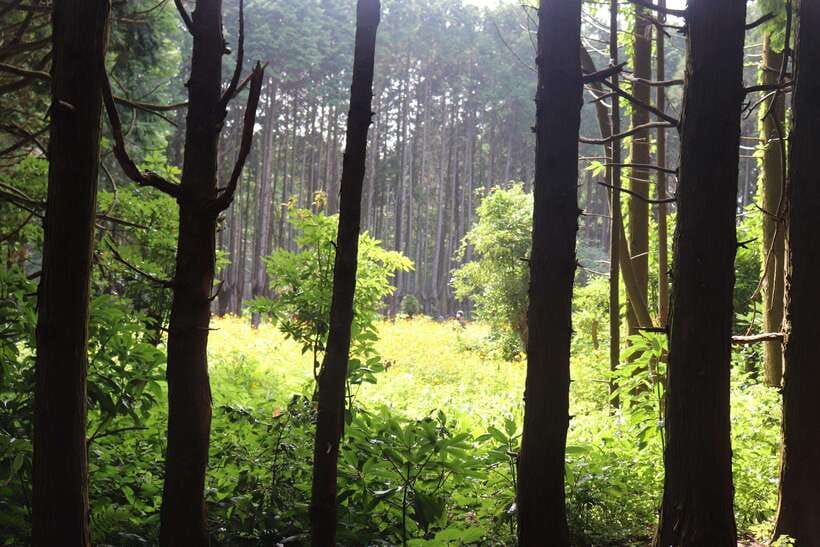
Woljeongri Beach comes next, with about 30 minutes of free time. This is a shorter, lighter stop after the museum and the walking at Seongsan.
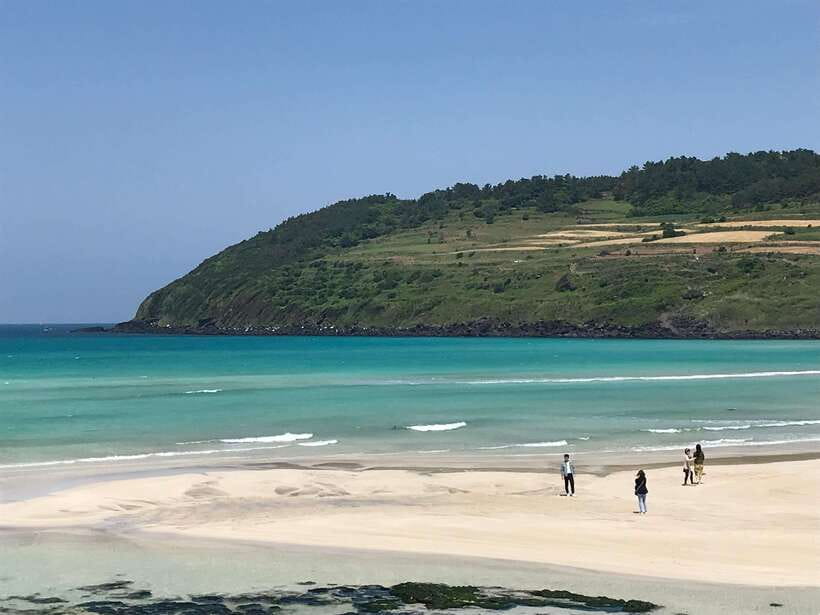
Woljeongri is known for clear sea color and a compact, attractive shoreline. You can pause, take photographs, stretch your legs, or simply enjoy a change of pace. It is not presented as a full beach day, and 30 minutes is not enough for a long swim or a serious coastal walk.
That limited time is worth remembering. If you want extended time at the beach, this schedule may feel brief. If you prefer a varied day, the short break keeps the route moving without turning the tour into a long series of museum interiors.
Manjanggul Cave, and the current replacement plan
Under normal conditions, the next major stop is Manjanggul Cave, reached after a short drive from the museum area. The cave is another World Natural Heritage site and was created by Jeju’s volcanic activity.
The planned guided visit lasts about an hour. A lava tube gives the day a different angle: at Seongsan you see the force of volcanic construction above ground, while inside Manjanggul you see what that activity left beneath the surface.
But the current condition is important. Manjanggul Cave is closed temporarily until March 2026 because of falling rocks. During the closure, the tour uses Hamdeok Seowoobong Beach as an alternative. Weather or another site problem can also trigger a change.
The supplied route information describes the day as visiting only one of Manjanggul Cave or the Hamdeok Beach and Seopjikoji alternative. Confirm the exact plan before you set out, especially if the cave is the main reason you are booking.
Hamdeok is described as Jeju’s largest and most beautiful beach, with white sand and a broad coastal setting. Seoubong Peak offers a trail and a sunset view. The beach replacement is not a lesser kind of experience, but it is a different one: more open air and sea, less geology.
Food, breaks, and the rhythm of the day
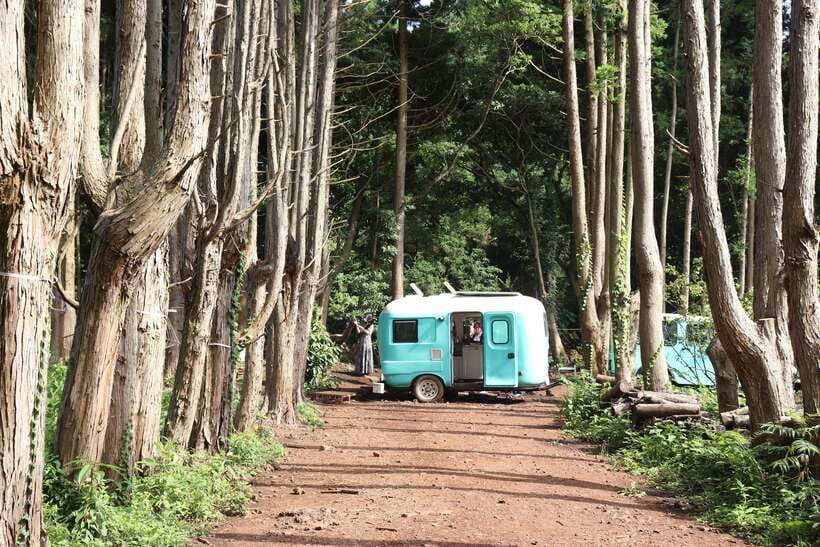
Lunch is not included, so budget for a meal separately. The timing allows for a food break, and Fabio can help with practical choices within the group’s schedule. One meal associated with the route is bomal kalguksu, knife-cut noodles made with sea snail, though the exact restaurant and lunch arrangement are not fixed in the supplied details.
Do not expect a long restaurant lunch if you want to see every planned stop. This is a sightseeing day, not a food tour. Bring water and a small snack if you need regular fuel, especially in warm weather.
The day works best when you accept a little structure. You get guided time at the major sites and free time at the beach, but the vehicle must cover a large part of eastern Jeju before returning south.
Price, transport, and what the $88 covers
At $88 per person, the tour offers solid value for anyone who does not want to rent a car. The price includes the vehicle, English or Korean guide, fuel, parking, and admission fees for the parks. For a nine-and-a-half-hour day, those included costs add up quickly.
The real value is the transport. Eastern Jeju’s sights are spread out, and public transport can make a multi-stop day slow and complicated. A private rental gives you more control, but it also requires driving unfamiliar roads, parking, and managing the schedule yourself.
The price does not include lunch, insurance, hotels, flights, or personal spending. You should also remember that the vehicle size depends on the group. A small group may use a family van, while a larger party may use a minibus or bus.
The experience has a perfect rating from 63 reviews, with repeated praise for Fabio’s English, timing, warmth, and ability to explain Jeju’s culture and past. The most useful pattern is not simply that people liked him. It is that he made the long day feel organized, answered questions clearly, and adjusted small details without losing the route.
Who should book this eastern Jeju tour
I would choose this tour if you are staying in Seogwipo, want to avoid driving, and prefer context over a simple transport service. It suits solo visitors especially well because the small group gives you company without the scale of a large coach tour.
It also works for families with older children. A 10-year-old enjoyed the cultural side of the day, but the walking and stairs at Seongsan still require sensible pacing. People with limited mobility should ask about the walking portions before booking.
You should bring:
- Comfortable walking shoes
- A wind jacket in every season
- A raincoat and sandals or flip-flops in summer
- Sun protection, including an umbrella on bright days
- Water and money for lunch and personal expenses
Pets are not allowed, except assistance dogs. The activity is not suitable for people over 95, according to the supplied restrictions.
Should you book it?
Book this tour if you want eastern Jeju’s big sights in one day and you are based in Seogwipo. The strongest reasons are the local explanation, the small group, the comfortable transport, and the chance to see haenyeo culture in more than one setting.
Think twice if you dislike long days, stairs, changing weather, or a schedule that keeps moving. Also check the Manjanggul Cave status before paying, since the cave is closed until March 2026 and may be replaced by Hamdeok Beach.
For most visitors without a rental car, the $88 price is fair. You get a broad look at eastern Jeju, but the real benefit is having Fabio connect the villages, volcanoes, beaches, and people into one understandable day.
FAQ
Where does the tour start?
The main departure point is listed as Seogwipo Maeil Olle Market. Free hotel pickup may be available from hotels in Seogwipo Old Town. Casaloma Hotel is used as the meeting point for some accommodations outside the city center.
How long does the tour last?
The stated duration is 570 minutes, or about nine and a half hours.
Is lunch included?
No. Lunch is not included, so you need to pay for your own meal.
Is Manjanggul Cave open?
Manjanggul Cave is closed temporarily until March 2026 because of falling rocks. The tour may visit Hamdeok Seowoobong Beach instead during the closure. Weather or other site problems can also cause a change.
Is the women diver performance guaranteed?
No. The performance depends on the weather that day. The tour still includes the Haenyeo Museum, which explains the culture and work of Jeju’s women sea workers.
What languages are available?
The live guide is available in English and Korean. Fabio is the named English-speaking guide associated with the experience.
Recently added around the world
- Vine Hopper: Hop-On Hop-Off Wine Tour – Northern Route★ 4.5 · 62 reviews
- Vine Hopper: Hop-On Hop-Off Wine Tour – Southern Route★ 4.5 · 64 reviews
- Xi’an 1-Day Coach Tour of Terracotta Army★ 4.5 · 47 reviews
- Xi’an: Terracotta Army Mini-Bus Tour with Options★ 5.0 · 240 reviews
- Malta: Vintage Bus Ride through the Three Cities★ 4.1 · 112 reviews
- Adelaide Hills & Hahndorf Hop-On Hop-Off Wine Tour★ 5.0 · 136 reviews
- Barossa Valley Hop-On Hop-Off Wine Tour★ 5.0 · 418 reviews
- McLaren Vale North Hop-On Hop-Off Wine Tour★ 5.0 · 251 reviews
Tours, compared.
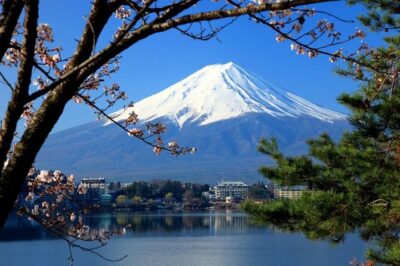
Mt Fuji and Hakone 1-Day Bus Tour Return by Bullet Train
Read our review →

Warner Bros. Studio Harry Potter Tour & Branded Bus
Read our review →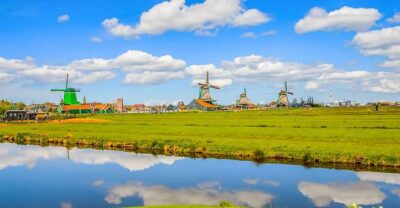
Zaanse Schans, Edam, Volendam & Marken Bus Tour
Read our review →