Review · TOURS
Guatemala city Walking Tour and public bus
Guatemala City is easiest to understand when you connect its grand buildings with ordinary city life. This tour does that by pairing a walking route through Zone 1 with a public bus ride, then finishing at the Central Market and San Martín café. You get old churches, government buildings, a market, and a taste of how residents move around the city.
I like the small maximum of 15 people, which keeps questions and conversation manageable. I also like the clear start and finish: meet at the Westin Camino Real and end at Constitution Plaza, where your guide can point you toward the Transmetro system and the hotel area.
The main consideration is pace. With many stops packed into roughly two to two and a half hours, the tour can feel slow if you prefer to keep moving, while the short visits may feel too brief if you want to enter every building. Bring water, a hat, and sunscreen, especially in the midday heat.
Key points to know before booking
- Ride public transportation like a local: Your bus fare is included, so you do not need to arrange separate transport for the route.
- See Zone 1’s major landmarks quickly: The route covers the Civic Center, churches, Post Office, Constitution Plaza, cathedral, Central Market, and more.
- Expect a small shared group: The maximum is 15 people, and on some dates the outing may operate with only your party.
- Finish near Guatemala City’s main square: The tour ends at Constitution Plaza, a useful place to continue sightseeing on foot.
- Plan for a coffee stop, not a meal: San Martín is the final stop, but coffee, tea, and lunch are not included.
- Ask for the guide by name: Armando and Fidencio have led this experience, with explanations covering architecture, government, Mayan history, and city life.
Why this tour works well as a first look at Guatemala City
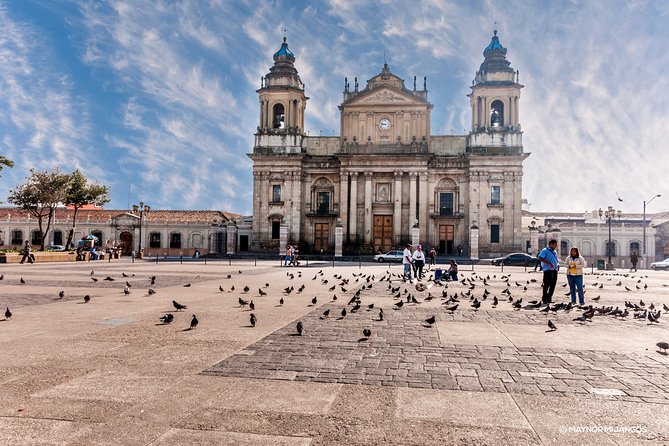
At $30 per person, this is not a full-day city tour. It is a compact introduction to the historic center, with transportation included and a guide handling the route. That matters in Guatemala City, where the older center, Civic Center, markets, and hotel districts are not all gathered in one neat pedestrian zone.
I see the public bus as one of the tour’s best features. You are not just looking at the city from a private vehicle. You are using part of the same transport system that residents use, while your guide handles the practical details. The fare is included, which removes one small task from your morning.
The tour begins at the Westin Camino Real on Avenida La Reforma at 10:30 a.m. That starting point is straightforward for anyone staying in the hotel area. The route then works toward the historic center and ends at Plaza de la Constitución, rather than returning you to the beginning.
That one-way design is useful. You can continue exploring Zone 1 after the tour instead of retracing the route. Your guide can also take you toward the Transmetro and indicate where to get off for the hotel area.
More routes around the world:
- Mt Fuji and Hakone 1-Day Bus Tour Return by Bullet Train
★ 5.0 · 26,383 reviews - Barcelona: 24 or 48-Hour Hop-On Hop-Off Bus Tour
★ 4.4 · 20,872 reviews - London: Warner Bros. Studio Harry Potter Tour & Branded Bus
★ 4.7 · 19,194 reviews
Civic Center and the Miguel Ángel Asturias connection
The first stop is Estación Centro Cívico, where you look at several important modern buildings. These include City Hall, the Bank of Guatemala, Banco Crédito Hipotecario Nacional, and the Social Security offices.
This opening gives you a quick lesson in how Guatemala City presents government and public institutions through architecture. The stop is listed at about 15 minutes, so expect an exterior overview rather than a detailed building tour. Admission is not included, and the stated itinerary does not promise interior access.
The Civic Center also connects to the work of engineer Recinos, who was responsible for monitoring, construction, and creative development of the Guatemalan Cultural Center Miguel Ángel Asturias. That detail adds a useful thread to the opening: you are not only looking at isolated buildings, but at a wider effort to shape the city’s cultural and civic identity.
If architecture interests you, listen closely here. If you mainly want markets and churches, this may feel like a slow start. The guide’s explanation is what gives this section its value.
National Typography and the story of official communication
The next major stop is the General Directorate of the Diario de Centro América and National Typography. The building reflects the role of printing and official communication in Guatemala’s public life.
The original National Typography building operated from 1894 to 1918 on what was then called Hospital Street, at 2nd South Avenue and 10th Street. In 1935, President Jorge Ubico ordered construction of a new building for the National Typography.
You spend about 20 minutes here. That is enough time for context and exterior viewing, but not for a long museum visit. The attraction is the building’s connection to newspapers, government printing, and the machinery of public information. It helps you see the historic center as a working administrative district, not only a collection of churches and monuments.
El Calvario and San Francisco Church
Parroquia Rectoral Nuestra Señora de los Remedios, commonly called El Calvario, brings the tour back to religious history. The church originally stood at the top of Cerro del Cielito, at the end of Sixth Avenue in the historic center.
Its location and function changed over time. In 1936, it became the National Museum of History, and it was later demolished to make room for the expansion of a major city road. The present parish is one of Guatemala City’s most visited secular Catholic parishes.
The stop lasts about 10 minutes, so you should expect a concise explanation rather than a long architectural visit. It is still a worthwhile pause because it shows how roads, civic plans, and changing city needs have altered older religious sites.
The route continues to Iglesia San Francisco, a Catholic temple connected to the conventual Franciscan friars. It forms part of the territory of the Parish of Our Lady of Remedies and sits in the historic center.
Again, the visit is short, around 10 minutes. I would treat this as a chance to understand the church’s place in the city rather than a dedicated church tour. If you want quiet time for prayer, photographs, or close study of the interior, the schedule may not give you much freedom.
Same city, a different seat on a different deck:
- Rome: City Sightseeing Hop-on Hop-off Bus with Audioguide
★ 4.0 · 16,045 reviews - Paris: Tootbus Hop-on Hop-off (Optional River Cruise)
★ 4.3 · 15,279 reviews - Amsterdam: Zaanse Schans, Edam, Volendam & Marken Bus Tour
★ 4.6 · 15,034 reviews - 1-Day Tokyo Bus Tour
★ 5.0 · 14,250 reviews
The Post Office building and Guatemala’s communication network
The General Directorate of Posts and Telegraphs is one of the route’s more distinctive architectural stops. Formerly called the Palace of Communications, it was designed by Rafael Pérez de León and Enrique Riera during Jorge Ubico’s government.
Construction began in 1938. The first phase opened two years later as part of the president’s birthday celebrations, and two additional phases followed over the next five years.
The planned visit lasts about 15 minutes. You get a focused look at a building created for communication on a national scale, at a time when mail and telegraph services were central to government and business. It also gives you another example of the architectural program associated with Ubico’s rule.
The route’s repeated focus on civic buildings is useful if you want more than a standard church-and-plaza walk. It also explains why the tour can feel information-heavy. You are moving through several buildings with political and administrative connections, not simply checking off photo stops.
Casa Ibargüen and the older center
Casa Ibargüen receives the longest stop, about 30 minutes. The house in Zone 1 was once the Beltranena palace, built in 1778. Today it houses the Foundation of the Historic Capital Center.
This is the point where the tour’s older urban character comes into sharper focus. A former palace now used by a foundation devoted to the historic center gives you a direct link between colonial-era construction and current preservation work.
The longer timing here may allow more explanation and a less hurried look. Still, admission is not included, so do not assume that the $30 price covers a special interior tour. The listed experience centers on seeing the site and learning from the guide.
I especially like this stop for travelers who want context. The building is not presented as a standalone attraction. It fits into the larger question of how Guatemala City protects, reuses, and explains its older buildings.
Constitution Plaza, cathedral, and the country’s public stage
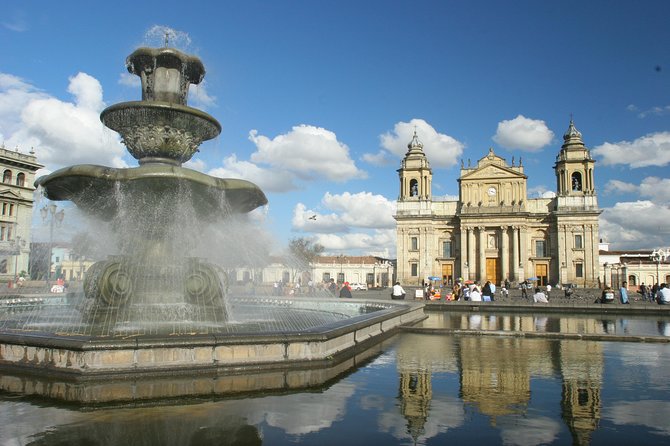
Plaza de la Constitución, also called Central Park, is the tour’s main destination. It is Guatemala’s largest square and is bordered by the National Palace to the north, the Metropolitan Cathedral to the east, the Portal of Commerce to the south, and Centennial Park and the National Library to the west.
This is much more than an attractive open space. Independence celebrations, parades, concerts, speeches, protests, and student events have all taken place here. The square has also hosted the Huelga de Todos los Dolores, a satirical student parade connected with the University of San Carlos.
The entrance to the National Palace is considered kilometer zero for roads across Guatemala. That small detail helps explain the plaza’s symbolic and practical importance. It is a national reference point as well as a city square.
The scheduled visit is about 15 minutes. You will get orientation and historical context, then can return later on your own if you want more time. Since the tour ends here, the plaza is also your natural launch point for an afternoon in Zone 1.
The Metropolitan Cathedral of Santiago de Guatemala is next. The cathedral has endured more than two centuries of major events, including two large earthquakes, independence, and revolution. Its Carrara marble altar was installed on July 23, 1860.
The cathedral stop is also listed at about 15 minutes. That is enough for a guide’s overview and a look around, but you should not expect a detailed art-history lecture or extended independent exploration. The cathedral’s importance comes from its long connection to the country’s religious and political life.
Central Market, where the city gets practical
The Central Market is where the tour shifts from official buildings to daily commerce. Its location near the cathedral has a complicated past.
Before Guatemala’s independence, the area east of the cathedral included an abandoned square, the old Plazuela de El Sagrario, a partly ruined temple, and a cemetery. Dr. Mariano Gálvez proposed turning the unhygienic square into a market. The cemetery was to be moved to the large San Juan de Dios grounds, but the plan was halted after concern over premature exhumations and an outbreak of morbid cholera. Church authorities also opposed the project because the land was sacred and belonged to the Church.
That background gives the market more meaning than a simple shopping stop. It developed from a contested urban project, and its location reflects the city’s old mix of religious, civic, and commercial uses.
You have about 20 minutes here. That is enough to look around and get a taste of the market, but perhaps not enough for a slow meal and extensive browsing. The market is one of the most useful stops for seeing the city as people use it now.
If you plan to buy food or goods, remember that those purchases are not included. Keep the short schedule in mind before stopping at a stall.
Coffee at San Martín and the end of the route
The last stop is San Martín in the historic center, where the tour finishes with the option of a cup of Guatemalan coffee. The location occupies the old Pavón House on Paseo de la Sexta and 10th Street. The building was revitalized for a bakery and restaurant in the San Martín chain.
This is a comfortable way to end a busy route. After churches, civic buildings, a public bus, and the market, you get a chance to sit down and take stock. The stop is planned for about 30 minutes, but coffee and tea are not included, and lunch is separate.
The finish is not at the Westin. It is at Constitution Plaza, so clarify the exact end point with your guide before splitting off. You can stay in Zone 1, continue walking, or use the Transmetro with directions from the guide.
Guides, group size, and the tour’s pace
Armando and Fidencio are named guides associated with this experience. Armando is described as having experience working in the city and as a former firefighter, and he covers subjects ranging from government structure and Mayan history to architecture. Fidencio has led family groups, answered questions patiently, and helped make the public transport portion comfortable for parents with a small child.
Those details matter because the route relies on explanation. Many stops are viewed from outside or visited briefly. A guide who can connect the buildings to city life makes the $30 fare more worthwhile.
The group maximum is 15 people. That is small enough for questions without promising a private tour. On some dates, only one party may book, in which case you could receive a private-style experience, but that is not guaranteed.
The pace deserves an honest warning. The route contains many stops, and the full experience is advertised at about two to two and a half hours. One account found it too slow and felt the route could have been completed in half the time. If you like pauses and explanation, that pace may suit you. If you prefer fast sightseeing, you may find the repeated short stops frustrating.
What the $30 price really covers
The $30 price is fair for a guided introduction if you value local explanation and do not want to plan the route yourself. Your public transportation fare is included, and the tour connects parts of Guatemala City that would be less convenient to combine on foot.
The price does not cover coffee, tea, lunch, or admission tickets. The experience is therefore best understood as a guided orientation, not an all-inclusive sightseeing package.
I would book it early if your schedule is fixed. It is booked, on average, about 15 days ahead, though that does not guarantee every date will sell out. Confirmation arrives when you book, and the tour has a maximum of 15 people.
The experience requires good weather and a minimum number of participants. You can cancel for a full refund up to 24 hours before the start time. Changes or cancellations inside that window are not accepted for a refund.
Who should book this Guatemala City walk
I would choose this tour if you are new to Guatemala City, want help understanding Zone 1, and like mixing major landmarks with ordinary transport and market life. It also suits solo visitors and couples who want a small shared group rather than a large bus outing.
Families can benefit from the guide’s help with the bus and the clear route. The experience is also a good fit for anyone staying near the Westin Camino Real who wants a simple morning start.
I would think twice if you need long interior visits, a fast pace, or a full meal included. The tour provides breadth rather than depth. You see many places, but several stops last only 10 to 15 minutes.
Should you book it?
Book this $30 tour if you want a practical first layer of Guatemala City: government buildings, churches, a historic market, public transportation, and Constitution Plaza, all tied together by a local guide. The clearest strengths are the included bus fare, the small group limit, and the chance to finish in the city center rather than back at the hotel.
Skip it if you already know Zone 1 well or prefer to spend an hour inside each church and museum. For most first-time visitors, though, it is a useful way to get oriented, especially if you follow it with your own slower walk around the cathedral, plaza, and Central Market.
FAQ
Where does the Guatemala City walking tour start?
The tour starts at the Westin Camino Real on Avenida La Reforma in Guatemala City.
What time does the tour begin?
The stated start time is 10:30 a.m.
Where does the tour end?
The tour ends at Plaza de la Constitución, also called Central Park, in Guatemala City.
How long does the experience last?
The tour lasts approximately two hours to two and a half hours.
Is public transportation included?
Yes. Public transportation is included, including the public bus used during the route.
How many people can join the tour?
The tour has a maximum of 15 participants.
Are coffee, tea, or lunch included?
No. Coffee, tea, and lunch are not included. The final stop is San Martín in the historic center, where you can finish with coffee.
Can I cancel for a full refund?
Yes. You can cancel at least 24 hours before the start time for a full refund. Cancellations or changes made less than 24 hours before the start time are not accepted for a refund.
Recently added around the world
- London’s Family-friendly Routemaster Bus Tour with Live Guide★ 5.0 · 18 reviews
- London Vintage Bus Tour with Cream Tea at Harrods★ 4.0 · 145 reviews
- London Vintage Bus Tour Including River Thames Cruise with Optional Lunch★ 4.0 · 286 reviews
- London Tour Hop-on Hop-off Bus with Optional Thames River cruise★ 3.5 · 39 reviews
- Christmas Lights Open-Top Bus Tour★ 4.0 · 31 reviews
- London Discovery by Day and by Night Hop-On Hop-off Tours★ 3.5 · 48 reviews
- London: Guided Sightseeing Tour on a Vintage Open-Top Bus★ 4.5 · 17 reviews
- 2 Day London Hop-On Hop-Off River Thames Sightseeing Pass★ 4.5 · 18 reviews
Tours, compared.
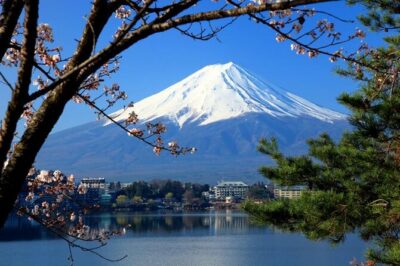
Mt Fuji and Hakone 1-Day Bus Tour Return by Bullet Train
Read our review →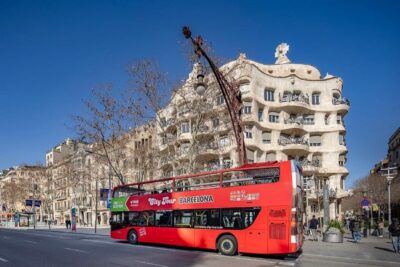
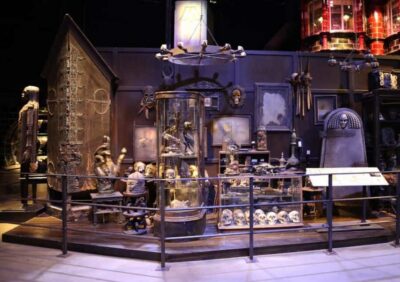
Warner Bros. Studio Harry Potter Tour & Branded Bus
Read our review →
Zaanse Schans, Edam, Volendam & Marken Bus Tour
Read our review →