
Review · EGYPT BUS TOURS
From Aswan: Trip to Abu Simbel by Bus
Abu Simbel is one of Egypt’s great showstoppers: four huge statues of Ramses II greet you from a cliff face, while the nearby Temple of Nefertari adds a more intimate second act. I like that this trip gives you both temples, entrance fees, transport, and hotel pickup for $110, without making you arrange the long journey yourself.
I also like the small-group format and the chance to reach the site early, when the morning light can make the carved façade especially striking. The main catch is the schedule and guide service: pickup may be changed from a later advertised time to around 4 or 4:15 a.m., and some departures have offered only a short English explanation before leaving you to explore.
Key points at a glance
- Four-hour drive each way: Abu Simbel is a serious day trip from Aswan, not a quick outing.
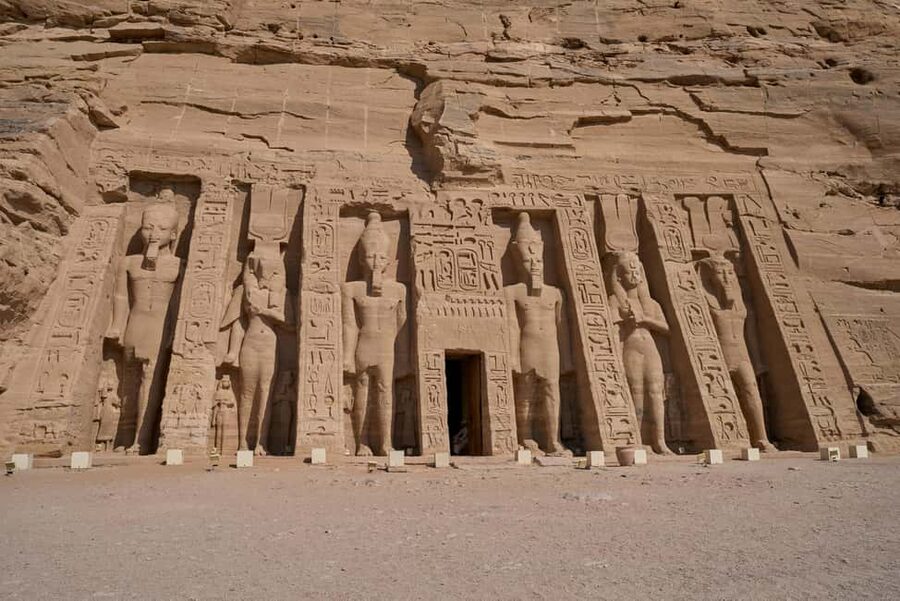
- Two temples included: See Ramses II’s great sun temple and Nefertari’s Temple of Hathor.
- Early arrival can help: One departure reached the site ahead of many buses for better morning views.
- Guide service may vary: English commentary is included, but the amount of time spent with the guide can be limited.
- Transport covers the basics: Hotel pickup, return transfer, air-conditioning, bottled water, and entrance fees are included.
- Check your hotel location: Pickup from Soheil Island, Hisa Island, Aswan Airport, or a Nubian hostel costs extra.
Why Abu Simbel is worth the long road from Aswan
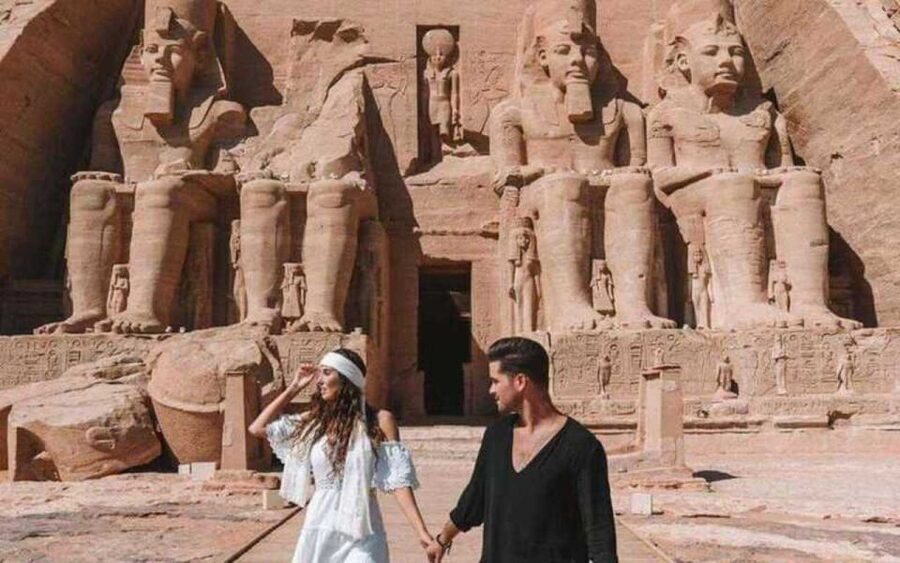
The appeal of this trip is simple: Abu Simbel is far from Aswan, but the temples are too important to skip if you have enough time in southern Egypt.
The site was built during the reign of Ramses II, one of ancient Egypt’s most powerful kings. The larger temple was dedicated to Ptah, Re-Her-Akhtey, Amun-Re, and Ramses II himself. That mix of gods and king tells you how strongly the temple was designed to link royal power with the divine world.
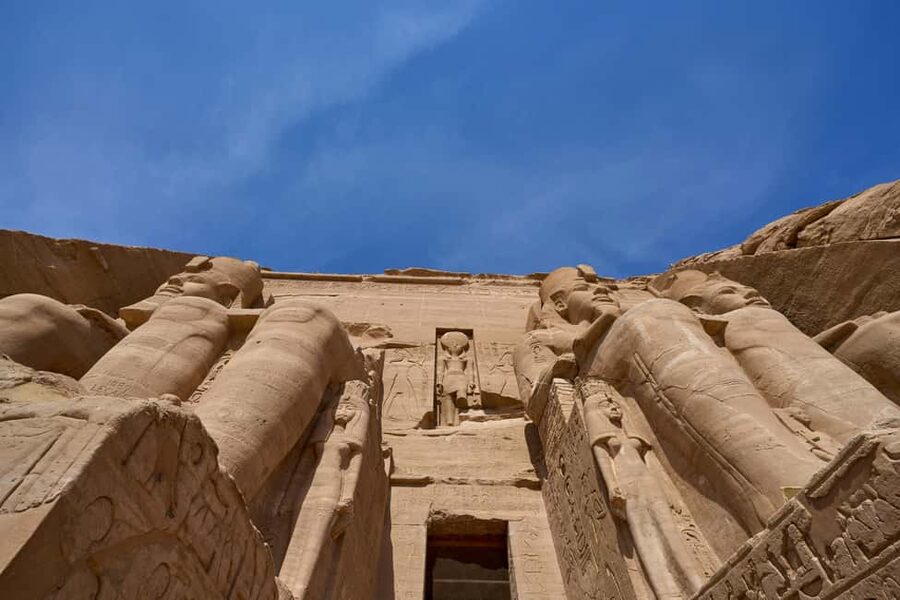
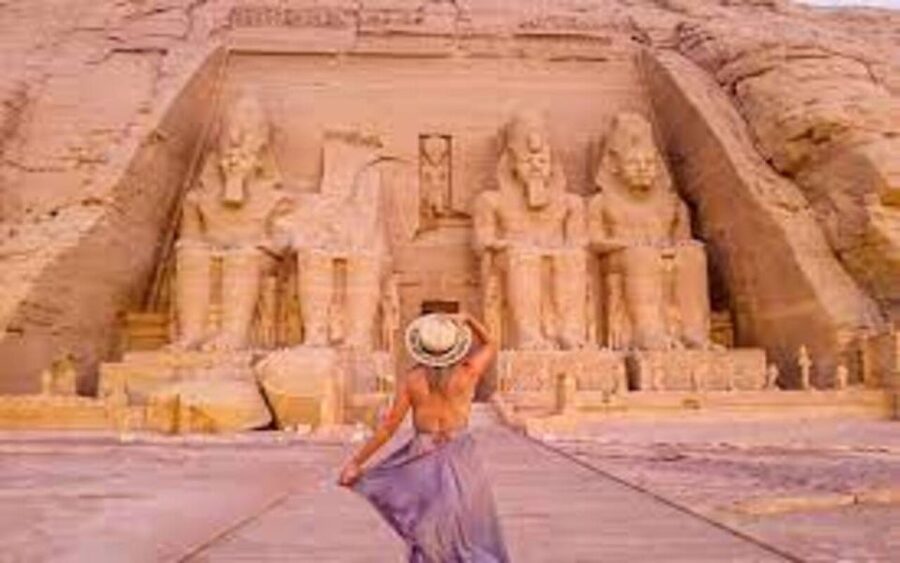
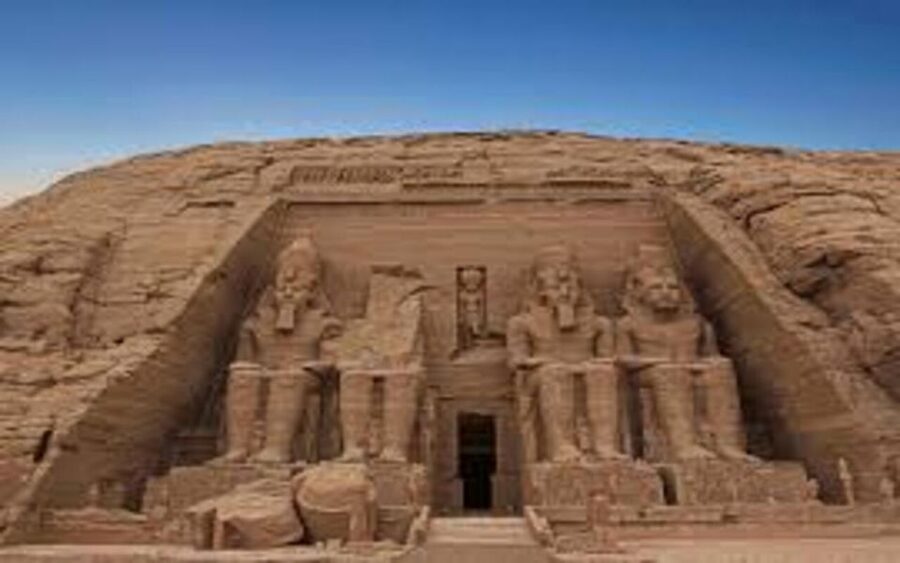
The façade gives you the first great visual moment. Four colossal seated statues of Ramses II face outward, carved into the rock and arranged across the front of the temple. Their scale is hard to grasp from photographs. Once you approach on foot, you can see how the entrance and smaller figures are framed by these giant royal images.
The second temple belongs to Queen Nefertari and is also connected with Hathor, the goddess associated here with the sun god and with Nefertari’s role as queen. The pair of temples was carefully designed as a royal partnership in stone. Ramses II dominates the larger temple, while Nefertari receives an unusually prominent monument of her own.
I find the two temples work best as a pair. The great temple gives you power, scale, and formal royal imagery. Nefertari’s temple gives you a more personal sense of the relationship between queen, goddess, and king.
More routes around Egypt:
- VIP Day Trip to Cairo by Bus with Top Tour operators
★ 5.0 · 739 reviews - Cairo By Big Bus full day From Hurghada (Pyramids-sphinx-Egyptian Museum-Lunch)
★ 4.5 · 494 reviews - Day trip to Cairo by bus from Sharm el Sheikh
★ 4.5 · 334 reviews
The 4 a.m. departure changes the whole day
The biggest practical point is the start time. One booking was shifted from a planned 10 a.m. departure to about 4:15 a.m., while another began at roughly 4 a.m. You should confirm your pickup time before the morning itself, because a very early start appears to be common for this outing.
That early departure has a clear benefit. It gives you a chance to arrive before many other buses and see the temples in the cooler morning hours. One well-organized departure used a small van for the first part of the trip and reached Abu Simbel early, allowing the group to enjoy the first views before the main flow of buses arrived.
There is a tradeoff. You are giving up much of your night, and the road journey takes about four hours each way. This is an eight-hour round trip before you count time at the temples, so it can feel tiring even when the visit itself is excellent.
I would not book this as a relaxed half-day excursion. Think of it as a full, demanding day built around one major archaeological site. If you have only a short stay in Aswan, it may consume a large part of your schedule. If Abu Simbel is high on your Egypt wish list, the long ride is easier to accept.
What the bus ride means for you
The trip uses a modern, air-conditioned bus, with bottled water provided on board. That matters in southern Egypt, where a cool vehicle can make the return journey much easier.
The vehicle type may vary in practice. One early group used a small van that moved quickly and passed many buses. That helped the group reach Abu Simbel early, but speed became a serious concern for some passengers on another departure. Several requests were made for the driver to slow down because the driving felt too fast.
This is the main transport warning I would keep in mind. The trip covers a long stretch of road, and comfort depends not only on air-conditioning but also on the driver’s pace. If you feel unsafe, speak up early and clearly. A calm, careful ride matters more than arriving a few minutes sooner.
Hotel pickup and return are included for hotels in Aswan. Extra charges apply if you are staying on Soheil Island, Hisa Island, at Aswan Airport, or in a Nubian hostel. Confirm the pickup point and any added cost before paying, especially if your accommodation is outside the usual hotel area.
Seeing Ramses II’s great sun temple
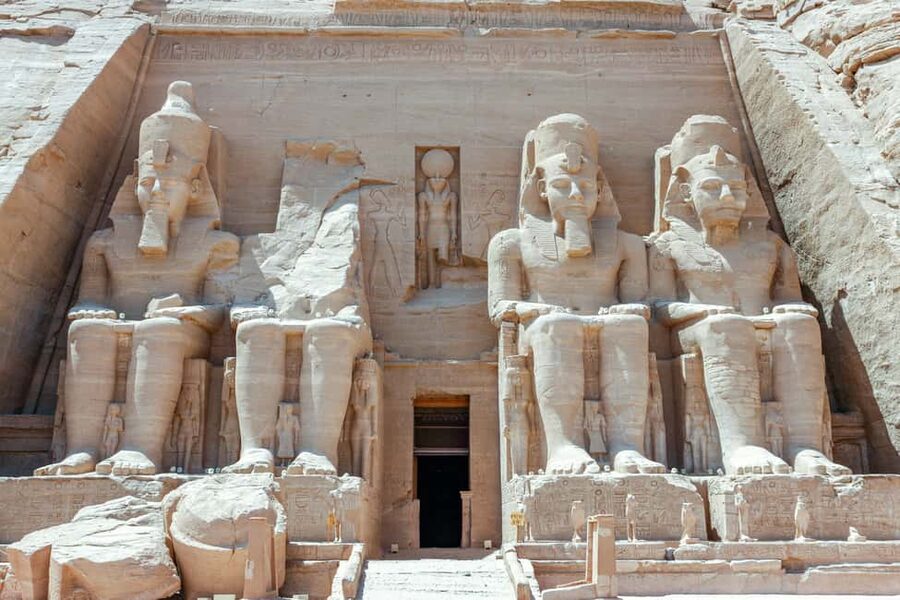
The larger temple is the main event. It is also called the Sun Temple of Ramses II, and its façade makes a forceful first impression. The four colossal statues of the king are the feature you will remember most clearly, but do not rush past the smaller carved figures and the entrance details.
Inside, the temple continues the message of kingship and religion. The monument was not simply a place to worship. It was a statement about Ramses II, his connection with the gods, and the power of the New Kingdom.
A guide can add useful context here, particularly if you want to understand why four gods were honored and how Ramses II was placed among them. The trouble is that the guide service may not always unfold as you expect. One experience included only about five minutes of explanation outside the temple, followed by free time for photographs and an independent visit inside.
Another arrangement involved a guide showing pictures from a portfolio, then spending much of the visit with a different group. A second guide later led a short walk around the temple but did not speak English. That means the word English-speaking in the booking description should not automatically make you expect a long, detailed lecture inside both temples.
I would treat the guide as a helpful introduction, not the sole reason to book. Before entering, ask for the main points you want explained: the four gods, Ramses II’s role, the temple’s purpose, and the rescue project that moved the monuments.
Same city, a different seat on a different deck:
- Sharm El Sheikh: Great Pyramids, Sphinx, Museum Tour by Bus
★ 3.7 · 287 reviews - Sharm El-Sheikh: Full-Day Tour of Cairo and Pyramids by Bus
★ 4.8 · 237 reviews - Ras Mohamed National Park Half Day Tour by Bus In Sharm El Sheikh
★ 4.5 · 60 reviews - Abu Simbel Excursion 1 Day Trip from Aswan (Sharing Bus & Egyptologist Guide)
★ 4.0 · 52 reviews
The rescue of Abu Simbel
The temples are famous not only for their age and size but also for their modern survival. When the Aswan High Dam created Lake Nasser, rising water threatened to cover Abu Simbel.
The Egyptian government and UNESCO worked together to save the temples from the flood. The monuments were cut apart and moved to higher ground, where they were reconstructed. That modern engineering effort is part of the site’s story, and it gives your visit another layer beyond ancient carvings and royal statues.
You will also get views connected with Lake Nasser during the outing. The lake is a major reason the temples had to be rescued, so seeing the water near the monuments helps connect the ancient site with the modern history of Egypt.
Your guide may explain the relocation with photographs or a short presentation. Since the amount of commentary can be limited, I would ask directly about the move if it is important to you. It is one of the most remarkable parts of Abu Simbel’s modern story.
Nefertari’s temple adds a different mood
After the monumental scale of Ramses II’s temple, the nearby Temple of Nefertari feels more balanced. It is also called the Temple of Hathor, and it brings together Nefertari, Hathor, Ramses II, and the sun god in a symbolic pairing with the larger temple.
The façade includes large figures of the royal couple, giving Nefertari a strong public presence. That is important because temples devoted to queens are less common than monuments built primarily around a king.
Allow time for this second temple rather than treating it as an optional extra. The two structures are included in the entrance fees, and the contrast between them improves the whole visit. The great temple can overwhelm you with scale. Nefertari’s temple gives you a closer look at how royal women and goddesses were represented.
The exact time available may depend on how the guide organizes the stop. One itinerary allowed about an hour for photographs and individual exploration before another short guided walk. That is enough to see the temples, but it may feel tight if you want to examine every chamber carefully.
How much value do you get for $110?
At $110 per person, this is not a cheap bus ride. Still, the price includes several costs that can add up when arranged separately: hotel pickup and return, transport, entrance fees, an English-speaking guide for the group, bottled water, taxes, and service charges.
The price is easiest to justify if you value convenience. Abu Simbel is too far from Aswan for a casual taxi trip, and the included transport removes the need to plan the long road journey yourself. The early arrival option can also be valuable because the temples are more enjoyable when you are not fighting the largest crowd of buses.
The value becomes less convincing if you expect detailed private guiding. At least one departure felt that the guide gave only a brief explanation and then focused on another group. Another included a non-English-speaking guide for part of the temple walk. You may receive the full listed service, but the hands-on explanation can be uneven.
I would compare this with your priorities. If you want transport, admission, and a basic introduction in one booking, $110 is reasonable for such a remote site. If you want in-depth Egyptology, a private guide, or a slower visit, you may prefer a different arrangement, even if it costs more.
The guide question deserves attention
The tour is sold with an English-speaking guide for the whole group. That is useful, but the practical experience may depend on the group size, the guide’s schedule, and how much time is given to each party.
I would ask three questions at the start:
- How long will the introduction last?
- Will you guide us inside both temples?
- How much free time will we have for photographs?
These questions help you set expectations. A short explanation outside can still give you the basic story, but it is not the same as a guided visit through the chambers and carvings.
The supplied experience includes a 3.3 rating from four submitted ratings, which points to a mixed rather than dependable service level. The most praised part is the early, efficient arrival. The sharpest complaints concern driving speed and limited English guiding. Those are not small details on an eight-hour road trip, so I would weigh them carefully.
Who should book this Abu Simbel trip?
I think this outing suits you if you are staying in Aswan, want to see Abu Simbel in one day, and prefer a package that handles transport and admission. It is also a good match if you can tolerate a pre-dawn pickup and a long return ride in exchange for seeing one of Egypt’s most important temple sites.
It suits independent-minded sightseers as well. The free time allows you to take photographs and enter the temples at your own pace, even if the guide’s commentary is short.
I would be more cautious if you need a slow schedule, dislike long bus rides, or expect constant guiding in English. The early start can be changed without much notice, and the ride is long enough that poor driving or weak guide service will affect the whole day.
Should you book it?
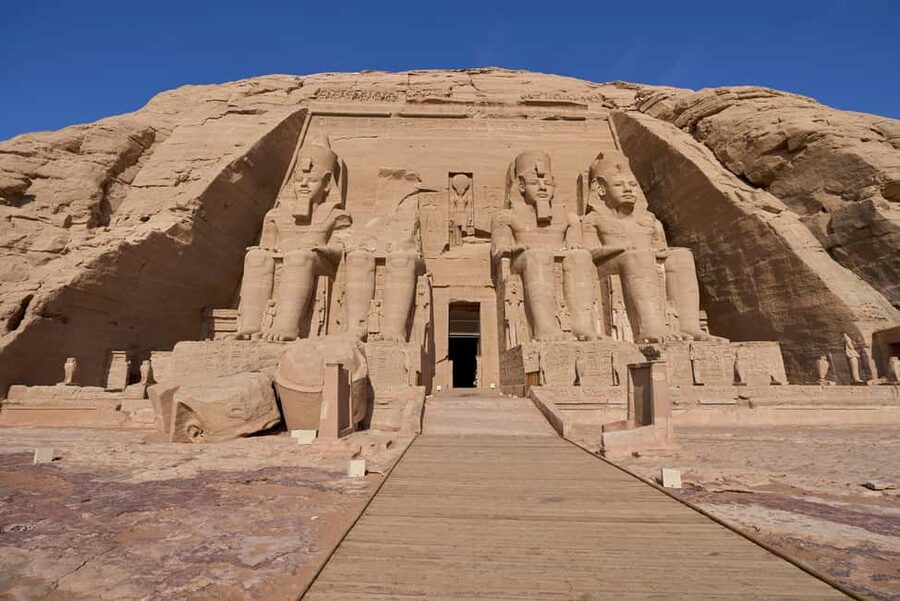
Book this trip if Abu Simbel is a priority and you want a simple Aswan pickup with transport, admission, water, and a group guide included. The four colossal statues, the paired temple of Nefertari, and the story of the UNESCO-supported rescue make the journey worthwhile for many people.
Before you commit, confirm the exact pickup time, the vehicle, the added cost for your accommodation, and how much guiding is planned inside the temples. I would choose this tour for convenience and early access, not for guaranteed expert commentary. If those limits fit your expectations, it offers a practical way to reach an extraordinary site.
FAQ
What is included in the Abu Simbel bus tour?
The tour includes hotel pickup and return in Aswan, transfers by modern air-conditioned bus, bottled water, entrance fees to the listed historical sites, an English-speaking group guide, service charges, and taxes.
How early does the tour leave Aswan?
The departure may be around 4 a.m. or 4:15 a.m. One booking was changed from a planned 10 a.m. start to 4:15 a.m., so confirm your pickup time before the trip.
How long is the journey from Aswan to Abu Simbel?
The drive takes about four hours each way, according to the trip details provided for this experience.
Which temples will I visit?
You will visit the great temple of Ramses II, also called the Sun Temple of Ramses II, and the Temple of Queen Nefertari, also known as the Temple of Hathor.
Is the guide English-speaking?
An English-speaking guide is included for the group. The amount of English guiding may vary, and one departure included only a short English explanation before free time and a later walk with a guide who did not speak English.
Is there an extra pickup charge for some locations?
Yes. Pickup from Soheil Island, Hisa Island, Aswan Airport, or a Nubian hostel costs extra. Standard hotel pickup in Aswan and the return transfer are included.
Recently added around Egypt
- Full-Day Tour in Cairo by Bus★ 4.0 · 6 reviews
- Day Trip to Cairo from Hurghada by Bus with Lunch & Guide★ 5.0 · 2 reviews
- Cairo Tour by bus, Pyramids, Sphinx & Museum with Lunch -Hurghada★ 4.5 · 21 reviews
- Tour In Luxor From Hurgharda By Bus★ 5.0 · 3 reviews
- Full-Day Tour to Luxor by Bus: Valley of the Kings from Hurghada★ 4.5 · 8 reviews
- Trip to Cairo from Hurghada By Bus★ 4.5 · 2 reviews
- Luxor Overday Tour by Mini Bus★ 5.0 · 6 reviews
- Over Day Cairo By Bus From Hurghada★ 5.0 · 4 reviews
Egypt Bus Tours, compared.
VIP Day Trip to Cairo by Bus with Top Tour operators
Read our review →
Cairo By Big Bus full day From Hurghada (Pyramids-sphinx-Egyptian Museum-Lunch)
Read our review →
Sharm El Sheikh: Great Pyramids, Sphinx, Museum Tour by Bus
Read our review →
Sharm El-Sheikh: Full-Day Tour of Cairo and Pyramids by Bus
Read our review →
Ras Mohamed National Park Half Day Tour by Bus In Sharm El Sheikh
Read our review →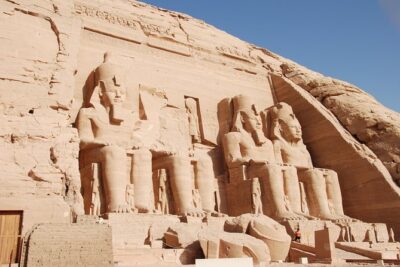
Abu Simbel Excursion 1 Day Trip from Aswan (Sharing Bus & Egyptologist Guide)
Read our review →
Pyramids Of Giza And Egyptian Museum Day Tour By Bus From Sharm
Read our review →Browse the lists this tour appears in