Review · BELGIUM BUS TOURS
Brussels: Hop-On Hop-Off Bus Tour
Brussels spreads farther than its postcard center suggests, and this bus tour is a practical way to connect the Grand Place, European Quarter, and Atomium without spending your day figuring out trams and walking routes. I especially like the open-top view for getting your bearings, plus the freedom to hop off when a museum, square, or neighborhood catches your eye.
I also like the useful app, which shows bus locations and adds self-guided walks. Drivers such as Imad, Bruno, and Sulaiman have been singled out for friendly, careful service. The main drawback is that the audio can feel dated or too general, and a 30-minute wait between buses can matter when your sightseeing time is short.
Quick points to know
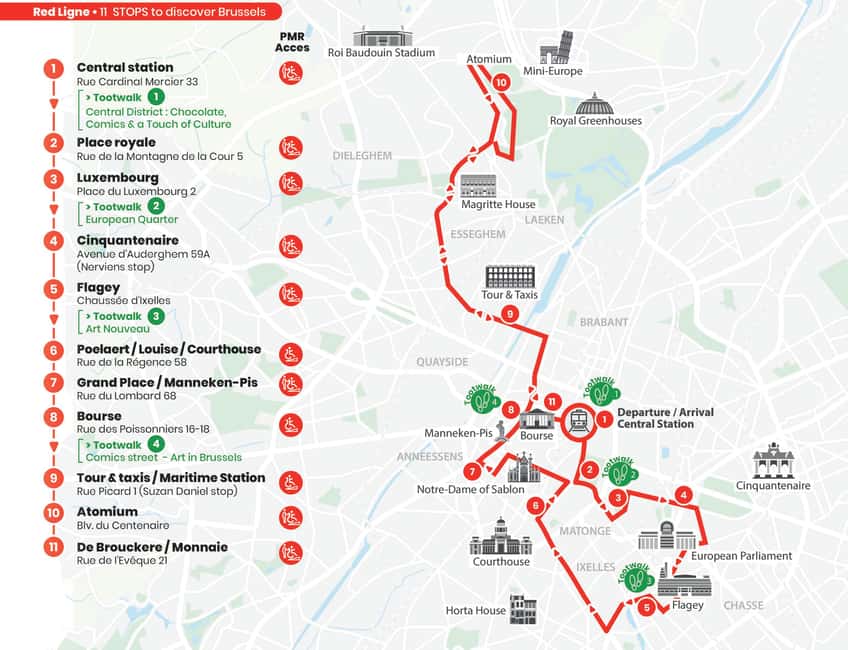
- One red route links central Brussels with Atomium: You can cover major sights in one loop, including Grand Place, the Sablons, European Parliament, Marolles, Tour & Taxis, and the Atomium.
- A 24-hour pass costs about $29: It can pay off quickly if you use the bus for sightseeing and transport rather than taking taxis between far-flung stops.
- The app is worth downloading before you go: It holds your mobile ticket, tracks buses in real time, and provides commentary and self-guided walks.
- The open top deck gives you a city overview: It is ideal for photos and for spotting areas you may want to explore on foot later.
- Audio comes in 11 languages, with a kids’ guide: English, French, Dutch, German, Spanish, Italian, Chinese, Japanese, Arabic, Portuguese, and Russian are available.
- The route is most useful for a first visit or a short stay: If you already know Brussels well, walking and public transport may give you more control.
Why this bus works well in a spread-out city
Brussels is not difficult to walk, but its main sights are scattered. The Grand Place sits in the old center, the European Quarter lies to the east, the Atomium is well outside the historic core, and neighborhoods such as Marolles reward a slower look. This route joins those areas in one sightseeing plan.
I would use the bus in two ways. On a short visit, I would first ride much of the route without getting off. That gives you a useful map of Brussels and shows you which stops deserve your limited time. On a longer visit, I would use the bus as transport between selected stops, then explore on foot.
The bus ticket lasts 24 or 48 hours, not just for one loop. That makes the pass more useful than a simple narrated drive. You can ride the full circuit, return to a museum or square later, and avoid paying for separate short journeys.
The listed price is $29 per person. For one adult taking a single loop, that may feel high compared with walking. But the value improves if you use the bus several times, visit stops on opposite sides of the city, or have only one or two days in Brussels. It can also save you taxi fares, especially for the Atomium and Tour & Taxis.
More Hop-On Hop-Off Bus Tours in the world:
- Barcelona: 24 or 48-Hour Hop-On Hop-Off Bus Tour
★ 4.4 · 20,872 reviews - Rome: City Sightseeing Hop-on Hop-off Bus with Audioguide
★ 4.0 · 16,045 reviews - Paris: Tootbus Hop-on Hop-off (Optional River Cruise)
★ 4.3 · 15,279 reviews
Riding the red route from Central Station

You can begin at any of the 11 stops, so you do not need to reach a formal departure office. Central Station is a logical start for many visitors, at 33 rue Cardinal Mercier. It is close to the historic core and gives you an easy introduction to the city.
From there, the route heads toward Place Royale. This is a good point to leave the bus if you want museums, grand civic buildings, and views toward the upper part of central Brussels. The stop is at 5 rue de la Montagne de la Cour, close to the Royal Museums of Fine Arts of Belgium and the Musical Instruments Museum.
The open deck is best on a dry day. You get a broader view than from a normal city bus, and the height helps you spot grand avenues, church towers, and changing neighborhoods. Bring a light layer, since the upper deck can feel cool even when the street level is comfortable.
Place Royale, museums, and the Sablons
Place Royale gives the route some of its finest architecture. This is the part of Brussels where you can combine a short bus ride with serious museum time. The Royal Museums of Fine Arts of Belgium cover major art collections, while the Musical Instruments Museum is housed in a striking building and has a strong city view from its upper levels.
The Sablons quarter is another worthwhile stop. It is associated with antiques, old buildings, cafés, and a more polished side of central Brussels. I would get off here if you want a neighborhood walk rather than a quick photograph from the bus.
The route also points you toward the Horta Museum, tied to the work of Belgian Art Nouveau architect Victor Horta. The bus does not replace a visit, but it helps you understand how Brussels shifts from royal squares to residential streets and design-focused districts.
One limitation is the audio commentary. It gives you useful orientation in several languages, but some sections offer fewer details than you may want for individual buildings. If you care about art or architecture, treat the narration as a framework, then explore the museums themselves.
The European Quarter and Cinquantenaire
The Luxembourg stop, at Place du Luxembourg, places you near the European Parliament and the wider European Quarter. This is a different Brussels from the medieval center. Large institutional buildings, open spaces, and modern offices replace the narrow old streets.
Cinquantenaire gives you another chance to leave the bus. The area is known for its monumental arch and museum buildings, and the stop at 59A Avenue d’Auderghem is useful if you want a broad public space and a break from the dense center.
This section is especially helpful when you have little time. You can see the political heart of the European Union without trying to work out a separate route from the Grand Place. The bus commentary adds context, though you should not expect a detailed guided tour inside the institutions.
At Place du Luxembourg and Cinquantenaire, check the live bus position in the app before walking away from the stop. The service can run every 30 minutes under the listed schedule, and missing one bus can change a quick stop into a longer pause.
More routes around the world:
- Mt Fuji and Hakone 1-Day Bus Tour Return by Bullet Train
★ 5.0 · 26,383 reviews - London: Warner Bros. Studio Harry Potter Tour & Branded Bus
★ 4.7 · 19,194 reviews - Amsterdam: Zaanse Schans, Edam, Volendam & Marken Bus Tour
★ 4.6 · 15,034 reviews - 1-Day Tokyo Bus Tour
★ 5.0 · 14,250 reviews
Flagey and the ride toward Louise
Flagey brings you into another part of Brussels, at Chaussée d’Ixelles. This stop helps break up the run of major monuments with a neighborhood that feels more local and less formal.
The Poelaert, Louise, and Courthouse stop is at 58 rue de la Régence. The area is useful for views and for connecting with the Sablons and upper city. The Courthouse is one of Brussels’ most imposing landmarks, and the surrounding streets show the city’s grand nineteenth-century scale.
The bus is helpful here because Brussels streets can feel confusing when you are moving between the lower and upper parts of the city. Still, traffic affects the ride. At busy times, the bus may move slowly, and sections can feel bumpy. A Sunday morning may be a smarter choice if your schedule allows, since there is usually less traffic.
Grand Place, Manneken-Pis, and the old center
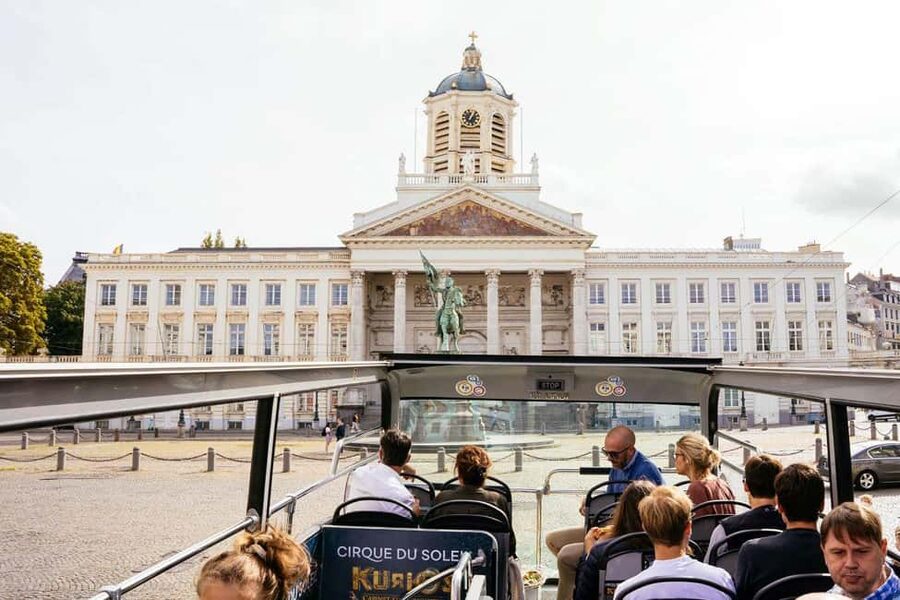
The Grand Place and Manneken-Pis stop, at 68 rue du Lombard, is the most obvious place to get off for first-time visitors. From here, you can explore Brussels’ famous central square, narrow lanes, chocolate shops, cafés, and the small statue of Manneken-Pis.
Do not expect the bus to deliver you directly into every landmark. You still need to walk from the stop, and the old center can be busy and crowded around the main sights. That is part of the appeal. The bus gets you close, then you take over.
Bourse, at 16 to 18 rue des Poissonniers, is another useful central stop. It gives you access to the former stock exchange area and nearby eating streets. I would use Grand Place for the classic sights and Bourse for a more flexible wander through the center.
The audio guide can help you notice details you might otherwise miss, and the children’s version makes the ride easier for families. Still, the commentary is automated, so you cannot ask the narrator a follow-up question. Keep the route map open if you want to match each announcement with the building outside.
Marolles, Tour & Taxis, and the city’s changing edges
Marolles is one of the best reasons not to treat this as a simple monument loop. The neighborhood mixes older streets, traditional food, vintage shops, and a lively local feel. It is the kind of place where getting off matters more than taking another photograph from the bus.
The route then reaches Tour & Taxis and the Maritime Station at 1 rue Picard. This area shows Brussels in transition, with large former industrial and transport buildings used for cultural, event, and commercial purposes. It feels quite different from the Grand Place and helps you see how broad the city really is.
This outer section can take time. If you ride all the way to the Atomium and back without getting off, part of your day will be spent in transit. That is not a problem if you want a city overview or need a sheltered ride on a rainy day, but it is less useful if you have only a few hours and care mainly about old Brussels.
Atomium and the long ride beyond the center

The Atomium stop is at Boulevard du Centenaire. The landmark is one of Brussels’ most recognizable sights, and the bus makes reaching it simple compared with arranging separate transport.
The route to Atomium also helps explain the scale of Brussels. You leave the historic center and pass through a different part of the capital before reaching the monument. If the Atomium is on your must-see list, the bus provides a direct sightseeing link.
If you are not visiting the Atomium or nearby attractions, this is the section I would consider skipping on a very short visit. A full ride out and back can use a large part of the day, and the central section has more varied stops. Use the app and route map to decide where you want to turn around rather than assuming the entire circuit has equal interest.
The final listed stop, De Broukere and Monnaie, at 21 rue de l’Evêque, returns you to the heart of the city. It is convenient for central hotels, shopping streets, and another walk through the old center.
Audio, app, and walking tours
The onboard commentary is available in Dutch, English, French, German, Spanish, Italian, Chinese, Japanese, Arabic, Portuguese, and Russian. Earphones are provided, though you can bring your own. There is also a children’s audio guide, which gives families a better chance of keeping younger passengers interested.
I would download the Tootbus app before leaving your hotel. It includes the mobile ticket wallet, real-time bus tracking, route information, audio commentary, and self-guided walking tours. The live map is especially useful because the printed timetable may not reflect seasonal changes.
The audio is generally clear and informative, but it is not a substitute for a private guide. Some commentary feels rehearsed, some cultural references sound dated, and individual buildings do not always receive enough explanation. Drivers and staff can add to the experience, though the service is mainly automated. Drivers such as Matteo and Bruno have been praised for adding useful background, while Eddie and Sulaiman have been noted for safe, professional driving.
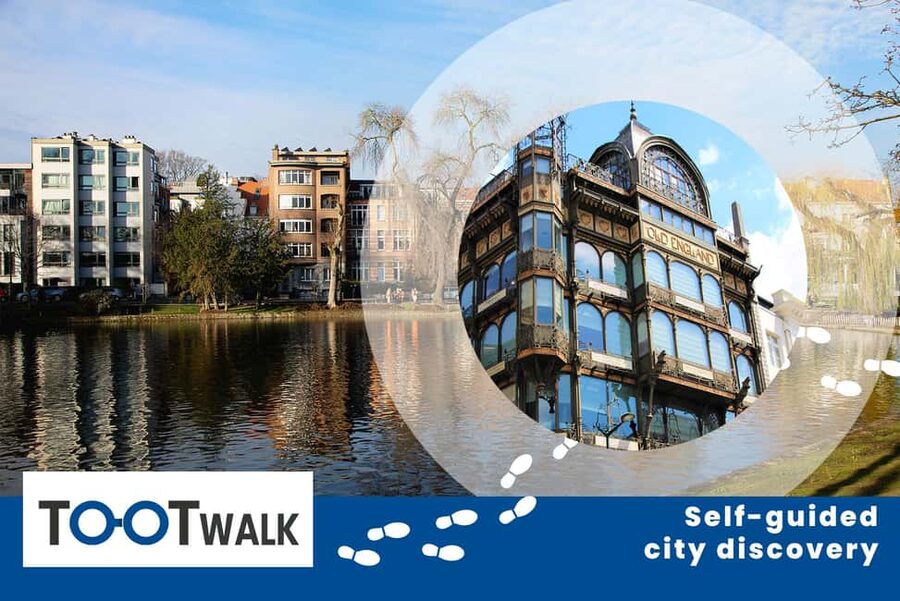
The walking tours are a worthwhile extra, but check how and when they operate in the app. A walking tour only helps if you can find its start point and timing. The included walks give you another way to explore after using the bus to get your bearings.
Comfort, timing, and practical details
The buses are clean-energy vehicles, wheelchair accessible, and fitted with onboard Wi-Fi. The upper deck is the place for photos, but the lower deck is better in poor weather or when you need a steadier ride.
The listed seasonal schedule runs from 10 a.m. to 5 p.m., with buses every 30 minutes. The provider advises checking the current timetable before departure, and you should take that advice seriously because operating times can change with the season.
Start at any red-route stop. The route includes Central Station, Place Royale, Luxembourg, Cinquantenaire, Flagey, Poelaert and Louise, Grand Place and Manneken-Pis, Bourse, Tour & Taxis, Atomium, and De Broukere and Monnaie.
Food and drinks are not included. Oversize luggage, alcohol, and drugs are not allowed. You can cancel up to 24 hours before the activity for a full refund, and the reserve-now, pay-later option keeps your plans flexible.
Who should book this Brussels tour?
I would book it for a first visit, a rainy day, a family trip, or a short stay of one to two days. It is also a good choice if you want to see the Atomium, European Quarter, and old center without arranging several separate journeys.
I would choose the 48-hour option if you want museum time, neighborhood walks, and relaxed stops. A 24-hour pass works best when you plan your route in advance and use the bus for both sightseeing and transport.
I would skip it if you prefer slow, independent walking and already know Brussels well. The narration has limits, traffic can slow the ride, and the bus cannot match the detail of a good local guide or museum visit.
For most first-time visitors, though, the $29 price is sensible when used actively. Ride the full route early, get off at Grand Place, Marolles, the European Quarter, or Atomium, and use the app to avoid standing around at stops. That turns a basic city loop into a useful Brussels plan.
FAQ
Where can I start the Brussels hop-on hop-off bus tour?
You can start at any stop on the red route. The 11 listed stops include Central Station, Place Royale, Luxembourg, Cinquantenaire, Flagey, Poelaert and Louise, Grand Place and Manneken-Pis, Bourse, Tour & Taxis, Atomium, and De Broukere and Monnaie.
How long is the ticket valid?
You can choose a 24-hour or 48-hour ticket. The ticket lets you get on and off during its valid period.
Does the bus go to the Atomium?
Yes. Atomium is one of the 11 red-route stops, located on Boulevard du Centenaire.
What languages are available for the audio guide?
The audio guide is available in Dutch, English, French, German, Spanish, Italian, Chinese, Japanese, Arabic, Portuguese, and Russian. A children’s audio guide is also included.
Is the bus wheelchair accessible?
Yes. The activity information states that the bus is wheelchair accessible.
How often do buses run?
The listed schedule says buses run every 30 minutes on the route. Schedules can change by season, so check the provider’s timetable before setting out.
Is food included?
No. Food and drinks are not included in the ticket.
Recently added around the world
- Vine Hopper: Hop-On Hop-Off Wine Tour – Northern Route★ 4.5 · 62 reviews
- Vine Hopper: Hop-On Hop-Off Wine Tour – Southern Route★ 4.5 · 64 reviews
- Xi’an 1-Day Coach Tour of Terracotta Army★ 4.5 · 47 reviews
- Xi’an: Terracotta Army Mini-Bus Tour with Options★ 5.0 · 240 reviews
- Malta: Vintage Bus Ride through the Three Cities★ 4.1 · 112 reviews
- Adelaide Hills & Hahndorf Hop-On Hop-Off Wine Tour★ 5.0 · 136 reviews
- Barossa Valley Hop-On Hop-Off Wine Tour★ 5.0 · 418 reviews
- McLaren Vale North Hop-On Hop-Off Wine Tour★ 5.0 · 251 reviews
Hop-On Hop-Off Bus Tours, compared.


City Sightseeing Hop-on Hop-off Bus with Audioguide
Read our review →
Tootbus Hop-on Hop-off (Optional River Cruise)
Read our review →Big Bus Hop-On Hop-Off Tour with Optional Cruise
Read our review →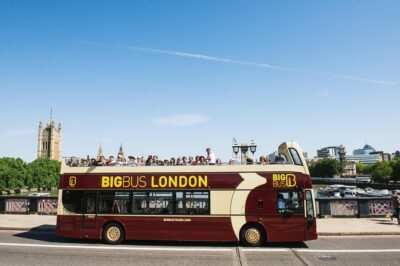
London Big Bus Hop-On Hop-Off Tour with Optional River Cruise
Read our review →
Big Bus Hop-on, Hop-off Open-Top Sightseeing Tour
Read our review →