

Review · BARCELONA BUS TOURS
Barcelona: Hop-On Hop-Off Bus & Aquarium Tour
Barcelona’s best feature is its sheer range. In one outing, you can ride from the harbor to Montjuïc, pass Gaudí landmarks, reach Camp Nou, and then spend time at the Barcelona Aquarium, home to a long acrylic tunnel through the Oceanarium. I like the freedom to get off whenever a sight catches your eye, and I like that one ticket covers both bus routes.
The main drawback is simple: the stops are not always easy to identify once you get off. One recent booking found it hard to work out where to rejoin the bus, so keep the stop guide with you and confirm the route before walking away. The buses also run less often in some seasons, so this works best when you leave room in your schedule.
- Two routes cover a wide sweep of Barcelona, from the World Trade Center and Barceloneta to Park Güell, Camp Nou, Sagrada Familia, and Montjuïc.
- The Aquarium adds a useful indoor break, with Mediterranean habitats and an Oceanarium tunnel where sharks pass overhead.
- A 24-hour ticket suits a short visit, while the 48-hour option gives you time for longer stops at museums, churches, and neighborhood sights.
- Open-top seating gives you a quick city orientation, though shade and comfort depend on the weather and available seats.
- Audio commentary comes in 16 languages, with an adapted audio system for people with auditory disabilities.
Two bus routes for seeing Barcelona at your own pace
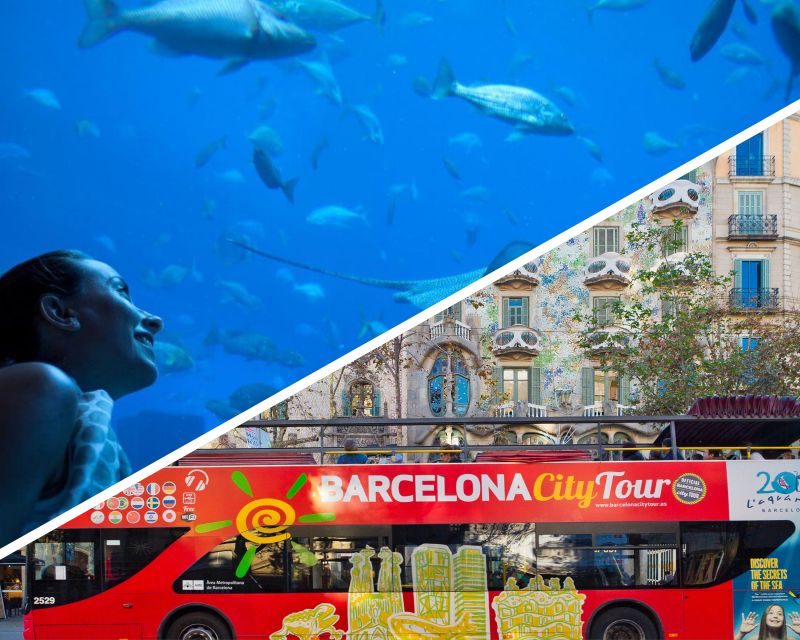
This is not a guided walking tour with a fixed group. It is a transport and sightseeing pass built around two circular bus routes. You can board at Plaça Catalunya, the main stop, or begin at any Barcelona City Tour stop that suits your day.
The bus ticket lasts for one or two consecutive days, depending on your choice. You can get off, visit a sight, find another stop, and board again with the same ticket. That flexibility matters in Barcelona, where a single attraction can easily take more time than expected.
Each route takes about two hours if you stay on board. Buses generally operate from around 9:00 AM until 7:00 PM, with departures listed at about 30-minute intervals. Seasonal frequency can range from roughly 5 to 30 minutes, so avoid planning a tight connection between a bus ride and a timed visit.
The open coaches are air-conditioned and have double-decker seating. The upper deck gives you a broad view of streets and buildings, while the lower deck is a better fallback on a hot, wet, or windy day. The included audio guide explains the sights in English, Catalan, Spanish, French, German, Russian, Portuguese, Chinese, Japanese, Dutch, Hebrew, Italian, Arabic, Swedish, Norwegian, and Turkish.
The orange route from the harbor to Montjuïc and Gaudí

The West Route, marked orange, is the better choice for Montjuïc, Plaça d’Espanya, the Olympic area, Poble Espanyol, Camp Nou, and the major works along Avinguda Diagonal.
Starting at the World Trade Center, you are near the waterfront and the Port Vell area. The nearby Miramar Gardens lead toward Montjuïc, where the Fundació Joan Miró and the Anella Olímpica offer two very different stops. The foundation focuses on modern art, while the Olympic area gives you wide city views and a sense of Barcelona’s sporting past.
The orange route then reaches the Museu Nacional d’Art de Catalunya, or MNAC. Its grand position above Plaça d’Espanya is one of the route’s strongest visual moments. You might choose to get off here for the museum, the views, or a walk around the monumental stairways and fountains.
Nearby, Poble Espanyol presents a purpose-built collection of Spanish architectural styles, craft shops, and places to eat. It is designed for browsing rather than a quick photo stop, so allow extra time if you plan to enter.
The Caixafòrum and the Mies van der Rohe Pavilion offer a very different experience. The pavilion is known for its clean modern design and is compact enough to fit into a short stop. Plaça d’Espanya is also a useful transfer point, but take care not to treat the bus as a fast shuttle across town. Traffic can change the timing.
The route continues to Estació de Sants, Barcelona’s main railway station, and then Camp Nou and the FC Barcelona Museum. The exact attraction experience can change with access arrangements, but the stop is useful if football is high on your list.
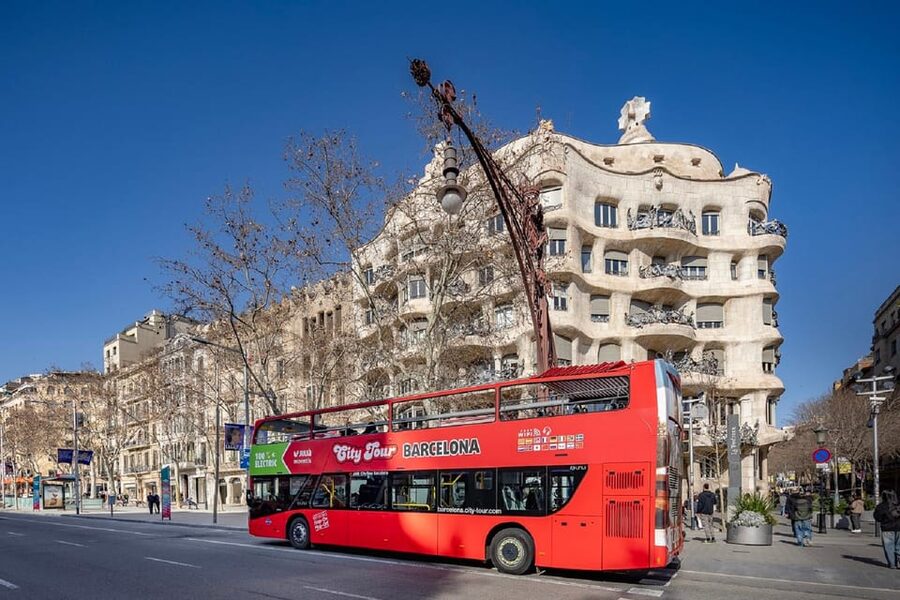
From there, the bus reaches the Diagonal area and La Pedrera, one of Antoni Gaudí’s most famous buildings. La Pedrera is worth a longer stop if you want to see its sculpted stone exterior and distinctive roofline. Since it is also served by the green route, you can use it as a practical connection point.
The orange route also serves Sagrada Familia. This is important because the route does not offer a direct, simple ride to every major sight without a bit of planning. The Sagrada Familia stop connects orange-route passengers toward Park Güell and helps green-route passengers reach Sagrada Familia without riding the entire circuit.
The final part reaches Estació del Nord, the Zoo and Poblenou area, Port Olímpic, Pla de Palau, and Passeig de Colom. You can use these stops for the waterfront, the old city edge, or a meal break. For a first orientation, the full orange circuit gives you a strong overview, but getting off at too many stops in one day may leave you spending more time waiting and boarding than exploring.
More Hop-On Hop-Off Bus Tours in Spain
- Barcelona: 24 or 48-Hour Hop-On Hop-Off Bus Tour
★ 4.4 · 20,872 reviews - Barcelona: City Sightseeing Hop-On Hop-Off Bus Tour
★ 4.4 · 10,061 reviews - City Sightseeing Barcelona Hop-On Hop-Off Bus Tour: 24 or 48-Hour
★ 4.0 · 5,250 reviews
The green route for Barceloneta, Park Güell, and the modern city
The East Route, marked green, is the stronger route for the seaside, Arc de Triomf, El Born, Casa Batlló, La Pedrera, Park Güell, and the modern Torre Glòries district.
It begins at Pla de Palau, close to the old city and waterfront, then reaches Barceloneta. This is the route to choose if you want to see Barcelona’s connection with the sea without arranging separate transport.
The bus continues by Port Olímpic, Platja del Bogatell, and Nova Mar Bella. These stops show a more open stretch of the coast than the central harbor. You can get off for the beaches, but the bus is not a substitute for a full beach day. Its value here is the easy connection between coastal areas and inland sights.
The route then passes the Fòrum and Torre Glòries. The Torre Glòries area gives you a look at Barcelona’s newer architecture, while the Fòrum is a large open urban space. These stops are less essential if your time is limited, but they help show that Barcelona is more than its medieval center and Gaudí buildings.
The Recinte Modernista de Sant Pau is one of the most worthwhile stops on this route. The former hospital complex is known for its modernist buildings and ornamental details. It is close enough to the Sagrada Familia area to pair with that visit, though you should allow time for both rather than trying to squeeze them into a rushed hour.
Park Güell is another major reason to use the green route. The stop gives you access to one of Gaudí’s best-known sites, with unusual architecture and elevated city views. Admission arrangements for Park Güell are not included in this package, so check what you need before making it the centerpiece of your day.
The bus then travels toward La Pedrera and Casa Batlló. These two Gaudí buildings sit along the same general avenue, making this section especially useful for comparing their facades. Casa Batlló is a good stop for architecture fans, but it can become expensive if you add several paid interiors to an already full day.
The green route continues through Plaça Catalunya, Arc de Triomf, and El Born near Parc de la Ciutadella. Plaça Catalunya is the central starting point and the easiest place to reorient yourself. Arc de Triomf and El Born are better suited to walking, eating, and browsing than to a quick bus-side glance.
The route also has a connection arrangement for reaching Sagrada Familia without completing the entire green circuit to La Pedrera. This can save time, but you need to pay attention to the route direction and stop information. The practical lesson is to check the next stop before boarding instead of assuming every bus follows the same path.
What the Aquarium adds to the day

The aquarium ticket is valid for one entry only. That makes it best to plan the visit rather than treating it as a casual hop-off stop you might repeat later.
Barcelona Aquarium focuses on Mediterranean marine life and different coastal habitats. The exhibits include environments inspired by the Ebro Delta and the Medes Islands, two protected areas along Spain’s coast. These displays give the aquarium more local character than a collection built only around exotic species.
The largest crowd-pleaser is the Oceanarium tunnel. You walk through an acrylic passage with water and marine life around you, including sharks. It is the sort of attraction that works for families, but it also gives adults a clear look at how Mediterranean species share the same marine environment.
The aquarium is a sensible midday or late-afternoon stop because it offers an indoor change from Barcelona’s streets. You can place it near the orange-route waterfront stops, especially Port Vell and the World Trade Center area. Do not assume the bus will be waiting immediately outside after your visit. Allow time to locate the correct stop and check the direction of the next bus.
The package includes the entrance fee, but not food or drinks. That keeps the arrangement simple, though you will need to budget separately for lunch and refreshments.
How to use one day without wasting it
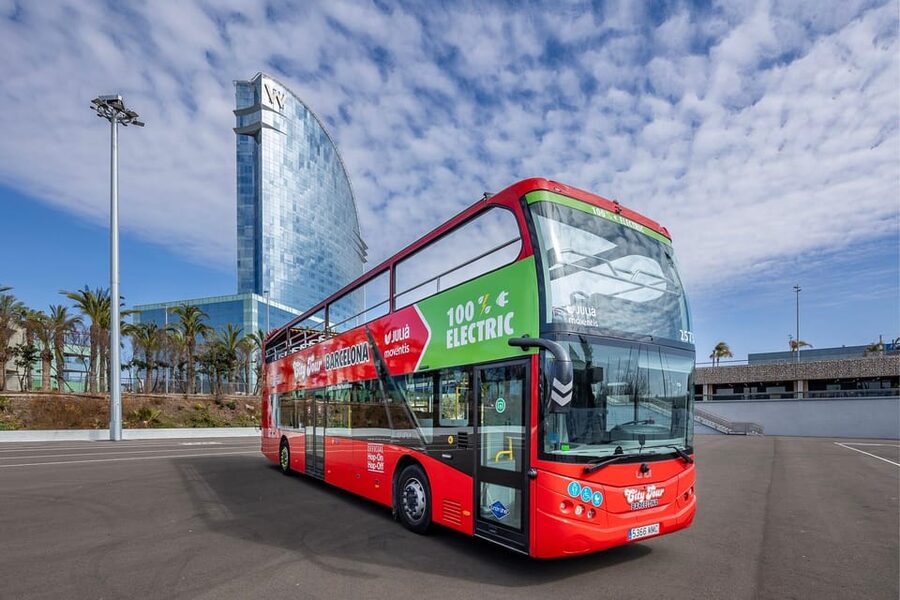
A one-day ticket is most useful if you treat the bus as a sightseeing route, not as a taxi. Pick two or three major stops and use the ride between them for orientation.
One workable plan is to begin at Plaça Catalunya, ride toward Casa Batlló and La Pedrera, then continue toward Sagrada Familia or Sant Pau. After that, use the green route toward the coast and get off for the Aquarium. You can finish near Plaça de Palau or Passeig de Colom, depending on the bus schedule.
Another approach is to spend the first part of the day on the orange route, concentrating on Plaça d’Espanya, Montjuïc, Poble Espanyol, and Camp Nou. Later, switch to the waterfront and Aquarium. This plan covers more ground but gives you less time inside each attraction.
I would not try to visit every stop in one day. Barcelona’s major sights need time, and the bus can be slowed by traffic or city events. A full circuit is useful at the beginning, but after that, get off only where you have a clear reason.
More Hop-On Hop-Off Bus Tours in Barcelona:
- Barcelona: Hop-On Hop-Off Bus with Sailing Cruise
★ 4.3 · 412 reviews - Barcelona Hop-On Hop-Off Bus and FC Barcelona Immersive Tour
★ 4.2 · 362 reviews - Shore Excursion: Barcelona City Tour Hop-On Hop-Off
★ 4.0 · 280 reviews - Barcelona: Hop-On Hop-Off Bus and Moco Museum Ticket
★ 3.7 · 14 reviews
Why the 48-hour option can be better value
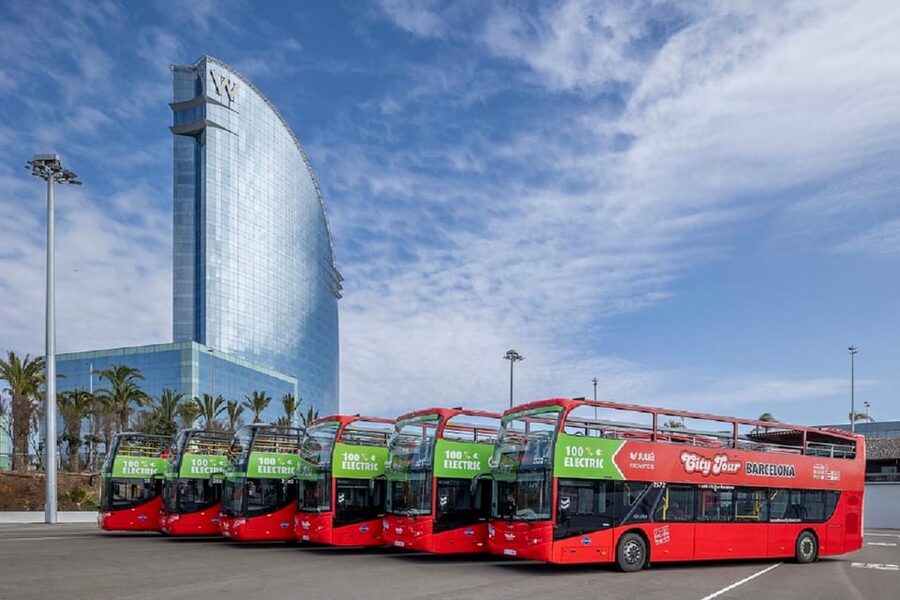
At $73 per person, the package is not a cheap city bus ride. Its value depends on how much you use both parts: the sightseeing bus and the Aquarium.
The 24-hour option can make financial sense if you want a broad city overview, plan several bus journeys, and already intend to visit the Aquarium. It is less convincing if you only want transport to one or two attractions, since regular public transport may suit that need better.
The 48-hour option gives you breathing room. You can use the first day for Montjuïc, Camp Nou, and the west side, then reserve the second for Park Güell, Gaudí buildings, the coast, and the Aquarium. You also have more freedom to stop for meals without losing the whole route.
The discount booklet may help lower the cost of other activities, but the details of each offer can vary. Treat it as a possible bonus, not the main reason to buy.
I especially like the longer option for a first visit when you want to see both routes without turning the trip into a checklist. You pay for the extra day, but you also reduce the pressure to make every connection work perfectly.
Small practical details that make a difference
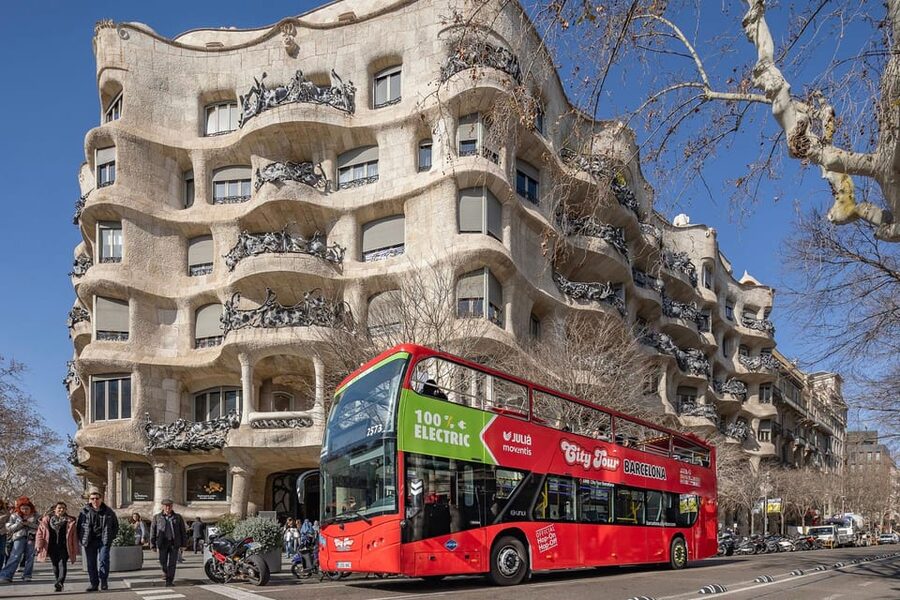
Bring the stop guide with you. The most specific negative point in the available feedback concerns unclear stop signage after getting off. You may know the name of the attraction but still need help finding the correct boarding point for the return journey.
Keep the route color in mind. Orange covers the west side, Montjuïc, Plaça d’Espanya, Camp Nou, and the waterfront circuit. Green covers Barceloneta, Park Güell, Casa Batlló, Arc de Triomf, and El Born.
The bus schedule is affected by demonstrations, sports events, cultural events, and other city conditions. If you have a timed Aquarium entry or another reservation, leave a generous buffer.
The audio system is useful for passing sights, but it is not a substitute for time inside the attractions. I would use it to decide where you want to get off, then explore on foot.
The system also includes an audio loop adapted for people with auditory disabilities. That is a practical inclusion, though the supplied information does not describe other accessibility arrangements, so ask the operator directly if you need details beyond the audio system.
Who will get the most from this Barcelona package

This suits first-time visitors who want a quick sense of how Barcelona fits together. It is also useful for families, since the bus reduces long walks and the Aquarium gives children a clear, engaging stop.
You will get the best value if you enjoy choosing your own pace rather than following a guide through every attraction. The package gives you transport, commentary, and one major indoor attraction, but you still decide how much time to spend at each place.
It is less suitable if you prefer quiet neighborhood walks, local buses, or a tightly planned museum schedule. The open coach is exposed to weather, and the route can feel slow when traffic is heavy.
The overall rating is 4.5 from 221 bookings, and the strongest praise centers on the Aquarium, described as spectacular in one recent booking. The bus itself was also considered good, but the stop signage issue is worth taking seriously. That balance tells you what this package does best: it combines a reliable sightseeing framework with a strong single attraction, but it asks you to pay attention when changing buses.
Should you book the bus and Aquarium combination?
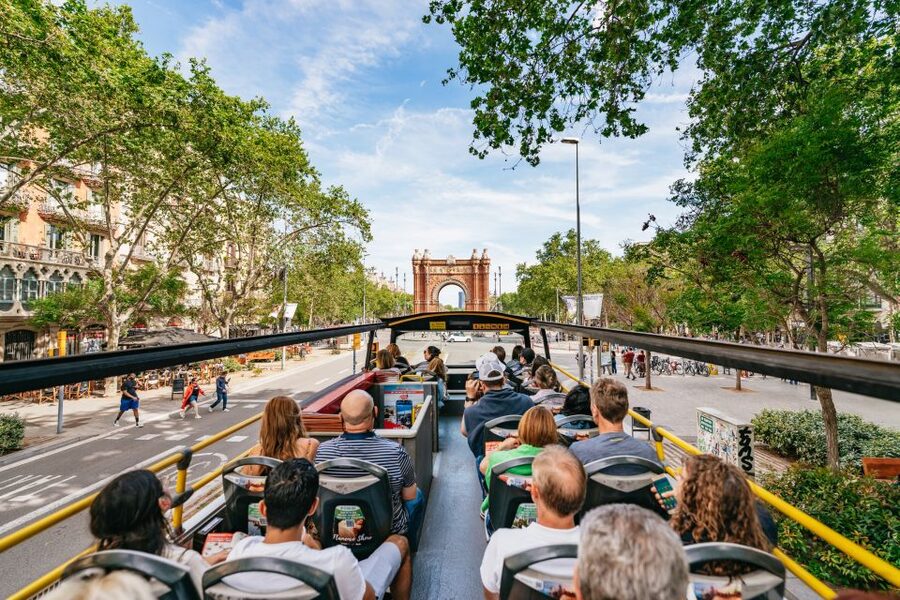
Book it if you want a broad Barcelona introduction, expect to use the bus several times, and like the idea of pairing city views with the Aquarium’s Mediterranean exhibits and shark tunnel.
Choose the 48-hour version if you want Montjuïc, Park Güell, Gaudí’s central buildings, the coast, and the Aquarium without racing from stop to stop. Choose 24 hours if your schedule is short and you have a clear plan.
Skip it if you only need point-to-point transport or prefer to explore one neighborhood on foot. For everyone else, keep the stop guide handy, allow extra time between buses, and use the route as a flexible framework rather than a strict timetable.
FAQ
Where can I start the Barcelona City Tour bus?
You can start at Plaça Catalunya, the main stop, or at any stop served by the Barcelona City Tour.
How long is the bus ticket valid?
The ticket is valid for one or two consecutive days, depending on the option selected.
Can I use both bus routes with one ticket?
Yes. The ticket includes all routes and stops.
How often do the buses run?
Buses are listed as departing approximately every 30 minutes, with seasonal frequency ranging from about 5 to 30 minutes.
What are the operating hours?
Barcelona City Tour operates from around 9:00 AM, with the last return around 7:00 PM.
How long does each bus route take?
Each route takes approximately two hours if you remain on board.
Is the Aquarium entry included?
Yes. The Aquarium entrance fee is included, but the ticket is valid for a single use.
What can I see at Barcelona Aquarium?
You can see Mediterranean marine communities, habitats inspired by the Ebro Delta and Medes Islands, and the Oceanarium tunnel with sharks.
Which languages are available for the audio guide?
The audio guide is available in English, Catalan, Spanish, French, German, Russian, Portuguese, Chinese, Japanese, Dutch, Hebrew, Italian, Arabic, Swedish, Norwegian, and Turkish.
Are meals and drinks included?
No. Lunch, drinks, and services not specifically listed are not included.
More aquarium visits around Barcelona
- Barcelona City Tour Hop-On Hop-Off and Aquarium
★ 4.5 · 6 reviews - 5-Day Pass: Hop-On Hop-Off, Lost World Aquarium, Dubai Frame
★ 4.4 · 838 reviews - Okinawa: Churaumi Aquarium, Ryukyu Village & Manza Bus Tour
★ 4.5 · 118 reviews - Okinawa: Bus Tour to Churaumi Aquarium with Sightseeing
★ 4.3 · 20 reviews
Recently added around Barcelona
- Shore Excursion: Barcelona City Tour Hop-On Hop-Off★ 4.0 · 280 reviews
- Private Customized Barcelona Tour by Mercedes VIP Bus and Personal Expert Guide★ 5.0 · 4 reviews
- Barcelona City Hop On Hop Off and FC Barcelona Immersive Tour★ 3.5 · 10 reviews
- Barcelona City Tour Hop-On Hop-Off and Aquarium★ 4.5 · 6 reviews
- Barcelona Hop on Top City Tour★ 3.5 · 12 reviews
- Barcelona City Card with 30+Attractions, Tours and Hop on Hop off★ 4.5 · 9 reviews
- Barcelona: Hop-On Hop-Off Bus and Moco Museum Ticket★ 3.7 · 14 reviews
- Barcelona Hop-On Hop-Off Bus and FC Barcelona Immersive Tour★ 4.2 · 362 reviews
Hop-On Hop-Off Bus Tours, compared.
City Sightseeing Hop-on Hop-off Bus with Audioguide
Read our review →
Tootbus Hop-on Hop-off (Optional River Cruise)
Read our review →Big Bus Hop-On Hop-Off Tour with Optional Cruise
Read our review →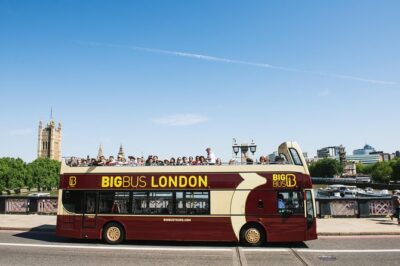
London Big Bus Hop-On Hop-Off Tour with Optional River Cruise
Read our review →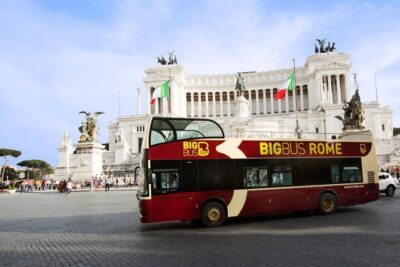
Big Bus Hop-on, Hop-off Open-Top Sightseeing Tour
Read our review →
Browse the lists this tour appears in