
Review · ITALY BUS TOURS
From Taormina: Syracuse and Noto Guided Day Trip by Bus
Syracuse and Noto give you two very different views of Sicily in one long day. Syracuse reaches back to ancient Greece, while Noto is a graceful Baroque town rebuilt after an earthquake. The contrast is the point: ruins and myth in the morning, honey-colored churches and grand streets later on.
I like the way this trip combines the Neapolis Archaeological Park with Ortigia, Syracuse’s old island center. I also like having a guide such as Christy, who brings together archaeology, local stories, and practical directions in several languages. The tradeoff is clear: you spend many hours on the coach and get only a short taste of each place.
At a glance
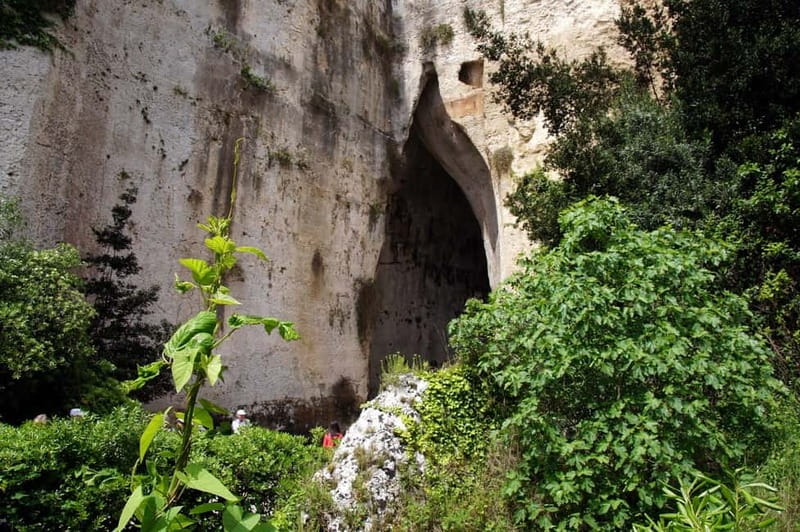
- Greek theatre and Roman ruins: Walk through Syracuse’s Neapolis Archaeological Park, including the Greek Theatre, Ear of Dionysius, Latomia del Paradiso, and Roman Amphitheatre.
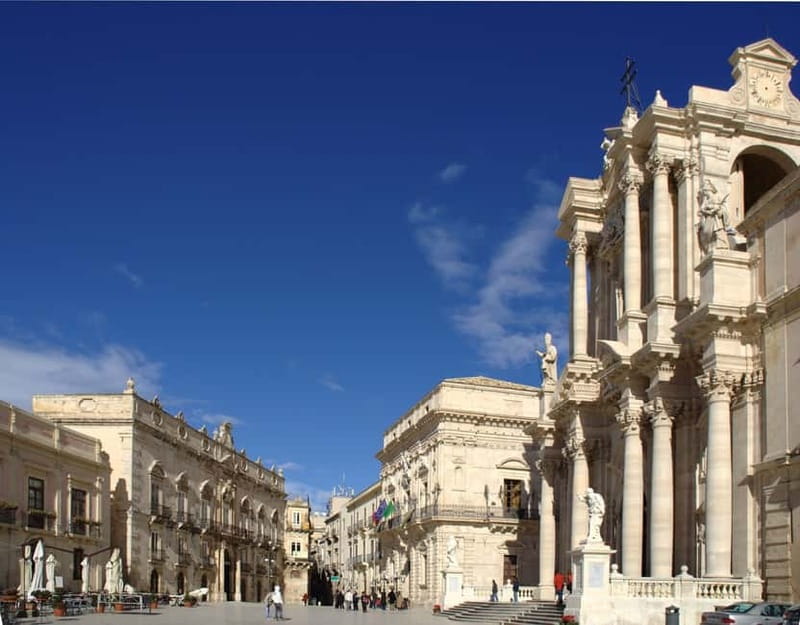
- Ortigia’s sea-facing old town: See the Fountain of Arethusa, papyrus plants, the Cathedral of Syracuse, and the Baroque Piazza Duomo.
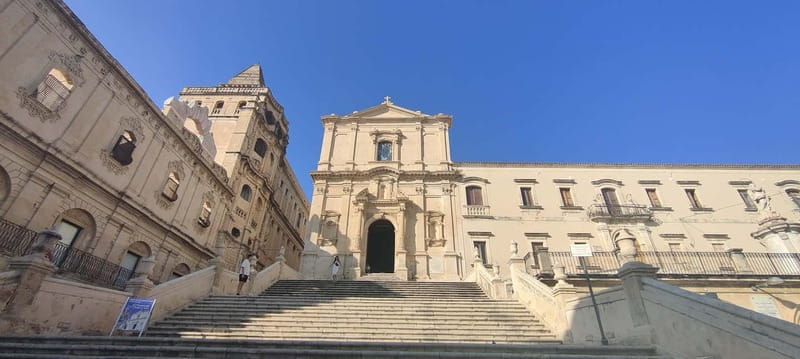
- Noto in one compact visit: Enter through the Porta Reale and follow Corso Vittorio Emanuele past churches, palaces, and the Cathedral of San Nicolò.
- A guide who carries the day: Christy is frequently praised for clear explanations and for speaking several languages during the same tour.
- A full 10-hour outing: Pickup begins early, with return in the late afternoon or evening depending on traffic and your pickup point.
- Extra costs to plan for: The Neapolis Park costs about €16.50 and the cathedral about €2, while lunch and drinks are not included.
Why this day trip works
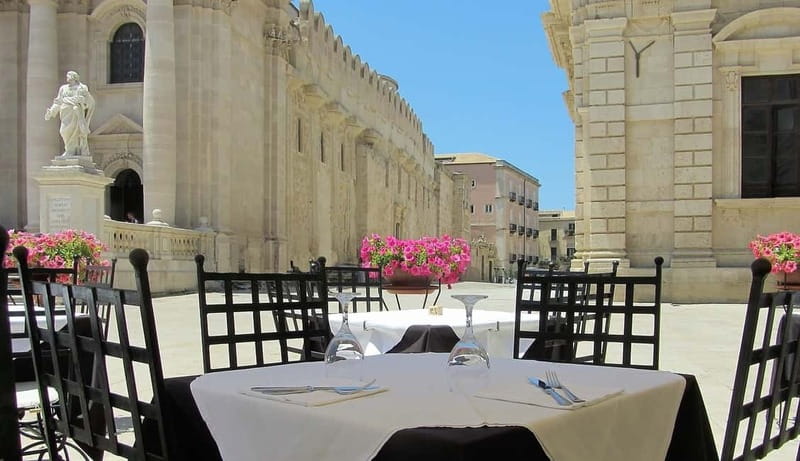
The attraction here is not one single monument. It is the range. In the morning, you are among theatres cut into stone and reminders of Syracuse’s Greek and Roman past. Later, you walk through Noto, where the mood changes to wide streets, ornate balconies, and pale Baroque façades.
That makes this a good choice if you are based in Taormina and do not want to arrange separate transport to southeastern Sicily. Syracuse and Noto are far enough away to make independent planning more involved, especially if you want both places in one day. A private coach, an onboard guide, and a planned route remove much of that work.
The price is $68 per person, which is fair for a 10-hour excursion with transport and guiding. It is not the final cost, since both the archaeological park and cathedral charge separately, and you must buy your own lunch and drinks. Still, the coach and guide cover the costly, time-consuming part: getting there and making sense of what you see.
The main limitation is time. You will not explore Syracuse and Noto at a slow pace. One traveler felt the Greek Theatre deserved more time, and that is a reasonable criticism. The itinerary gives you a useful introduction, not a full archaeological or architectural study.
More Bus Day Trips in Italy
- CAPRI – DIY Day Trip Package – BoatTour, BlueGrotto,Bus&Lunch
★ 4.5 · 49 reviews - From Livorno: Guided Day Trip to Florence and Pisa by Bus
★ 4.6 · 49 reviews
The early coach ride from Taormina
Pickup is offered from several points, including the Taormina Interbus terminal, Recanati Bus Terminal, Hotel Antares, Blue Sea Diving Center, and Express Wash Naxos. The listed morning schedule begins at Letojanni at 7:00, reaches the Mazzarò cable car at 7:10, Taormina bus terminal at 7:20, S. Giovanni at 7:35, and Recanati at 7:45.
You should arrive five to ten minutes early. Look for the coach with the orange SIRACUSA NOTO sign. If you are staying in Taormina proper, confirm your pickup point carefully because the bus stops are not all in the same part of town.
The first major drive is about two hours, followed by a short service stop. With several pickups, the first part of the day can feel longer than the schedule suggests. One useful way to think about it is this: you are trading a slow morning in Sicily for the chance to reach two major destinations without changing trains or buses.
The coach is described as private and generally comfortable, although it can feel stuffy. Bring water, a light layer, and a small snack. Lunch is not included, and the schedule does not leave much room for a long restaurant meal.
Noto and the Baroque hour
The route includes a visit to Noto, described as the capital of Sicilian Baroque. The historic center became a UNESCO World Heritage Site in 2002, and even a brief walk gives you a clear sense of why.
You enter through the Porta Reale, a ceremonial gateway that leads to Corso Vittorio Emanuele. This is Noto’s principal street, lined with churches and palaces in the warm stone associated with the town. The route includes the Church of Santa Chiara, Palazzo Landolina, the Cathedral of San Nicolò, the Church of San Domenico, and the Municipal Theatre.
Noto is easy to appreciate on foot because the main sights sit along a compact central route. You do not need a lecture to see the town’s visual rhythm: long façades, carved details, church steps, and formal squares. A guide adds useful context about the rebuilding of the city and the role of Baroque design.
The scheduled visit is about an hour, so keep your expectations in check. You can follow the main street, take photographs, and perhaps buy a snack such as cannoli, but you will not have time to inspect every church or wander far from the route. If Noto is your main reason for booking, you may eventually want to return for a separate visit.
Ortigia, Syracuse’s island center
After Noto, the coach continues toward Syracuse and the island of Ortigia. The drive is listed at about 40 minutes. Ortigia is the historic heart of Syracuse, and it feels very different from the open archaeological park.
The walk includes the Foro Italico and the Fountain of Arethusa, a freshwater spring forming a natural pool with papyrus plants on a terrace above the sea. It is one of the city’s most distinctive views because it joins local legend, water, plants, and the coast in one small setting.
From there, the route continues toward the Cathedral of Syracuse and the Baroque square around it. The cathedral is especially interesting because its setting brings together several periods of Sicilian history. The tour presents Syracuse through its Greek origins and later Baroque character, rather than treating the old town as a single period.
The Ortigia portion includes guided time and free time, with about 105 minutes listed for the visit. That is enough to get your bearings, see the main sights, and eat something quick. It is not enough for a leisurely lunch followed by an extensive walk through side streets.
A practical tip is to plan your food before you arrive or ask the guide where the free-time options are. One past participant specifically recommended a sandwich from Borderi in Ortigia, but you should not assume there will be time for a long queue or sit-down meal. Keep an eye on the meeting time. The schedule depends on the whole group returning promptly.
Same city, a different seat on a different deck:
- Rome: City Sightseeing Hop-on Hop-off Bus with Audioguide
★ 4.0 · 16,045 reviews - Rome: Big Bus Hop-on, Hop-off Open-Top Sightseeing Tour
★ 4.1 · 9,537 reviews - Florence: Hop-on Hop-off Bus Tour: 24, 48 or 72-Hour Ticket
★ 4.0 · 6,283 reviews - Milan: City Sightseeing Hop-On Hop-Off Bus with Audio Guide
★ 4.0 · 6,256 reviews
The Cathedral and Piazza Duomo
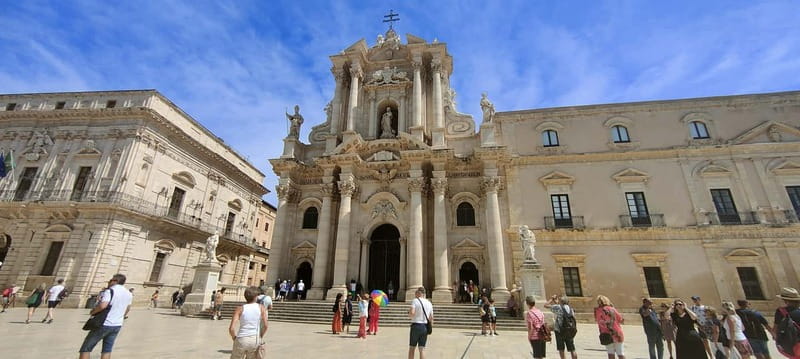
The cathedral receives its own visit of about 30 minutes, and entry costs around €2. This small extra fee is worth including in your budget if you want to see the interior rather than only the square.
The building is in the Baroque setting of Piazza Duomo, one of the most polished urban spaces on the route. The guide may explain how the cathedral connects with Syracuse’s earlier religious and civic history. Follow the instructions about meeting points and tickets, since the group moves on to the archaeological park afterward.
A useful bit of preparation is to wear clothing suitable for church visits. Comfortable shoes are essential, but respectful clothing also matters. You will be walking outside in the sun, then entering churches where shoulders and knees may need to be covered.
Neapolis Archaeological Park and its ancient theatre
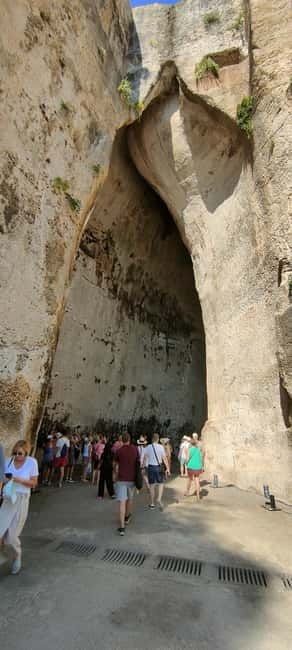
The Neapolis Archaeological Park is the largest stop of the day, with about two hours scheduled. It contains the most important ancient sites on the route, including the Greek Theatre, Latomia del Paradiso, Ear of Dionysius, and Roman Amphitheatre.
The Greek Theatre is the emotional center of the visit. Cut into the hillside, it shows the scale of ancient Syracuse better than a short description can. You can look across the seating and imagine the theatre as a working civic space, not simply a scenic ruin. The time allowance lets you see the main area, but a fast group pace may limit how long you linger.
The Latomia del Paradiso is a former stone quarry. Its rock walls and open spaces help explain where the city obtained building material. Within it, the Ear of Dionysius is a famous cavern linked to stories about sound and surveillance. The guide’s explanation is valuable here because the site can otherwise seem like a collection of striking but disconnected shapes.
The Roman Amphitheatre adds another layer. You are not only seeing Greek Syracuse, but a later Roman presence using the same city and its stone. This sequence makes the park rewarding for anyone who enjoys seeing how a place changes over centuries.
Buy the park ticket in advance if the operator allows it, or be prepared to pay around €16.50 per person. Keep the ticket after entry because access may involve more than one point within the site. The route includes uneven ground, slopes, and a substantial amount of walking, so this is not a good choice for wheelchair users or anyone with serious mobility limits.
The guide and the pace
The guide can make or break a day that covers this much ground. Christy is the name most often associated with this experience, and he is praised for his strong command of English, Italian, French, German, and, on some departures, Dutch. Conducting a multilingual tour is not simple, yet the schedule depends on keeping several language groups together.
The best part of the guiding is the historical explanation. Christy is described as clear, attentive, and able to connect ancient history with the places directly in front of you. He also helps keep the group moving when traffic or late returns threaten the schedule.
That same efficiency can feel hurried. The walking pace may challenge older participants, and several stops are short by design. Pay attention when the guide gives a return time. If one person is late, the delay affects everyone, and there is little spare time in a day with long road sections.
The driver also matters on this route. The service includes a private bus, and the driver has been praised for smooth, safe driving. Traffic can still cause delays, so the late afternoon return is not something to schedule tightly against a dinner reservation or another activity.
What the $68 price really covers
At $68, this is a sensible value if you want both Syracuse and Noto and are starting in Taormina. You receive round-trip coach transport, an onboard guide, local guiding at the sites, and a structured route that would be difficult to reproduce in one day using public transport.
The extra charges are straightforward:
- Neapolis Archaeological Park: about €16.50 per person
- Cathedral of Syracuse: about €2 per person
- Lunch and drinks: not included
The total cost is therefore higher than the headline price, but still reasonable for a full-day excursion. The value drops if you prefer long meals, independent wandering, or detailed time inside each monument. In that case, a private day tour or an overnight stay in Syracuse would give you more freedom.
Free cancellation is available up to 24 hours before departure, and you can reserve now and pay later. Those terms help if your plans around Taormina may shift, but they do not change the physical demands of the day.
Who should book this excursion
I would choose this trip if you want a broad first look at southeastern Sicily from a Taormina base. It suits couples, families with older children, and history-minded visitors who prefer a guide to explain what they are seeing.
It is also a strong option if you value efficiency. In one day, you see ancient theatre architecture, a Roman amphitheatre, a Greek-era quarry, a sea-facing old town, a cathedral, and a Baroque city center.
I would hesitate if you have mobility problems, dislike long coach rides, or want to photograph every site at leisure. The tour is not suitable for wheelchair users, and the amount of walking is significant. Comfortable shoes are not a minor suggestion here. They are part of the basic equipment.
Final verdict
Book this Syracuse and Noto day trip if you want two major Sicilian destinations in one organized day and accept that each will be an introduction. The guide, especially Christy, is a major strength, and the combination of ancient ruins and Baroque streets gives the day real variety.
Skip it if your priority is slow travel. Noto deserves more than an hour, and the Greek Theatre can leave you wishing for extra time. For most visitors based in Taormina, though, the tour offers a practical way to reach a distant corner of Sicily without managing the roads, parking, tickets, and historical context yourself.
FAQ
How long is the Syracuse and Noto day trip?
The excursion lasts about 10 hours. Pickup begins early in the morning, and you return to your hotel area in the late afternoon or evening.
Where can I be picked up in the Taormina area?
Pickup points include the Interbus Taormina terminal, Recanati Bus Terminal, Hotel Antares, Blue Sea Diving Center, and Express Wash Naxos. Listed pickup times range from 7:00 at Letojanni to 7:45 at Recanati.
What languages does the guide speak?
The tour is offered in Italian, English, French, and German. Christy is also described as speaking Dutch on some departures.
Are admission tickets included?
No. Entry to the Neapolis Archaeological Park costs about €16.50 per person, and the Cathedral of Syracuse costs about €2 per person. Lunch and drinks are also excluded.
Is the tour suitable for people with mobility impairments?
The experience is not suitable for people with mobility impairments or wheelchair users. Expect extensive walking and uneven surfaces at the archaeological park, along with a brisk pace between some sights.
What should I bring and wear?
Bring comfortable walking shoes and clothing suitable for visiting churches. You should also bring money for admission tickets, lunch, and drinks.
More single-day trips around Italy
- Mt Fuji and Hakone 1-Day Bus Tour Return by Bullet Train
★ 5.0 · 26,383 reviews - 1-Day Tokyo Bus Tour
★ 5.0 · 14,250 reviews - PERFECT KYOTO 1-Day Bus Tour
★ 5.0 · 13,518 reviews - Peaceful Hiroshima & Miyajima UNESCO 1 Day Bus Tour
★ 5.0 · 5,309 reviews
Recently added around Italy
- City Sightseeing Turin Hop-On Hop-Off Bus Tour★ 3.5 · 104 reviews
- Turin: Cinema Museum and Bus Tour★ 4.4 · 200 reviews
- Turin: 24/48-Hour Hop-On Bus & National Automobile Museum★ 4.4 · 52 reviews
- From Naples: Pompeii and Vesuvius by Bus★ 4.1 · 258 reviews
- Milan Hop-On Hop-Off Bus Tour with Four Routes★ 3.5 · 1,214 reviews
- Chianti Wine Tour with Tuscan Lunch Open Top Van★ 5.0 · 89 reviews
- From Livorno: Guided Day Trip to Florence and Pisa by Bus★ 4.6 · 49 reviews
- CAPRI – DIY Day Trip Package – BoatTour, BlueGrotto,Bus&Lunch★ 4.5 · 49 reviews
Bus Day Trips, compared.

Mt Fuji and Hakone 1-Day Bus Tour Return by Bullet Train
Read our review →

Day Trip to Grindelwald, Interlaken & Lauterbrunnen
Read our review →
Munich Hop-On Hop-Off Tour: 1-Day or 2-Day Ticket
Read our review →
From NYC: Guided Day Trip to Washington DC by Van or Bus
Read our review →Browse the lists this tour appears in