
Review · SPAIN BUS TOURS
Córdoba: City Sightseeing Hop-On Hop-Off Bus Tour
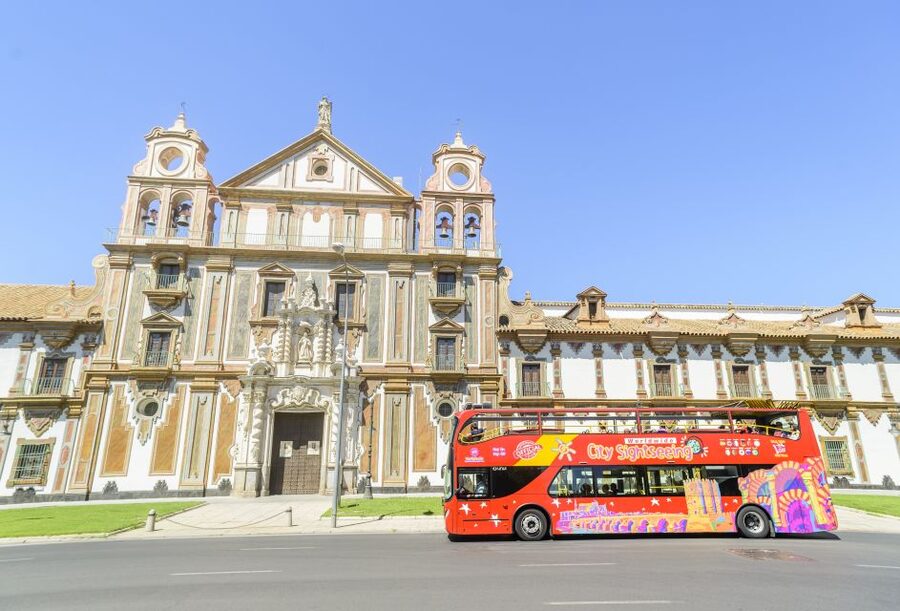
Córdoba’s best sightseeing trick is its two-route bus system. The red panoramic route covers the broad city, riverfront, gardens, train station, and major monuments, while the blue minibus squeezes through streets too narrow for a double-decker. I especially like the easy way to connect the Mezquita, Roman Bridge, Calahorra Tower, Palacio de Viana, and less central sights without wearing out your feet.
I also like the Judería walking tour, included at 6pm, and the clear audio guide in 10 languages. The catch is timing: buses run about every 70 minutes, so one missed bus can cost you a long wait. Audio equipment can also be faulty, and the open upper deck offers little shelter from Córdoba’s strong sun.
Key points at a glance
- Two distinct routes: The red panoramic bus covers the wider city, while the blue minibus handles narrow historic streets.
- The 6pm Judería walk is included: This one-hour tour runs in English and Spanish from the Puente Romano.
- Seventeen stops are listed for the route network: Major stops include the Mezquita, Alcázar, Palacio de Viana, Roman Temple, and train station.
- The full panoramic loop takes about 70 minutes: The intimate minibus route takes about 30 minutes.
- Audio comes in 10 languages: Spanish, Chinese, English, French, German, Italian, Japanese, Arabic, and Russian are offered, with a children’s Spanish option.
- Attraction admission is separate: Your bus ticket gets you near the sights, but you pay extra to enter places such as the Mezquita and Alcázar.
Why the two Córdoba routes matter

Córdoba is compact in its historic center, but its sights are not all packed into one tidy cluster. The Mezquita, Roman Bridge, Alcázar, and Jewish Quarter sit close together, while the Palacio de Viana, Malmuerta Tower, Palacio de la Merced, and Botanical Garden are farther out.
That is where this pass earns its keep. The red Panorámica route gives you a broad look at the city on a double-decker bus. The complete circuit takes about 70 minutes, and the first bus leaves Stop 1 at 9:30am. The final departure from Stop 1 is at 6pm, with buses scheduled roughly every 70 minutes.
The blue Córdoba Íntima route uses a smaller minibus. It takes about 30 minutes and follows narrow streets that the larger bus cannot manage. This is the more characterful ride, with close views of old façades and tight lanes around the historic center.
The weak point is the long interval between buses. A 70-minute wait is not a minor delay when you are trying to fit the Mezquita, Alcázar, Roman Bridge, and a museum into one day. I would use the bus first as a city orientation tool, then walk between the central sights whenever the distance is reasonable.
More Hop-On Hop-Off Bus Tours in Spain
- Barcelona: 24 or 48-Hour Hop-On Hop-Off Bus Tour
★ 4.4 · 20,872 reviews - Barcelona: City Sightseeing Hop-On Hop-Off Bus Tour
★ 4.4 · 10,061 reviews - City Sightseeing Barcelona Hop-On Hop-Off Bus Tour: 24 or 48-Hour
★ 4.0 · 5,250 reviews
Starting at the Guadalquivir and Roman Bridge
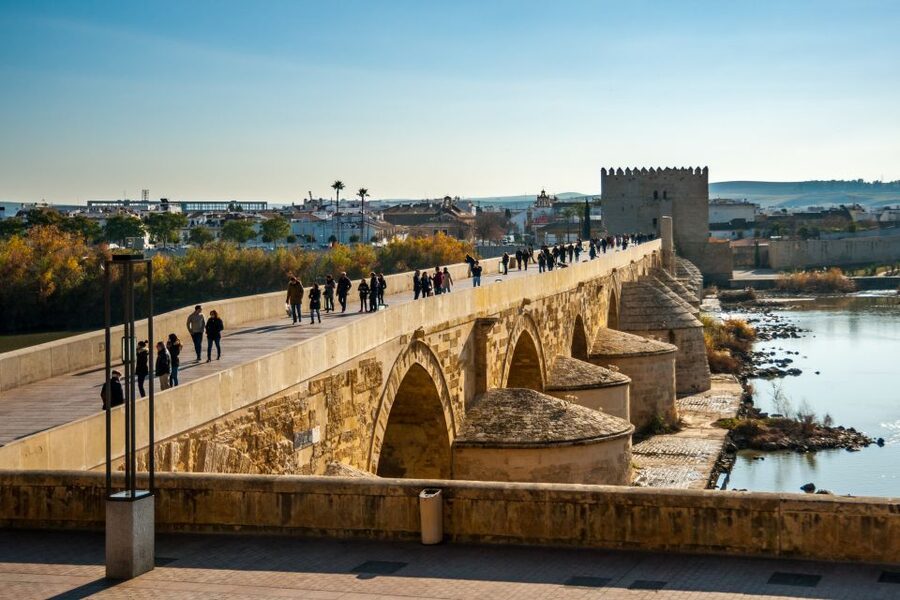
You can begin at the riverfront meeting point, Avenida Fray Albino 2, listed as Stop 1 on the Panorámica route. This puts you close to the Guadalquivir River and the Roman Bridge, one of Córdoba’s defining views.
The river route helps explain Córdoba’s location. The Guadalquivir supported trade, transport, farming, and settlement, and the city’s position drew Roman, Arab, Jewish, and Christian communities over many centuries. The audio commentary adds background as the bus moves between the river, old walls, and city streets.
The Puente Romano stop is especially useful. From here, you can walk toward the Mezquita, the Alcázar, and the Jewish Quarter. It is also the meeting point for the included Judería walking tour at 6pm, so note the location early in the day.
The Roman Bridge is a place where I would get off rather than simply photograph it from the bus. You can see the river, the old city wall, and the great mass of the Mezquita from here. The stop also gives you a practical anchor if the route map feels confusing.
Gates, walls, and Córdoba’s old defenses

The bus passes several reminders that Córdoba was once a walled city with formal entrances. The Puerta de Almodóvar, Puerta de Sevilla, and Puerta del Puente are three surviving gates from the original 13.
Puerta de Almodóvar is particularly handy for the Jewish Quarter and the western edge of the old center. Puerta del Puente sits beside the Roman Bridge and offers the clearest connection between the riverfront and the monumental core. Puerta de Sevilla gives you another view of the old defensive line and access toward San Basilio.
The route also takes in several towers and fortified structures. These include Malmuerta Tower, Belén Tower, Puerta del Rincón Tower, Calahorra Tower, and Donceles Tower. You will not necessarily want to enter every structure, but seeing them in sequence gives the city a stronger sense of its medieval defenses.
Calahorra Tower is one of the most useful stops for orientation. It guards the southern end of the Roman Bridge, opposite the historic center. The bus lets you connect this defensive position with the gates and walls farther inland, something that is harder to grasp when you visit each sight separately.
The Mezquita, Alcázar, and old religious Córdoba
The bus does not include entry to Córdoba’s major monuments, but it places you near them. That distinction matters. You are buying transportation and commentary, not a skip-the-line sightseeing package.
At the Mezquita-Catedral, the audio commentary introduces Córdoba’s religious changes and the building’s long story as a major Islamic and Christian monument. The structure is famous for its forest of arches, but the more important point is how many layers of worship and power are contained within one building.
The stop is also convenient for exploring the Jewish Quarter on foot. Allow enough time to wander beyond the main monument. The narrow lanes, whitewashed walls, and small squares are part of the experience, not just the route to the Mezquita entrance.
The Alcázar de los Reyes Cristianos is another key stop. This fortress-palace reflects Córdoba’s Christian period, with strong walls, formal gardens, and towers. The bus brings you close, but you need a separate admission ticket if you want to go inside.
Start or end the intimate route at Calle Caballerizas Reales, the listed Stop 1 for the blue line. This is a sensible place to begin if the Alcázar is your first major sight of the day. It also makes the minibus useful before you start walking through the old center.
More Sightseeing Bus Tours in Spain
- Seville: City Sightseeing Hop-On Hop-Off Bus Tour
★ 4.0 · 4,633 reviews - Palma de Mallorca: City Sightseeing Hop-On Hop-Off Bus Tour
★ 4.1 · 4,450 reviews - Madrid Panoramic City Bus Tour
★ 3.5 · 3,118 reviews - Malaga: City Sightseeing Hop-On Hop-Off Bus Tour
★ 4.0 · 2,619 reviews
The Roman Temple, Palacio de Viana, and city gardens
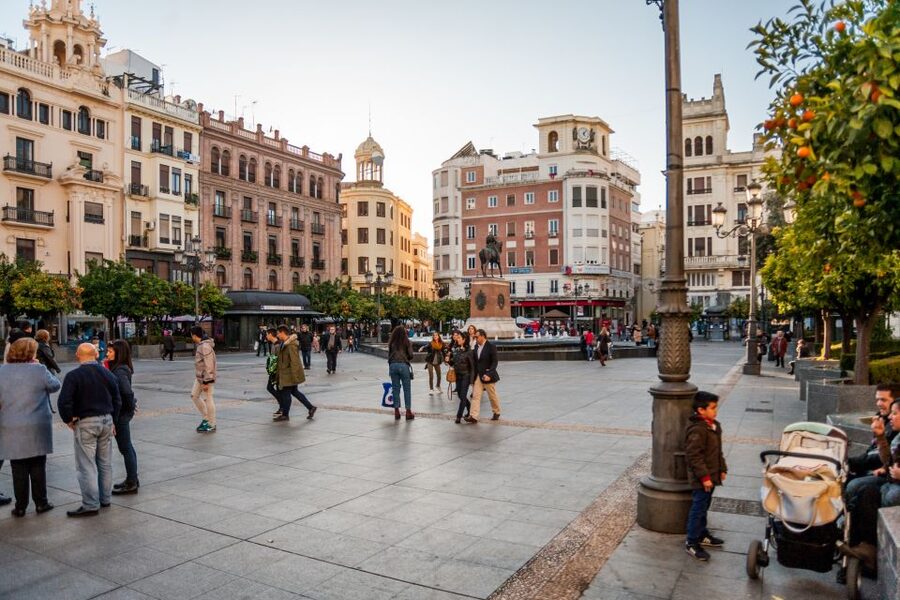
The route does a good job of showing that Córdoba is more than the Mezquita. At Ayuntamiento and the Roman Temple, you can see remains of the ancient Roman city close to the modern civic center. The stop is also near the central streets around Plaza de las Tendillas.
The Roman Temple is not a complete building, but its surviving columns make the scale of Roman Córdoba clear. I like this stop as a quick historical counterpoint to the Islamic and Christian monuments.
The Palacio de Viana is another useful addition. Its courtyards and gardens are among the city’s best-known residential spaces. If your idea of Córdoba is only grand religious buildings, Viana gives you a quieter view of domestic architecture, patios, and cultivated outdoor spaces.
The red route also reaches the Palacio de la Merced and Diputación, the Malmuerta and Santa Marina area, and the Botanical Garden and zoo. The Botanical Garden and Ciudad de los Niños can be useful for families, while the palace and old neighborhood stops suit anyone looking for more than the central monuments.
The stop near Mercado de la Victoria adds a practical food and rest option, although the walking-tour arrangements connected with this area may not always operate as expected. I would not build the whole day around a separate market walk unless you have confirmed the timing locally.
A closer look at the blue minibus
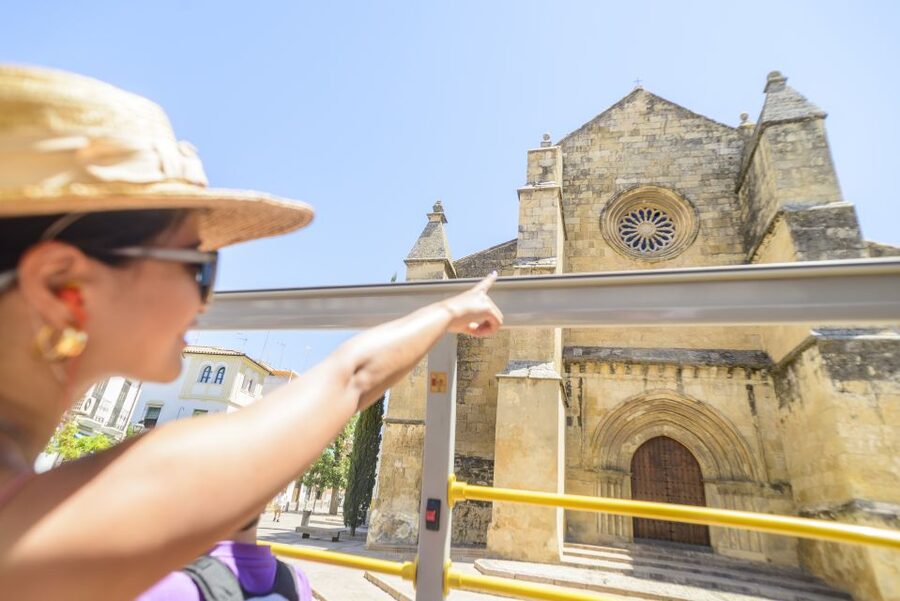
The blue route is the part I would prioritize if you have limited time. Its smaller vehicle can pass through streets that are too tight for the larger panoramic bus, giving you a closer look at Córdoba’s old neighborhoods.
The minibus covers the Alcázar, Mezquita, San Pedro, Realejo and San Andrés, Palacio de Viana, Palacio de la Merced, Roman Temple, Plaza de las Tendillas, Arco del Portillo, and riverfront. Its 30-minute circuit is short, but it covers the city center efficiently.
There is one practical problem: the intimate route can fill up. If the minibus is full, you may need to wait for the next one, and that next departure may be around 70 minutes away. I would board early in the day if this route is important to you.
The blue route is also a better fit for photography. The large bus gives you a wide view, but the minibus puts you closer to façades, gateways, and narrow lanes. You may find the ride more memorable even though it covers fewer roads.
The 6pm Judería walking tour
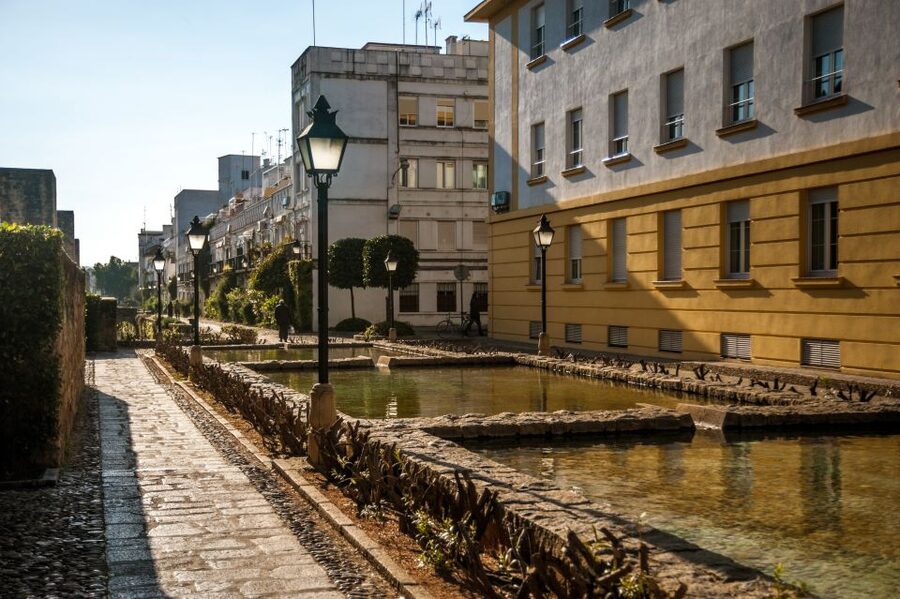
The included Judería walking tour begins at 6pm from the Puente Romano stop and lasts one hour. It is offered in English and Spanish.
This is a valuable addition because a bus can show you where the Jewish Quarter is, but it cannot explain every lane and courtyard at street level. The walking tour gives the old quarter a more human scale and helps connect the buildings with Córdoba’s Jewish, Islamic, and Christian past.
Plan your day around it if you want to take part. The tour is not an all-day hop-on, hop-off feature that you can join whenever you like. You need to be at the Roman Bridge stop at the stated time.
The tour is also a good reason not to spend the entire afternoon riding the loop. Use the buses for orientation and longer connections, then spend late afternoon on foot before meeting the guide.
Audio commentary and comfort on board
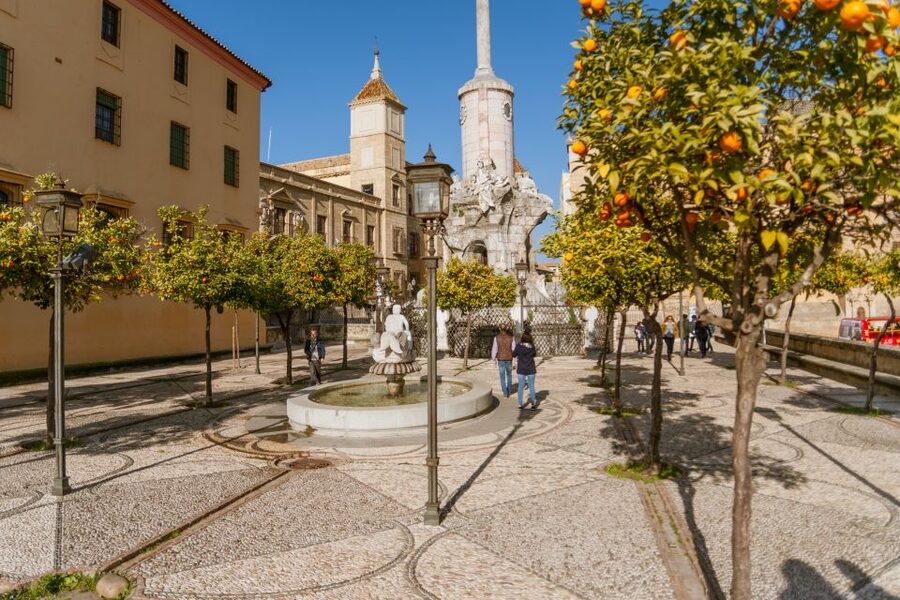
The commentary is available in 10 languages: Spanish, Chinese, English, French, German, Italian, Japanese, Arabic, and Russian. A children’s audio option is available in Spanish, which can make the ride more useful for families.
The commentary gives you a steady overview of Córdoba’s monuments, gates, towers, gardens, and cultural festivals. It is most helpful on the first circuit, when you are trying to work out the city’s layout.
The equipment is not perfect. Some passengers have found that headphone sockets do not work, especially on the lower level of the double-decker. The audio can also run slightly behind the bus, so a stop may be announced after the vehicle has already passed it.
For that reason, keep an eye on the route and do not rely only on the narration to tell you when to get off. The upper deck offers better views, but it leaves you exposed to full sun. On hot days, the lower deck is more comfortable if you can get a working audio outlet.
The service is wheelchair accessible. Pets and smoking are not allowed.
Price, timing, and real value
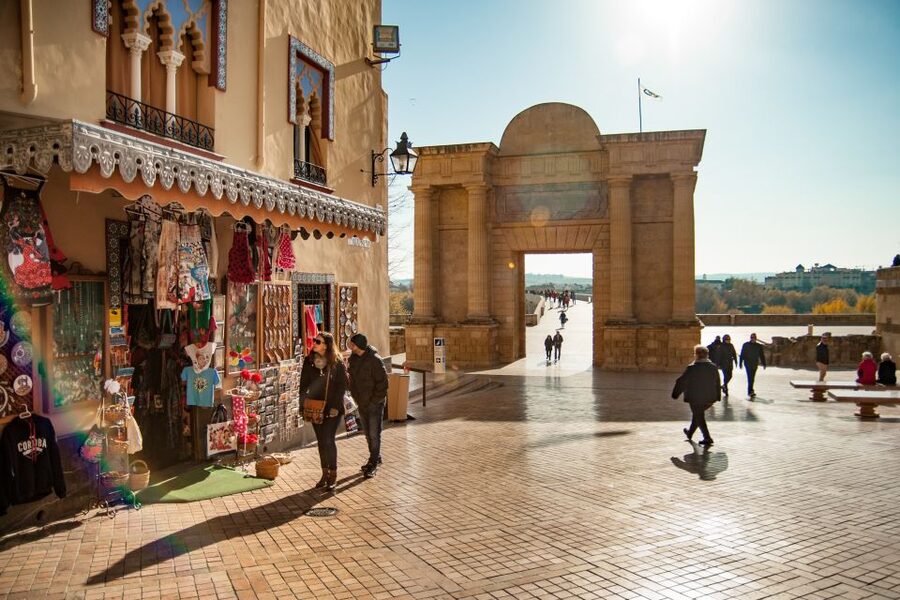
At $32 per person, the pass is not a bargain if you plan to walk every street and visit only one central monument. Córdoba’s old center is manageable on foot, and the bus route itself is relatively short.
The value improves if you want to reach the Palacio de Viana, Palacio de la Merced, Malmuerta Tower, Botanical Garden, train station, and riverfront without arranging separate transport. It also helps if you have mobility limits or want a broad city view before choosing where to spend your time.
The ticket includes the two bus routes, audio commentary, headphones, and the Judería walking tour. It does not include admission to the Mezquita, Alcázar, towers, museums, or other attractions.
I would consider it good value for a first day in Córdoba, especially if you arrive by train and want a stop near the station. It is less useful if you have only a few hours and intend to stay around the Mezquita, Roman Bridge, and Jewish Quarter.
A printed voucher or mobile voucher is accepted, and you can begin at any allocated stop. The published first and last departures from Stop 1 are 9:30am and 6pm. On the stated Friday schedule, buses run every 60 minutes instead of every 70, so check the operating details for your date.
Who should book this Córdoba bus tour?
I would choose this experience if you want a quick city overview, are staying outside the old center, have limited walking ability, or want to combine major sights with less central neighborhoods. Families may also like the simple format and children’s Spanish commentary.
I would be more cautious if you dislike waiting or have a tight schedule. The bus intervals are long, the audio equipment can be unreliable, and a full minibus may force you to change plans.
My preferred approach is to ride the red route once, use the blue minibus for the narrow streets, get off near the Mezquita or Alcázar, and save the 6pm Judería walk for the end of the day. That gives you the practical benefit of the bus without letting it dictate every hour.
FAQ
How long is the Córdoba hop-on hop-off ticket valid?
The ticket is valid for one day, described as a 24-hour hop-on hop-off pass.
How long do the bus routes take?
The Panorámica red route takes about 70 minutes for a full circuit. The Córdoba Íntima blue minibus route takes about 30 minutes.
What time do the buses begin and finish?
The first departure from Stop 1 on both routes is at 9:30am, and the last departure from Stop 1 is at 6pm. Buses generally run every 70 minutes, with a stated exception of every 60 minutes on Friday, February 20.
Which languages are available for the audio guide?
Audio is available in Spanish, Chinese, English, French, German, Italian, Japanese, Arabic, and Russian. A children’s audio commentary is available in Spanish.
Is the Judería walking tour included?
Yes. It begins at 6pm from the Puente Romano, Stop 16 on the Panorámica route, lasts one hour, and is offered in English and Spanish.
Are attraction entrance tickets included?
No. The bus pass does not include tickets for attractions such as the Mezquita-Catedral, Alcázar, towers, museums, or palaces.
Where can I start the tour?
You can begin at any allocated stop. The listed Panorámica Stop 1 is at Avenida Fray Albino 2, and the listed Córdoba Íntima Stop 1 is on Calle Caballerizas Reales. Mobile and printed vouchers are accepted.
Recently added around Spain
- Tourist bus tour of Seville★ 4.5 · 529 reviews
- Seville: Panoramic Cruise, Hop-On-Hop-Off Bus & Walking Tour★ 4.0 · 147 reviews
- Palma de Mallorca: City Sightseeing Hop-On Hop-Off Bus Tour★ 4.0 · 270 reviews
- Formentor: Xperience Bus and Boat Tour from the North★ 4.3 · 131 reviews
- Alcudia/Marratxi: Valldemossa & Soller Tour by Tram & Bus★ 4.7 · 499 reviews
- From Malaga: Day Trip to Alhambra by Bus with Entry Tickets★ 4.5 · 116 reviews
- Gran Canaria Highlights Full-Day Tour by Bus★ 4.5 · 286 reviews
- Lanzarote: Full Day Bus Tour with Scenic Views★ 4.5 · 620 reviews
Hop-On Hop-Off Bus Tours, compared.
City Sightseeing Hop-on Hop-off Bus with Audioguide
Read our review →
Tootbus Hop-on Hop-off (Optional River Cruise)
Read our review →Big Bus Hop-On Hop-Off Tour with Optional Cruise
Read our review →
London Big Bus Hop-On Hop-Off Tour with Optional River Cruise
Read our review →
Big Bus Hop-on, Hop-off Open-Top Sightseeing Tour
Read our review →
Browse the lists this tour appears in