
Review · ATHENS BUS TOURS
Pauls Biblical Ancient Corinth by Mini-bus
Paul’s connection to Corinth gives this day a clear purpose. You follow the route linked with his stay in 51 AD, from the harbor at Kechries to the church associated with him and the remains of Ancient Corinth. The dramatic Corinth Canal and hilltop Acrocorinth add scenery beyond the biblical story.
I like the small group, limited to 11 people, and the comfortable Mercedes minibus with air-conditioning and Wi-Fi. I also like the guides’ flexible approach, including help with lunch timing, local food, fruit, and extra questions. The main drawback is that the guide does not enter the Ancient Corinth archaeological site with you, and the €15 monument ticket costs extra.
Key points at a glance
- A full Paul-focused route: See Kechries, Paul’s church, Ancient Corinth, and the places tied to his work in the region.
- The Corinth Canal makes an easy first stop: You get about 20 minutes for photos and a quick look at this striking engineering project.
- Acrocorinth supplies the big view: The hilltop castle reaches about 530 meters and looks across Corinth and the canal.
- Ancient Corinth requires extra planning: Allow two hours here, but pay the €15 monument fee separately.
- Small-group comfort matters: The Mercedes minibus carries no more than 11 people and includes Wi-Fi and air-conditioning.
- The guide adds the most value: Nick, Aris, Kostas, and Konstantinos are praised for clear history, biblical context, flexibility, and local suggestions.
Why Paul’s Corinth is worth a full day
This is not simply a drive to a famous ruin. Corinth links several layers of Greek history in one compact outing. You see the modern canal, an ancient ship-transport route, a Roman-era city, a hilltop fortress, and sites connected with Paul’s time in Corinth.
Paul arrived in Corinth in 51 AD. At Kechries, he found Priscilla and Aquila, tentmakers who became important companions in his work. The route gives that story a physical setting. Instead of hearing only about Corinth from a book or church lesson, you see the harbor area, the old city, and the roads and hills around it.
The tour lasts about six to seven hours from Athens. That is long enough for the major stops without turning the day into a rushed checklist. You get roughly two hours at Ancient Corinth, one hour at Acrocorinth, and shorter visits at the canal, Kechries, Paul’s church, and the Diolkos.
I would choose this experience if you want biblical context but also care about archaeology and scenery. If you want only a quiet half-day at one ruin, this schedule may feel busy.
More routes around Athens:
- Athens, Piraeus, and Coastline: Blue Hop-On Hop-Off Bus
★ 3.9 · 4,849 reviews - Athens: City Sightseeing Hop-On Hop-Off Bus Tour
★ 4.3 · 4,520 reviews - City Sightseeing Athens, Piraeus & Beach Riviera Hop-On Hop-Off Bus Tours
★ 4.0 · 1,887 reviews
The Corinth Canal gives the day a dramatic start
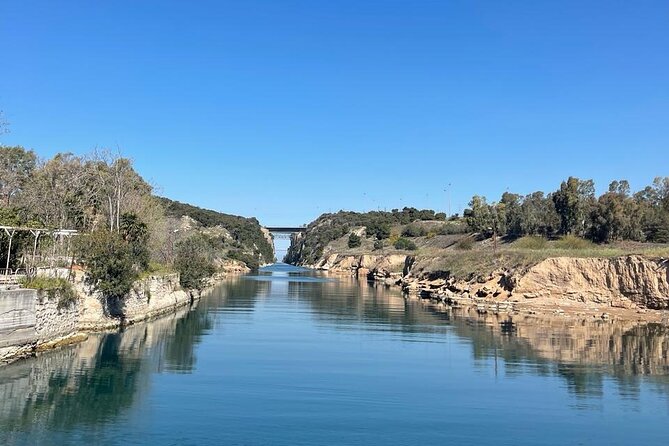
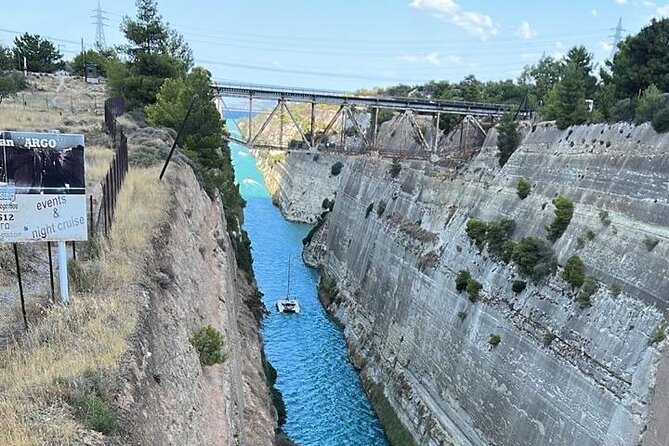
The Corinth Canal is an excellent opening stop because it immediately shows why this area mattered. The canal cuts through the narrow Isthmus of Corinth, linking the Aegean and Ionian seas. It is described as about four miles long, 27 meters wide, and surrounded by sides rising about 80 meters.
You have about 20 minutes here, with no admission fee. That is enough to take photographs, look down into the cut, and understand the scale of the project. Bring your camera, but also pause to look at the walls. The canal is more than a pretty photo stop. It explains Corinth’s position between two seas and helps you picture the movement of ships through the region.
The ancient route was not the present canal. The isthmus was used as a land crossing as early as 2700 BC, and the Romans moved boats across wooden rollers. The old transfer route is the Diolkos, visited later in the day.
The canal’s construction began in 1886 after years of wars and delays. The supplied tour information gives a final completion date of 1996, but the key point for your visit is the long gap between the ancient idea of crossing the isthmus and the modern cut you see today.
Kechries connects the landscape with Paul’s story
Kechries is the most direct biblical stop on the route. In 51 AD, Paul found Priscilla and Aquila there, working as tentmakers. The area also connects with Paul’s overnight stays before he left for Ephesus after spending 16 months in Corinth.
You have about 30 minutes at Kechries. The stop is free, and its value comes less from a large surviving monument than from the story attached to the place. Your guide can help you understand how a harbor settlement fit into Paul’s movement around the eastern Mediterranean.
The remains associated with the first Christian church provide another point of interest. Do not expect a vast archaeological complex here. This is a shorter, more reflective stop, and its importance depends on your interest in the New Testament and early Christian history.
I would pay close attention to the guide at Kechries. The physical remains may not explain themselves, especially if you are not familiar with the story of Paul, Priscilla, and Aquila. This is one of the places where the guide’s ability to connect names, dates, and locations makes a real difference.
Acrocorinth brings the best views
Acrocorinth is the visual high point of the day. The castle sits about 530 meters above the surrounding area and has a long history reaching back to the fifth century BC. From this height, you can look across Corinth and toward the canal. The elevated position explains why the site mattered for defense and control.
You get about one hour here. The castle is associated with the winter palace of Caesar in the tour’s historical account, and the area also includes the Temple of Aphrodite. The description of the temple refers to the 1,000 women associated with Corinth’s ancient cult traditions. Your guide can place these claims in their historical setting and separate legend, religious practice, and later interpretation.
Acrocorinth is also linked with the working world of Priscilla and Aquila, who made tents. That detail keeps the site from becoming only a story about rulers and temples. Corinth was also a place of trade, crafts, travel, and ordinary work.
The practical point is simple: this is a hilltop site. The tour provides one hour, but the exact amount you can see depends on walking conditions and how much time you spend on the views. Wear shoes you can manage on uneven ground. The tour data does not promise guided entry through every part of the castle, so ask your guide how much time is best spent at the viewpoints and accessible remains.
Same city, a different seat on a different deck:
- Athens: Big Bus Hop-on, Hop-off Tour by Open-Top Bus
★ 4.1 · 1,286 reviews - Hop on Hop Off Classic tour of Athens, Piraeus & Beaches
★ 3.5 · 1,266 reviews - Big Bus Athens Hop-On Hop-Off with optional Piraeus & Riviera
★ 4.0 · 652 reviews - Athens Shore Excursion: Athens and Piraeus Hop-On Hop-Off Bus Tour
★ 4.0 · 617 reviews
Paul’s church offers a short, focused stop
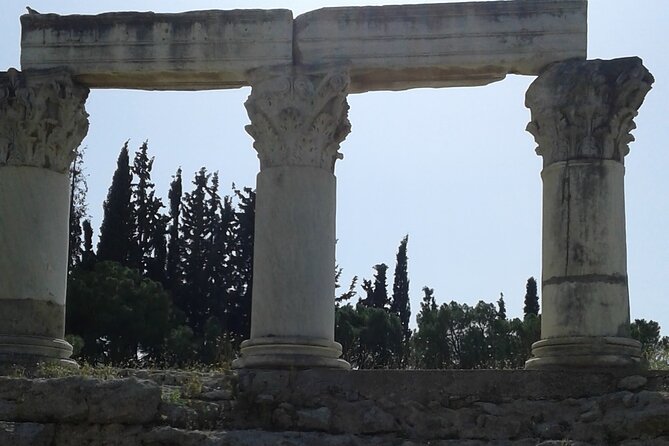
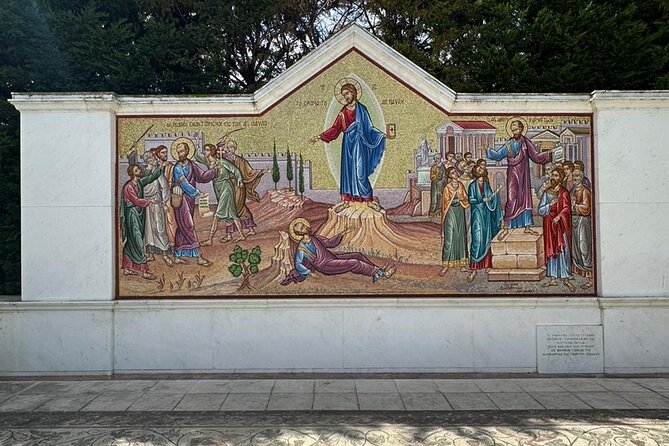
The Apostolos Pavlos Church is visited for about 30 minutes. It is described as the ancient church of Paul from 51 AD and provides another strong photo stop.
This visit works best when you see it as part of the wider route rather than a stand-alone church tour. Kechries shows Paul’s harbor connection, Ancient Corinth shows the city where his work took place, and this church gives the story a named Christian landmark.
The stop also breaks up the larger archaeological visits. You can take photographs, listen to the explanation, and continue without spending another long stretch on your feet. If your main reason for booking is biblical history, this will likely be one of the more meaningful points of the day.
Ancient Corinth deserves the longest visit
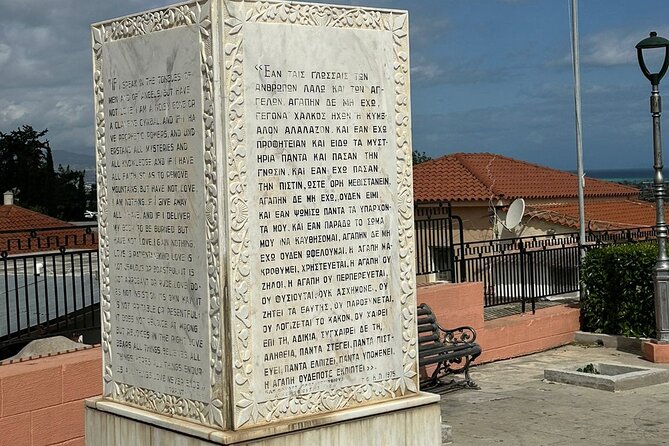
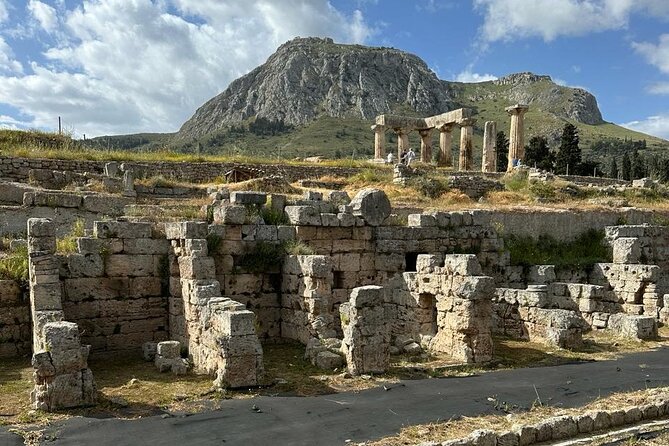
Ancient Corinth is the heart of the excursion. You have about two hours here, and that time is needed. The site includes the Temple of Apollo, the Agora, the Oracle of Corinth, the Octavia Temple associated with Caesar’s mother, the Ancient Church of Paul, and a museum.
The Temple of Apollo is the most recognizable monument. Corinth’s temple is often compared with the better-known Temple of Apollo at Delphi. Seeing the surviving columns and the surrounding ruins helps you understand the city’s scale and importance during Greek and Roman times.
The Agora gives you a sense of how public life worked. This was not just a collection of temples. It was a place of commerce, politics, worship, and daily business. The area associated with Paul’s church adds another layer, linking the ancient city to the Christian story that shapes this excursion.
Ancient Corinth is described as a village with roots reaching back about 7,000 years. That long timeline can be hard to take in during one visit, so I suggest focusing on the main sequence: early settlement, Greek religious life, Roman rebuilding, and Paul’s Corinth in the first century.
There is an important limitation here. The guide will not enter the Ancient Corinth archaeological site with you. That means you receive the explanation outside or before entry, then explore the monuments and museum on your own. Some people will like the freedom. Others may prefer a guide beside them while looking at the Temple of Apollo and the Agora.
The admission fee is not included. The cost is €15 per person for the monuments. Add this to the tour price when comparing options. At $80.68 per person, the excursion is reasonably priced for a six to seven-hour small-group day with a luxury minibus, but the extra site fee matters.
The Diolkos explains Corinth’s ancient shortcut
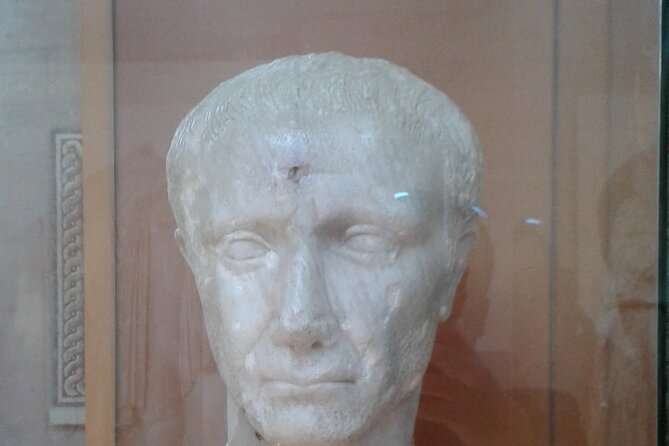
The Diolkos is a brief 15-minute stop, but it gives the canal a useful ancient preface. This was the old roadway used to move boats from the Aegean Sea to the Ionian Sea. Teams transferred vessels across the isthmus on rollers, long before modern ships passed through a waterway.
You will not spend as much time here as at Ancient Corinth. That is appropriate. The Diolkos is a compact historical stop, and the guide’s explanation is likely more important than the amount of visible remains.
I like the way this stop rounds out the day. The Corinth Canal shows modern engineering. The Diolkos shows the ancient solution to the same geographic problem. Together, they explain why Corinth mattered for thousands of years.
The minibus keeps the day manageable
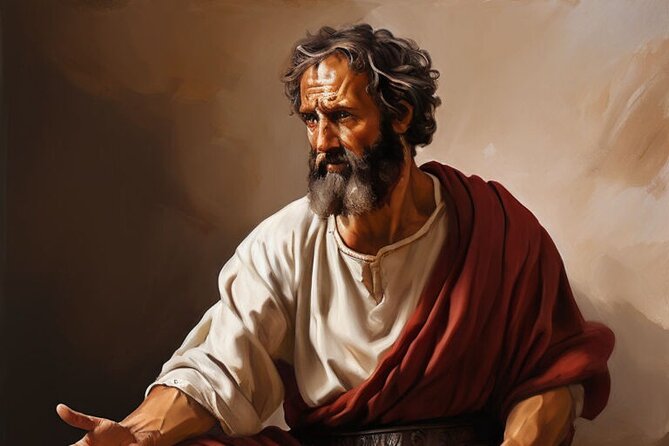
Transportation is one of the strongest practical features. You ride in an air-conditioned Mercedes minibus with Wi-Fi, and the group is capped at 11 people. That is a much more personal scale than a large coach, especially on a day with several short stops.
Pickup is offered, but everyone must meet at one pickup point at Akti Miaouli 85. Do not assume the vehicle will collect you at any Athens hotel. Confirm the meeting details when you book and allow time to reach the address.
The English-speaking driver and guide are central to the experience. Nick, Aris, Kostas, and Konstantinos are the names connected with the guiding team. The strongest qualities associated with them are clear historical explanations, biblical references, patience with questions, and a willingness to adjust the pace.
One guide worked around a 30-minute delay after a long travel day. Another helped with lunch timing and offered local suggestions. Small touches, such as keeping water available and sharing Greek food or figs, also appear in the way the day is handled. These details are not guaranteed extras, but they show the kind of personal service you might receive.
Lunch and free time are handled with some flexibility
Lunch is not listed as included, but the guiding team can help you decide when to stop. That flexibility is useful because the itinerary has several moving parts. You may prefer to eat earlier, or you may want to stay longer at Ancient Corinth and eat later.
The tour also balances explanation with time on your own. You receive history and biblical context, then have space to take photographs and look around. That balance is especially important at Ancient Corinth, where the guide does not enter the site with you.
Do not book this expecting a formal meal plan or a long restaurant experience. The useful feature is choice, not a fixed lunch package. Ask the guide about timing on the day.
Who will get the most from this Corinth tour
I would recommend this outing to several kinds of visitors:
- People interested in Paul, early Christianity, and the New Testament
- First-time visitors to Corinth who want the major sites in one day
- Couples and families who prefer a small group to a large bus
- Anyone who wants archaeological ruins and broad views, not only religious landmarks
- Visitors who value an English-speaking guide and flexible pacing
- People staying in Athens who want a full excursion without arranging several separate transfers
You may want a different option if you dislike moving between several stops, need a fully guided Ancient Corinth visit, or want every admission and meal included in the price. The day is active and varied rather than slow and highly specialized.
Most people can participate, according to the tour information. Still, Acrocorinth is a hilltop castle, so anyone concerned about walking should ask about the specific route and conditions before booking.
Price, group size, and cancellation terms
The listed price is $80.68 per person. For six to seven hours of transportation, an English-speaking driver-guide, a Mercedes minibus, Wi-Fi, air-conditioning, and several major Corinth sites, that is a fair value.
The price becomes more attractive when divided across the length of the day and the number of stops. You are not paying only for a ride to Ancient Corinth. You are also getting the canal, Kechries, Acrocorinth, Paul’s church, and the Diolkos.
Remember the €15 monument ticket. It is not included, and the guide does not enter Ancient Corinth with you. Those two points are the main costs and service limits to consider before you compare the tour with alternatives.
Free cancellation is available up to 24 hours before the experience begins. Changes or cancellations inside that 24-hour window are not accepted for a refund. Confirmation arrives at booking.
Should you book Paul’s Biblical Ancient Corinth by Mini-bus?
Book it if you want a clear Paul-focused day with enough room for Greek and Roman history too. The strongest reasons are the small vehicle, flexible guide service, comfortable transport, and broad range of sites. Nick, Aris, Kostas, and Konstantinos bring the explanations that make the shorter stops worthwhile.
The main caution is Ancient Corinth. You will have time to explore, but the guide will not accompany you inside, and the €15 admission fee is extra. If that arrangement suits you, this is a well-priced and efficient way to connect Paul’s Corinth with the canal, the ancient boat route, and the hilltop castle of Acrocorinth.
FAQ
How long does the tour last?
The experience lasts approximately six to seven hours.
Where does pickup take place?
All participants must meet at the pickup point at Akti Miaouli 85.
Is hotel pickup included?
Pickup is offered, but the provided details specify one pickup point rather than individual hotel pickup.
What language is the tour offered in?
The tour is offered in English with an English-speaking driver and guide.
How many people can join the minibus?
The maximum group size is 11 participants.
What vehicle is used?
The tour uses a luxury Mercedes minibus with air-conditioning and Wi-Fi on board.
Is the Ancient Corinth admission fee included?
No. Monument tickets cost €15 per person and are not included.
Does the guide enter Ancient Corinth with the group?
No. The guide will not enter the Ancient Corinth archaeological site with you.
What locations are included?
The route includes the Corinth Canal, Kechries, Acrocorinth, Apostolos Pavlos Church, Ancient Corinth, and the Diolkos.
Can I cancel for a full refund?
Yes. You can cancel at least 24 hours before the start time for a full refund. Cancellations or changes made less than 24 hours before the experience are not accepted for a refund.
Recently added around Athens
- Hop-On Hop-Off Bus and Acropolis Museum Ticket★ 3.0 · 4 reviews
- Meteora Full-Day Trip with Guide on Luxury Bus From Athens★ 3.5 · 3 reviews
- Olympia – Private Half Day Tour with Mini Bus★ 5.0 · 37 reviews
- From Athens: Small-Group Mycenae, Epidaurus & Nafplio Trip★ 5.0 · 187 reviews
- Athens Combo Ticket: Full-Day Cruise and Hop on Hop off Bus★ 5.0 · 14 reviews
- Athens Hop-On Hop Off w/ Acropolis & Acr.Museum tickets & 3 audio★ 3.0 · 5 reviews
- Athens Combo: Hop-on Hop-off Bus & Cape Sounion Sunset Tour★ 4.0 · 92 reviews
- Athens City Night Tour with Open-Top Bus★ 4.0 · 10 reviews
Athens Bus Tours, compared.

Athens, Piraeus, and Coastline: Blue Hop-On Hop-Off Bus
Read our review →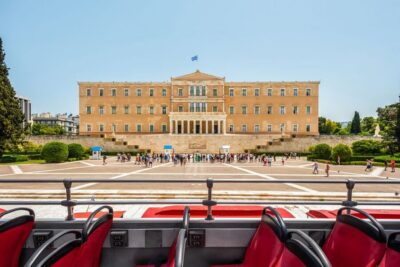
City Sightseeing Athens, Piraeus & Beach Riviera Hop-On Hop-Off Bus Tours
Read our review →
Hop on Hop Off Classic tour of Athens, Piraeus & Beaches
Read our review →
Big Bus Athens Hop-On Hop-Off with optional Piraeus & Riviera
Read our review →
Athens Shore Excursion: Athens and Piraeus Hop-On Hop-Off Bus Tour
Read our review →
City Pass with Acropolis, Museums, Hop-On Hop-Off Bus
Read our review →Browse the lists this tour appears in