Review · TOURS
Antigua: Villages Tour on Chicken Bus
Antigua’s old streets are only part of the story. This half-day ride takes you into nearby villages aboard a brightly painted Guatemalan chicken bus, with stops for chocolate, loquat products, village traditions, jade, and macadamias. Guides such as Juan Jesus, Esteban, Felix, and Katy are known for bringing local history and everyday life into the conversation.
I like the way this tour supports family-run producers instead of keeping you inside Antigua’s tourist center. I also like the variety: one stop explains chocolate, another shows a communal washing area and a colonial church, and Valhalla connects farming with work in indigenous communities.
The main thing to understand is that this is not a public bus ride. The bus is a genuine former chicken bus, but it is reserved for the group, so you will not be sharing a route with local commuters. That makes the ride easier and more comfortable, but less spontaneous than some people expect.
Key points to know before you book
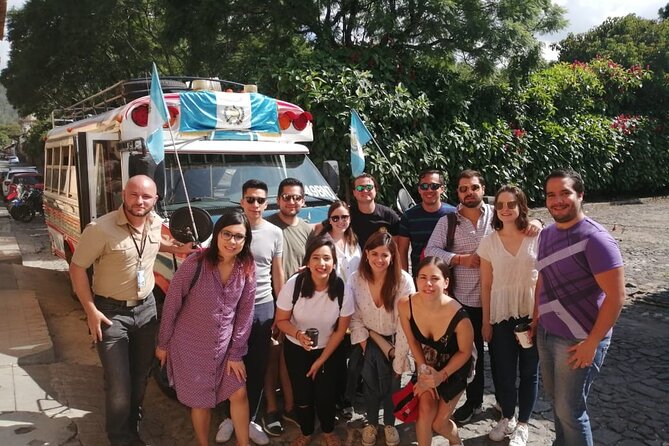
- A real former chicken bus, used privately: You get the colorful bus experience without the crowded public route or frequent village-to-village transfers.
- Three distinct stops: San Juan del Obispo focuses on chocolate and loquat, San Pedro Las Huertas offers village views and local traditions, and Valhalla centers on macadamia farming.
- Guides make the difference: Juan Jesus, Esteban, Felix, Katy, and other bilingual guides have been praised for clear explanations, humor, and flexibility.
- A good way to leave Antigua: You see farmland, small communities, volcano views, and working family businesses in about five to six hours.
- Tastings are part of the day: Expect chocolate, loquat products, snacks, and bottled water. Lunch is not included.
- Small-group format: The group can reach 15 people, with free cancellation up to 24 hours before departure.
Why this chicken bus ride is different from an Antigua walking tour
A walking tour gives you Antigua’s stone streets, churches, courtyards, and ruins. This excursion gives you the area around the city. In a single morning or afternoon, you move from urban colonial architecture to farming villages and small production businesses.
The bus itself is part of the appeal. In Guatemala, the term chicken bus commonly refers to a brightly painted former American school bus used for public transport. Here, the vehicle is used only by the tour group. That distinction matters. You get the look, color, and feel of the vehicle, but not the full public-transit experience.
I see this as a practical compromise. You cover more ground than you could on foot, and the guide can talk while you ride. You also avoid trying to piece together separate local buses to reach villages that are not connected by one simple route. If your main goal is to ride with local residents, this will not fully meet it. If your goal is to see the countryside and several small businesses in a half-day, it makes good sense.
The group size can reach 15 people. That is still small enough for a personal guide in most situations, though a full vehicle will feel less intimate than a private outing. The strongest part of the experience is likely to be the guide. Juan Jesus, Esteban, Felix, and Katy have all been singled out for their humor, language skills, cultural explanations, and willingness to adjust the pace.
More routes around the world:
- Mt Fuji and Hakone 1-Day Bus Tour Return by Bullet Train
★ 5.0 · 26,383 reviews - Barcelona: 24 or 48-Hour Hop-On Hop-Off Bus Tour
★ 4.4 · 20,872 reviews - London: Warner Bros. Studio Harry Potter Tour & Branded Bus
★ 4.7 · 19,194 reviews
San Juan del Obispo: chocolate, loquat, and a broad valley view
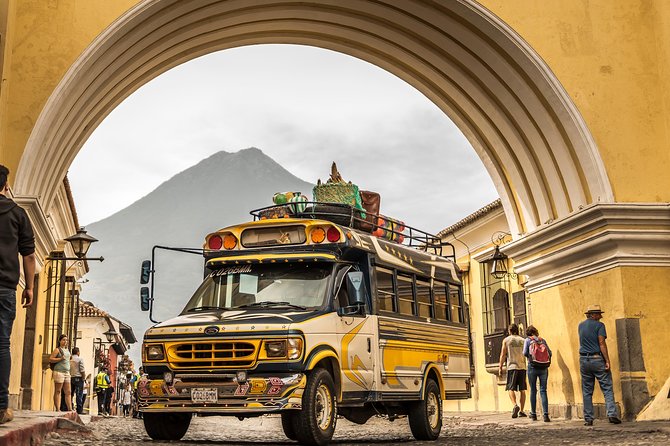
The first stop is San Juan del Obispo, a village with a plaza that opens toward the surrounding valley. It is a good first change of pace from Antigua. Instead of simply looking at old buildings, you start seeing how communities outside the city work and produce goods.
The chocolate visit is family owned and has continued for more than five generations. You learn how cacao becomes the warm chocolate drink associated with Guatemala, then have a tasting. This is not just a quick sweet sample. The useful part is seeing the hand-worked process and connecting the finished drink with a local family business.
I especially like this stop for anyone interested in food traditions. Chocolate is familiar around the world, but the preparation and drink culture here give it a local setting. Your guide can also answer questions about the ingredients, family production, and the place of chocolate in Guatemalan life.
Just around the corner is a loquat museum. Loquat is a small golden fruit that is turned into wine, jams, and preserves in the village. You can sample these products, giving the stop a second flavor and a clear sense of place.
The stop lasts about an hour. That is enough time for an explanation and tasting, but you should not expect a long museum visit or a full cooking class. The focus is on meeting small producers and trying what they make. The tour includes snacks, which helps, but lunch is not part of the price.
San Pedro Las Huertas: a working village with volcano views
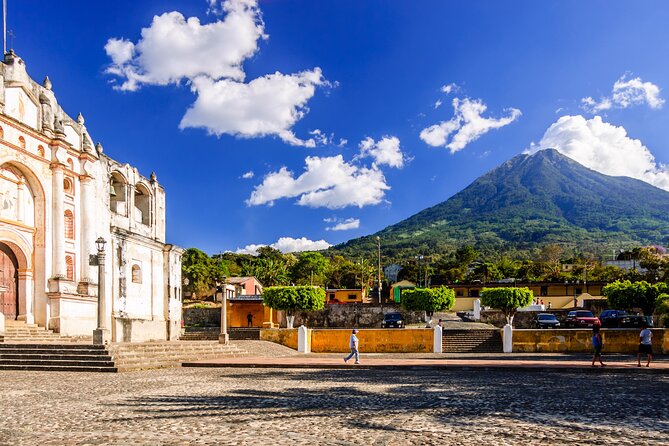
San Pedro Las Huertas feels more residential and agricultural. The name refers to its gardens and farm production, including tomatoes, beans, and lettuce. The stop gives you a look at a village shaped by cultivation rather than souvenir shopping.
You walk through quiet streets and see a traditional communal sink. Several washing places allow residents to use the same facility, an everyday feature that says a great deal about how public spaces serve a community. It is the sort of detail easy to miss if you only visit Antigua’s central sights.
The village plaza also has a baroque Spanish Colonial church. From the area, you can sometimes frame views of Fuego and Agua volcanoes. The exact visibility will depend on clouds and weather, but the setting offers one of the clearest chances during the tour to photograph rural life with volcanoes behind it.
This is a good stop for slowing down. San Juan del Obispo is about products and tasting. San Pedro Las Huertas is about streets, farming, religious architecture, and shared community facilities. The contrast keeps the day from feeling like a string of shop visits.
A jade factory may be added if everyone in the group agrees. That point is worth noting. Jade is an important Guatemalan craft, but the factory is not presented as a guaranteed stop on every departure. If it matters to you, ask about it when booking or at the start of the tour.
The same practical advice applies to shopping. Past groups have visited jade, textile, coffee, wine, and chocolate businesses during different versions of the experience. You should have opportunities to see local goods, but the exact mix may vary. The tour is designed around community producers, not a fixed factory schedule with every possible product included.
Passing the first Spanish capital and its farmland
Between village stops, the bus passes through the site of the first capital established by the Spanish Crown in the Americas. The drive also opens onto farmland where flowers and vegetables are grown for both local use and international markets.
This section is easy to underestimate. You are not stopping at every field, but the guide can help connect what you see from the road with the region’s economy. Antigua is a handsome colonial city, yet it depends on the farms and communities around it. The ride makes that relationship visible.
For me, this is one reason the excursion is more useful than a simple scenic drive. You are not just looking at green fields from a window. You are getting context about what is grown, who produces it, and how the surrounding villages support the former capital.
Same city, a different seat on a different deck:
- Rome: City Sightseeing Hop-on Hop-off Bus with Audioguide
★ 4.0 · 16,045 reviews - Paris: Tootbus Hop-on Hop-off (Optional River Cruise)
★ 4.3 · 15,279 reviews - Amsterdam: Zaanse Schans, Edam, Volendam & Marken Bus Tour
★ 4.6 · 15,034 reviews - 1-Day Tokyo Bus Tour
★ 5.0 · 14,250 reviews
Valhalla: macadamia farming with a community purpose
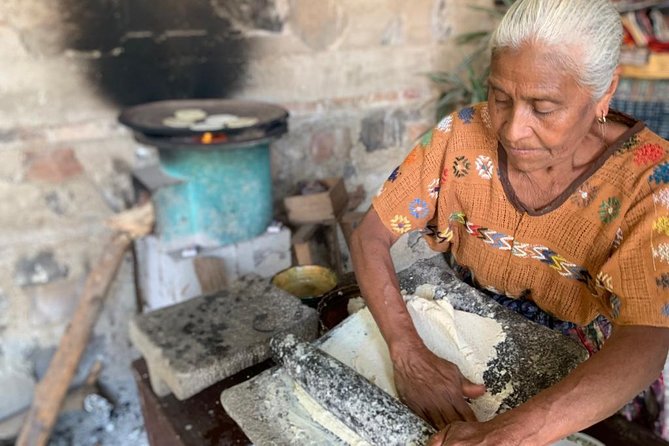
Valhalla Experimental Station is the longest-feeling single subject on the route, with about an hour devoted to an organic macadamia farm. The stop explains how macadamia trees are grown and how the project supports indigenous communities.
You learn about the nut’s uses in food, skin care, and medicine. The guide also discusses the environmental side of the project, sometimes described as the macadamia industry’s footprint or green print. The point is to show how a small agricultural product can connect farming, income, sustainability, and local livelihoods.
This stop has earned special praise from families and couples because it is both hands-on in subject and easy to understand. You do not need prior interest in agriculture to appreciate it. Macadamias are familiar as a snack, but seeing the farm and hearing about other uses gives the product more meaning.
The stop is also a useful counterpoint to the chocolate visit. Chocolate begins with a well-known global ingredient, while the macadamia farm shows a different crop and a different business model. Together, they give you a broader picture of local production.
Do not expect a full farm trek or a long outdoor expedition. The tour description allows about an hour, and the wider day still includes driving and village visits. Think of Valhalla as a guided introduction to an organic farm and its social purpose.
Guides are the heart of the day
The itinerary is appealing, but the guide will shape your experience more than any one stop. Juan Jesus has been praised for answering questions about culture, religion, and local history while keeping the mood light. Esteban is known for clear English and Spanish, flexibility, and careful service alongside drivers such as Antonio.
Felix has been described as especially strong with families, history, local facts, and practical recommendations. Katy has led departures that included chocolate, wine, coffee, and a meal with a local family. These names are useful to know, but they do not guarantee who will lead your particular departure.
The common thread is the guide’s role as interpreter. A communal washing area can look like a photo stop without explanation. A chocolate workshop can feel like a retail visit if nobody explains the process. A good guide gives each place a reason to matter.
Several past departures also included small acts of flexibility, such as stopping for street corn, helping with a food stop, offering restaurant suggestions, or adjusting the order of visits. You should not count on every extra, but the company appears willing to respond to the group when timing allows.
If you have questions about Guatemalan culture, religion, farming, or local history, ask them. This is the sort of outing that improves when you treat the ride as a conversation rather than waiting for a fixed script.
What the $95 price gets you
At $95 per person, this is not the cheapest way to see villages outside Antigua. The value comes from combining transport, a bilingual guide, several admissions or tastings, bottled water, snacks, and a five to six hour schedule.
Doing the same route independently could cost less in transport, but it would require finding the right public buses, working out connections, locating the family businesses, and handling timing on your own. Since the chicken bus is private, the price is buying convenience and interpretation more than a raw local-transit experience.
The price looks strongest if you want variety. In one outing, you get a chocolate process, loquat products, a farming village, a church and communal sink, volcano views, farmland, and a macadamia project. It is less compelling if you only want a scenic ride or if you prefer to spend a full day at one farm or village.
Lunch is not included. Bring money for food or ask the guide for a recommendation. Snacks and bottled water are included, but they should not be treated as a meal.
The tour is often reserved about 27 days ahead, which suggests you should not leave it until the last moment if your Antigua schedule is tight. The meeting point is Casa de la Mandarina at 2a Calle Poniente 2, and the stated start time is 8:30 in the morning. The experience ends back at the meeting point.
The description also advertises a choice of morning or afternoon departures, so check the available time when you book. The fixed meeting information supplied for this departure lists 8:30 am. Confirmation arrives at booking.
Who should book this Antigua villages tour
I would recommend it to you if you have already seen some of Antigua and want a broader sense of the area. It is also a strong first full-day activity for families, since the route changes often and the guide can explain rather than simply point out sights.
The tour suits people who enjoy food production, small businesses, village architecture, agriculture, and local stories. It can work well for solo visitors, couples, friends, and families. One family completed it with a three-year-old, and the guide was attentive to the child.
You should think twice if you want a fully unscripted public-bus experience. This is a private vehicle with a planned route. You should also be comfortable with a day that includes tastings and local businesses, since shopping opportunities may form part of the community-support model, even though there is no pressure to buy.
Most people can participate, and service animals are allowed. The tour operates near public transportation, but the supplied information does not list detailed mobility or accessibility conditions, so ask before booking if you have specific needs.
Free cancellation is available up to 24 hours before the start time. Changes or cancellations inside that window are not accepted for a refund. If the minimum number is not reached and the company cancels, you are offered another date or experience, or a full refund.
Should you book it?
Book this tour if you want to get beyond Antigua without spending a day arranging buses, guides, and village visits yourself. The strongest reasons are the family-run chocolate and loquat stops, the working village setting at San Pedro Las Huertas, the macadamia project at Valhalla, and guides such as Juan Jesus, Esteban, and Felix who add the cultural background that makes each stop more than a quick photo.
Skip it if your idea of a chicken bus means sharing a public route with local passengers. This bus is authentic in origin but private in operation. For most people, that tradeoff brings comfort, time, and a better chance to cover several communities in one outing.
At $95, I consider it a fair value for a small-group, guide-led half-day that includes transport, tastings, water, snacks, and access to places you would not easily link together on foot. It is a practical way to see how Antigua connects to the villages, farms, and family businesses around it.
FAQ
How long does the Antigua villages tour last?
The experience lasts approximately five to six hours.
Where does the tour start?
The meeting point is Casa de la Mandarina, 2a Calle Poniente 2, Antigua Guatemala 03001.
What time does the tour start?
The supplied meeting information lists an 8:30 am start. The experience is also advertised with a choice of morning or afternoon departure, so confirm the available time when booking.
Where does the tour end?
The tour ends back at the meeting point.
Is lunch included?
No. Lunch is not included, although snacks and bottled water are provided.
What is included in the price?
The price includes all fees and taxes, bottled water, snacks, and a bilingual tour guide.
Is the chicken bus shared with local residents?
No. The bus is a genuine former Guatemalan chicken bus, but it is used exclusively for the tour group rather than as a public route.
How many people can join the tour?
The maximum group size is 15 people.
Can I cancel for a full refund?
Yes. You can cancel at least 24 hours before the experience starts for a full refund. Cancellations or changes made less than 24 hours before departure are not accepted for a refund.
Recently added around the world
- London’s Family-friendly Routemaster Bus Tour with Live Guide★ 5.0 · 18 reviews
- London Tour Hop-on Hop-off Bus with Optional Thames River cruise★ 3.5 · 39 reviews
- London Vintage Bus Tour with Cream Tea at Harrods★ 4.0 · 145 reviews
- London Vintage Bus Tour Including River Thames Cruise with Optional Lunch★ 4.0 · 286 reviews
- Christmas Lights Open-Top Bus Tour★ 4.0 · 31 reviews
- London Discovery by Day and by Night Hop-On Hop-off Tours★ 3.5 · 48 reviews
- London: Guided Sightseeing Tour on a Vintage Open-Top Bus★ 4.5 · 17 reviews
- 2 Day London Hop-On Hop-Off River Thames Sightseeing Pass★ 4.5 · 18 reviews
Tours, compared.

Mt Fuji and Hakone 1-Day Bus Tour Return by Bullet Train
Read our review →

Warner Bros. Studio Harry Potter Tour & Branded Bus
Read our review →
Zaanse Schans, Edam, Volendam & Marken Bus Tour
Read our review →