Review · ITALY BUS TOURS
Milan: City Sightseeing Hop-On Hop-Off Bus with Audio Guide
Milan’s four-route bus network gives you more than a quick loop around the Duomo. It reaches Brera, Navigli, CityLife, and San Siro, so you can compare Milan’s grand center with its canals, modern towers, and football stadium. I like the freedom to ride one full circuit for orientation, then hop off when a street or sight deserves more time. I also like the lively audio commentary, which covers local food such as cotoletta alla Milanese and panettone, not just monuments.
The main drawback is Milan traffic. Buses can lose time at lights, and some routes have long waits between vehicles. You also need to locate the correct boarding point, especially at huge Foro Buonaparte, where a vague meeting description can cost you time.
Key points to know before you board
- Four routes share key stops: Change lines around Castello, Duomo, Monte Napoleone, and Cadorna.
- The green route reaches San Siro: You can ride toward the stadium, but a long wait may follow if you get off there.
- The blue route covers Navigli: This is the best choice for seeing Milan’s canal district from the bus.
- Audio comes in 10 languages: English, Italian, Spanish, French, German, Portuguese, Russian, Japanese, Chinese, and Arabic are available, with special commentary for children.
- A 72-hour ticket offers the most breathing room: A single day can cover the highlights, but two or three days make hopping off more practical.
- You pay for sightseeing transport, not admissions: Duomo, La Scala, the Last Supper, museums, and San Siro entry tickets are separate.
Four bus routes, one useful Milan overview
At the listed price of $26 per person, this is not simply a ride around the historic center. Your ticket covers four connected lines, and that matters because Milan’s sights are spread farther apart than a first look at a map may suggest.
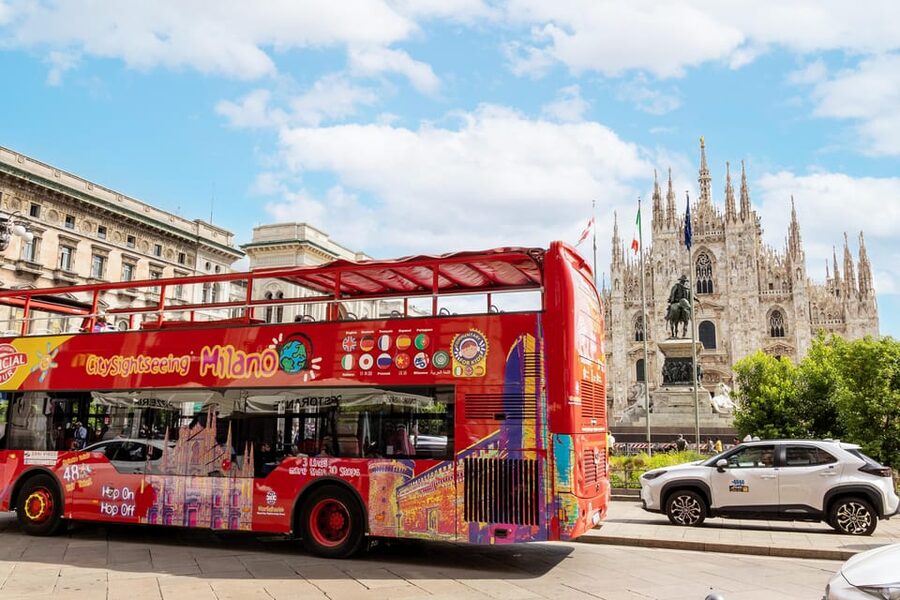
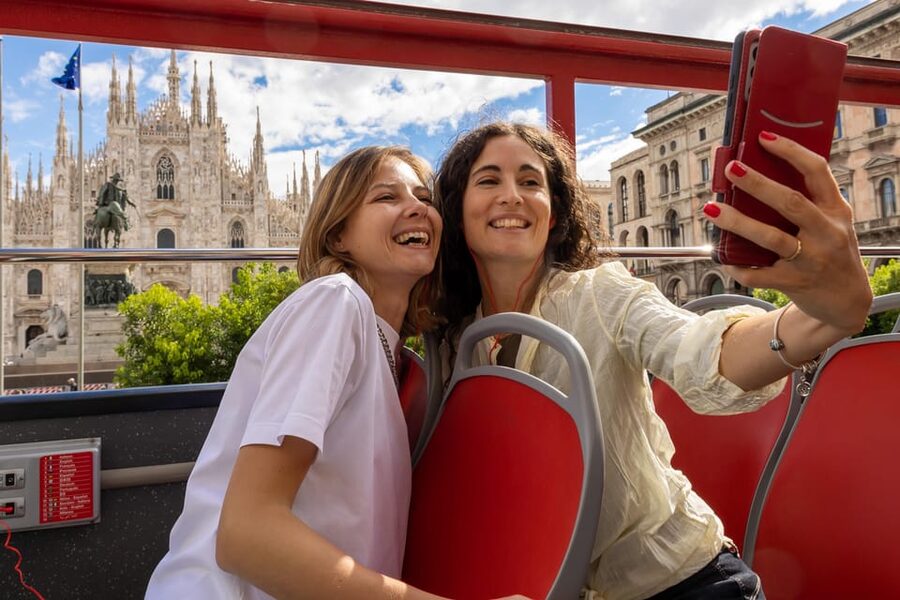
The buses are open-top panoramic vehicles, though some have air conditioning. On a sunny day, the upper deck gives you a clear view of facades, towers, street signs, and the changing shape of the city. On a hot afternoon, the lower deck may be more comfortable. Wi-Fi is included, along with a city map and free walking tours through the operator’s mobile app in five languages.
You can start Lines A, C, and D at Foro Bonaparte. Line B begins at Piazza Duomo. Shared stops let you change routes, but check the destination board before boarding. The four lines overlap often, so it is easy to ride past the point where you meant to switch.
More Hop-On Hop-Off Bus Tours in Italy
- Rome: City Sightseeing Hop-on Hop-off Bus with Audioguide
★ 4.0 · 16,045 reviews - Rome: Big Bus Hop-on, Hop-off Open-Top Sightseeing Tour
★ 4.1 · 9,537 reviews - Florence: Hop-on Hop-off Bus Tour: 24, 48 or 72-Hour Ticket
★ 4.0 · 6,283 reviews
Line A: Castello, the Duomo, and Milan’s grand center
Line A begins at Castello, beside Castello Sforzesco and the broad green spaces of Parco Sempione. The castle is one of the most useful first stops in Milan because it combines a major landmark with museums and a large park. Get off here if you want time inside the castle complex or a walk toward the Arco della Pace.
The bus then passes Cadorna, a practical transport point near the castle and central Milan. Cenacolo serves the area around Leonardo da Vinci’s Last Supper. The bus does not include admission, and seeing the painting requires a separate ticket, so treat this stop as transport to the neighborhood rather than a guaranteed entry.
At Corso Magenta, you are near elegant streets, historic buildings, and several important cultural sights. This is a good stop for a slower walk away from the most crowded part of the center.
Duomo is the obvious anchor. Milan Cathedral, the Galleria Vittorio Emanuele II, and La Scala are all central to your visit, though the bus ticket includes none of their admission fees. The audio commentary gives context as you ride, but leave time to explore on foot. The square can be confusing when several buses and operators gather there, so look for the correct company and route markings.
Line A continues to Monte Napoleone, Milan’s luxury shopping district, then Manin and Moscova. These stops are useful for seeing a more polished, modern side of the city and for reaching the Brera and Porta Nuova areas. If your interest is mainly the cathedral and La Scala, you may not need the full route. If you want to understand Milan beyond its postcard center, stay on.
Line B: Central Station, Porta Venezia, and city life beyond the cathedral
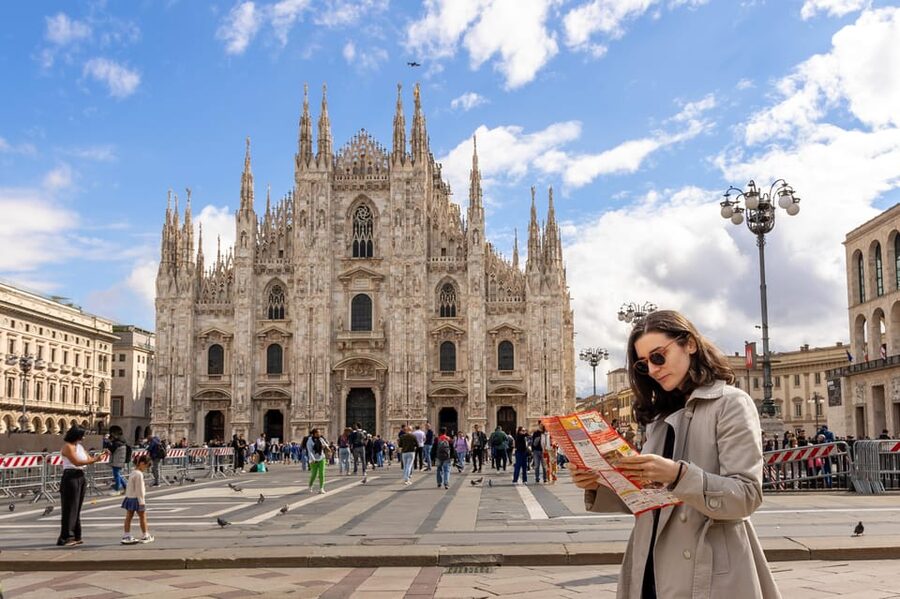
Line B starts at Duomo, making it easy to change from the central sightseeing area. It shares Monte Napoleone and Manin with Line A, then heads toward Repubblica and Palazzo Lombardia.
Palazzo Lombardia takes you into the newer business district, while Stazione Centrale shows a different piece of Milan: the city’s large rail gateway and one of its most useful transport areas. This part of the ride helps you see how quickly Milan shifts from old stone streets to modern offices and broad avenues.
The route continues through Buenos Aires, Porta Venezia, and San Babila. Porta Venezia is especially handy if you want to explore a lively neighborhood rather than collect monuments. San Babila brings you back toward the Duomo and the central shopping streets.
This route works well for a first ride because it connects several parts of Milan without requiring you to master the metro immediately. It is less useful if you plan to spend all day around the cathedral, where many attractions are already close enough to reach on foot.
Line C: CityLife, the stadium, and Milan’s modern edge
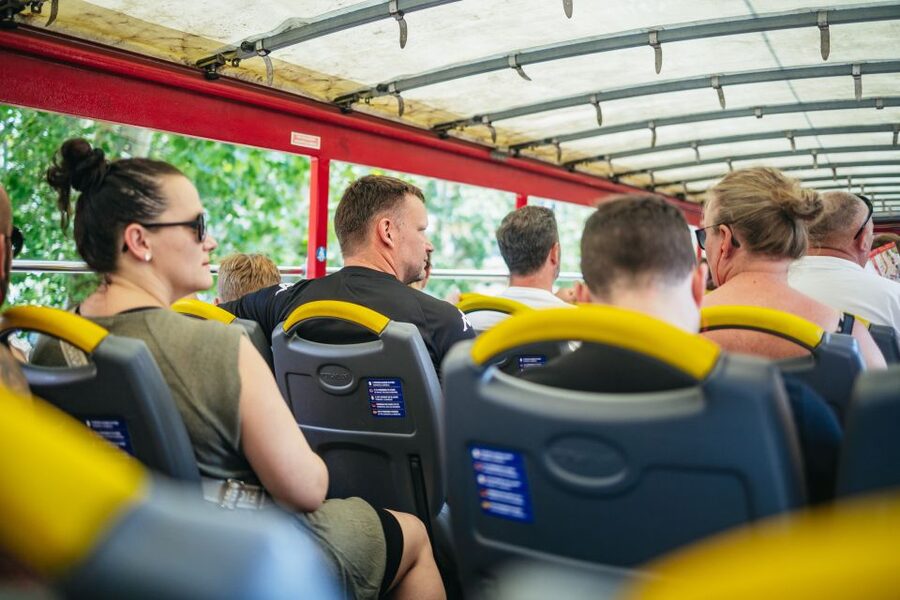
Line C is the longest and most varied circuit. It starts at Castello and passes Triennale, the design and art center in Parco Sempione. From there, it reaches Arco della Pace, one of the city’s most photogenic monumental gateways.
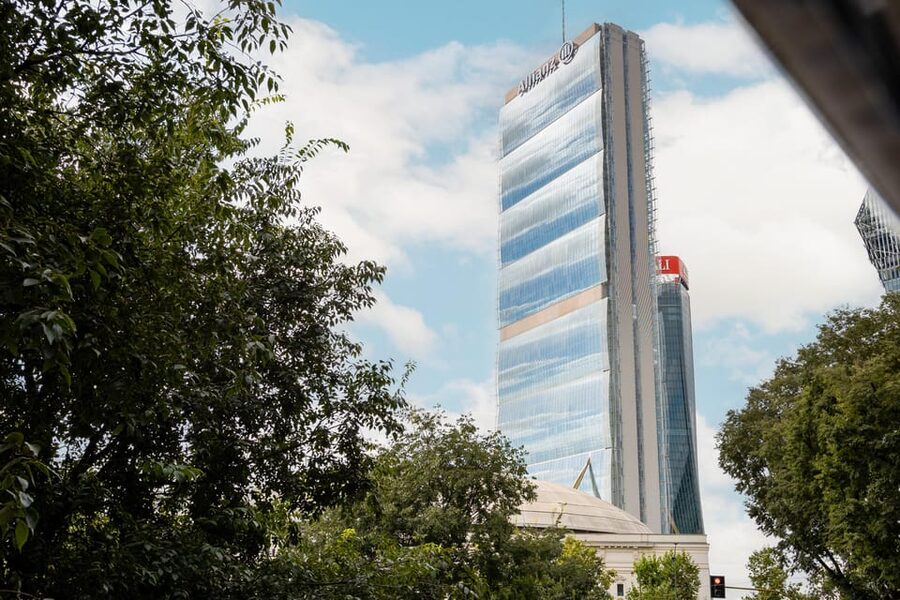
The route then moves toward CityLife, a modern district of towers, open public areas, and newer architecture. Casa Milan is the stop for the football club’s museum and related attractions. Entry is not included, but the stop is worthwhile if football is high on your list.
Next come Mico, the Congress Centre, Lotto, Montebianco, and Lido. The circuit then continues to Ippodromo and Stadio San Siro. San Siro is one of the tour’s most distinctive destinations because it lies well beyond the usual central sights. It gives you a reason to see a part of Milan you might otherwise skip.
Plan carefully before getting off at the stadium. One ride can stop for only a few minutes, while the next bus may not arrive for roughly 90 minutes. That is not a problem if you want to visit the stadium, but it is awkward if you only wanted a quick photograph.
The return leg includes Lotto, Monterosa, Buonarroti, Pagano, Conciliazione, and Parco Sempione. These stops connect the western side of the city back to the castle area. Because Line C is long, traffic can affect your plans. I would use it for a dedicated half-day circuit rather than trying to squeeze it between timed museum reservations.
More Sightseeing Bus Tours in Italy
- City Sightseeing Rome Hop-On Hop-Off Bus Tour
★ 3.5 · 5,446 reviews - Rome: Hop-on Hop-off Sightseeing Bus Tour with Audioguide
★ 4.1 · 4,801 reviews - Rome: Big Bus Hop-on, Hop-off Open-Top Sightseeing Tour
★ 3.5 · 2,580 reviews - Rome: City Highlights Open-Top Bus Night Tour
★ 4.1 · 2,038 reviews
Line D: Navigli, Brera, and the best neighborhood contrast
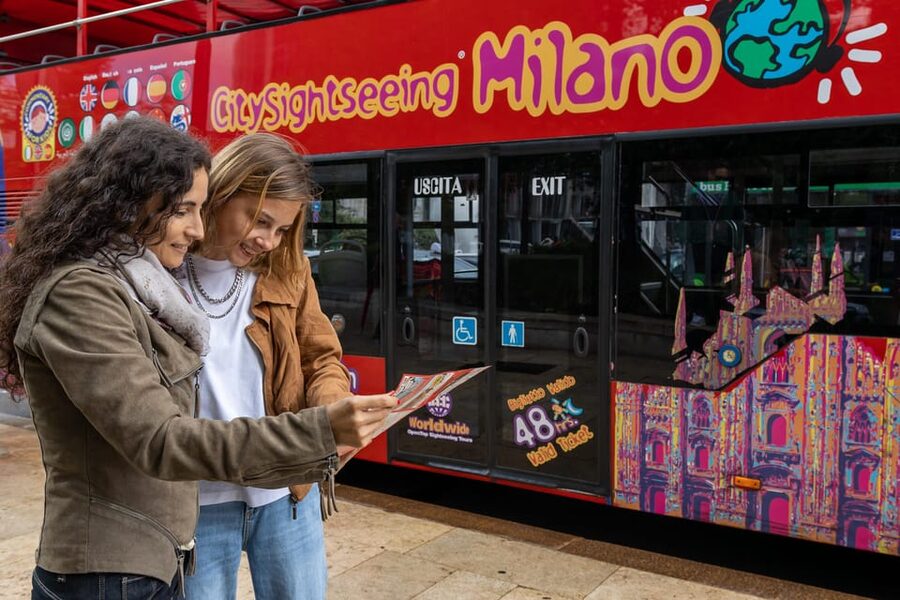
Line D is particularly useful because it combines central landmarks with Milan’s canal district. Starting at Castello, it follows the familiar Cadorna and Cenacolo stops before heading to Navigli.
Navigli is one of the city’s most atmospheric areas, with canals, bridges, restaurants, and evening activity. From the bus, you get a useful first look, but you will want to get off and walk along the water. The bus gives you the orientation; your feet provide the details.
The route continues to Piazza XXIV Maggio, then returns toward Duomo and Monte Napoleone. Its final stop, Brera, is one of the best places to hop off for narrow streets, galleries, cafes, and a more intimate Milan feel.
Line D is a strong choice if you have one full day and want variety. You can see the castle, cathedral area, canals, and Brera without committing to four separate transport plans. The drawback is repeated central sections. Several lines pass through the same areas, so do not assume that every route offers a completely different tour.
How the audio guide adds value
The recorded commentary is available in 10 languages: Spanish, Chinese, English, French, German, Italian, Russian, Portuguese, Japanese, and Arabic. Italian, English, and Spanish are also listed among the host languages at the main stops.
The best parts are the small cultural details. You hear about La Scala and Castello Sforzesco, but also about the recipe for cotoletta alla Milanese and the background of panettone. That makes the ride feel less like a list of buildings and more like an introduction to Milanese life.
There is special audio commentary for children, a useful touch for families who may lose interest during a long architectural explanation. Headphones are provided, but test the plug as soon as you sit down. Some seats have had faulty audio connections, and moving to another seat or changing the headphones may be necessary.
If you have hearing loss, the recorded format may not work well for you. Ask staff about the available setup before settling in. The service has helpful staff at major stops, but the audio system itself remains central to the experience.
How long should you book?
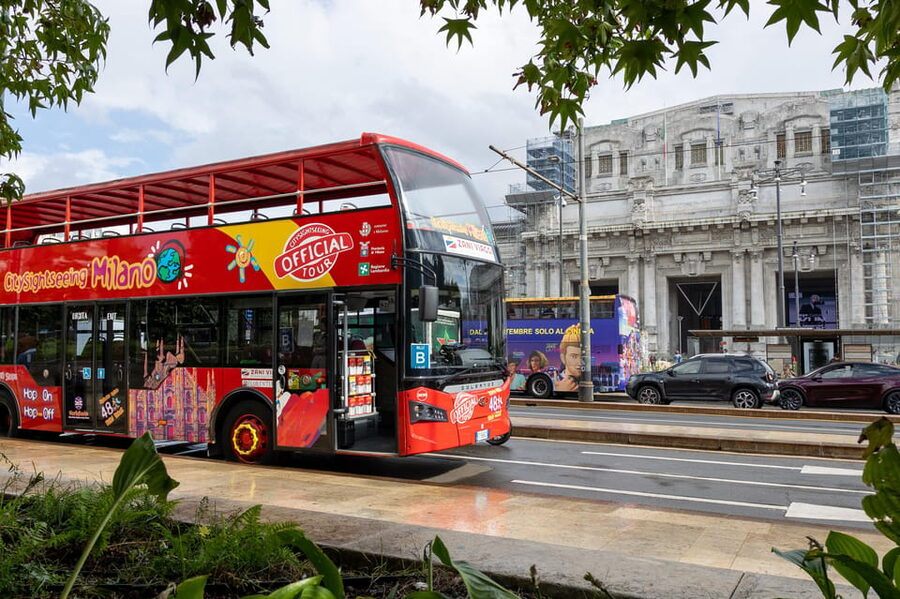
A one-day ticket works if your aim is a broad look at Milan. You can ride part of several routes, take photographs, and get your bearings. It is also the best fit for a short stopover, especially if you do not want to spend the whole day walking.
A two-day ticket gives you time to combine riding with actual visits. Use one day for the historic center, Brera, and Navigli, then another for CityLife and San Siro. You will be less likely to skip a museum or hurry away from a neighborhood because the next bus is due.
A three-day ticket suits a slower visit. It is also the practical option if you want to use the bus as a flexible sightseeing connection rather than a single tour. The 72-hour weekend rate from June through September includes the Milan Night Tour, according to the activity terms. Confirm the exact operating dates when booking.
Keep your schedule loose. One departure may be delayed by traffic, and a missed bus can mean a wait of around 50 minutes or more on some sections. Milan is easy to explore on foot in the center, so combine the bus with walking instead of treating every stop as a bus-only destination.
Finding the bus and avoiding a frustrating start
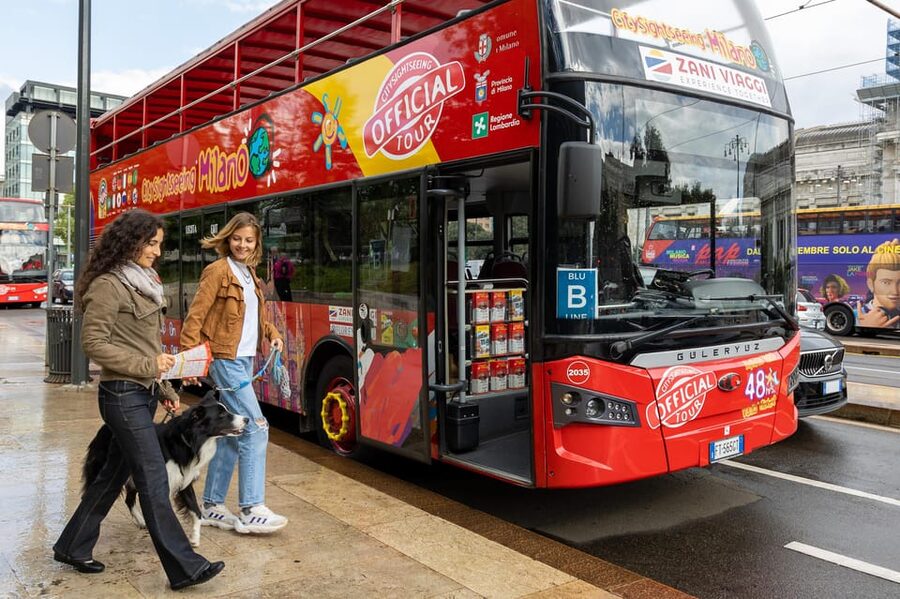
The stated meeting point for Lines A, C, and D is Foro Bonaparte. That is a large area, not one small doorway. Head toward the corner with the travel information point and look for the sightseeing bus staff rather than relying only on a photo in your booking details.
Line B begins in Piazza Duomo. Several sightseeing buses operate in this area, so check the logo, color, and route before boarding. It is worth taking a moment to confirm your voucher or ticket instructions at the start, since an unclear exchange process can delay you.
Staff are generally present at the main stops and can help with route changes. Still, download or open the map before leaving the first stop. Knowing your next change point saves time, especially when buses arrive full.
Price, value, and who should use it
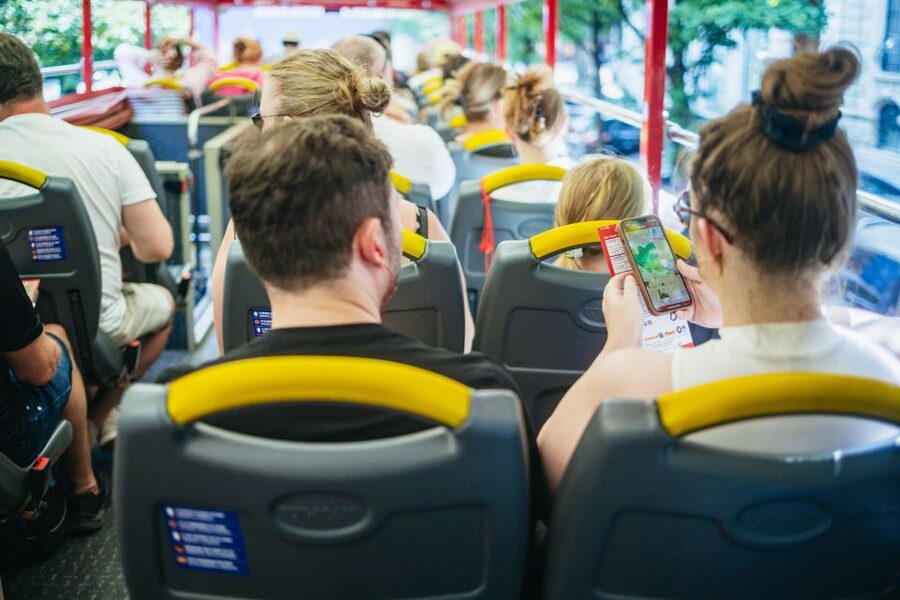
At $26 per person, the ticket can be good value if you use more than one route or need transport to distant stops such as San Siro, CityLife, or Navigli. It is less compelling if you plan to stay around the Duomo, La Scala, and Galleria, since much of that central area is walkable.
I would recommend it most strongly for a first visit, a one-day stay, families, and anyone who wants a broad view without walking all day. It also helps you choose where to return later. You can ride past an area, note what catches your eye, then come back on foot.
It is not the best choice if you dislike waiting in traffic or want a tightly timed schedule. It is also not an admission pass. Budget separately for the Duomo, La Scala, museums, the Last Supper, Casa Milan, and any San Siro visit.
Should you book the Milan bus tour?
Book it if you want to see Milan’s major districts in one flexible system, especially if Navigli, Brera, CityLife, or San Siro are on your list. Choose at least two days if you want to hop off often and explore properly.
Choose one day if you mainly need orientation and panoramic views. Skip it if your plans are limited to central Milan and you prefer walking. For most first-time visitors with limited time, the strongest plan is simple: ride one full loop early, use Line D for Navigli and Brera, then reserve Line C for San Siro only if that stop matters to you.
FAQ
How many bus lines are included?
The ticket includes four connected bus lines: A, B, C, and D.
Where do Lines A, C, and D begin?
The first stop for Lines A, C, and D is at Foro Bonaparte.
Where does Line B begin?
Line B begins in Piazza Duomo.
Which route goes to Navigli?
Line D includes a Navigli stop, along with Piazza XXIV Maggio, Duomo, Monte Napoleone, and Brera.
Which route goes to San Siro Stadium?
Line C goes to Stadio San Siro. The route also passes Casa Milan, CityLife, the Ippodromo, and several western Milan stops.
What languages are available for the audio guide?
The audio guide is available in Spanish, Chinese, English, French, German, Italian, Russian, Portuguese, Japanese, and Arabic.
Is there commentary for children?
Yes. Special audio commentary for children is included.
Are attraction entry tickets included?
No. The bus ticket does not include admission to attractions.
Can I use the ticket at night?
A 72-hour weekend ticket valid on Saturdays and Sundays from June through September includes the Milan Night Tour. Check the available dates and conditions when booking.
More routes you ride at your own pace around Italy
- Los Angeles: Hop-On Hop-Off Bus Tour with Audio Guide
★ 3.7 · 2,030 reviews - Zurich: City Bus Tour with Audio Guide and Lake Cruise
★ 4.3 · 1,195 reviews - City Sightseeing Hop-On Hop-Off Bus Tour with Audio Guide
★ 3.0 · 1,083 reviews - Toulouse: City Sightseeing Tour by Bus with Audio Guide
★ 4.2 · 956 reviews
More routes with commentary in your ear around Italy
- Trieste Bus Tour with Audio Guide
★ 4.4 · 2,170 reviews - London: Christmas Lights Bus Tour With Live Guide
★ 4.0 · 5,410 reviews - Big Bus Dublin Hop-on, Hop-off Sightseeing Tour with Live Guide
★ 4.5 · 2,387 reviews - London by Night Bus Tour with Christmas Lights and Live Guide
★ 4.5 · 2,040 reviews
Recently added around Italy
- Turin: Cinema Museum and Bus Tour★ 4.4 · 200 reviews
- Turin: 24/48-Hour Hop-On Bus & National Automobile Museum★ 4.4 · 52 reviews
- City Sightseeing Turin Hop-On Hop-Off Bus Tour★ 3.5 · 104 reviews
- From Naples: Pompeii and Vesuvius by Bus★ 4.1 · 258 reviews
- Milan Hop-On Hop-Off Bus Tour with Four Routes★ 3.5 · 1,214 reviews
- Chianti Wine Tour with Tuscan Lunch Open Top Van★ 5.0 · 89 reviews
- From Livorno: Guided Day Trip to Florence and Pisa by Bus★ 4.6 · 49 reviews
- CAPRI – DIY Day Trip Package – BoatTour, BlueGrotto,Bus&Lunch★ 4.5 · 49 reviews
Hop-On Hop-Off Bus Tours, compared.
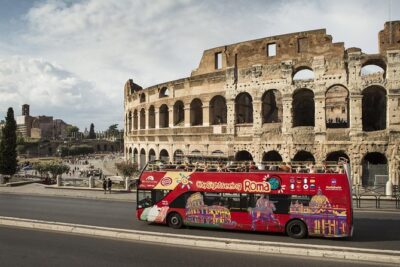
City Sightseeing Hop-on Hop-off Bus with Audioguide
Read our review →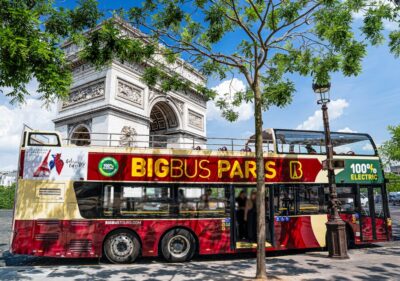
Tootbus Hop-on Hop-off (Optional River Cruise)
Read our review →Big Bus Hop-On Hop-Off Tour with Optional Cruise
Read our review →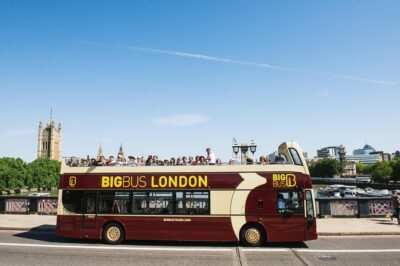
London Big Bus Hop-On Hop-Off Tour with Optional River Cruise
Read our review →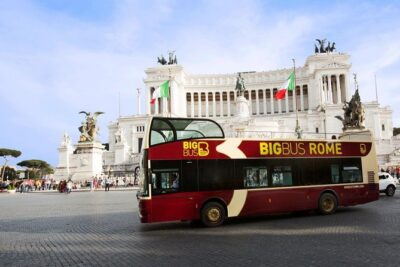
Big Bus Hop-on, Hop-off Open-Top Sightseeing Tour
Read our review →