
Review · USA BUS TOURS
Kennedy Space Center: Entry Ticket with Explore Bus Tour
The biggest surprise here is scale. The Explore Bus Tour takes you beyond the main visitor complex toward the Vehicle Assembly Building and historic Launch Complex 39, with stops for photographs before continuing to the Apollo/Saturn V Center. I like that the ride adds real context to the rockets and spacecraft you see indoors, and I like that the guide turns a large, complicated spaceport into a story you can follow. The main drawback is time: even a full day may not cover everything.
I also like the way the ticket combines the tour with Space Shuttle Atlantis and hands-on attractions such as Shuttle Launch Experience. Guides including Kevin, Ken, Jim, Bart, and David have been praised for clear, lively explanations, but the quality of your day still depends on pacing and the schedule. If you can, plan for two visits within six months rather than trying to rush every exhibit into one afternoon.
Key points to know before you book
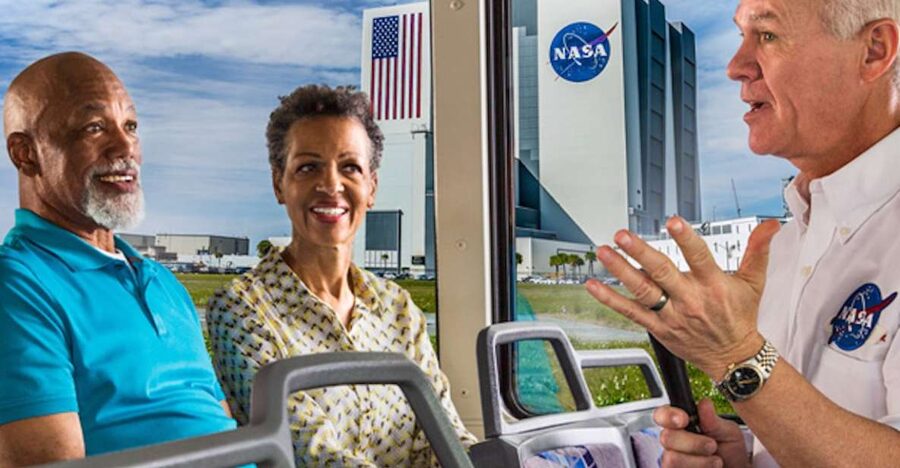
- The Explore Tour reaches places the regular bus tour does not: You stop for closer views and photos of the Vehicle Assembly Building, Launch Complex 39, and other spaceflight sites.
- The Apollo/Saturn V Center is the emotional high point: The enormous Saturn V rocket is displayed indoors, where you can stand beneath the largest rocket ever flown.
- Space Shuttle Atlantis deserves serious time: The shuttle display is one of the most powerful parts of the complex, not a quick photo stop.
- One day can feel rushed: The Explore Tour, Apollo/Saturn V Center, films, shows, simulators, and exhibit halls can easily fill the day.
- The regular and Explore bus tours are different: You do not need to take both, and both finish at the Apollo/Saturn V Center.
- A launch can change the day: Check the launch schedule before booking, since seeing a rocket launch adds an unforgettable bonus but may affect your timing.
Why the Explore Tour is worth adding
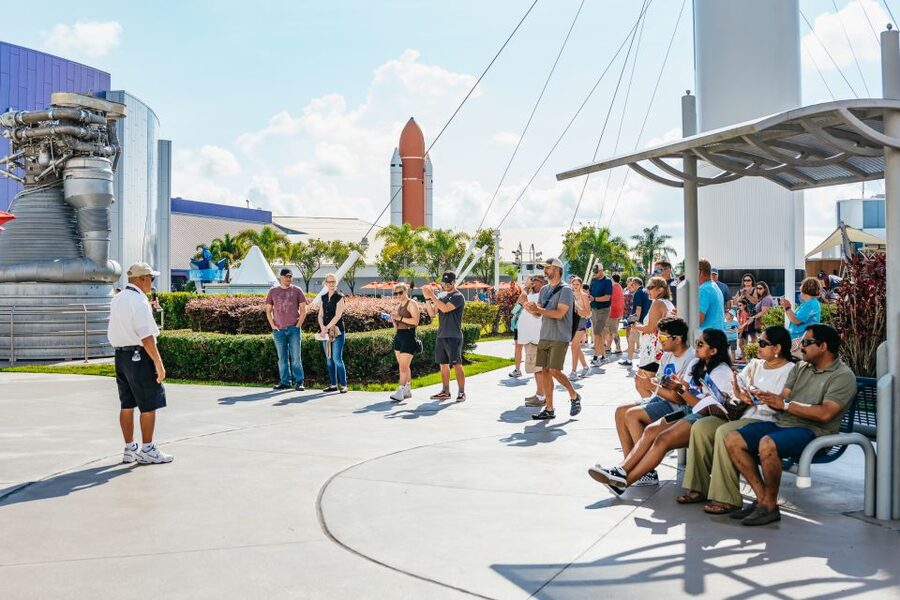
Kennedy Space Center Visitor Complex is not simply a museum with rockets parked outside. It is a collection of large exhibit halls, theaters, simulators, historic spacecraft, and access points around an active spaceport. The regular admission ticket gives you plenty to do, but the Explore Tour helps you understand how the separate pieces fit together.
The standard visitor complex bus tour takes you toward the Apollo/Saturn V Center. The Explore version goes farther in spirit and in practice. You ride with a space expert and make several stops along the way, rather than simply looking through a bus window at distant buildings.
That difference matters. The Vehicle Assembly Building is so large that photographs often fail to show its size. Launch Complex 39 carries the weight of the Apollo and shuttle eras, while the surrounding area also points toward current and future missions. You get time to pause, look, and take pictures instead of treating the spaceport as scenery.
The guide is part of the value. A strong guide can explain what you are looking at, why the buildings matter, and how NASA’s past work connects with present operations. Guides named David, Jim, Kevin, Ken, and Bart have all been praised for friendly, clear presentations. You should still expect the tone and style to vary from one departure to another, but the guided commentary is one reason to choose Explore rather than admission alone.
More tickets worth holding around the USA:
- Boston: Hop-On, Hop-Off 20+ Stops Trolley Ticket
★ 4.2 · 607 reviews - Florence: Hop-on Hop-off Bus Tour: 24, 48 or 72-Hour Ticket
★ 4.0 · 6,283 reviews - Naples: Hop-on Hop-off Bus Tour 24-Hour Ticket
★ 4.3 · 5,157 reviews
Starting at the visitor complex
Allow a full morning or day if you can. The center opens up a large menu of attractions, and many of them deserve more than a quick look. The last entry is at 4:00 PM, so an afternoon arrival can leave you with too little time for the bus tour and major exhibit halls.
Your exact meeting point may depend on the option you book. Pay attention to the boarding area, since the Explore Tour has a separate line from the regular Kennedy Space Center bus tour. Arriving early gives you time for security and helps prevent the common mistake of joining the wrong queue.
The complex is wheelchair accessible. You can also expect plenty of walking and standing. One practical complaint is limited seating in some areas, so comfortable shoes, water, and sensible pacing will help. Water refill fountains are available, and carrying a bottle is useful in Florida’s heat.
Food and drinks are not included. You can buy them at the center, but bringing your own meal may help if you want to protect your schedule. With so much to see, a long meal break can cut into exhibit time.
Riding out to the launch area
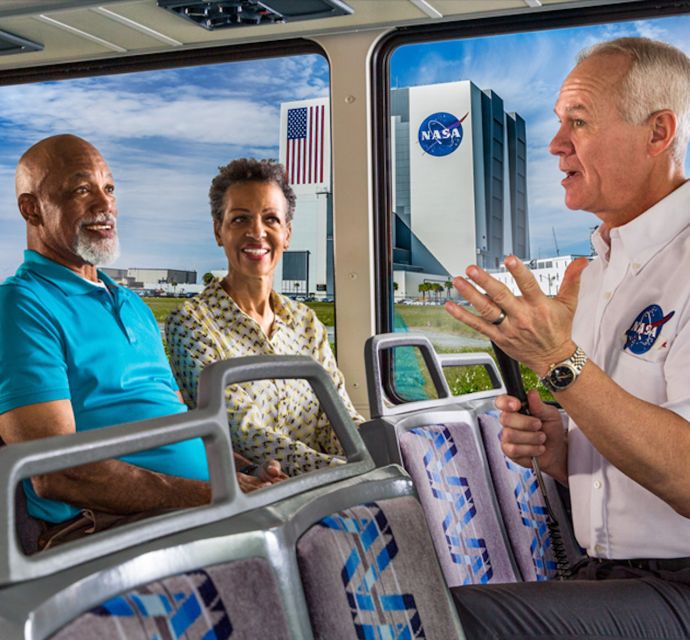
The Explore bus ride is the experience’s most important upgrade. A space expert narrates the route and points out the working and historic parts of America’s multi-user spaceport. The tour is designed to offer more than a drive past buildings, with stops for photographs and closer views.
The Vehicle Assembly Building is a highlight because its size is hard to grasp from ordinary photographs. The building has become one of the visual symbols of American spaceflight, and seeing it from the tour route gives you a better sense of the industrial scale behind each launch.
Launch Complex 39 adds another layer. The site is linked with historic missions, but it is also part of an operating spaceport. That means access is controlled, views can be limited, and the experience is not a walk through every launch facility. One fair assessment is that the platform views may feel less dramatic than you expect, but the stop remains worthwhile because you are seeing a real launch area rather than a recreated display.
Take your camera, but do not spend the whole stop framing pictures. The guide’s explanation gives meaning to what might otherwise be a distant tower, pad, or building. You will get the most from this part by listening first and photographing second.
The extended tour is often described as lasting about three hours. Add time for boarding, stops, the Apollo/Saturn V Center, and the return journey. The return trip to the main visitor complex takes about 15 minutes after the Apollo/Saturn V Center, and you should allow roughly another hour for that center itself.
Standing beneath Saturn V
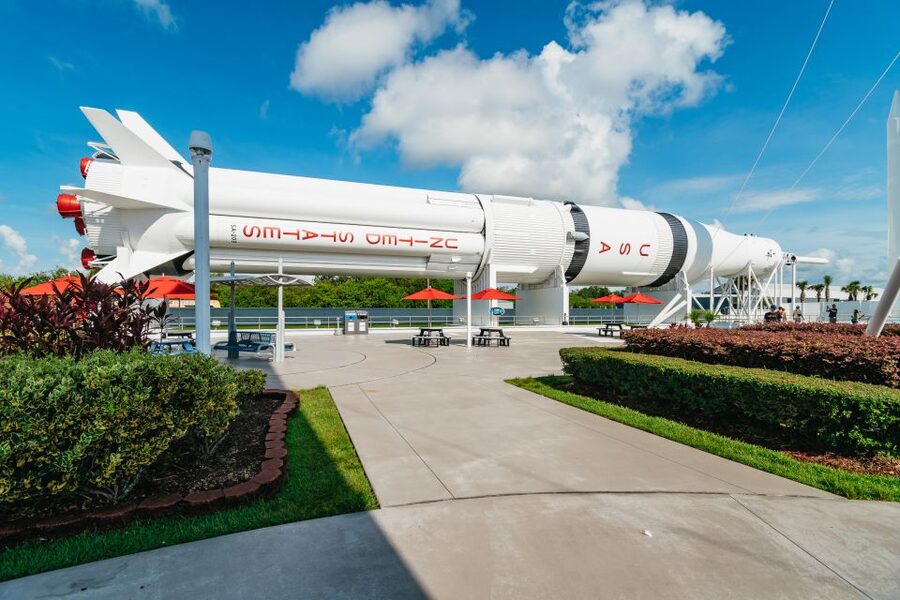
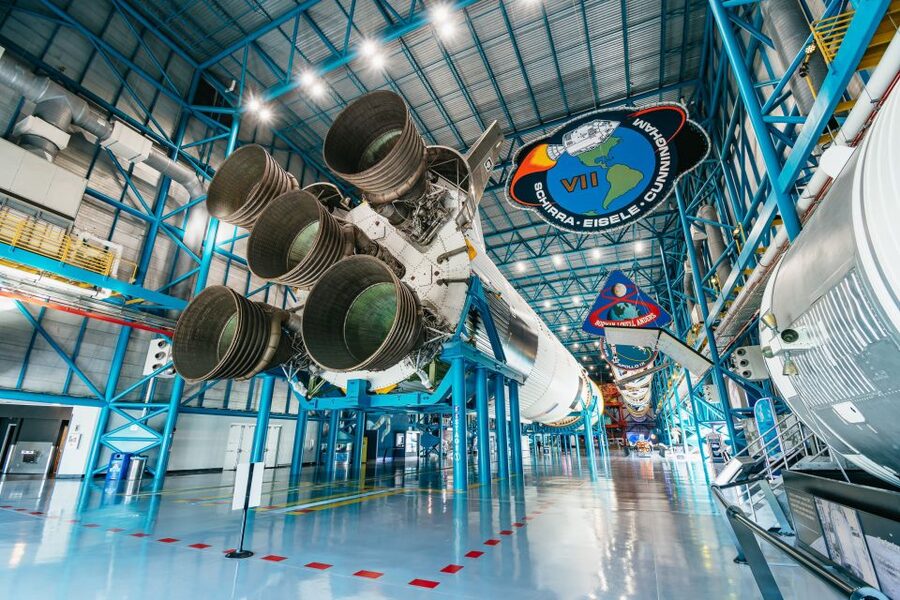
The Apollo/Saturn V Center is where the tour becomes personal. The Saturn V is displayed horizontally, but its size still feels almost absurd when you stand beneath it. This is the largest rocket ever flown, and the indoor setting lets you examine its stages, engines, and scale at close range.
The center focuses on the Apollo era and the people and machines that made lunar missions possible. It is not just another room filled with artifacts. The rocket gives the exhibit a physical center, while the surrounding displays add the human and technical story.
Plan to spend the full recommended hour here. Rushing through after the bus ride would waste one of the strongest parts of your admission. You can also take a moment to absorb the contrast between the huge hardware and the small details of astronaut equipment and mission life.
The regular and Explore bus tours both end at this center. You do not need to book both. After exploring Apollo/Saturn V, you can return to the main visitor complex on the visitor complex bus, with the return journey taking about 15 minutes.
More routes around the USA:
- Grand Canyon West Bus Tour with Hoover Dam and Optional Skywalk
★ 4.0 · 7,224 reviews - Savannah Hop-On Hop-Off Trolley Tour
★ 4.5 · 6,527 reviews - New York: Hop-on Hop-off Sightseeing Tour by Open-top Bus
★ 4.2 · 5,863 reviews - Boston Hop-On Hop-Off Trolley Tour with 13 Stops
★ 4.5 · 5,576 reviews
Space Shuttle Atlantis and the shuttle experience
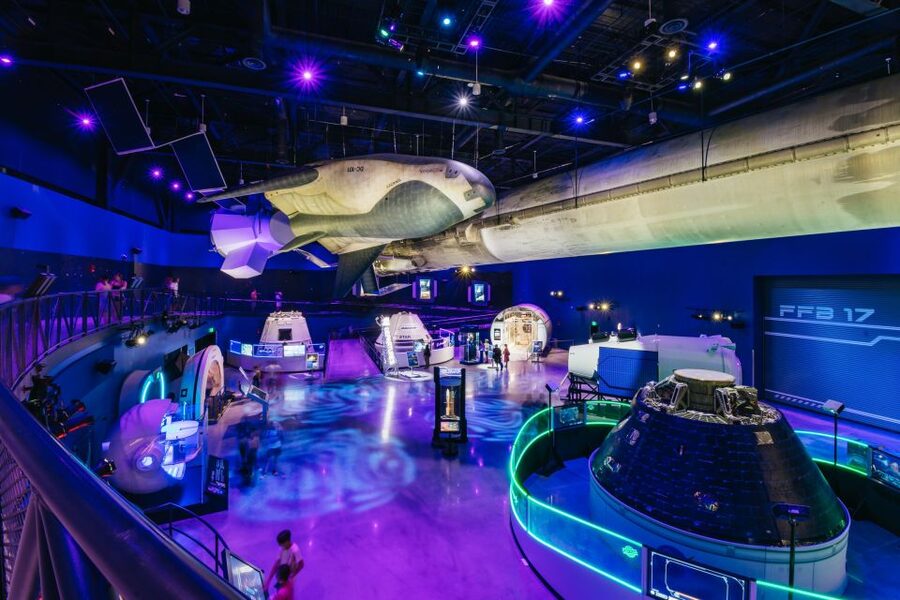
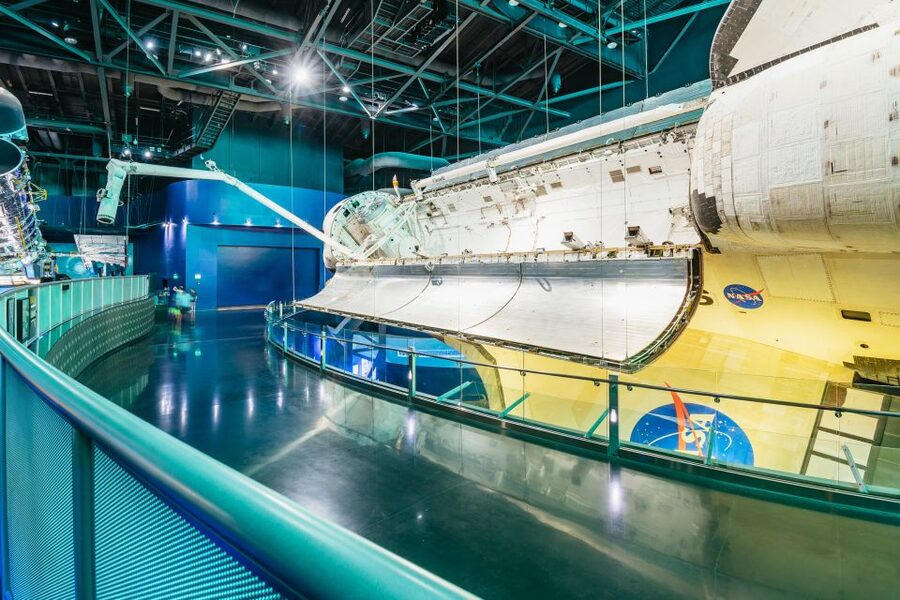
For many people, Space Shuttle Atlantis is the day’s most moving display. The spacecraft is presented in a way that lets you appreciate both its size and its unusual design. Seeing the shuttle in person changes the impression you get from photographs, especially when you notice how compact the crew area is compared with the broad wings and cargo bay.
Give Atlantis more than a quick photo. The exhibit honors the shuttle program while explaining what the spacecraft did and how it operated. It works well for adults who remember shuttle launches, but younger children can also connect with the vehicle’s shape and scale.
Shuttle Launch Experience adds a physical attraction to the museum-style displays. It is a simulated launch experience designed to give you the rumble and motion of liftoff. This is one of the attractions that breaks up the reading and viewing, though people who prefer quiet exhibits may find it less important than Atlantis or Apollo.
You may also find live shows, 3D space films, and a spaceport motion theater included with admission. These are useful on a hot day because they provide air-conditioned breaks while adding explanation and drama. Check the day’s timing when you arrive, since fitting scheduled presentations around the Explore Tour takes some planning.
Gateway and the future of spaceflight

Gateway looks beyond NASA’s earlier programs. The complex presents current and upcoming space exploration work from NASA and commercial partners, then places you in an interactive spaceport setting with one of four immersive journeys to distant worlds.
This section helps balance the nostalgia of Mercury, Gemini, Apollo, and the shuttle program. Without it, the center could feel like a memorial to past achievements. Instead, you see how the space program continues to change.
The interactive simulators are useful for families and for adults who learn best by doing. They also give younger children a break from exhibit text. Still, you should not expect every attraction to suit every age or interest. One parent may spend an hour studying spacecraft hardware while a child prefers the motion theater or simulator.
Journey to Mars: Explorers Wanted adds a live interactive theater presentation about the Red Planet. It is a good stop if you want the center to connect historic NASA missions with future exploration. The presentation also gives the day a sense of direction: you move from early spaceflight, through the shuttle era, toward missions that have not yet happened.
Heroes, legends, and the Rocket Garden
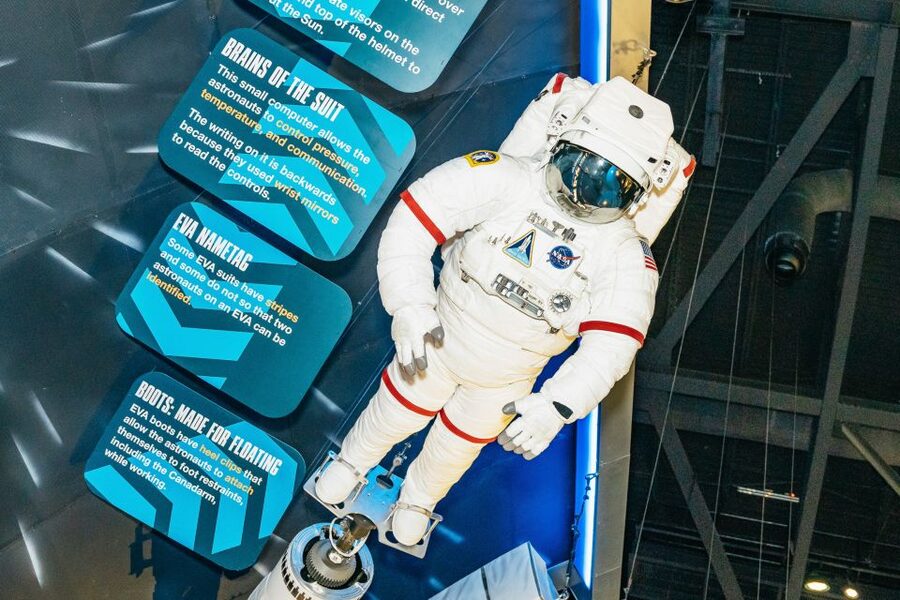
Heroes & Legends, featuring the U.S. Astronaut Hall of Fame presented by Boeing, pays tribute to astronauts from the Mercury, Gemini, Apollo, and Space Shuttle programs. The exhibit puts names and personal stories beside the machines, which helps explain the risks behind the hardware.
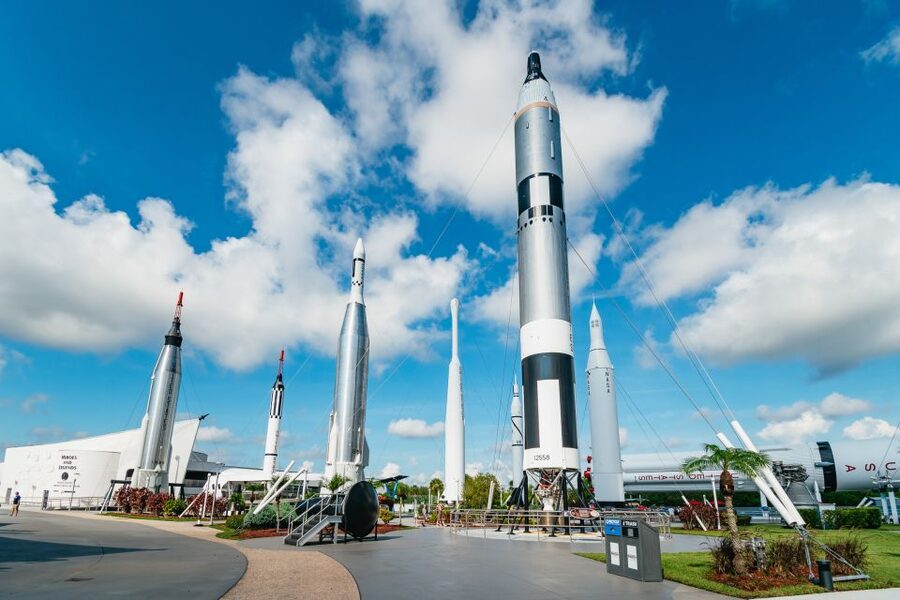
The Rocket Garden offers a more open-air look at launch vehicles. It is a straightforward place to see rockets arranged together, and it gives you a chance to reset after indoor exhibits. The scale is easier to read when several vehicles are visible at once.
The center also presents the largest collection of astronaut memorabilia. That makes it useful for people interested in personal objects, not only engineering. You can move from rocket engines and launch systems to the smaller items that show how astronauts lived and worked.
How to plan one or two days
A one-day visit is possible, but it calls for discipline. Start early, take the Explore Tour at a sensible time, and keep track of show schedules. You will probably need to choose between spending extra time at Atlantis, catching every presentation, and moving through the larger exhibit halls.
A two-day ticket gives you a much better pace. You can return for a second visit within six months, which is especially helpful if you want to combine the Explore Tour with the full visitor complex rather than treating one as an afterthought.
A practical order might look like this:
- Take the Explore Tour and continue to the Apollo/Saturn V Center.
- Return to the main visitor complex after the Apollo exhibits.
- Visit Atlantis, Heroes & Legends, and the Rocket Garden.
- Fit in Gateway, Journey to Mars, films, live shows, and simulators.
- Use the second day for exhibits you had to pass quickly.
The exact order depends on departure times and the day’s presentation schedule. Do not assume you can see everything in two or three hours. Several people who expected a short stop ended up spending the entire day, and that is a realistic expectation.
The $92 price and what you receive
At $92 per person, this is not a casual add-on. The value comes from combining admission with an extended bus experience that would be difficult to arrange on your own. You receive entry to the visitor complex, the Explore Tour, the Apollo/Saturn V Center, 3D films, the motion theater, and most shows and attractions.
The strongest value is access to the tour route and the guide’s interpretation. If you only want to see rockets, standard admission may be enough. If you want to understand the launch area and stop for photographs near major sites, the additional cost makes more sense.
Food, drinks, and an astronaut training experience are not included. The activity is non-refundable, so check your dates and think carefully about your schedule before purchasing. The ticket is wheelchair accessible, but you should still plan for standing and walking.
Launch timing deserves special attention. A launch is never guaranteed by this ticket, but visiting near one can add a remarkable moment to the day. Check the schedule before booking, then allow flexibility because launch plans can affect how you spend your time at the center.
Who will enjoy this experience most?
I would choose this for anyone interested in NASA, rocket engineering, American spaceflight, or the practical work behind a launch. It also suits families, provided children can handle a long day with walking, waiting, and exhibit time. The interactive attractions help, but very young children may not remember much of the history or bus commentary.
Adults who are not space enthusiasts may still enjoy the building scale, Atlantis, the launch-area views, and the sheer variety of attractions. One visitor who expected not to care much about the subject found the rockets and exhibits far more interesting than expected. That is a fair sign that the center has appeal beyond dedicated space fans.
I would be cautious about booking this if you have only a short afternoon. The last entry is at 4:00 PM, and the tour plus Apollo/Saturn V Center can consume a large portion of your available time. In that case, admission alone may feel less rushed, though you would miss the added stops and expert commentary.
Should you book the Explore Tour?
Yes, if you can give Kennedy Space Center at least a full day and want more than indoor exhibits. The Explore Tour is the right choice for closer views of the Vehicle Assembly Building, Launch Complex 39, and other spaceflight sites, while Atlantis and Saturn V provide the indoor highlights.
Choose the two-day option if you want to read the exhibits, attend shows, use the simulators, and still have time for the bus tour. Choose one day if your schedule is tight, but arrive with realistic expectations.
The best plan is simple: check for a launch, arrive early, join the Explore line rather than the regular bus line, carry water, and reserve time for Apollo/Saturn V and Atlantis. At $92, the ticket earns its price when you use the full day and take advantage of the extended route.
FAQ
How much does the Kennedy Space Center Explore Tour ticket cost?
The listed price is $92 per person.
How long is the ticket valid?
You can choose a one-day or two-day admission ticket. With a two-day ticket, you can return for a second visit within six months.
What does the Explore Bus Tour include?
It includes an Explore Bus Tour led by a space expert, with stops for views and photographs of spaceflight sites such as the Vehicle Assembly Building and Launch Complex 39.
Does the ticket include the Apollo/Saturn V Center?
Yes. The ticket includes the Apollo/Saturn V Center, where you can see the Saturn V rocket and Apollo exhibits.
Do I need to take both the regular bus tour and the Explore Tour?
No. The Explore Tour replaces the need to take the regular Kennedy Space Center Bus Tour. Both tours end at the Apollo/Saturn V Center.
How much extra time should I allow for the Apollo/Saturn V Center?
Allow about one hour for the Apollo/Saturn V Center and about 15 minutes for the return journey to the main visitor complex.
What are the main attractions included with admission?
Included attractions include Space Shuttle Atlantis, Shuttle Launch Experience, Gateway, Rocket Garden, Heroes & Legends, Journey to Mars: Explorers Wanted, 3D space films, the spaceport motion theater, and most shows and exhibits.
Is the Kennedy Space Center ticket wheelchair accessible?
Yes, the activity is wheelchair accessible.
Is food included?
No. Food and drinks are not included in the ticket price.
Recently added around the USA
- NON BUS VIP Cadillac Escalade Traverse City Old Mission Wine Tour★ 5.0 · 19 reviews
- NON BUS 4 Winery Traverse City Wine Tour on Old Mission Peninsula★ 5.0 · 445 reviews
- NON BUS Traverse City Old Mission Sunset Wine & Distillery Tour★ 5.0 · 123 reviews
- NON BUS MOVIE STARS Traverse City Old Mission 4 Winery Tour★ 4.8 · 23 reviews
- Miami Combo: Open-top Bus Tour and Sightseeing Bay Cruise★ 3.5 · 75 reviews
- City Sightseeing Seattle HOHO Bus Tour + Bookable Extras★ 3.0 · 40 reviews
- CitySightseeing Seattle Hop-On Hop-Off Bus Tour + Bookable Extras★ 3.0 · 290 reviews
- Seattle: 3-Hour City Tour by Bus★ 4.7 · 321 reviews
Tickets, compared.

Hop-on Hop-off Bus Tour: 24, 48 or 72-Hour Ticket
Read our review →

Munich Hop-On Hop-Off Tour: 1-Day or 2-Day Ticket
Read our review →
Granada City Train 1 or 2-Day Hop-On Hop-Off Ticket
Read our review →
Liverpool City Sights Hop On Hop Off City Tour – 24hr Ticket
Read our review →
Palermo: Hop-on Hop-off Bus Tour 24-hour Ticket
Read our review →
72/96-Hour Hop-On Hop-Off Bus, Tram & Boat Ticket
Read our review →
Verona: Hop-on Hop-off Tour 24 or 48-Hour Ticket
Read our review →Browse the lists this tour appears in